
Bridging the Mathematical Gap Between Quantum Mechanics and Relativity Theory
Exploring the Frontiers of Unifying Physics' Fundamental Theories
Key Takeaways
- Unified Frameworks are Emerging: New theories aim to reconcile quantum mechanics and general relativity without discarding the foundational principles of either.
- Mathematical Challenges Persist: Concepts like background independence and non-renormalizability continue to hinder the unification process.
- Experimental Verification is Crucial: Advancements in experimental physics are essential to validate and guide theoretical models towards a complete unified theory.
Introduction
The quest to bridge the mathematical gap between quantum mechanics (QM) and general relativity (GR) stands as one of the most profound challenges in modern theoretical physics. Quantum mechanics governs the behavior of particles at the subatomic level, characterized by principles like superposition and probabilistic events. In contrast, general relativity provides a deterministic description of gravity and the fabric of spacetime on cosmic scales. These two pillars of physics operate under fundamentally different mathematical frameworks, leading to significant challenges in creating a unified theory that can seamlessly describe all physical phenomena.
For decades, physicists have sought ways to reconcile these theories into a coherent framework, often referred to as "quantum gravity." Despite numerous approaches and substantial progress, a fully unified theory remains elusive. This comprehensive analysis explores the current state of efforts to bridge this gap, examining the conceptual divides, leading candidate theories, recent breakthroughs, and ongoing challenges.
Understanding the Core Challenges
1. The Conceptual Divide
Quantum mechanics and general relativity fundamentally differ in their descriptions of space, time, and gravity:
- Quantum Mechanics: Operates on a fixed, often flat spacetime background with probabilistic events and wave functions governing particle behavior.
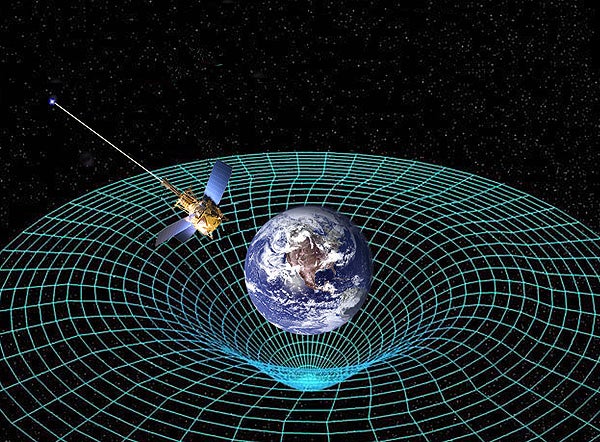
- General Relativity: Describes spacetime as a dynamic, curved continuum influenced by mass and energy, leading to deterministic gravitational interactions.
This divergence creates a conceptual rift, making it challenging to apply quantum principles to the dynamic fabric of spacetime as described by general relativity.
2. Mathematical Incompatibilities
Several mathematical issues impede the unification of QM and GR:
- Background Independence: General relativity’s description of dynamical spacetime contrasts with quantum mechanics’ reliance on a fixed background.
- Non-Renormalizability: Attempts to quantize gravity directly lead to non-renormalizable infinities, necessitating new mathematical treatments.
- Unification of Symmetries: QM’s unitary evolution in Hilbert spaces and GR’s diffeomorphism invariance present conflicting symmetry structures.
3. Experimental Limitations
Empirical validation of unified theories remains a significant hurdle. Current experimental capabilities lack the precision and scale necessary to test predictions of quantum gravity theories definitively, hindering the ability to confirm or refute potential models.
Leading Approaches to Unification
1. Loop Quantum Gravity (LQG)
Loop Quantum Gravity is a non-perturbative and background-independent approach that seeks to quantize spacetime itself. By representing spacetime geometry in terms of discrete loops or spin networks, LQG predicts that space is composed of finite, indivisible units at the Planck scale. Key features include:
- Discrete Spectra: Area and volume operators have discrete spectra, suggesting a granular structure of spacetime.
- Background Independence: LQG does not assume a fixed spacetime background, aligning closely with general relativity’s principles.
- Challenges: Recovering classical general relativity in the low-energy limit and coupling matter fields consistently remain unresolved issues.
2. String Theory and M-Theory
String theory posits that the fundamental constituents of reality are one-dimensional "strings" whose vibrational modes correspond to different particles, including the graviton—the hypothetical quantum of gravity. M-Theory extends string theory into an 11-dimensional framework, aiming to unify the various string theories into a single coherent model. Notable aspects include:
- Extra Dimensions: Requires additional spatial dimensions beyond the familiar three, often compactified at Planck scales.
- Supersymmetry: Incorporates a symmetry between bosons and fermions, aiding in the cancellation of anomalies and achieving mathematical consistency.
- Dualities: Mathematical equivalences between seemingly different theories, providing insights into non-perturbative aspects of quantum gravity.
- Challenges: Experimental verification remains elusive, and the vast landscape of possible solutions complicates definitive predictions.
3. Oppenheim's Classical-Quantum Framework
Jonathan Oppenheim proposed a novel approach that maintains gravity as a classical force while allowing it to interact with quantum systems through a stochastic mechanism. This framework introduces a new mathematical structure that reconciles classical and quantum descriptions without requiring quantum gravity. Key elements include:
- Preservation of Classical Spacetime: Gravity remains classical, avoiding the need to quantize spacetime itself.
- Stochastic Interactions: Quantum systems influence and are influenced by classical gravity through probabilistic interactions.
- Potential Advantages: Simplifies the unification process by avoiding the complexities of quantizing general relativity.
- Ongoing Research: The framework is still under development, with ongoing efforts to address its implications and compatibility with existing theories.
4. Causal Dynamical Triangulations (CDT)
CDT is an approach that models spacetime as a collection of simple geometric building blocks, dynamically evolving to form a continuum in the large-scale limit. By summing over different geometries, CDT seeks to reproduce the features of general relativity emergently from a quantum framework.
- Discrete Building Blocks: Spacetime is approximated by simplices, analogous to triangles and tetrahedrons in higher dimensions.
- Continuum Limit: Aimed at recovering smooth spacetime as the number of building blocks increases.
- Advantages and Challenges: Provides a background-independent approach but faces difficulties in matching all classical predictions of general relativity.
5. Asymptotic Safety
Asymptotic Safety posits that gravity becomes "safe" from divergences at high energies due to the existence of a non-trivial fixed point in the renormalization group flow. This approach aims to make gravity a well-defined quantum field theory without requiring a complete unification with other forces.
- Fixed Point Theory: Predicts that couplings approach finite values at high energies, preventing non-renormalizable infinities.
- Scale Invariance: Maintains consistency across different energy scales.
- Research Status: Theoretical and mathematical developments are ongoing, with partial successes in lower-dimensional models.
Comparative Analysis of Unified Theories
Comparing Key Features and Challenges
| Theory | Key Features | Advantages | Challenges |
|---|---|---|---|
| Loop Quantum Gravity (LQG) | Quantizes spacetime using loops; background-independent | Aligns with GR's principles; discrete spacetime structure | Recovering classical GR; coupling matter fields |
| String Theory & M-Theory | Fundamental strings; extra dimensions; supersymmetry | Mathematical consistency; potential for unification | Lack of experimental evidence; complex solution landscape |
| Oppenheim's Framework | Classical gravity coupled with quantum systems via stochastic mechanisms | Simplifies unification; avoids quantizing gravity | Still under development; compatibility with existing models |
| Causal Dynamical Triangulations (CDT) | Discrete spacetime building blocks; dynamical geometry | Background independence; emergent spacetime | Matching classical GR predictions; scaling issues |
| Asymptotic Safety | Non-trivial fixed points in renormalization group flow | Potentially renormalizable; scale invariance | Limited success in higher dimensions; incomplete theoretical framework |
Recent Developments and Breakthroughs
Advancements in Mathematical Frameworks
Recent years have seen significant progress in developing new mathematical tools and frameworks to address the unification challenge:
- Planck-Scale Formalism: Extending Riemannian geometry to the Planck scale has opened pathways to describe spacetime with inherent quantum properties.
- Finsler Geometry: Offers a generalized framework that can potentially accommodate both quantum phenomena and the relativistic curvature of spacetime.
- Hidden Geometric Structures: Proposals suggest that deeper, underlying geometric layers may link quantum mechanics and general relativity through novel mathematical constructs.
Notable Theoretical Proposals
- Stochastic Gravity: Building on Oppenheim's work, theories incorporating stochastic processes provide mechanisms for quantum systems to interact with classical gravitational fields.
- Elemental Cells of Space: Hypotheses that space is composed of discrete "atoms" or "cells," offering a granular approach to spacetime structure.
- Unified Structural Frameworks: Emerging theories propose that both QM and GR emerge from a more fundamental, unified structure, suggesting a deeper layer of physical law.
Experimental Endeavors
Advancements in experimental physics are crucial for testing the predictions of unified theories:
-
Quantum Satellites: Missions like China's Micius satellite have begun experimenting with the interaction between quantum states and gravitational fields, providing data that could inform theoretical models.
-
High-Energy Experiments: Particle accelerators and other high-energy facilities aim to probe the limits of known physics, potentially uncovering phenomena that hint at a unified theory.
-
Astronomical Observations: Observations of cosmic events, such as black hole mergers via gravitational waves, offer insights into the behavior of gravity under extreme conditions, essential for testing quantum gravity theories.
Ongoing Challenges and Future Directions
Mathematical Consistency and Predictive Power
Ensuring mathematical consistency across unified theories remains a primary challenge. Theories must not only merge QM and GR but also make accurate predictions that can be empirically tested. Achieving a balance between theoretical rigor and empirical relevance is essential for progress.
Reconciling Time and Space Descriptions
Quantum mechanics treats time as an absolute parameter, whereas general relativity integrates time into the dynamic fabric of spacetime. Finding a consistent mathematical representation that allows for relative time in a quantum framework is a significant hurdle.
Overcoming Non-Renormalizability
The non-renormalizable nature of direct quantization of gravity necessitates innovative mathematical approaches. Techniques that can tame or circumvent these infinities are critical for developing a viable quantum theory of gravity.
Enhancing Experimental Techniques
As theoretical models become more sophisticated, so too must experimental methods. Advancements in technology that allow for probing the Planck scale or observing quantum gravitational effects are imperative for testing and refining unified theories.
Conclusion
The endeavor to bridge the mathematical gap between quantum mechanics and general relativity is a frontier of contemporary physics, marked by rich theoretical innovation and persistent challenges. While no single theory has yet achieved the ambitious goal of complete unification, ongoing research continues to yield promising frameworks and mathematical tools. Approaches like Loop Quantum Gravity, String Theory, and Oppenheim's classical-quantum framework each offer unique insights into how these foundational theories might ultimately be reconciled.
Mathematical advancements and experimental breakthroughs play complementary roles in this pursuit. As theoretical models become more refined and experimental capabilities expand, the prospects for achieving a unified description of the fundamental forces of nature grow ever brighter. The journey towards unification not only deepens our understanding of the universe's underlying principles but also paves the way for revolutionary advancements in technology and our comprehension of reality itself.
References
Last updated February 16, 2025