
The Brooklyn Bridge: A Reflection of Post-Civil War Transformation
Exploring Economic, Political, and Social Shifts through Engineering Marvel
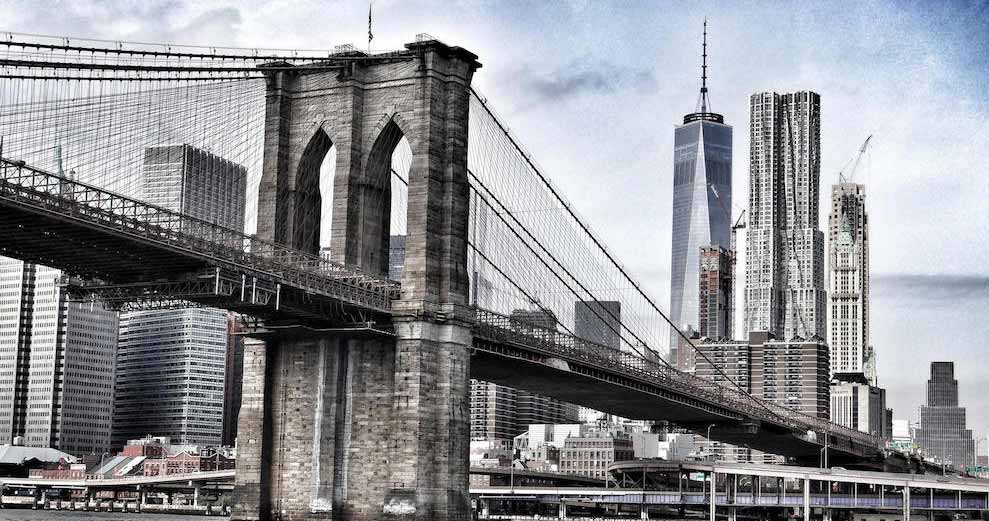
Key Highlights
- Innovative Industrial Growth: The bridge epitomized rapid industrialization with new construction methods and materials.
- Political Dynamics & Urban Governance: It revealed evolving governmental roles and political influences typical of the Reconstruction era.
- Social Integration & The American Spirit: Serving as a symbol of hope and progress, the bridge unified communities and represented cultural ambition.
Economic Transformation and Industrialization
Rapid Industrial Growth and Technological Innovation
In the aftermath of the Civil War, the United States experienced a pronounced surge in industrialization—a transformational change vividly mirrored in the construction of the Brooklyn Bridge. The bridge, completed in 1883, was emblematic of America's emerging technological prowess. Engineers harnessed groundbreaking techniques and materials, most notably steel, which had become economically viable largely due to advances such as the Bessemer process. This innovation lowered production costs, thereby enabling the use of steel in large-scale projects.
The bridge’s construction involved the application of steel-wire suspension cables, a method that marked a revolutionary departure from earlier engineering practices. Additionally, the employment of pneumatic caissons for deep foundation work allowed construction teams to overcome complex subterranean challenges. These engineering feats were more than mere technical accomplishments—they signified a broader trend of industrial growth, where new technologies were rapidly integrated into large infrastructure projects.
Economic Investment and Urban Expansion
The financial commitment behind the Brooklyn Bridge was immense. What began as a provision for a budget of around $5 million eventually escalated to a cost that exceeded $15 million. This escalation underscored the increasing willingness of investors and government entities alike to fund landmark infrastructure projects as a path toward national economic expansion. In the words of textbooks like the American Pageant and American Spirit, such investments were not singular occurrences but part of a pervasive belief that durable infrastructure was crucial to long-term economic development.
As the bridge linked Manhattan and Brooklyn—two distinct urban centers at the time—it effectively accelerated economic integration. The facilitation of swift and efficient transport of goods, services, and labor between the two boroughs catalyzed economic expansion and set the stage for New York City’s rise as an economic powerhouse. This kind of investment in transportation infrastructure played a seminal role in reinforcing the emergent economic ideologies of the post-Civil War era.
Political Shifts and Governmental Dynamics
Political Realignment and Infrastructure Funding
The construction of the Brooklyn Bridge occurred during a redistricting of political power post-Civil War where urban centers began to exert greater influence. In an era when political machines and urban political bosses held significant sway—such as Tammany Hall in New York City—the bridge project became a canvas where economic ambition, public pressure, and patronage intertwined.
Political support was critical to the successful realization of such a monumental project. Public consensus following transport tragedies, particularly incidents involving unreliable ferry systems, led legislators to augment funding through state intervention. This government backing was a clear demonstration of how political leaders were adapting to the demands of rapid urbanization and modernization. The political narrative as presented in both American Pageant and American Spirit emphasizes that the Brooklyn Bridge was more than just a physical structure; it was a political instrument designed to align with the country’s evolving attitudes towards governance.
Political Machines and Urban Policy
Beyond the pragmatic aspect of funding, the project symbolized the entrenchment of political machines within urban development. Entities like the New York Bridge Company, influenced by local political networks, were pivotal in orchestrating such large-scale projects. Their involvement often came with implications of patronage and local corruption, yet these projects underscored the shift from a laissez-faire stance towards one in which government, organized labor, and political operatives played a central role in shaping public infrastructure.
This new dynamic created a framework wherein governmental agencies actively participated in planning and executing public works. The rigorous administrative procedures and regulatory measures introduced during the Brooklyn Bridge’s construction were reflective of an era in which urban progress was inseparable from political reform and intervention.
Social Transformation and the American Spirit
Uniting Diverse Communities and Cultures
The Brooklyn Bridge emerged as a symbol of social union and the overcoming of regional divisions following the tumult of the Civil War. Its construction was intrinsically linked to the phenomenon of urbanization—a process characterized by rapid population movements and the merging of once disparate communities. By physically bringing together Brooklyn and Manhattan, the bridge lessened the social and geographic isolation that previously existed between these populations.
The bridge not only facilitated the physical movement of people but also served as a conduit for cultural exchange. In a period marked by waves of immigration, notably documented in American Spirit, the individual stories of immigrant workers who labored on the bridge echoed the broader narrative of the American dream. Their determination and resilience were instrumental in the nation’s transformation, symbolizing a collective aspiration for progress and inclusion.
Symbolism, Identity, and National Progress
The symbolism associated with the Brooklyn Bridge resonated profoundly within the national psyche. It was viewed as a monument to human ingenuity and perseverance—a token of the American spirit in overcoming adversity. The narrative that surrounded its construction celebrated technological innovation, while also serving as a metaphor for the reconciliation and unification of a divided nation.
Cultural narratives emerging during the latter part of the 19th century, as captured in textbooks like American Pageant, portrayed such infrastructure projects as critical markers of national maturity. The emotional and psychological impact of such symbols is evidenced by the public celebrations and media coverage surrounding the opening of the bridge. They provided the populace with a tangible representation of the modern era—a testament to the collective capacity for rebuilding and progress.
Integrated Analysis Through a Comparative Table
| Aspect | Economic Perspective | Political Perspective | Social Perspective |
|---|---|---|---|
| Infrastructure & Technology |
Represents the ushering in of industrial modernity with the use of steel and innovative engineering techniques such as pneumatic caissons. |
Demonstrates the growing role of government and political support in funding and regulating large projects through emerging urban policies. |
Serves as a symbol of communal determination and unity. Emblematic of the progress and optimism of post-war America. |
| Financial Investment |
Substantial investment which evolved from $5 million to over $15 million, marking significant economic commitment towards infrastructural development. |
Exemplifies the interplay between political patronage and public funding; reflects the influence of political machines like Tammany Hall. |
Encourages the emergence of a unified urban identity by improving connectivity and reflecting shared values of progress. |
| National Narrative & Symbolism |
Highlights economic modernization and the expansion of urban wealth as aided by technological advancements. |
Embodies the shift towards a more interventionist government role in economic affairs, relying on partnerships to achieve national progress. |
Infuses the national consciousness with a sense of pride, unity, and resilience—traits central to the American spirit during Reconstruction. |
Detailed Discussion Through the Lens of Historical Narratives
The Industrial Catalyst of Progress
Using insights derived from both the American Pageant and American Spirit, it can be argued that the Brooklyn Bridge's construction was inexorably linked to the prevailing industrial movement. This period, situated in the years following the Civil War, witnessed the accelerated adoption of mechanization, which not only redefined production methods but also reshaped urban landscapes. The emergence of mass production techniques and the transition to steel structures underscored an era of innovation and economic expansion, positioning cities like New York at the forefront of global industrial development.
The bridge's engineering advancements were a direct result of the learnings gleaned from an increasingly technical society. Its designers not only tackled significant engineering and logistical challenges, but they also set standards for future infrastructural projects. Innovations such as the use of steel-wire suspension in the face of strong winds and the complexities of deep-water excavation demonstrated a transformative approach—one that resonated on both economic and global scales. The infrastructure represented the continent's capability to harness scientific advancements for common good, fundamentally altering the trajectory of urban growth.
Political Adaptation and New Urban Governance
Politically, the post-war period was characterized by a paradigmatic shift as nation and city leaders began to recognize the intrinsic link between infrastructure development and urban governance. The Brooklyn Bridge project, supported by both local governments and influential political machines, was a microcosm of the evolving administrative landscape. The challenges associated with funding, regulatory frameworks, and political interference underscored broader national debates. The necessity for a unified regulatory approach indicated an early form of public-private partnerships that would define future governmental policies.
Governmental support in these infrastructure projects helped bridge the gap between industrial innovation and societal needs. Political figures recognized that investments in such monumental works were decisive in spurring economic vibrancy and urban cohesion. Legislative measures, combined with political pressures from rapidly growing urban populations, contributed to an environment where large-scale projects were not only possible but imperative. This intricate interplay of politics and public works redefined the new urban ethos, paving the way for progressive governance.
Social Fabric and the American Ideal
Culturally and socially, the Brooklyn Bridge came to embody the regenerative spirit of a nation emerging from the scars of civil conflict. It was a symbol that transcended its physical architectural brilliance to represent broader ideals of unity and forward momentum. In an era marked by significant immigration and urban shift, the bridge provided a literal and figurative link that facilitated human connectivity across diverse socioeconomic strata.
The human stories entwined with the construction of the bridge—stories of immigrant laborers, visionary engineers like John and Washington Roebling, and the communities that rallied behind the project—served as enduring testaments to the American ideal of determination. As detailed in American Spirit, these narratives underscored the resilience of populations striving for better lives amid profound social changes. The bridge became a physical manifestation of hope, symbolizing how collective effort and innovation can usher in new chapters of progress and unity.
The Brooklyn Bridge also played a crucial role in redefining cultural perceptions about urban spaces. As cities began to offer myriad opportunities and as populations grew denser and more diverse, the infrastructure projects of the era—epitomized by the bridge—facilitated a broader acceptance of urban multiculturalism. Its celebrated opening, replete with public festivities and widespread media coverage, highlighted an emerging ethos: the belief that engineering and art could together elevate the social fabric of the nation.
Interconnected Lessons from History
Bridging the Past and the Future
The construction of the Brooklyn Bridge is more than an account of an architectural achievement; it is a narrative that encapsulates the transformation of American society during one of its most pivotal epochs. Through the integration of economic innovation, political adaptation, and social metamorphosis, the bridge mirrors the dual aspirations of a nation eager to build a modern future while remaining rooted in its storied past.
As captured in the historical texts American Pageant and American Spirit, monumental projects like the Brooklyn Bridge offered a platform to articulate a collective sense of optimism and renewal. The bridge did not simply serve a utilitarian purpose but also ignited a renewed belief in the limitless capacity of human ingenuity. This very belief spurred further investments in infrastructure and technological research, reinforcing a cycle of progress and innovation that defined the burgeoning United States.
While economic benefits such as increased trade and investment set the groundwork for the nation's modern infrastructure, the political and social narratives intertwined with the project provided a deeper commentary on the American identity. In a time of reconstruction and redefinition, the bridge stood as a potent testament to the value of public works in shaping national discourse, balancing the scales between fiscal realities and visionary aspirations.
References
- Brooklyn Bridge Analysis - Internet Public Library
- Engineering and Infrastructure Insights - Brainly
- New York City in the 1860s - History101
- The Brooklyn Bridge: A Monument to the Human Spirit - Objectivist Standard
- The Brooklyn Bridge and the Gilded Age - The History Guy
Recommended Related Queries

Last updated March 6, 2025