
Unraveling the Mystery: The Brussels-Boma Air Route in the Pivotal Year of 1944
An exploration into the complexities of wartime aviation and Sabena's historic Congo routes, set against the backdrop of World War II.
Key Insights into the Brussels-Boma Air Connection Circa 1944
- No New Connection Commenced in 1944: Current historical records provide no evidence to suggest that a new air connection between Brussels, Belgium, and Boma, then in the Belgian Congo, was initiated in the year 1944.
- Sabena's Pioneering African Routes: The Belgian national airline, Sabena, had already established air routes to and within the Belgian Congo much earlier, with pioneering flights dating back to the mid-1920s. Boma was part of this early network.
- Profound Impact of World War II: The year 1944 was dominated by World War II. Civilian air travel, particularly international routes like those to Africa, was severely disrupted. Aviation infrastructure was largely under military control and subject to wartime conditions.
The question of when an air connection between Brussels and Boma started in 1944 delves into a period of significant global upheaval. While Sabena had a rich history of connecting Belgium with its African territories, the wartime context of 1944 presents a complex picture for civilian aviation.
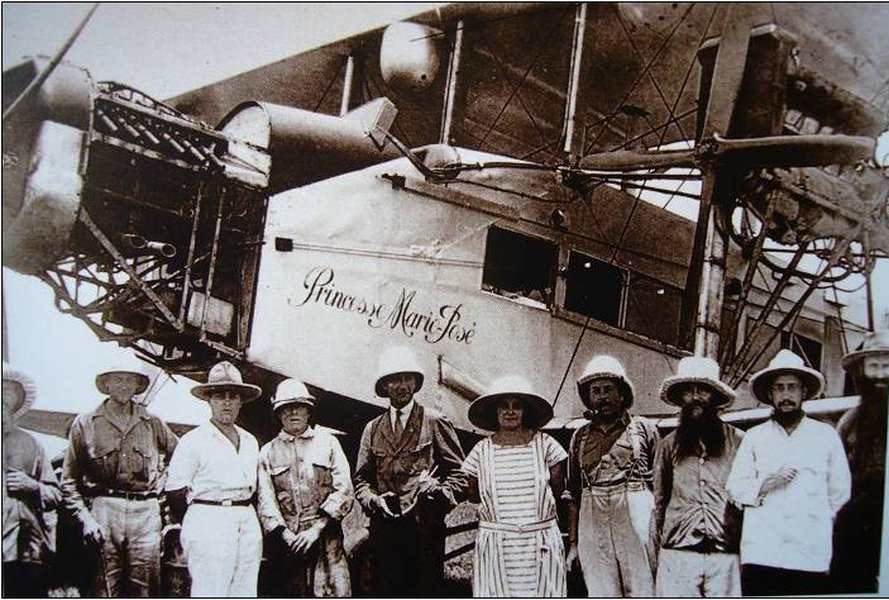
The Handley Page W8 F biplane, instrumental in Sabena's pioneering flights to the Belgian Congo in the 1920s.
The 1944 Enigma: Examining a Wartime Air Link
Based on available historical information, there is no direct evidence indicating the inauguration of a new or regularly scheduled commercial air service between Brussels and Boma specifically in 1944. The existing understanding points to Sabena's earlier establishment of routes to the Belgian Congo, which were significantly impacted by the war.
Echoes from the Past: Sabena's Trailblazing Ventures into the Congo
To understand the context, it's crucial to look back at Sabena's early operations. The airline was a pioneer in establishing long-haul routes from Europe to Africa.
The Groundbreaking 1925 Flight
A landmark event in this history was the flight on February 12, 1925, when Sabena aviators Edmond Thieffry, Léopold Roger, and Joseph De Brycker successfully flew a Handley Page W8 F biplane from Brussels to Léopoldville (now Kinshasa). This journey, covering a vast distance over challenging terrain, took 51 days and marked a significant achievement in aviation, laying the groundwork for future services.
Establishment of Internal Congo Routes
Following this success, Sabena initiated a program of aerodrome construction within the Belgian Congo. This infrastructure development was largely completed by 1926, enabling Sabena to begin regular flights within the colony. One of the key routes established was the Boma-Léopoldville-Élisabethville (now Lubumbashi) corridor, spanning approximately 2,288 kilometers (1,422 miles) over dense jungle. These routes were vital for passenger transport, mail delivery, and cargo, becoming some of Sabena's most profitable operations at the time.
Skies Under Siege: Aviation in Brussels During 1944
The year 1944 was a critical period during World War II, with profound implications for aviation across Europe, including Belgium.
Wartime Disruptions and Military Control
Belgium was under German occupation from May 1940. During this time, civilian air operations were largely suspended, and airports came under military control. Sabena's ability to operate its international network, including routes to the Congo, was severely curtailed.
The Liberation of Brussels
Brussels was liberated by Allied forces, including the British Welsh Guards, on September 3, 1944. Following the liberation, control of aviation facilities shifted to the Allies.
Status of Brussels' Airports in 1944
Brussels had several key airfields, and their status in 1944 is important:
- Evere-Haren Airport: This was Sabena's main pre-war base. During the war, it suffered bombing raids. After liberation, it was used by Allied forces (designated B.56 Evere by the RAF). However, it was closed after World War II as it became too small and was surrounded by urban development.
- Melsbroek Airfield: This airfield was used by the Luftwaffe during the occupation. After the liberation in September 1944, Allied forces took control and began using it. Melsbroek would later evolve into the modern Brussels Airport (Zaventem), becoming the new national airport as Haren was deemed unsuitable for expansion.
Nature of Air Traffic in Late 1944
After September 1944, air traffic in and out of Brussels was predominantly military. Records indicate Allied freight and transport flights operating to and from Brussels airfields like Evere. These flights were focused on supporting ongoing military operations, troop movements, and supply chains, such as those related to Operation Market Garden and the subsequent Allied advance. There is no specific mention in the provided historical accounts of regular commercial passenger or cargo flights being re-established between Brussels and Boma during this intense wartime period.
Visualizing the Factors: Air Travel Feasibility in 1944
The feasibility of a regular air connection like Brussels-Boma in 1944 was influenced by numerous interconnected factors. The radar chart below provides a qualitative assessment of these elements, comparing the situation in early 1944 (under German occupation) with late 1944 (post-liberation by Allied forces). The scores (out of 10) are indicative, reflecting the challenging environment for civilian aviation.
As the chart illustrates, while the liberation of Brussels in late 1944 brought a shift in control and some improvement in political stability, the overarching dominance of military operations and the damaged state of infrastructure meant that conditions were far from conducive for restarting regular international civilian air services to distant destinations like Boma.
Mapping the Historical Context
The mindmap below provides a simplified overview of the key entities, events, and relationships concerning the Brussels-Boma air connection and its historical context, particularly around 1944.
This mindmap helps to visualize how Sabena's early colonial routes, the major disruption caused by World War II, the specific events of 1944 in Brussels, and the status of key airfields all interrelate, leading to the conclusion that a new air service to Boma did not commence in that year.
The Path to Resumption: Post-War Air Travel Revival
The re-establishment of civilian air routes, including those operated by Sabena to the Belgian Congo, was a gradual process that took place in the post-war years. With the end of hostilities, efforts focused on rebuilding infrastructure, demilitarizing airfields, and acquiring new aircraft suitable for long-haul passenger and cargo services. While Sabena did resume and expand its African routes, including transatlantic services with aircraft like the DC-4 and DC-6B, this occurred after 1944 as conditions stabilized and resources became available. The precise timeline for the full resumption of regular services to Boma specifically would have been part of this broader post-war recovery of international civil aviation.
A Glimpse into Colonial Aviation: "Congo Flight"
The following video, "Congo Close-Up: Documentary on the Belgian Congo," includes historical footage and mentions "Congo Flight" and "Sabena Air," offering a broader perspective on travel and life in the Belgian Congo during the colonial era. While not specific to 1944, it provides valuable context about the types of air services and the significance of aviation in connecting Belgium to its colony.
Documentary footage offering insights into the Belgian Congo, including aspects of aviation.
This historical documentary footage underscores the importance of air travel in accessing remote areas of the Belgian Congo and maintaining connections with Europe. However, such established civilian operations were largely put on hold during the intense conflict years like 1944.
Comparative Overview: Air Travel Conditions
The table below offers a comparative look at the conditions for air travel, specifically concerning routes between Brussels and the Belgian Congo, across different eras.
| Feature | Pre-War (1920s-1930s) | Wartime (1944) | Post-War (late 1940s onwards) |
|---|---|---|---|
| Primary Operator Focus | Sabena (Civilian Commercial) | Military Forces (German, then Allied) | Sabena (Civilian Commercial) |
| Brussels-Boma Route Status | Established as part of Sabena's Congo network | Severely disrupted; likely non-operational for regular civilian travel | Gradually re-established and developed |
| Airport Control (Brussels) | Civilian / Sabena | Military | Civilian |
| Primary Flight Purpose | Passengers, Mail, Commercial Cargo | Military transport, Logistics, Supply, Evacuation | Passengers, Mail, Commercial Cargo |
| Infrastructure (Brussels Airports) | Operational and developing | Damaged, under military control, or being repurposed | Rebuilt, modernized, and expanded (e.g., Melsbroek becoming Zaventem) |
| Regularity of Civilian Service | Scheduled, though infrequent by modern standards | Highly irregular or non-existent for civilian international travel | Increasingly scheduled and regular |
This table highlights the stark contrast between the pre-war establishment of routes, the severe disruptions and military focus of 1944, and the eventual revival and expansion of civilian air services in the post-war era.
Frequently Asked Questions (FAQ)
Was there any air connection between Brussels and Boma *before* 1944?
Yes, Sabena, the Belgian national airline, had established air routes to the Belgian Congo starting in the mid-1920s. A pioneering flight from Brussels to Léopoldville (now Kinshasa) occurred in 1925. By 1926, Sabena began operating flights within the colony, including a route that connected Boma with Léopoldville and Élisabethville. Therefore, an air connection involving Boma existed well before 1944, as part of Sabena's broader African network.
What was the status of Brussels airports during World War II, particularly in 1944?
During World War II, Belgian airports, including those in Brussels like Evere-Haren and Melsbroek, were significantly affected. Initially, under German occupation (from 1940), these airfields were controlled and used by the Luftwaffe. Evere-Haren, Sabena's pre-war hub, suffered bombing. After the liberation of Brussels in September 1944, these airfields came under Allied control and were primarily used for military and logistical purposes. Civilian operations were largely suspended or severely restricted.
When did Sabena resume regular commercial flights to the Belgian Congo after WWII?
The resumption of regular commercial flights by Sabena to the Belgian Congo occurred gradually in the post-war period, after 1945. The airline had to rebuild its fleet, infrastructure, and re-establish international agreements. While specific restart dates for the Boma route immediately post-war aren't detailed in the provided information, Sabena did focus on reviving its African and transatlantic routes, introducing aircraft like the DC-4 and DC-6B in the late 1940s and early 1950s to serve these long-haul connections.
If not from Brussels, were there other air connections to Boma in 1944?
The provided information focuses specifically on the air connection between Brussels and Boma. During World War II, the Belgian Congo itself was not a primary theater of combat in the same way Europe was, and internal flights or connections with other Allied-controlled territories in Africa might have continued to some extent, potentially for strategic or supply purposes. However, detailed information on such specific operations to Boma from locations other than Brussels in 1944 is not available in the provided context.
Recommended Further Exploration
- What is the detailed history of Sabena's routes to the Belgian Congo in the 1920s and 1930s?
- How did World War II affect civil aviation operations in occupied Belgium?
- What was the role of Melsbroek airport during and immediately after World War II?
- How did international air travel to African colonies resume after World War II?
References
 routetoairport.blogspot.com
Last updated May 20, 2025