
Unlocking the Blueprint: How Do We Approach Building Super Artificial Intelligence?
Journey into the complex world of creating advanced AI, from foundational concepts to cutting-edge platforms and future possibilities.
Key Insights on Advanced AI Development
- Defining the Goal: Building "super artificial intelligence" typically refers to developing Artificial General Intelligence (AGI) or the theoretical Artificial Superintelligence (ASI), systems capable of human-level or beyond-human cognitive tasks across diverse domains.
- Essential Infrastructure: Success relies on robust infrastructure, including powerful computing (potentially quantum), vast high-quality datasets, advanced machine learning algorithms (like deep learning and transformers), and scalable cloud platforms.
- Structured Development: A systematic approach involving clear problem definition, rigorous data preparation, iterative model training and validation, MLOps practices, and continuous learning is crucial for developing sophisticated AI systems.
Understanding "Super Artificial Intelligence"
Defining the Ambition: From Narrow AI to ASI
The term "super artificial intelligence," often used interchangeably with Artificial Superintelligence (ASI), represents a future, hypothetical stage of AI development. Unlike current AI, which excels at specific tasks (Narrow AI), ASI would possess intellectual capabilities far exceeding those of the brightest human minds across virtually every field, including scientific creativity, general wisdom, and social skills. Artificial General Intelligence (AGI) is often seen as a necessary stepping stone, representing AI with human-like cognitive abilities.
While true ASI remains theoretical as of May 4, 2025, the pursuit involves pushing the boundaries of current AI research, tools, and methodologies. Building towards such advanced systems requires a deep understanding of existing technologies and a structured approach to development.
Conceptualizing the advanced processing power required for superintelligence.
Foundational Pillars of Advanced AI Systems
The Technological Bedrock
Constructing highly capable AI relies on several core technological components:
- Advanced Machine Learning (ML) Algorithms: Techniques like deep learning, using complex neural networks (e.g., Transformers, CNNs, RNNs), are fundamental. These models learn intricate patterns from vast datasets, enabling capabilities in areas like natural language processing (NLP), computer vision, and decision-making.
- Massive, High-Quality Data: AI models, especially advanced ones, require enormous amounts of diverse and well-prepared data for training. The quality, quantity, and relevance of data directly impact the AI's performance and ability to generalize. Techniques like transfer learning and synthetic data generation can help when real-world data is scarce.
- Powerful Computing Infrastructure: Training complex models demands significant computational resources. This often involves Graphics Processing Units (GPUs), Tensor Processing Units (TPUs), and potentially, in the future, quantum computing to handle the scale and complexity of calculations efficiently. Cloud platforms provide scalable access to this infrastructure.
- Neural Network Architectures: Designing sophisticated neural network architectures, sometimes inspired by the human brain, is key to processing information effectively for complex tasks. Multi-modal models, which process different types of data (text, images, audio), are becoming increasingly important.
- MLOps and Development Platforms: Managing the AI lifecycle (data preparation, training, deployment, monitoring) requires robust Machine Learning Operations (MLOps) practices and integrated development platforms. These platforms streamline workflows and enable scaling.

Visual representation of interconnected AI technologies.
A Step-by-Step Pathway to Building Advanced AI
Structuring the Development Process
Building sophisticated AI systems, while complex, can be approached systematically:
1. Define the Problem and Scope
Clearly articulate the specific problem the AI aims to solve or the capabilities it needs to possess. Is it intended for complex reasoning, autonomous decision-making, creative generation, or understanding multi-modal inputs? A well-defined scope prevents vague objectives and focuses development efforts.
2. Gather and Prepare Data
Acquire large, diverse, and high-quality datasets relevant to the defined problem. This phase involves cleaning, labeling (if necessary), and structuring the data. Data quality is paramount. Address potential biases and ensure ethical sourcing. Explore synthetic data or transfer learning if data is limited.
3. Choose the Right AI Model and Architecture
Select appropriate ML models and architectures based on the task. For advanced capabilities, this often involves deep learning models like Transformers (used in GPT, BERT) or exploring multi-modal architectures. Consider models designed for reasoning and planning for AGI-like tasks.
4. Select AI Development Platforms and Tools
Utilize comprehensive AI platforms that support the entire ML lifecycle. Platforms like Google Cloud Vertex AI, Amazon SageMaker, Microsoft Azure AI, and open-source hubs like Hugging Face provide infrastructure, pre-trained models, training tools, and deployment capabilities. Choose tools that match your technical requirements and scale.
5. Model Training and Optimization
Train the selected model using the prepared data and powerful computing resources (GPUs/TPUs). This is often an iterative process involving tuning hyperparameters (model settings) to optimize performance. Techniques like AutoML can assist in finding optimal configurations. Rigorous testing against relevant benchmarks is essential.
6. Integration, Testing, and Validation
Integrate the trained model into the target application or system. Thoroughly test its performance, robustness, and reliability in real-world or simulated environments. Validate its outputs against defined metrics and ensure it behaves as expected, handling edge cases appropriately.
7. Deployment and Scaling
Deploy the validated model into production, making it accessible via APIs, embedded systems, or other means. Utilize cloud infrastructure for scalability and reliability. Implement monitoring systems to track performance and detect issues.
8. Continuous Learning and Ethical Considerations
Implement mechanisms for the AI to learn and adapt over time as new data becomes available (continuous learning). Crucially, monitor and address fairness, bias, transparency, and ethical implications throughout the development lifecycle and during operation. Organizations like the Artificial Superintelligence Alliance are working on frameworks for decentralized and ethical AI.
Exploring Key AI Development Platforms
Tools of the Trade for Building Intelligent Systems
Several powerful platforms offer end-to-end solutions for developing, training, deploying, and managing sophisticated AI models. These platforms provide the necessary infrastructure, tools, and services to accelerate AI development.
Leading Cloud AI Platforms
- Google Cloud Vertex AI: A unified platform offering managed ML services, AutoML capabilities, and tools for the entire ML workflow, from data preparation to model deployment and monitoring.
- Amazon SageMaker: A comprehensive service from AWS that enables developers and data scientists to build, train, and deploy ML models quickly and at scale. It covers the entire ML lifecycle.
- Microsoft Azure AI & Machine Learning Studio: Provides a suite of cloud-based AI services, including cognitive services, machine learning tools, and infrastructure for building and deploying intelligent applications.
Specialized and Open-Source Platforms
- Hugging Face: An influential platform focused primarily on NLP, offering a vast repository of pre-trained models (especially Transformers), datasets, and libraries that significantly speed up development.
- H2O.ai: An open-source platform known for its AutoML capabilities and ease of use, enabling users to build and deploy ML models efficiently.
- Iguazio MLOps Platform: Focuses on operationalizing machine learning (MLOps), helping organizations manage, automate, and scale their ML and generative AI applications effectively in production environments.
- Wit.ai: A platform specifically designed for building conversational applications that understand natural language (text or speech).
Platforms for AI Agents and Automation
- Frameworks like AutoGen, LangChain, CrewAI: These are libraries and frameworks used to build AI agents capable of reasoning, planning, and using tools to accomplish complex tasks, often by coordinating multiple AI models or components.
- ClickUp / Notion AI: While primarily productivity tools, platforms like ClickUp and Notion are integrating AI features (like ClickUp Brain) to automate tasks, process data, and enhance workflows within their environments.
Comparison of Major Cloud AI Platforms
The following table provides a high-level comparison of some leading cloud-based AI development platforms:
| Platform | Key Strengths | Primary Use Cases | Target Users |
|---|---|---|---|
| Google Cloud Vertex AI | Unified ML platform, strong AutoML, integration with Google Cloud services, scalability. | End-to-end ML development, custom model training, MLOps. | Data Scientists, ML Engineers |
| Amazon SageMaker | Comprehensive toolset, broad integration with AWS, flexibility, large ecosystem. | Full ML lifecycle management, large-scale model training and deployment. | Data Scientists, ML Engineers, Developers |
| Microsoft Azure AI | Wide range of AI services (cognitive, ML), responsible AI tools, strong enterprise focus. | Building intelligent applications, cognitive services integration, enterprise ML. | Developers, Data Scientists, IT Professionals |
| Hugging Face | Vast library of pre-trained models (NLP focus), open-source community, ease of use for transfer learning. | NLP tasks, rapid prototyping, leveraging state-of-the-art models. | Researchers, Developers, Data Scientists |
Comparative Analysis of AI Platform Capabilities
Visualizing Platform Strengths
Choosing the right AI development platform depends heavily on specific project needs, existing infrastructure, team expertise, and budget. The radar chart below provides a visual comparison of major platforms across key dimensions like scalability, ease of use, variety of pre-built models, MLOps support, and cost-effectiveness. Note that these scores are representational based on general perceptions and platform focuses, not precise quantitative measures.
This chart highlights how different platforms excel in various areas. For instance, SageMaker and Vertex AI score high on scalability and MLOps, Hugging Face stands out for model variety and community support, while H2O.ai might be favored for ease of use, particularly with AutoML.
Mindmap: The Advanced AI Development Lifecycle
Visualizing the Journey
The process of building advanced AI involves multiple interconnected stages, technologies, and considerations. This mindmap provides a visual overview of the key elements involved in the journey towards creating sophisticated AI systems.
(AGI/ASI Path)"] id1["1. Foundation"] id1a["Define Problem & Goals"] id1b["Secure Funding & Resources"] id1c["Assemble Team"] id1d["Ethical Framework"] id2["2. Data Acquisition & Prep"] id2a["Identify Data Sources"] id2b["Collect & Aggregate Data"] id2c["Clean & Preprocess"] id2d["Labeling / Annotation"] id2e["Feature Engineering"] id2f["Synthetic Data Generation (Optional)"] id3["3. Model Development"] id3a["Select Architecture
(e.g., Transformers, CNN, RNN, Multi-Modal)"] id3b["Choose Frameworks
(TensorFlow, PyTorch)"] id3c["Algorithm Selection/Design"] id3d["Experimentation & Prototyping"] id4["4. Training & Optimization"] id4a["Select Platform
(Vertex AI, SageMaker, Azure)"] id4b["Set up Compute Infrastructure
(GPUs, TPUs, Cloud)"] id4c["Hyperparameter Tuning (AutoML)"] id4d["Iterative Training Cycles"] id4e["Transfer Learning (Optional)"] id5["5. Evaluation & Validation"] id5a["Define Metrics"] id5b["Testing (Unit, Integration, Performance)"] id5c["Benchmark Comparison"] id5d["Bias & Fairness Audit"] id5e["Robustness Checks"] id6["6. Deployment & Integration"] id6a["Choose Deployment Strategy
(Cloud API, Edge, Embedded)"] id6b["Containerization (Docker)"] id6c["CI/CD Pipelines (MLOps)"] id6d["Integration with Applications"] id7["7. Monitoring & Maintenance"] id7a["Performance Monitoring"] id7b["Drift Detection"] id7c["Security Monitoring"] id7d["Continuous Learning/Retraining"] id7e["User Feedback Loop"] id8["Core Technologies"] id8a["Machine Learning / Deep Learning"] id8b["Big Data Processing"] id8c["Cloud Computing"] id8d["Potential: Quantum Computing"] id8e["Natural Language Processing"] id8f["Computer Vision"] id8g["Reinforcement Learning"] id9["Considerations"] id9a["Ethics & Responsibility"] id9b["Scalability & Performance"] id9c["Security & Privacy"] id9d["Interpretability (XAI)"] id9e["Cost Management"]
This mindmap illustrates the complexity, showing how foundational work, data handling, modeling, training, evaluation, deployment, and ongoing maintenance are all critical parts of the process, underpinned by core technologies and vital considerations like ethics and security.

Conceptual image of advanced humanoid robots, representing a potential output of superintelligence research.
Essential AI Tools for Modern Development
Leveraging Tools for Efficiency and Power
Beyond the major platforms, a vast ecosystem of specialized AI tools exists to assist with various aspects of development, automation, and specific tasks. Understanding and utilizing these tools can significantly enhance productivity and capabilities.
The following video provides an overview of several useful AI tools available to developers and users, covering areas like automation and content generation, which are relevant building blocks or facilitators in the larger quest for advanced AI:
This video highlights tools like Zapier for automation, Google AI tools, and others that exemplify how AI is being integrated into various workflows. While not directly building superintelligence, these tools represent the practical application of AI principles and can automate parts of the development or operational process, freeing up resources for more complex challenges inherent in building advanced systems.
Addressing Challenges in Advanced AI Development
Navigating the Hurdles
The path to creating highly advanced AI systems, let alone theoretical ASI, is fraught with challenges:
- Data Scarcity and Quality: Obtaining sufficient high-quality, unbiased data remains a major bottleneck for many complex AI tasks.
- Computational Cost: Training state-of-the-art models requires immense computational power, which can be prohibitively expensive.
- Model Complexity and Interpretability: As models become more complex ("black boxes"), understanding their decision-making processes becomes harder, posing challenges for debugging, trust, and accountability.
- Scalability and Integration: Deploying and scaling complex AI systems reliably, and integrating them into existing workflows, can be technically demanding.
- Ethical Concerns: Ensuring fairness, preventing bias, maintaining privacy, ensuring security, and aligning AI behavior with human values are critical and complex ethical challenges that grow with AI capability.
- Generalization and Robustness: Ensuring models perform well on unseen data and are robust against adversarial attacks or unexpected inputs is crucial but difficult.
- The Theoretical Gap: Bridging the gap between current AI capabilities and the requirements for true AGI or ASI involves fundamental research breakthroughs that are yet to be achieved.
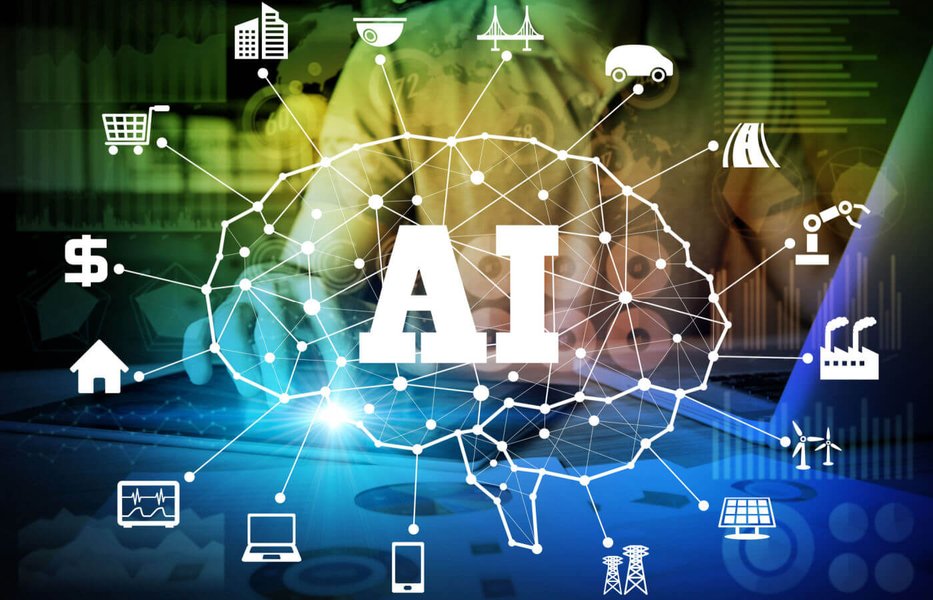
The complexity of AI systems presents significant development challenges.
Frequently Asked Questions (FAQ)
Common Queries About Building Advanced AI
What is the difference between AGI and ASI?
Artificial General Intelligence (AGI) refers to AI with human-level cognitive abilities – the capacity to understand, learn, and apply knowledge across a wide range of tasks, much like a human being. Artificial Superintelligence (ASI) is a hypothetical future AI that possesses intelligence far surpassing that of the brightest and most gifted human minds in virtually all fields.
What programming language is best for building AI?
Python is overwhelmingly the most popular and recommended language for AI development. Its extensive libraries (like TensorFlow, PyTorch, scikit-learn), large community support, readability, and suitability for both research and production make it the de facto standard.
Can an individual build super AI?
Building state-of-the-art AI models, especially those approaching AGI or ASI capabilities, typically requires vast resources (data, computing power, funding) and large, collaborative teams of researchers and engineers. While individuals can contribute significantly to AI research and build impressive AI applications, creating true "super AI" is likely beyond the scope of a single person and requires institutional or large-scale organizational effort.
What are MLOps, and why are they important?
MLOps (Machine Learning Operations) is a set of practices that aims to deploy and maintain machine learning models in production reliably and efficiently. It combines ML, DevOps, and Data Engineering principles. MLOps is crucial for managing the complexity of the ML lifecycle, enabling automation, reproducibility, monitoring, and collaboration, which are essential for scaling advanced AI systems.
Is Artificial Superintelligence dangerous?
The potential risks associated with ASI are a significant topic of discussion and research. Concerns include the "alignment problem" (ensuring ASI goals align with human values), potential for misuse, unintended consequences, and existential risks. Developing robust safety measures, ethical guidelines, and governance frameworks (like those explored by the Artificial Superintelligence Alliance) is considered critical as AI capabilities advance.
Recommended Further Exploration
- How do the top cloud AI platforms like Vertex AI, SageMaker, and Azure ML compare for enterprise projects?
- What is the specific role of MLOps in successfully scaling AI development and deployment?
- What are the most pressing ethical considerations when developing Artificial General Intelligence?
- What are the latest breakthroughs in Transformer models and their impact on large language model capabilities?
References
Last updated May 4, 2025