
Background of the Study
Exploring Environmental Impacts on Capacitor Efficiency in Wireless Systems
Key Highlights
- Environmental Sensitivity: Capacitors exhibit significant performance changes due to temperature, humidity, vibration, pressure, and other environmental factors.
- Wireless Transfer Relevance: In wireless power transfer systems, capacitors are critical in resonant circuits, and their behavior under variable conditions directly affects system efficiency and reliability.
- Design Considerations: Understanding environmental impacts aids in selecting appropriate capacitor types, protective measures, and operational strategies for improved durability in applications from EV charging to underwater systems.
Introduction
The study of environmental impacts on capacitor performance in wireless power transfer (WPT) systems is a critical research area aimed at ensuring the reliability and longevity of these essential components. Capacitors are not only used to store electrical energy but also fulfill vital roles in voltage stabilization, energy filtering, and resonant circuit tuning, which are indispensable in modern wireless applications. As wireless power technology expands into sectors such as electric vehicle (EV) charging, consumer electronics, and even specialized applications like underwater energy transfer, understanding the detailed interplay between ambient conditions and capacitor functionality becomes essential.
Capacitors and Their Role in Wireless Power Transfer
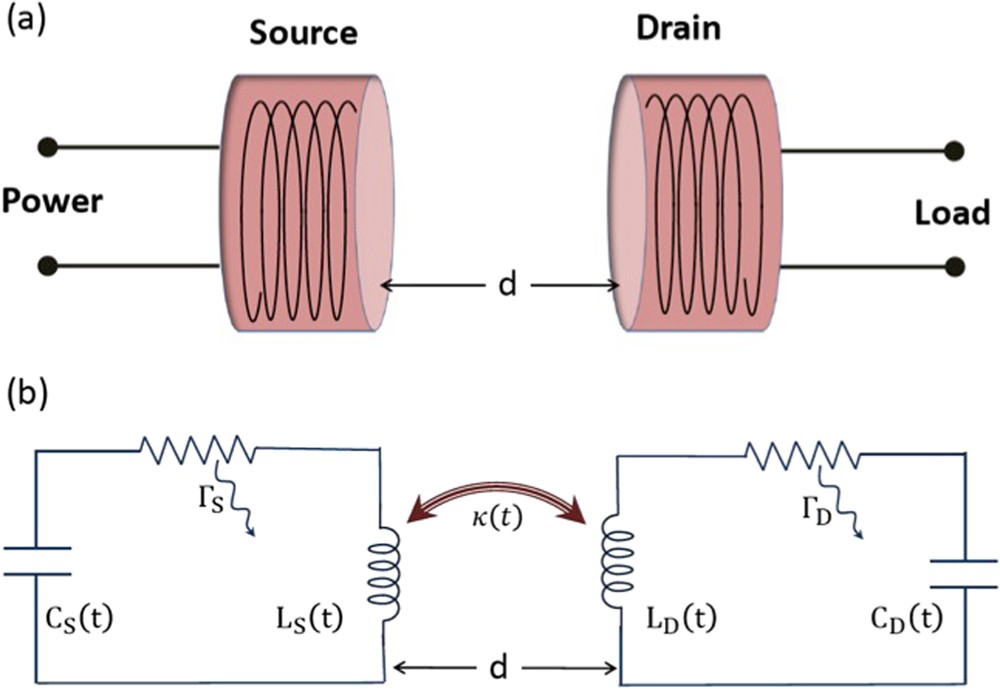
In WPT systems, the role of capacitors goes beyond simple energy storage. They are integrated into resonant circuits which form the backbone of wireless systems by enabling efficient energy transmission over air gaps. In such circuits, the capacitor, in conjunction with inductors, helps establish a resonance condition that maximizes the quality factor (\(Q\))—a key indicator of system efficiency. A fine balance of capacitance and inductance is needed to ensure that transmitted energy is optimally coupled between the transmitter and receiver coils. Any deviation, often triggered by environmental stress, can result in detuning of the circuit, leading to reduced energy transfer and system failures.
Environmental Factors Affecting Capacitor Performance
A comprehensive analysis of capacitors under varying environmental conditions is vital. Several key factors have been identified as primary influences on capacitor performance:
Temperature Effects
Impact on Dielectric Material
Temperature is one of the most influential factors affecting capacitor performance. Elevated temperatures accelerate the chemical and electrochemical reactions within capacitor dielectrics, leading to faster aging. As the dielectric material deteriorates, its capacity to store charge diminishes. Conversely, extremely low temperatures can cause certain dielectric materials to become brittle, potentially leading to physical fractures or cracks. Both scenarios adversely affect capacitance stability and could result in premature failure of the component.
Effect on Capacitance and Leakage Current
Variations in temperature directly influence the dielectric constant, thereby altering the capacitance value over time. Higher temperatures may also increase leakage currents, causing additional energy losses and impacting the overall efficiency of the WPT system. Heat-induced stresses can also lead to insulation breakdown, manifesting as reduced reliability and increased risk of short circuits.
Humidity and Moisture Infiltration
Moisture Absorption and Insulation Failure
Capacitors exposed to high-humidity environments absorb moisture, which results in the degradation of insulation properties. Water molecules infiltrate the dielectric material, reducing its ability to resist electrical breakdown. This phenomenon is particularly problematic in wireless systems where consistent performance is essential. The compromised insulation may lead to dielectric losses and even partial arcing, both of which are detrimental to the capacitor's lifetime.
Humidity in Varied Temperature Regimes
Environmental humidity combined with fluctuating temperatures can lead to cycles of condensation and evaporation, further stressing the capacitor materials. These cycles accelerate the corrosion of internal elements and can induce micro-cracks in the dielectric layer, ultimately altering the capacitor's performance characteristics.
Mechanical Stress: Vibration and Shock
Impact of Vibration
Wireless power transfer systems, especially those deployed in mobile or industrial applications, are often subject to continuous or sporadic mechanical vibrations. Such vibrations can induce minute yet cumulative structural changes within capacitors. Repeated mechanical stresses may lead to shifts in capacitance values due to micro-fracturing of the dielectric or dislodgement of internal components. Over time, this can result in diminished performance and reliability.
Effects of Shock and Acceleration
In addition to vibrations, sudden shocks—caused by impacts or abrupt movements—can severely disrupt the physical integrity of capacitors. These impacts may lead to immediate damages, such as cracked or broken leads, or gradual performance degradation due to repeated stress events. The combination of shock and acceleration introduces an additional layer of complexity to the reliability management of capacitors in WPT systems.
Pressure and Altitude Influences
Low Pressure and Arcing
In applications where WPT systems are used in high-altitude environments, reduced atmospheric pressure can pose unique challenges. Lower pressure conditions can facilitate arcing and corona discharges around capacitor terminals. This occurrence not only compromises the voltage withstand capability of the capacitor but also accelerates thermal buildup, further exacerbating the risk of dielectric breakdown.
Altitude-Dependent Heat Dissipation
Additionally, the effects of altitude on air density can influence the heat dissipation properties of capacitors. In less dense environments, the ability of air to carry away excess heat is diminished, leading to elevated operating temperatures even under normal conditions. This can hasten the aging process of the capacitor materials, reducing overall service life.
Electromagnetic Interference (EMI) and Other Influences
EMI and Signal Disturbances
Electromagnetic interference is an often overlooked factor in capacitor performance. In a wireless power transfer system, the presence of external EMI can disturb the delicate balance of the resonant circuit. This interference may result in unexpected spikes or drops in the capacitor's performance metrics, such as capacitance value and leakage current. In cases where capacitors are part of a finely tuned system, even minor deviations induced by EMI can lead to substantial efficiency losses.
Other Environmental and Operational Variables
Beyond the primary factors, there are other less prominent yet significant variables that can affect capacitor performance. These include chemical exposure, dust accumulation, and even operational frequency. In certain specialized WPT applications like underwater charging or high-speed industrial processes, these factors must be meticulously controlled to maintain capacitor stability. Each of these factors, whether acting independently or synergistically, has the potential to alter the performance and reliability of capacitors, thereby influencing the overall efficiency of wireless power transfer.
Integrated Analysis in Wireless Power Transfer Systems
The impact of environmental factors extends directly to the functioning of wireless power transfer systems. In these systems, the capacitors form a part of resonant circuits where their performance is directly correlated with critical parameters such as the quality factor (\(Q\)) and tuning accuracy. A deterioration in capacitor performance results in several cascading effects:
Resonant Circuit Performance
In resonant circuits, capacitors work in tandem with inductors to establish conditions for efficient power transfer. The quality factor (\(Q\)) of such a circuit is a measure of its efficiency and is highly sensitive to precise capacitance values. Any shift in capacitance—due to temperature variation, humidity, or mechanical stress—can lead to detuning of the circuit. Detuning not only decreases energy transfer efficiency but also places additional stress on other circuit components.
System Efficiency and Reliability
WPT systems rely on a delicate balance between multiple components to achieve high efficiency. Environmental factors impacting capacitors directly contribute to variations in system performance and reliability. For instance, an increase in leakage current or a reduction in capacitance can result in lower energy transfer rates, thereby increasing operational costs and reducing overall system efficiency. In applications such as electric vehicle charging, even slight performance degradations can have significant practical ramifications, emphasizing the necessity of robust capacitor design and precise environmental control.
Mitigation Strategies and Future Research
The challenges posed by environmental effects have spurred extensive research into mitigation strategies. Designers and engineers are exploring several avenues:
Material Innovation in Capacitors
One approach involves the development and utilization of advanced materials with enhanced tolerance to environmental stresses. Innovations in dielectric materials, such as the incorporation of ceramic or polymer-based alternatives, can significantly improve resilience against temperature and humidity fluctuations. The choice of capacitor material is critical for ensuring long-term stability and performance in adverse conditions.
Robust Circuit Designs and Compensation Techniques
Engineers also employ compensation techniques in circuit design to counteract the drift caused by environmental factors. Adaptive tuning methods and feedback control systems help maintain resonant conditions despite minor shifts in capacitor performance. Such designs often include redundant measures, such as the integration of stabilizing components or the use of multiple capacitors in parallel, to distribute the risk of failure.
Protective Encapsulation and Environmental Shielding
Protective measures, such as encapsulation and environmental shielding, serve as physical barriers against harsh environmental conditions. By isolating capacitors from direct exposure to moisture, dust, and mechanical stress, these strategies enhance the overall durability of the component. Advances in coating technologies have allowed for the production of encapsulated units that are better suited for demanding wireless power applications.
Integration into Advanced Wireless Systems
Future research in wireless power transfer is likely to explore adaptive systems that dynamically respond to environmental changes. These systems would use sensor data and real-time adjustments to maintain optimal operation, thereby minimizing the adverse effects of capacitance drift. Such innovative approaches promise to significantly improve the efficiency and reliability of wireless power solutions across a broad range of applications.
Summary of Environmental Factors and Their Impacts
The table below provides an overview of the principal environmental factors, their effects on capacitors, and subsequent impacts on wireless power transfer systems:
| Environmental Factor | Primary Impact | Effect on Capacitor Performance | Implications for WPT Systems |
|---|---|---|---|
| Temperature | Dielectric aging and brittleness | Variability in capacitance, increased leakage, and reduced lifespan | Resonant circuit detuning and higher system energy losses |
| Humidity | Moisture absorption and insulation degradation | Compromised dielectric performance, leakage, and potential arcing | Lower efficiency and higher risk of operational failure |
| Vibration & Shock | Mechanical stress and physical fatigue | Micro-fracturing, lead damage, and capacitance drift | System instability and reduced durability in dynamic environments |
| Pressure/Altitude | Reduced air density and potential arcing | Lower voltage withstand and impaired heat dissipation | Increased thermal stress and circuit inefficiencies |
| Electromagnetic Interference (EMI) | Signal disturbances and noise injection | Fluctuating capacitor parameters and erratic leakage currents | Disruption of resonant conditions and degraded system reliability |
Integrative Considerations for Future WPT Designs
In light of the various environmental factors affecting capacitor performance, it is evident that the successful deployment of wireless power transfer systems hinges on integrated design strategies. Engineers must incorporate materials that are resilient to thermal stress and moisture absorption while also ensuring that the circuit designs can compensate for inevitable performance drifts. Notably, the integration of adaptive control systems and robust encapsulation techniques represents a frontier in WPT system innovation.
Addressing these challenges involves drawing on interdisciplinary knowledge from materials science, electrical engineering, and environmental studies. Whether for consumer electronics or large-scale infrastructures like EV charging stations, a deep understanding of capacitor behavior under environmental stress conditions is key. The interplay between operational frequency and coupling efficiency further underscores the complexity of designing systems that can operate reliably across a gamut of conditions.
The path forward includes iterative testing in real-world conditions, simulation-based analyses, and the implementation of comprehensive quality control measures. Such methodologies facilitate improvements in design standards and performance benchmarks, ensuring that future WPT systems are not only efficient but also resilient in the face of environmental challenges.
References
- How does the Environment Affect Capacitor Performance? - ATO.com
- Why Do Capacitors Fail? - Electrocube
- Electronic Components in Degrading Conditions - MDPI
-
Scientific Study on Capacitor Aging - ScienceDirect
- IEEE Document on Environmental Effects - IEEE Xplore
Recommended Related Searches
Last updated March 7, 2025