
Why is a Short Ground Wire Crucial for Your Car Amplifier's Performance?
Uncover the hidden problems caused by using an overly long ground connection in your car audio setup.
When installing a car audio amplifier, seemingly small details can significantly impact performance and safety. One critical aspect often overlooked is the length of the ground wire. While it might seem convenient to use a longer wire to reach an easy grounding point, doing so introduces a host of problems that can degrade your audio experience and even pose risks. Understanding these issues is key to achieving optimal sound quality and ensuring a reliable installation.
Key Takeaways: The Trouble with Long Ground Wires
- Increased Electrical Resistance: Longer wires inherently have more resistance, hindering the smooth flow of electrical current back to the ground.
- Voltage Drops & Performance Loss: Higher resistance leads to voltage drops, starving the amplifier of the consistent power it needs, resulting in poor audio quality and reduced output.
- Noise Interference (Ground Loops): Long ground wires are more susceptible to picking up electrical noise (like engine whine) and creating ground loops, injecting unwanted hum and static into your audio signal.
The Science Behind the Short Wire Rule
The fundamental reason why a short ground wire is recommended boils down to basic electrical principles. Every wire, regardless of material, possesses some degree of electrical resistance. This resistance impedes the flow of current.
Resistance Rises with Length
Ohm's Law in Action
Resistance is directly proportional to the length of the conductor. Therefore, the longer the ground wire, the greater its resistance. An amplifier requires a stable and low-resistance path to ground to complete its circuit effectively. When the ground wire is excessively long, this increased resistance becomes a significant bottleneck.
The Cascade of Problems
Voltage Drop: Starving the Amplifier
As current flows through the resistance in the long ground wire, a voltage drop occurs (Voltage = Current × Resistance). This means the effective voltage potential at the amplifier's ground terminal is higher than the ideal zero volts of the chassis ground. Under heavy loads (like deep bass notes), the amplifier draws significant current. A high-resistance ground path causes a substantial voltage drop, reducing the voltage difference across the amplifier's power supply. This effectively 'starves' the amplifier, preventing it from receiving the full voltage it needs to operate correctly.
Audio Quality Degradation: Distortion and Clipping
Insufficient voltage due to drops in the ground path directly impacts audio quality. The amplifier may struggle to reproduce peaks in the audio signal accurately, leading to:
- Distortion: The sound becomes muddy, unclear, or harsh.
- Clipping: The amplifier reaches its power limit prematurely, squaring off the audio waveform, which sounds unpleasant and can potentially damage speakers.
- Reduced Output: The overall volume and dynamic range of the system can be noticeably lower than expected.
Noise Intrusion: The Ground Loop Menace
A long ground wire increases the likelihood of creating a ground loop. This occurs when multiple components in the audio system are grounded at different points with varying electrical potentials. The long ground wire, combined with other ground paths (like the head unit's ground), creates a loop.
Furthermore, a long wire can act like an antenna, picking up electromagnetic interference (EMI) from other vehicle systems, most notably the alternator. This interference manifests as:
- Engine Whine: A high-pitched noise that varies with engine RPM.
- Humming or Buzzing: Constant low-frequency noise.
- Static: Crackling or popping sounds.
A short, direct ground path minimizes the potential difference between components and reduces the wire's ability to pick up stray noise.
Overheating and Safety Concerns
Increased resistance means that energy is dissipated as heat (Power Loss = Current² × Resistance). A long, potentially undersized ground wire carrying significant current can overheat. In extreme cases, this could melt the wire's insulation, creating a risk of short circuits, electrical shocks, or even fire. While less common with proper wire gauge selection, the risk is exacerbated by unnecessary length.
Installation Difficulties
Beyond the electrical issues, managing and securing a very long ground wire can be cumbersome. It increases the chances of the wire being pinched, chafed, or having its connection loosen over time due to vehicle vibrations, compromising the ground integrity.
Visualizing the Impact: Short vs. Long Ground Wire Issues
The following chart provides a comparative visualization of the potential severity of issues associated with using short versus long ground wires for a car amplifier. A higher score indicates a greater potential for problems. As clearly shown, keeping the ground wire short significantly mitigates these risks.
Mapping the Consequences of a Long Ground Wire
This mindmap illustrates the chain reaction initiated by using an excessively long ground wire for your car audio amplifier. It starts with the fundamental issue of increased length and branches out to the various negative consequences impacting performance, sound quality, and safety.
Best Practices for Amplifier Grounding
To avoid the pitfalls associated with long ground wires, follow these industry-accepted best practices:
- Keep it Short: The universally recommended practice is to keep the ground wire as short as possible. Most experts advise a length of 18 inches (approx. 45 cm) or less.
- Match the Gauge: The ground wire should be the same gauge (thickness) as the amplifier's power wire. This ensures it can handle the same amount of current without excessive resistance or heat.
- Solid Chassis Connection: Find a solid, unpainted metal point on the vehicle's chassis or frame as close to the amplifier as possible.
- Prepare the Surface: Thoroughly clean the grounding point down to bare metal. Remove all paint, primer, rust, and dirt using sandpaper or a wire brush to ensure excellent metal-to-metal contact.
- Use Quality Connectors: Utilize a high-quality ring terminal, securely crimped (and preferably soldered) to the wire. Fasten it tightly to the chassis using a bolt or screw, often with star washers to help maintain contact.
- Avoid Seat Bolts (Usually): While convenient, seat bolts often pass through multiple layers of metal, brackets, or sound-deadening material, which may not provide the best ground path. Direct connection to the main chassis is preferred. Factory ground points, if nearby, can be good options.
Visual Guide: Achieving a Solid Ground Connection
Proper grounding is foundational to car audio performance. The images below illustrate key aspects of amplifier wiring and grounding, emphasizing the importance of secure, clean connections and appropriate wire management. A good ground point (like a prepared chassis location) ensures minimal resistance, while neat wiring prevents damage and interference.
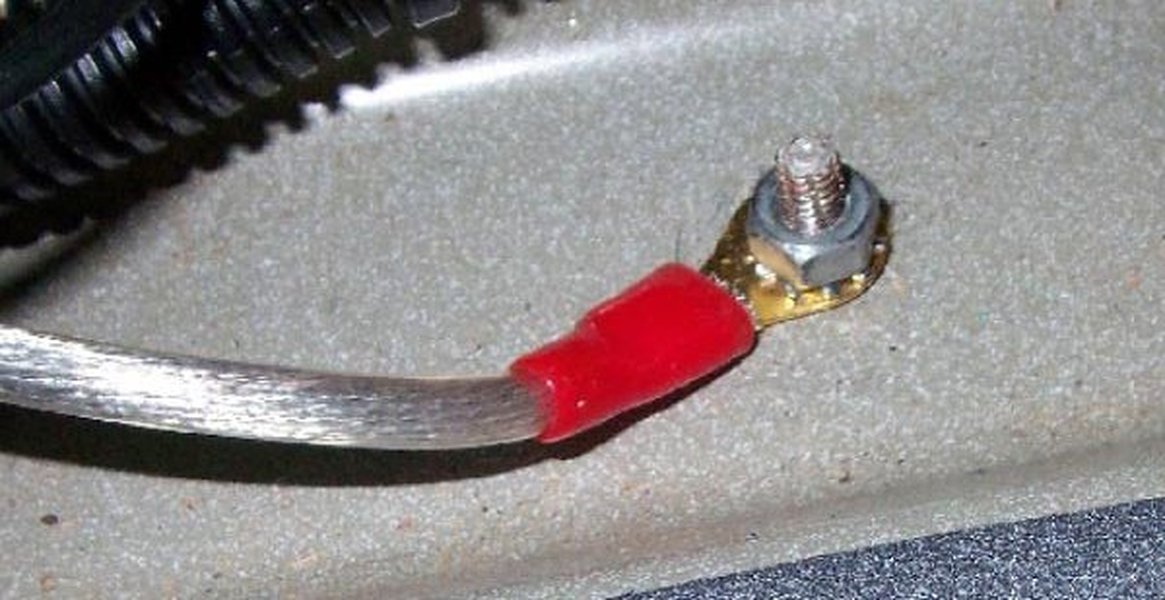
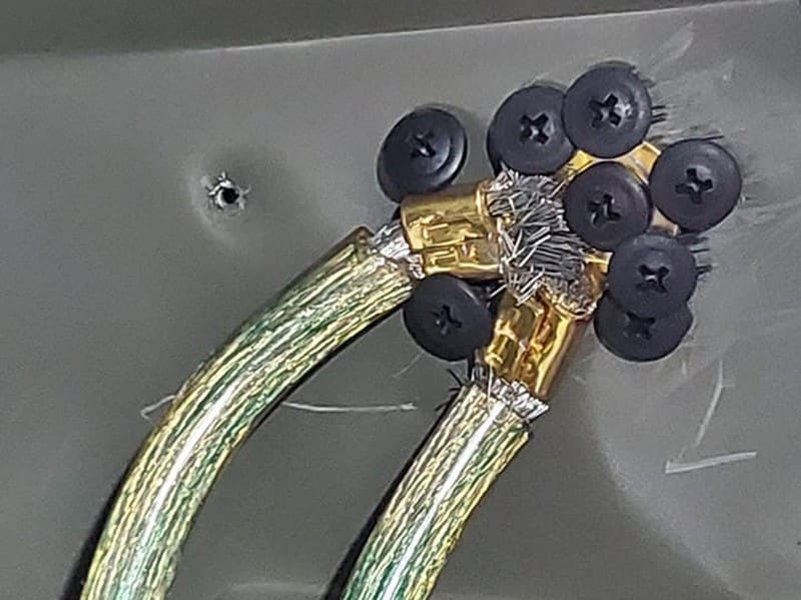
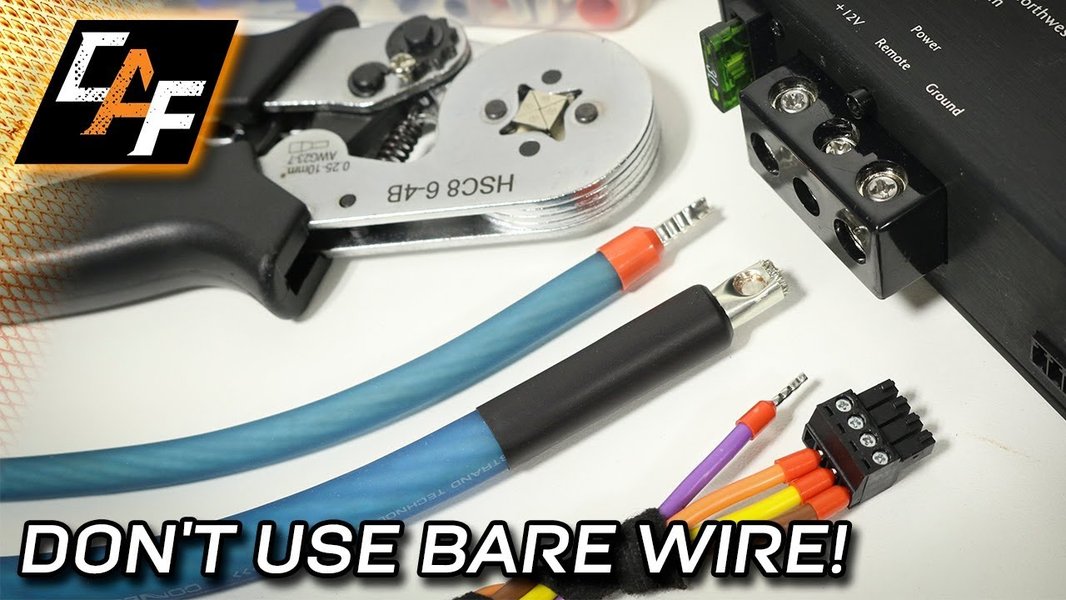
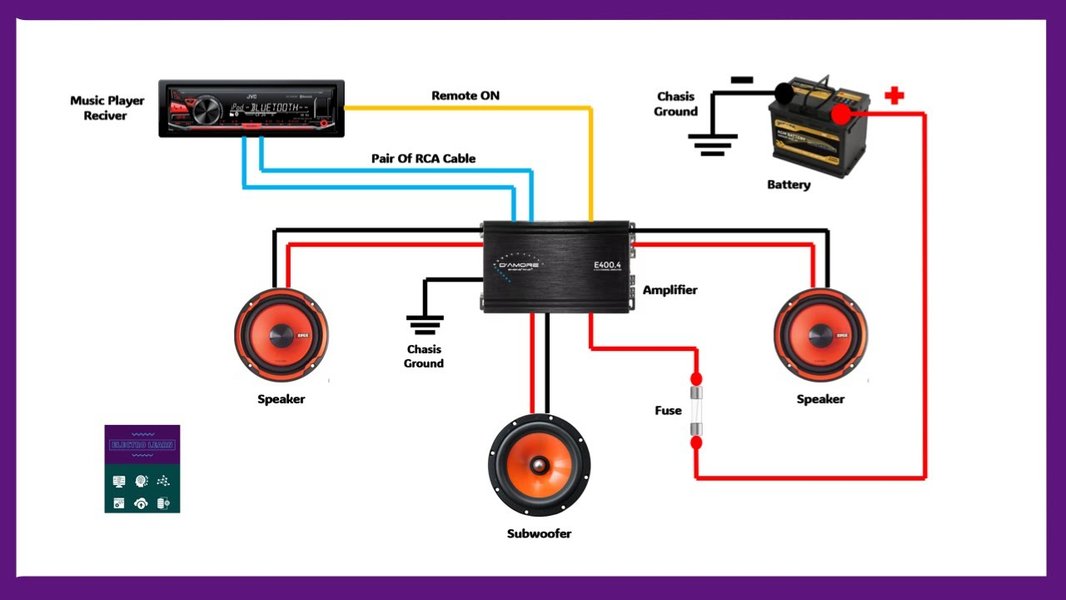
The first image shows a typical short ground wire securely bolted to a prepared metal surface on the car's chassis – this represents good practice. The second image highlights a potentially problematic 'mystery' ground point, emphasizing the need to connect to the main vehicle structure. The third image demonstrates the use of wire ferrules for clean and secure connections directly into the amplifier terminals, improving contact and preventing stray strands. Finally, the wiring diagram illustrates the complete circuit, showing how the ground wire completes the path back from the amplifier, parallel to the power wire coming from the battery.
Short vs. Long Ground Wire Comparison
This table summarizes the key differences in electrical characteristics and performance implications between using a recommended short ground wire versus an excessively long one.
| Parameter | Short Ground Wire (<18 inches) | Long Ground Wire (>18 inches) |
|---|---|---|
| Electrical Resistance | Minimal | Significantly Increased |
| Voltage Drop Potential | Low | High (especially under load) |
| Noise Susceptibility (EMI/Ground Loops) | Low | High |
| Amplifier Performance | Optimal Power & Clarity | Reduced Output, Increased Distortion/Clipping |
| Risk of Overheating | Very Low (with correct gauge) | Increased (especially if gauge is marginal) |
| Sound Quality Impact | Clean, Dynamic Audio | Potential Whine, Hum, Static, Muddiness |
| Installation Complexity | Simpler, Cleaner Routing | More Difficult Wire Management |
| Safety Risk | Minimal | Slightly Increased (Overheating/Short Circuit) |
Expert Demonstration: Proper Amplifier Grounding
Visual aids can be invaluable for understanding practical installation techniques. This video provides a clear demonstration of how to correctly ground a car audio amplifier, showing both good and bad examples and reinforcing the importance of a short, secure connection to a prepared chassis point.
Watching experienced installers tackle the grounding process highlights the critical steps: identifying a suitable location near the amp, thoroughly cleaning the metal surface, using appropriate connectors, and ensuring the wire is as short as practically possible while matching the power wire's gauge.
Frequently Asked Questions (FAQ)
Why is 18 inches the commonly recommended maximum length? +
The 18-inch guideline is a practical rule of thumb widely accepted in the car audio industry. It represents a length that is generally achievable in most installations while keeping the added resistance and potential for noise pickup sufficiently low for typical amplifier power levels. While not an absolute physical law, adhering to it minimizes the risks associated with longer runs and provides a reliable target for installers.
What if I absolutely cannot find a ground point within 18 inches? +
If a very short ground isn't feasible due to vehicle construction or amplifier placement, prioritize the best possible ground point over strictly adhering to the length. This means finding the closest, most solid piece of bare chassis metal, even if slightly longer than 18 inches. Ensure the surface is impeccably clean and the connection is extremely secure. In some rare, high-power competition setups, installers might run a ground wire of the same gauge as the power wire directly back to the battery's negative terminal, but this requires careful consideration and is not standard practice for most installations.
Does the ground wire gauge really need to match the power wire gauge? +
Yes, absolutely. The ground wire carries the same amount of current as the power wire. Using an undersized ground wire creates a bottleneck, increasing resistance and heat generation precisely where you're trying to minimize it. This negates the benefits of a thick power wire and can lead to voltage drops, poor performance, and safety hazards. Always use the same gauge wire for both power and ground.
Can a poor ground connection damage my amplifier? +
While a poor ground primarily leads to performance issues and noise, in severe cases, it can contribute to amplifier stress. Unstable power delivery due to significant voltage drops can cause the amplifier to operate outside its intended parameters, potentially leading to overheating or component failure over time. Consistent clipping caused by inadequate grounding can also damage connected speakers.
References
- How to Create a Proper Ground - Sonic Electronix
- Common Problems with Car Stereo Ground Wires - Katy Car Audio
- How to Ground a Car Amplifier - NVX
- Why Proper Grounding is Crucial for Your Car Audio Amplifiers - BestCarAudio.com
- Grounding Amplifiers Properly - Car Audio Advice
- Why Should Amp Ground Wire Be As Short As Possible? - the12volt.com
Recommended Reading

Last updated April 5, 2025