
Running Remote & RCA Wires Together: Friend or Foe to Your Car Audio?
Unraveling the truth about potential noise when wiring your car amplifier.
When meticulously planning your car amplifier installation, a common question arises: can the remote turn-on wire be routed alongside the RCA cables without compromising that crystal-clear sound you're aiming for? It's a valid concern, as the specter of electrical noise – that unwanted hiss, whine, or static – looms large in car audio setups. Let's delve into the specifics to understand the risks and best practices.
Quick Insights: Key Takeaways
- Low Current, Low Risk: The remote turn-on wire carries a very small electrical current primarily to signal the amplifier, making it inherently less likely to induce significant noise into nearby signal cables compared to high-current power wires.
- Shielding Matters: RCA cables are designed with shielding specifically to protect the delicate audio signals they carry from external electromagnetic interference (EMI), including potential noise from adjacent wires.
- Power Wire is the Prime Suspect: The main amplifier power wire carries substantial current and poses a much greater risk of introducing noise into RCA cables. Keeping these two completely separate is paramount.
Understanding the Players: Remote Wire vs. RCA Cables
To grasp the potential for interference, it's crucial to understand the role each wire plays in your audio system.
The Remote Turn-On Wire: The Signal Caller
Function and Characteristics
Often blue or blue with a white stripe, the remote turn-on wire acts like a light switch for your amplifier. When you turn on your head unit (car stereo), it sends a low-voltage (typically +12V) signal through this wire to the amplifier's remote terminal. This signal tells the amplifier to power up. When the head unit turns off, the voltage drops, signaling the amplifier to shut down. The key characteristic here is the low current involved – it's just enough to trigger the amplifier's internal relay, not enough to power the amp itself.
RCA Cables: The Audio Messengers
Function and Characteristics
RCA (Radio Corporation of America) cables are responsible for transmitting the low-level audio signal from your head unit (or signal processor) to your amplifier's input stage. This is the actual music signal, albeit at a voltage level that needs amplification. To protect this sensitive signal from degradation and noise, RCA cables employ shielding. This typically involves a foil wrap and/or braided copper mesh surrounding the center conductor(s), which is then covered by the outer insulation. Quality shielding is vital for rejecting noise.
Types of Shielding
- Foil Shielding: Provides good coverage against high-frequency interference.
- Braided Shielding: Offers better protection against lower-frequency noise and adds physical durability.
- Twisted Pair Construction: While not technically shielding, twisting the signal and return conductors together helps cancel out magnetically induced noise. Many high-quality RCAs use this method, often combined with shielding.
The Core Question: Interference Risk Assessment
Given the low current of the remote wire and the shielding of RCA cables, is running them side-by-side a significant problem?
Generally Low Risk
The consensus among many experienced installers and enthusiasts is that running the remote turn-on wire next to RCA cables is unlikely to cause audible noise issues in most installations. The low current simply doesn't generate a strong enough electromagnetic field to significantly interfere with properly shielded RCAs.
- Many installers routinely bundle these wires together for convenience without ill effects.
- Some manufacturers even produce RCA cables with an integrated remote turn-on wire, indicating confidence that interference is minimal.
Best Practices vs. Practical Reality
While generally safe, the absolute *best practice* in car audio wiring dictates separating signal cables (RCAs) from any wire carrying current (power, ground, remote, speaker wires) as much as possible. This is a "better safe than sorry" approach to guarantee the cleanest possible signal path by minimizing *any* potential source of noise, however small.
The Real Culprit: The Power Wire
The wire you absolutely must keep separate from your RCA cables is the main amplifier power wire. This thick cable carries significant current from the battery to the amplifier, generating a much stronger electromagnetic field. Running RCAs parallel to the main power wire is a common and almost guaranteed way to introduce noise, often manifesting as alternator whine (a high-pitched whine that changes pitch with engine RPM).
Recommended Routing Strategy
- Run the main power wire down one side of the vehicle (e.g., driver's side).
- Run the RCA cables and the remote turn-on wire down the *opposite* side of the vehicle (e.g., passenger's side).
- If signal and power wires must cross, ensure they do so at a 90-degree angle to minimize inductive coupling.
Visualizing Potential Wire Interference
While running the remote wire next to RCAs is generally low risk, other wiring proximity issues carry higher potential for noise. This chart provides a relative comparison of the noise induction risk based on typical wire types and proximity in a car audio installation. Higher scores indicate a greater potential for audible noise being introduced into the RCA signal path.
As the chart illustrates, the proximity of the main power wire (especially with unshielded or poorly shielded RCAs) poses the highest risk, while the remote wire near RCAs presents a comparatively low risk.
Mapping Your Wiring Strategy
Visualizing the ideal layout helps in planning your installation. This mindmap outlines the recommended separation of power and signal paths within the vehicle.
Following these path guidelines significantly reduces the chances of encountering noise problems related to wire routing.
Factors That Can Influence Noise
While remote wire proximity is a minor factor, other elements play a much larger role in determining if your system will be prone to noise:
- Grounding Quality: This is arguably the most common cause of car audio noise. A poor ground connection (e.g., painted surface, loose connection, wrong location) can create ground loops, leading to alternator whine and other noises. Ensure a short, secure connection to bare chassis metal.
- RCA Cable Quality: Cheap, poorly shielded RCA cables are much more susceptible to picking up noise from any nearby source, including the remote wire or even speaker wires. Investing in quality, well-shielded (preferably twisted pair) cables is crucial.
- Component Quality: Sometimes, noise can originate from the components themselves (head unit, amplifier, processor).
- Alternator/Electrical System Health: An aging alternator or other issues in the car's electrical system can introduce noise that gets amplified.
- Installation Technique: Pinching wires, poor connections, or routing choices can all contribute to noise.
Visual Examples of Wiring and Components
Understanding the physical components and how they connect is key. Below are images illustrating amplifier connections, RCA cables, and potential wiring issues.
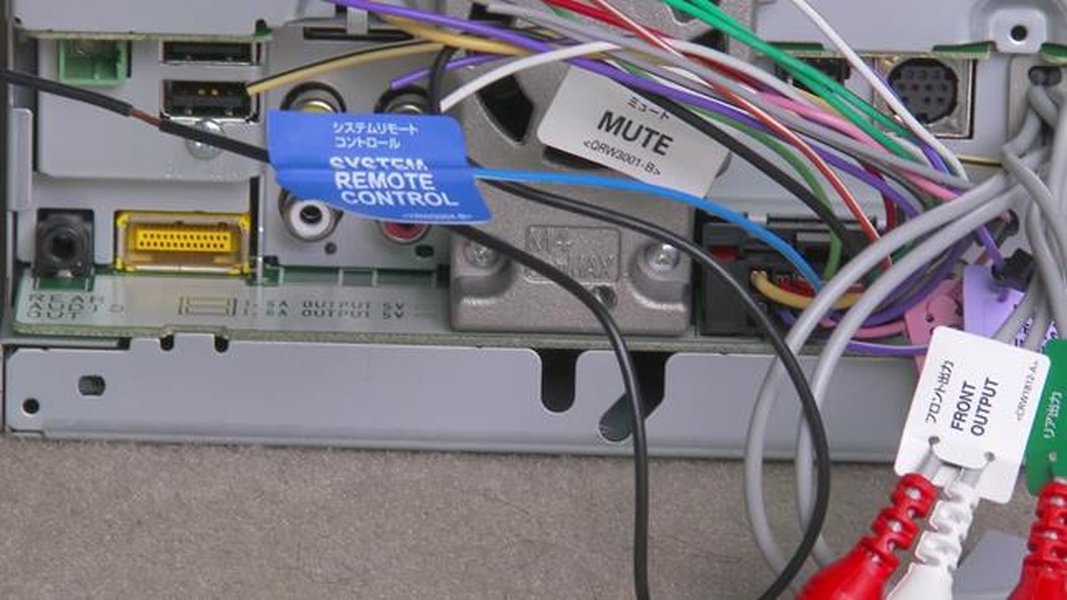
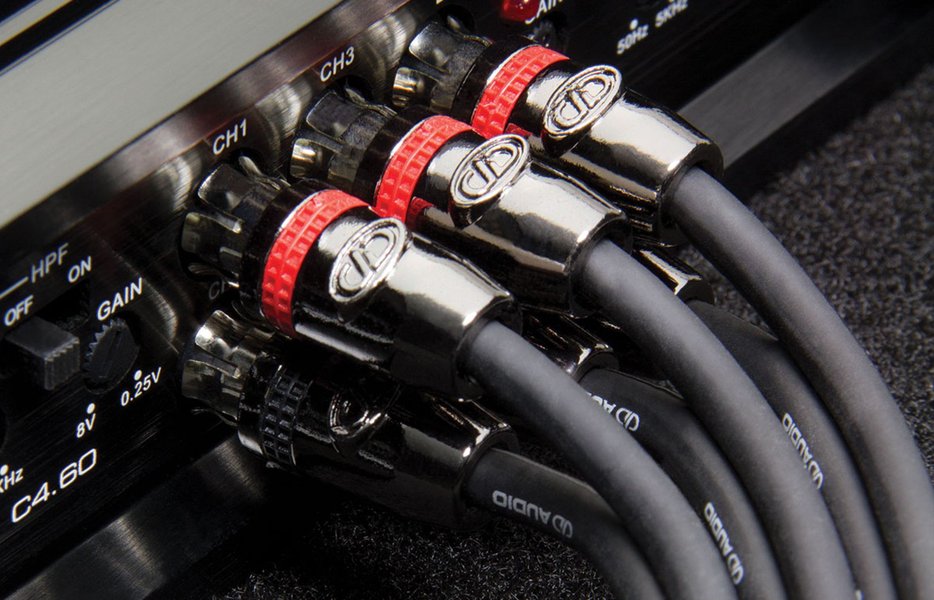
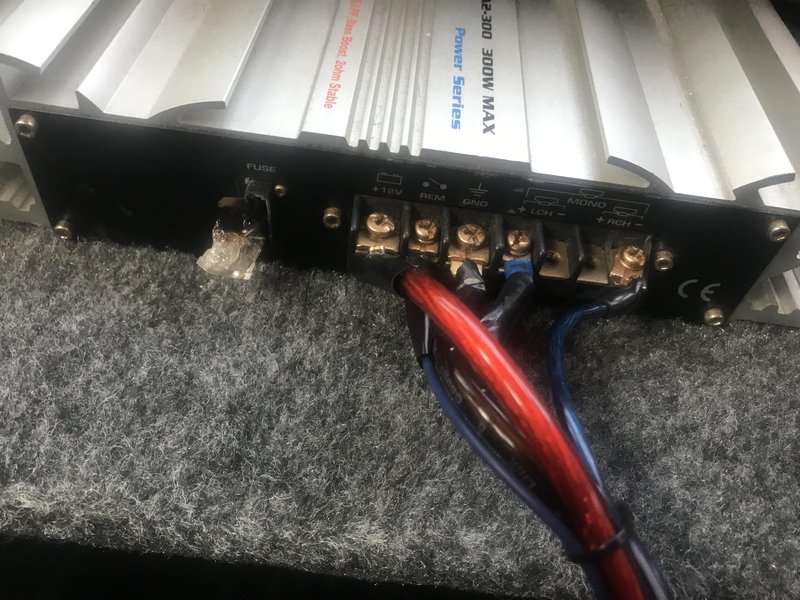
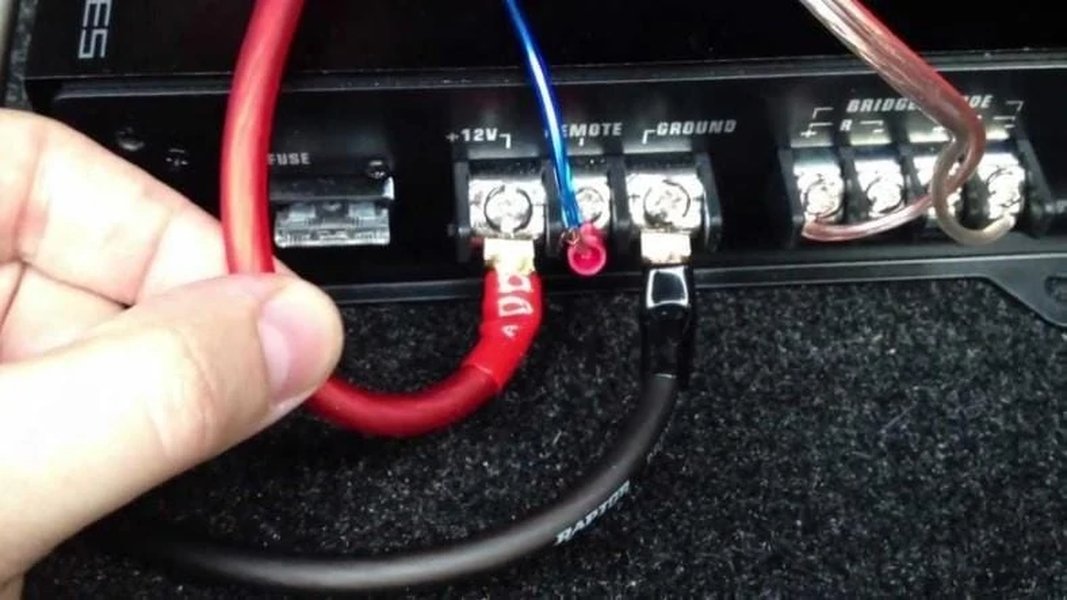
These images highlight the remote turn-on terminal on an amplifier, the construction of RCA cables designed to minimize noise, the potential consequences of improper power wiring, and an example of neat wiring practices.
Understanding the Remote Turn-On Wire Function
The remote turn-on wire is simple but essential. This video explains its purpose and how it integrates into your car audio system's power sequence.
Understanding that this wire primarily acts as a low-current trigger reinforces why it's less likely to cause interference compared to high-current power lines.
Wiring Scenario Risk Comparison
To further clarify the risks, this table compares common wiring scenarios:
| Wiring Scenario | Description | Noise Risk Level | Best Practice Adherence |
|---|---|---|---|
| Remote + RCAs Together | Remote turn-on wire runs parallel and close to RCA cables. Power wire is separate. | Low | Acceptable (Not Ideal) |
| Power + RCAs Together | Main amplifier power wire runs parallel and close to RCA cables. | Very High | No (Avoid at all costs) |
| Power + Remote Together | Main power wire runs parallel to the remote turn-on wire. RCAs are separate. | Very Low (for RCA noise) | Acceptable |
| Speaker Wires + RCAs Together | Amplifier output speaker wires run parallel and close to RCA cables. | Low to Moderate | Sub-optimal (Try to separate) |
| All Separated | Power runs down one side, RCAs/Remote run down the other side. Speaker wires routed away from RCAs. | Very Low | Yes (Ideal Scenario) |
This table highlights that while perfect separation is ideal, the combination of the remote wire and RCA cables presents a significantly lower risk compared to mixing RCAs with the main power wire.
Frequently Asked Questions (FAQ)
What if I run the remote wire with RCAs and DO get noise?
Are RCA cables with integrated remote wires okay?
Does the gauge of the remote turn-on wire matter for noise?
Is separating speaker wires from RCA cables important?
References
-
Should the remote turn on wire be ran on seperate side from rcas? - diymobileaudio.com
- What side of car to run remote wire down? - reddit.com/r/CarAV
- Car Amplifier Installation Guide - crutchfield.com
- Remote Turn On Wire: What it is and How to Install it - mtx.com
- How to Prevent Noise Interference in Car Audio Wiring - baboombaboom.com
- running remote wire with rca's - the12volt.com
Recommended Reading
Last updated April 5, 2025