
Unlock Your Potential: Crafting the Perfect Study Timetable for CBSE Class 7 Success!
Your step-by-step guide to balancing studies, activities, and rest for a productive and stress-free school year in India.
Welcome! As a Class 7 student in the CBSE system in India, you're at an important stage where building good study habits is key. A well-planned timetable is like a roadmap for your academic journey. It helps you manage your time effectively, cover all your subjects, reduce last-minute stress, and make sure you also have time for fun and rest. Let's create a timetable that works just for you!
Essential Insights for Your Study Plan
- Balance is Key: Aim for 2-3 hours of focused study outside school hours, broken into manageable sessions with short breaks. Don't forget time for homework, revision, hobbies, and adequate sleep (7-8 hours).
- Prioritize Wisely: Identify subjects you find challenging (like Mathematics or Science for many) and allocate slightly more time to them, perhaps when you feel most fresh (like early morning or right after a break).
- Consistency Matters: Sticking to your timetable regularly, even on weekends (with adjustments for rest), builds discipline and helps reinforce learning effectively. Flexibility is important, but consistency is crucial for long-term success.
Understanding the Building Blocks of Your Timetable
Typical CBSE Class 7 Subjects
Before creating your schedule, let's list the common subjects you'll likely be studying under the CBSE curriculum:
- Mathematics
- Science (Physics, Chemistry, Biology components)
- Social Science (History, Geography, Civics)
- English
- Hindi (or another regional/second language)
- Third Language (e.g., Sanskrit, French, German - if applicable)
- Computer Science (if applicable)
- General Knowledge (GK) / Environmental Studies (EVS) / Value Education (often integrated or supplementary)
Make sure to tailor your timetable to include all the specific subjects you are taking.
How Much Study Time is Ideal?
For Class 7, experts generally recommend around 2 to 3 hours of dedicated study time each day, separate from your school hours and homework completion. This should be spread out, not crammed into one long session. Think of it as focused learning and revision time.
When are the Best Times to Study?
Many students find these times most effective:
- Early Morning (e.g., 6:00 AM - 7:30 AM): Your mind is often fresh and alert, making it a great time for subjects requiring concentration or revision.
- After School (e.g., 4:00 PM - 6:00 PM): After some rest and a snack, this slot can be used for homework and tackling new concepts learned in school that day.
- Evening (e.g., 7:00 PM - 8:30 PM): A quieter time, suitable for lighter subjects, reading, or practicing languages.
Experiment to find out which times work best for your energy levels and concentration.
Designing Your Personalized Study Timetable
Step-by-Step Creation Guide
- List Your Subjects & Topics: Write down all your subjects and get the latest CBSE syllabus to understand the topics you need to cover.
- Assess Difficulty: Honestly rate how easy or hard you find each subject. Allocate more time slots to tougher subjects.
- Map Your Day: Block out fixed times like school hours, meals, travel, sleep, and existing activities (sports, classes).
- Allocate Study Slots: Fill in the free time with study sessions. Aim for 30-45 minute focused blocks per subject.
- Schedule Breaks: Include short 5-15 minute breaks between study sessions to rest your mind and body. Include longer breaks for meals and activities.
- Plan for Revision: Dedicate specific slots each day (e.g., 15-30 mins morning/evening) and weekly (e.g., Saturday morning) for reviewing what you've learned.
- Include Homework Time: Set aside time specifically for completing homework assignments given in school.
- Balance with Activities: Ensure your timetable includes time for sports, hobbies, family time, and relaxation. This prevents burnout.
- Be Flexible: Your timetable is a guide, not a rigid prison. If you miss a session, adjust and catch up later without panicking.
- Review and Refine: After a week, review how the timetable worked. Adjust it based on what felt effective and what didn't.
Sample Daily Timetable (Weekday)
This is a template you can adapt. Assume school ends around 2:00 PM - 3:00 PM.
- 6:00 AM - 6:30 AM: Wake up, Freshen up
- 6:30 AM - 7:15 AM: Study Session 1 (e.g., Revise previous day's topic or practice Maths)
- 7:15 AM - 8:00 AM: Get Ready for School, Breakfast
- 8:00 AM - (2:00/3:00 PM): School Hours
- (2:00/3:00 PM) - 3:30 PM: Travel Home, Lunch, Rest
- 3:30 PM - 4:15 PM: Homework Time
- 4:15 PM - 4:30 PM: Short Break / Snack
- 4:30 PM - 5:15 PM: Study Session 2 (e.g., Science concepts)
- 5:15 PM - 6:15 PM: Playtime / Sports / Hobby
- 6:15 PM - 6:30 PM: Freshen Up
- 6:30 PM - 7:15 PM: Study Session 3 (e.g., Social Science or English)
- 7:15 PM - 8:00 PM: Study Session 4 (e.g., Hindi/Third Language practice)
- 8:00 PM - 9:00 PM: Dinner, Family Time
- 9:00 PM - 9:15 PM: Quick Review / Plan for Next Day
- 9:15 PM onwards: Relax, Read a book, Prepare for Bed (Aim for sleep by 9:30/10:00 PM)
Visualizing Subject Focus
Different subjects often require different levels of effort and time. For example, Mathematics might need daily practice, while Social Science might involve more reading and memorization. This radar chart gives a general idea of how you might allocate focus across typical Class 7 subjects. 'Focus Allocation' represents a mix of time spent and mental effort needed (on a scale of 3 to 10, where 10 is highest focus). Remember to adjust this based on your strengths and weaknesses!
Key Components of a Balanced Timetable
A successful study timetable isn't just about study slots. It integrates various essential activities for overall well-being and effective learning. This mindmap illustrates the core elements you should consider including in your daily and weekly schedule.
(30-45 mins each)"] id1b["Homework Completion"] id1c["Daily Revision
(Short, ~15 mins)"] id1d["Weekly Revision
(Longer session)"] id1e["Subject Rotation
(Vary subjects daily/weekly)"] id1f["Practice & Problem Solving
(Maths, Science)"] id2["Breaks & Relaxation"] id2a["Short Breaks
(5-15 mins between study)"] id2b["Longer Breaks
(Meals, after school)"] id2c["Leisure Time
(Reading, music)"] id3["Health & Wellbeing"] id3a["Adequate Sleep
(7-8 hours minimum)"] id3b["Healthy Meals
(Breakfast, Lunch, Dinner, Snacks)"] id3c["Physical Activity
(Sports, Play, Exercise)"] id4["Other Activities"] id4a["Extracurriculars
(Hobbies, Classes)"] id4b["Family Time"] id4c["Preparing for Next Day"]
Organizing Your Study Space
Having a dedicated, quiet, and organized place to study can significantly improve your focus and productivity. Make sure your study area is well-lit, comfortable, and free from distractions like TV or excessive noise. Keep your books, stationery, and notes tidy and easily accessible.
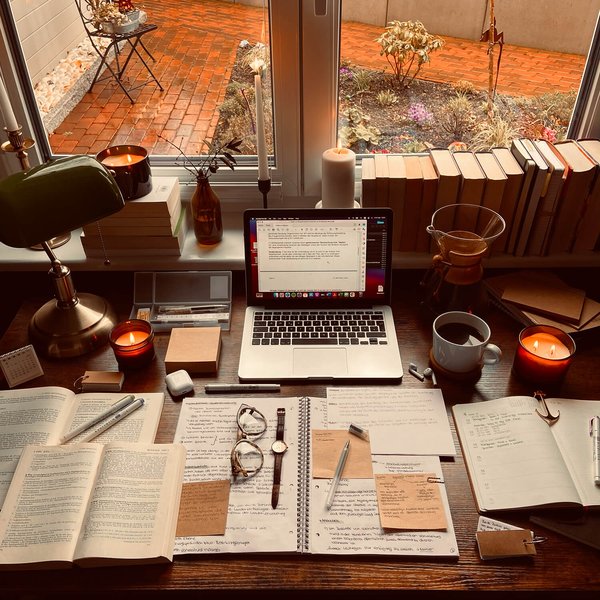
An example of a clean and organized study desk setup.
Structuring Your Week: Sample Subject Rotation
To ensure you cover all subjects adequately, it's helpful to rotate them throughout the week. This prevents monotony and allows you to dedicate focus appropriately. Below is a sample weekly rotation plan. Remember to adjust this based on your school timetable and subject priorities.
| Day | Study Session 1 (e.g., Morning/Afternoon) | Study Session 2 (e.g., Afternoon/Evening) | Study Session 3 (e.g., Evening) | Focus Area |
|---|---|---|---|---|
| Monday | Mathematics (Practice) | English (Grammar/Reading) | Homework / Revision | Problem Solving, Language Skills |
| Tuesday | Science (Concepts/Diagrams) | Social Science (History/Civics) | Homework / Revision | Conceptual Understanding, Reading |
| Wednesday | Mathematics (Difficult Topics) | Hindi / 2nd Lang (Writing) | Computer Science / 3rd Lang | Targeting Weak Areas, Language Practice |
| Thursday | Science (Revision/Questions) | Social Science (Geography/Map Work) | Homework / Revision | Reinforcement, Application |
| Friday | Mathematics (Weekly Test Prep) | English (Writing/Comprehension) | Hindi / 2nd Lang (Reading) | Consolidation, Language Fluency |
| Saturday | Weekly Revision (Science & SS) | Weekly Revision (Maths & Lang) | Project Work / Light Reading | Overall Review, Catch-up |
| Sunday | Rest / Hobbies | Light Revision / Planning for Week | Relaxation / Family Time | Recharge, Plan Ahead |
Note: Adapt the 'Focus Area' based on upcoming tests or specific needs. 'Homework/Revision' slots can be used flexibly.
Study Tips & Strategies Video
Sometimes, hearing tips from others can be very motivating! This video provides some useful insights and hacks that students, including those in Class 7 and 8, use to create effective timetables and study routines for achieving good results. It covers study tips that can complement your personalized timetable.
Video discussing study timetable strategies and tips for students.
Frequently Asked Questions (FAQ)
How long should each study session be for Class 7?
For Class 7, focused study sessions of 30 to 45 minutes are generally effective. This duration helps maintain concentration without causing fatigue. Remember to take short breaks (5-15 minutes) between sessions.
What should I do if I miss a study session?
Don't panic! Flexibility is important. If you miss a session due to unforeseen circumstances, try to make up for it during your weekly revision slot or by slightly adjusting your schedule the next day. Avoid overloading yourself to catch up; consistency over time is more important than perfection every single day.
How important are breaks and activities in the timetable?
Breaks and activities are extremely important. Short breaks help reset your focus during study periods. Longer breaks for meals, sports, hobbies, and family time help prevent burnout, reduce stress, and improve overall well-being. A balanced timetable leads to more effective and sustainable learning.
Should I study all subjects every day?
It's usually not necessary or practical to study every single subject every day. Aim to cover 2-4 subjects per day through your study sessions and homework time. Rotating subjects throughout the week (as shown in the sample weekly plan) ensures you give adequate attention to all areas without feeling overwhelmed.
Where can I find the CBSE Class 7 Syllabus for 2025-26?
Knowing your syllabus is crucial for effective planning. You can usually find the latest CBSE Class 7 syllabus on the official CBSE website (cbse.gov.in or cbseacademic.nic.in) or educational resource websites like Embibe, Vedantu, or SelfStudys which often provide direct links or summaries.
Recommended Further Exploration
- How can a Class 7 student improve focus and concentration while studying?
- What are some effective revision techniques specifically for CBSE Class 7 subjects like Science and Maths?
- What's the best way to balance extracurricular activities like sports or music with studies in Class 7?
- Can you provide tips on how to use NCERT textbooks most effectively for Class 7 exam preparation?
References
Last updated May 4, 2025