
Unlock Your COMLEX Level 1 Success: Crafting the Ultimate Study Guide
Your detailed roadmap combining premier resources, NBOME-style practice, and visual learning for peak performance.
Preparing for the COMLEX-USA Level 1 exam requires a strategic approach that blends comprehensive content review with targeted practice. While a single, perfect, pre-made "organized colorful detailed study guide with NBOME questions" might not exist commercially, you can absolutely build your own highly effective system by integrating the best available resources. This guide will walk you through selecting materials, incorporating official NBOME practice, and structuring your studies for success.
Essential Insights for COMLEX Level 1 Prep
- Synthesize Resources: Combine high-yield review books (like First Aid or Kaplan), dedicated OMM materials, and robust question banks for comprehensive coverage.
- Master Osteopathic Principles: Allocate specific study time to Osteopathic Manipulative Medicine (OMM) using resources like OMT Review, as this is a unique and crucial component of the COMLEX.
- Prioritize Official Practice: Utilize NBOME's official practice materials (COMSAE, sample questions) to familiarize yourself with the unique question style, format, and clinical decision-making emphasis.
Understanding the COMLEX Level 1 Exam
Exam Structure and Content Domains
The COMLEX-USA Level 1 is a one-day, computer-based examination consisting of 352 multiple-choice questions, typically taken by osteopathic medical students at the end of their second year. It assesses your understanding and application of foundational biomedical sciences and osteopathic principles in a clinical context. The exam blueprint covers seven key domains, emphasizing integration and clinical problem-solving:
- Foundational Biomedical Sciences: Anatomy, Physiology, Biochemistry, Microbiology & Immunology, Pathology, Pharmacology.
- Osteopathic Principles and Practice (OMP): Includes Osteopathic Manipulative Medicine (OMM), history, philosophy, and application of osteopathic tenets. This comprises roughly 7-13% of the exam.
- Clinical Disciplines Integration: Questions often present patient scenarios requiring diagnosis, management, and understanding underlying mechanisms, blending basic sciences with clinical reasoning.
- Two Dimension Structure: The exam assesses knowledge across Competency Domains (e.g., Osteopathic Principles, Medical Knowledge, Patient Care) and Clinical Presentations (e.g., Musculoskeletal System, Nervous System, Cardiovascular System).
Success hinges on not just recalling facts, but applying them to patient cases, often with an osteopathic perspective. The exam is now scored as Pass/Fail.
Building Your Comprehensive Study System
Creating your ideal study guide involves selecting high-quality foundational resources, integrating targeted OMM preparation, and mastering the exam format through rigorous practice.
Foundation: Core Study Guides
Start with comprehensive, high-yield review books known for their detail and visual organization. Many students successfully adapt top USMLE Step 1 resources, supplementing them with COMLEX-specific materials.
Popular Foundational Resources
- First Aid for the USMLE Step 1 (Adapted for COMLEX): Often considered a cornerstone resource. Its strength lies in its concise, high-yield summaries of pathology, pharmacology, microbiology, and biochemistry, packed with mnemonics, diagrams, and tables. Many editions are inherently colorful, aiding visual memory. Crucially, you must actively annotate it with OMM principles and details relevant to COMLEX.
- Kaplan Medical's USMLE Step 1 Lecture Notes: This comprehensive set (often 7 books) provides in-depth reviews across all subjects. They are known for clear explanations, full-color images, diagrams, and clinical correlations, making complex topics more digestible. Ensure you're using a recent edition.
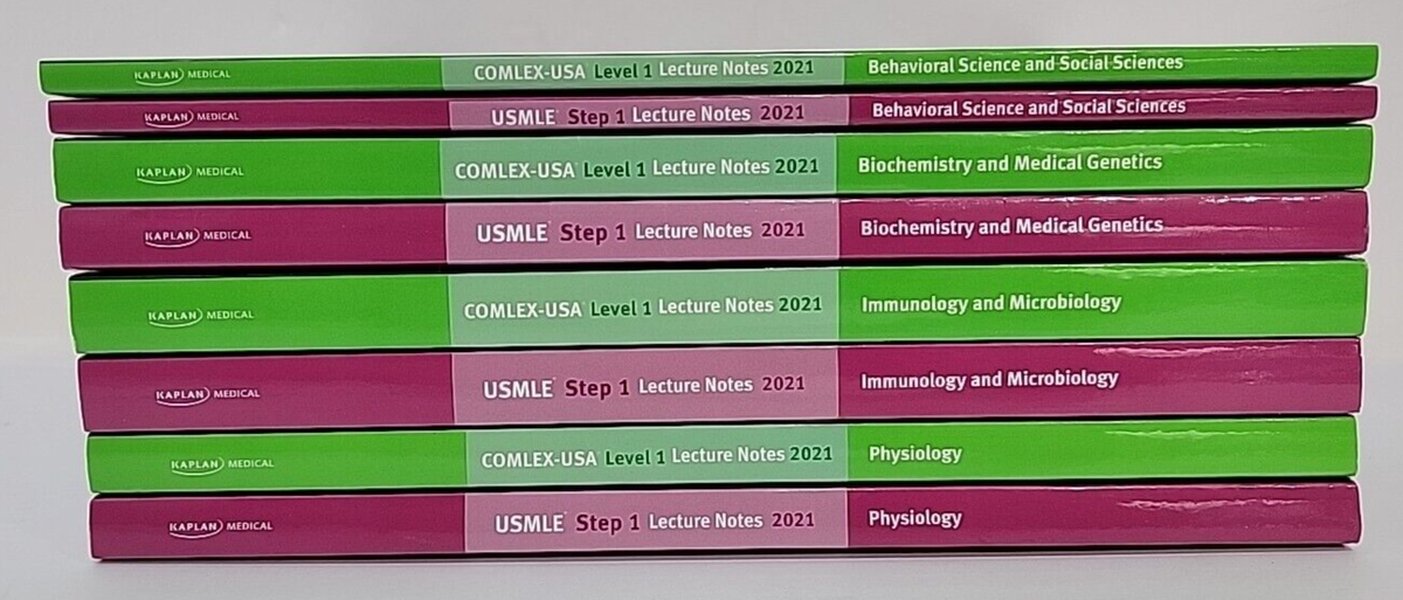
Example of comprehensive study materials like Kaplan's Lecture Notes.
Enhancing Visual Learning
Leverage the visual elements within these guides. Use highlighters or digital annotation tools to color-code topics by subject, importance, or areas needing more review. Create summaries using charts and flow diagrams to synthesize information visually.
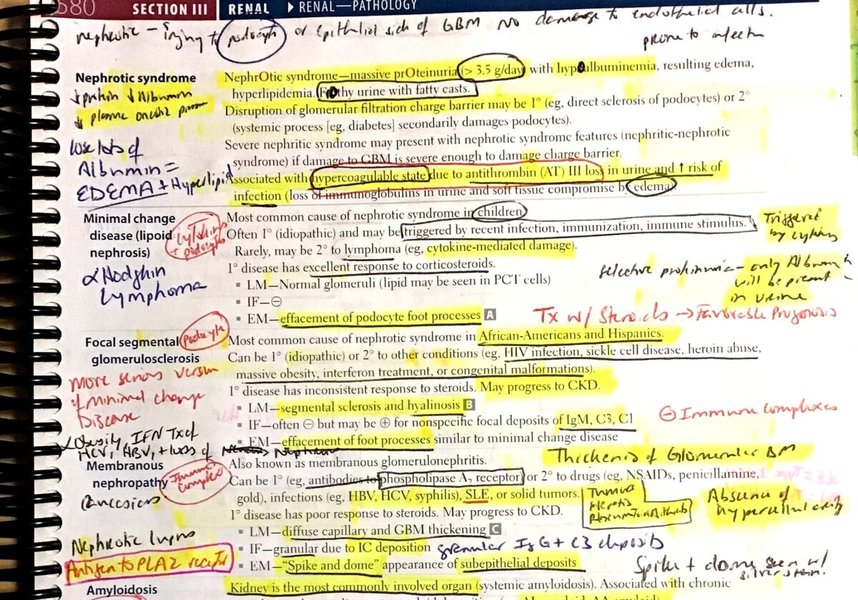
Actively annotating core resources like First Aid is key for personalization and retention.
Essential OMM Resources
Given the unique focus of COMLEX, dedicated OMM preparation is non-negotiable. Standard USMLE resources will not cover this sufficiently.
Key OMM Study Aids
- OMT Review (e.g., by Robert E. Kappler or Savarese): These texts are specifically designed for COMLEX OMM preparation. They cover osteopathic principles, techniques, counterstrain points, Chapman's points, visceral techniques, and clinical applications often tested on the exam. They frequently include helpful illustrations.
- Question Banks with OMM Focus: Some Qbanks (discussed below) offer specific filters or sections dedicated to OMM questions.
Mastering the Question Style: Practice Questions
Active learning through practice questions is critical for success. Focus on resources that mimic the NBOME's question style, including clinical vignettes and decision-making scenarios.
NBOME Official Resources: Your Benchmark
The NBOME provides the most authentic practice materials. While they don't endorse commercial products, their own resources are invaluable:
- COMSAE (Comprehensive Osteopathic Medical Self-Assessment Examination): These are official practice exams offered by the NBOME. Taking a COMSAE under timed conditions provides the best simulation of the actual exam experience and helps identify weak areas. Some forms provide detailed feedback.
- NBOME Practice Questions/Sample Items: The NBOME website offers sample questions illustrating the format and style of COMLEX items, often including explanations. These are essential for understanding how concepts are tested.
- COMAT Sample Questions: While designed for end-of-rotation exams, COMAT (Comprehensive Osteopathic Medical Achievement Test) questions cover clinical subjects relevant to Level 1 and share the NBOME question style.
High-Yield Question Banks (Qbanks)
Supplement official materials with high-quality commercial Qbanks. Look for those specifically tailored or adaptable for COMLEX, featuring detailed explanations for both correct and incorrect answers.
- UWorld: While primarily focused on USMLE, UWorld is widely used for COMLEX prep due to its high-quality questions and excellent explanations. Many students use it successfully by focusing on relevant content and supplementing with OMM resources. Some platforms allow filtering for osteopathic content.
- TrueLearn (COMBANK/COMQUEST): These platforms are specifically designed for COMLEX preparation and often include a strong emphasis on OMM questions, detailed explanations, and performance analytics aligned with the COMLEX blueprint.
- AMBOSS: Offers a comprehensive library and Qbank with features beneficial for COMLEX prep, including specific OMM questions and cross-linked articles for deeper understanding. Its interface often includes highlighting and annotation features, contributing to a more "colorful" study experience.
Aim to complete several thousand practice questions throughout your dedicated study period, focusing on understanding the rationale behind each answer.
Leveraging Digital & Interactive Tools
Modern study platforms offer interactive features that enhance learning and organization.
- Osmosis: Known for its engaging video lessons that simplify complex topics with clear visuals and animations. Offers customizable study schedules and integrated practice questions with explanations.
- AMBOSS: Beyond its Qbank, its integrated medical library allows for quick look-up of concepts encountered in questions. Features like hover-over definitions and highlighting improve efficiency.
- Anki / Flashcard Apps: Create digital flashcards (or use pre-made decks like AnKing, adapted for COMLEX) for active recall, particularly for memorization-heavy topics like pharmacology and microbiology. Many allow image embedding for visual cues.
Structuring Your Study Plan
Organization is key to managing the vast amount of information.
Organizing Your Material
Creating Your "Colorful" System
- Color-Coding: Whether using physical highlighters or digital tools (like Notion, OneNote, or PDF annotators), assign specific colors to subjects (e.g., blue for Anatomy, green for Pharm, red for OMM) or concepts (e.g., yellow for high-yield facts, orange for areas of weakness).
- Visual Summaries: Regularly create mind maps, flowcharts, or tables to synthesize information from different resources into a cohesive whole.
- Digital Binders: Use software to organize notes, screenshots from resources, practice question explanations, and links in one place.
- Personalized Flashcards: Make flashcards for facts you frequently miss, incorporating mnemonics or simple diagrams.
Sample Study Schedule Framework (Example: 6-8 Weeks)
Adapt this based on your timeline and baseline knowledge. Consistency is crucial.
- Weeks 1-3: Foundational Review & First Pass: Cover all subjects using your primary resources (First Aid/Kaplan). Integrate OMM review. Begin incorporating Qbank questions (50-80/day) focused on the subjects reviewed.
- Weeks 4-5: Targeted Review & Increased Practice: Focus on weaker areas identified through practice questions. Increase Qbank volume (80-120+ questions/day), mixing subjects. Take a COMSAE or NBME self-assessment mid-way.
- Weeks 6-8: Integration, Simulation & Refinement: Complete remaining Qbank questions. Take full-length practice exams (COMSAE, UWorld/TrueLearn simulations) under timed conditions. Review incorrects thoroughly. Focus heavily on OMM and high-yield topics. Review notes and flashcards daily.
Visualizing COMLEX Level 1 Preparation Factors
Success in COMLEX Level 1 depends on balancing several key study components. This chart illustrates the relative importance you might assign to different aspects of your preparation. While core knowledge is fundamental, integrating OMM, mastering question strategy via NBOME resources and Qbanks, and effective time management are all critical for passing.
Mapping Your COMLEX Prep Strategy
Visualizing your overall strategy can help ensure all essential components are addressed. This mindmap outlines the key pillars of a successful COMLEX Level 1 preparation plan, branching from the main goal to specific resources and tactics.
Key Resource Comparison
Choosing the right mix of resources is crucial. This table provides a comparative overview of some commonly used tools for COMLEX Level 1 preparation, highlighting their strengths regarding content, OMM focus, question style, explanations, and visual elements.
| Resource | Primary Content Focus | OMM Coverage | Question Style | Explanations | Visuals (Color/Diagrams) |
|---|---|---|---|---|---|
| First Aid for USMLE Step 1 | High-yield basic sciences, pathology, pharmacology | Minimal (Requires heavy supplementation/annotation) | USMLE-style (Highly relevant but needs OMM context) | Concise (Book format) | Excellent (Diagrams, Tables, Color-coded sections) |
| Kaplan Lecture Notes | Comprehensive basic sciences, system-based review | Varies by edition (May require supplementation) | USMLE-style (Good foundation) | Detailed | Excellent (Full-color images, diagrams) |
| OMT Review (Savarese/Kappler) | Osteopathic principles, diagnosis, techniques | Excellent (Primary focus) | Textbook format (May include some questions) | Detailed OMM concepts | Good (Illustrations of techniques) |
| UWorld Qbank | Clinical vignettes, basic science integration | Limited (May have some tags, needs supplement) | Primarily USMLE, but excellent clinical reasoning practice | Excellent, Detailed | Good (Diagrams, Images within explanations) |
| TrueLearn (COMBANK/COMQUEST) | COMLEX blueprint alignment, clinical vignettes | Good to Excellent (Specific OMM questions) | COMLEX-style, including OMM integration | Detailed, COMLEX-focused | Good (Platform interface, performance analytics) |
| AMBOSS | Integrated Library & Qbank, clinical reasoning | Good (Specific OMM questions available) | USMLE/COMLEX blend, strong clinical focus | Detailed, linked to library articles | Excellent (Platform interface, integrated visuals) |
| NBOME COMSAE/Samples | Reflects actual exam blueprint | Representative coverage | Authentic COMLEX-style | Provided for sample questions; feedback reports for COMSAE | Exam interface simulation |
Expert Insights on Resource Strategy
Hearing from students who have successfully navigated the exam can provide valuable perspectives on resource selection and study techniques. This video shares insights into the resources used for COMLEX Level 1 preparation, offering a practical viewpoint.
Video discussing resources used for COMLEX Level 1 study preparation.
Frequently Asked Questions (FAQ)
How much OMM is actually on COMLEX Level 1?
According to the NBOME blueprint, Osteopathic Principles and Practice typically accounts for approximately 7-13% of the exam content. However, osteopathic principles can be integrated into questions across various disciplines, so a solid understanding is crucial beyond just dedicated OMM questions.
Can I just use USMLE Step 1 resources like First Aid and UWorld?
Many students successfully use high-quality USMLE resources as their core study materials because there is significant content overlap (around 80-90%). However, you must supplement these heavily with dedicated OMM resources (like Savarese/Kappler OMT Review) and practice questions that specifically test osteopathic principles and manipulative techniques. Using COMLEX-specific Qbanks (like TrueLearn/COMQUEST) or official NBOME materials is highly recommended to master the unique aspects of the exam.
What's the difference between COMSAE and the actual COMLEX?
COMSAEs are official self-assessment exams provided by the NBOME designed to simulate the COMLEX experience and assess readiness. They use retired COMLEX questions or items written in the same style. While highly predictive and valuable for practice, they are shorter than the full COMLEX exam and primarily serve as assessment tools rather than learning resources with detailed explanations for every question (though some forms offer more feedback than others). The actual COMLEX Level 1 is the official, full-length, high-stakes licensure exam.
Which Qbank is considered the "best" for COMLEX Level 1?
There isn't a single "best" Qbank, as preferences vary. UWorld is highly regarded for its challenging questions and detailed explanations, making it excellent for building a deep understanding (though requiring OMM supplementation). TrueLearn (COMBANK/COMQUEST) is specifically designed for COMLEX, offering strong OMM content and questions styled after the NBOME. AMBOSS provides a robust platform with integrated learning features. Many students use a combination, often starting with one and potentially adding another for more variety or targeted OMM practice.
Recommended Next Steps
Continue exploring specific strategies and resources with these related searches:
- What are the highest-rated OMM-specific resources for COMLEX Level 1 preparation?
- How can I best utilize COMSAE results to guide my COMLEX Level 1 studying?
- What are the key differences between TrueLearn (COMBANK/COMQUEST) and UWorld for COMLEX Level 1 prep?
- Can I see a detailed example of a daily study schedule for COMLEX Level 1 that integrates various resources?
References
- COMLEX-USA Practice Resources - NBOME
- COMSAE Examinations - NBOME
- COMBANK powered by TrueLearn - COMAT Practice Questions - TrueLearn
- Best COMLEX Level 1 Study Resources - Elite Medical Prep
- Ultimate COMLEX Level 1 Study Schedule - Elite Medical Prep
- AMBOSS COMLEX® Level 1 Prep - AMBOSS
- How to Study for COMLEX Level 1 - MedSchoolCoach
- COMLEX Level 1: Everything You Need to Know - BeMo Academic Consulting
Unlock Your COMLEX Level 1 Success: Crafting the Ultimate Study Guide
Your detailed roadmap combining premier resources, NBOME-style practice, and visual learning for peak performance.
Preparing for the COMLEX-USA Level 1 exam requires a strategic approach that blends comprehensive content review with targeted practice. While a single, perfect, pre-made "organized colorful detailed study guide with NBOME questions" might not exist commercially, you can absolutely build your own highly effective system by integrating the best available resources. This guide will walk you through selecting materials, incorporating official NBOME practice, and structuring your studies for success.
Essential Insights for COMLEX Level 1 Prep
- Synthesize Resources: Combine high-yield review books (like First Aid or Kaplan), dedicated OMM materials, and robust question banks for comprehensive coverage.
- Master Osteopathic Principles: Allocate specific study time to Osteopathic Manipulative Medicine (OMM) using resources like OMT Review, as this is a unique and crucial component of the COMLEX.
- Prioritize Official Practice: Utilize NBOME's official practice materials (COMSAE, sample questions) to familiarize yourself with the unique question style, format, and clinical decision-making emphasis.
Understanding the COMLEX Level 1 Exam
Exam Structure and Content Domains
The COMLEX-USA Level 1 is a one-day, computer-based examination consisting of 352 multiple-choice questions, typically taken by osteopathic medical students at the end of their second year. It assesses your understanding and application of foundational biomedical sciences and osteopathic principles in a clinical context. The exam blueprint covers seven key domains, emphasizing integration and clinical problem-solving:
- Foundational Biomedical Sciences: Anatomy, Physiology, Biochemistry, Microbiology & Immunology, Pathology, Pharmacology.
- Osteopathic Principles and Practice (OMP): Includes Osteopathic Manipulative Medicine (OMM), history, philosophy, and application of osteopathic tenets. This comprises roughly 7-13% of the exam.
- Clinical Disciplines Integration: Questions often present patient scenarios requiring diagnosis, management, and understanding underlying mechanisms, blending basic sciences with clinical reasoning.
- Two Dimension Structure: The exam assesses knowledge across Competency Domains (e.g., Osteopathic Principles, Medical Knowledge, Patient Care) and Clinical Presentations (e.g., Musculoskeletal System, Nervous System, Cardiovascular System).
Success hinges on not just recalling facts, but applying them to patient cases, often with an osteopathic perspective. The exam is now scored as Pass/Fail.
Building Your Comprehensive Study System
Creating your ideal study guide involves selecting high-quality foundational resources, integrating targeted OMM preparation, and mastering the exam format through rigorous practice.
Foundation: Core Study Guides
Start with comprehensive, high-yield review books known for their detail and visual organization. Many students successfully adapt top USMLE Step 1 resources, supplementing them with COMLEX-specific materials.
Popular Foundational Resources
- First Aid for the USMLE Step 1 (Adapted for COMLEX): Often considered a cornerstone resource. Its strength lies in its concise, high-yield summaries of pathology, pharmacology, microbiology, and biochemistry, packed with mnemonics, diagrams, and tables. Many editions are inherently colorful, aiding visual memory. Crucially, you must actively annotate it with OMM principles and details relevant to COMLEX.
- Kaplan Medical's USMLE Step 1 Lecture Notes: This comprehensive set (often 7 books) provides in-depth reviews across all subjects. They are known for clear explanations, full-color images, diagrams, and clinical correlations, making complex topics more digestible. Ensure you're using a recent edition.
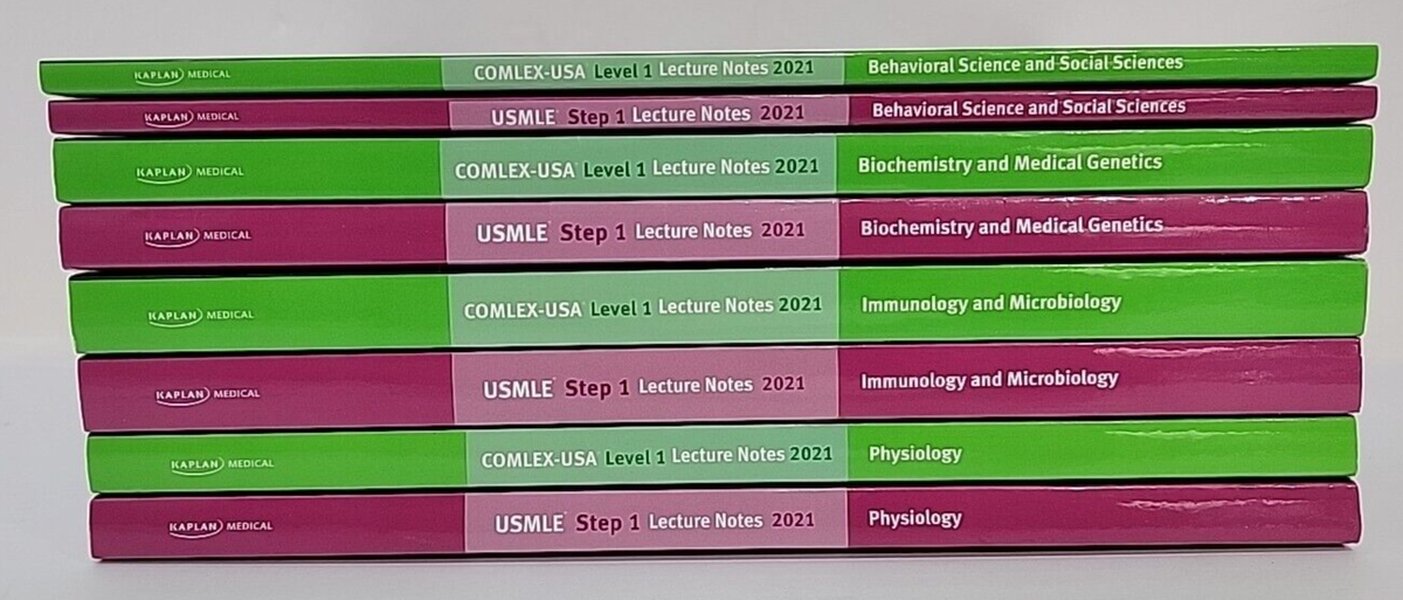
Example of comprehensive study materials like Kaplan's Lecture Notes.
Enhancing Visual Learning
Leverage the visual elements within these guides. Use highlighters or digital annotation tools to color-code topics by subject, importance, or areas needing more review. Create summaries using charts and flow diagrams to synthesize information visually.
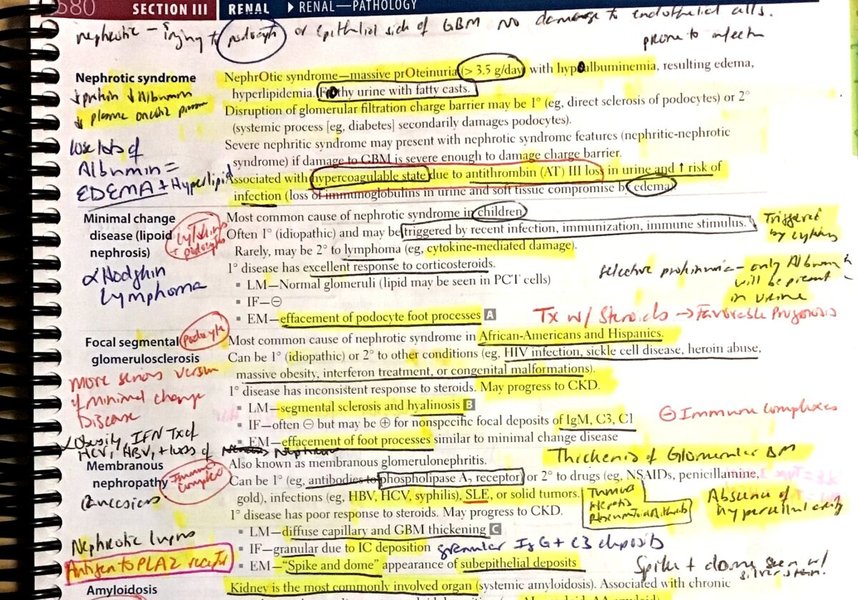
Actively annotating core resources like First Aid is key for personalization and retention.
Essential OMM Resources
Given the unique focus of COMLEX, dedicated OMM preparation is non-negotiable. Standard USMLE resources will not cover this sufficiently.
Key OMM Study Aids
- OMT Review (e.g., by Robert E. Kappler or Savarese): These texts are specifically designed for COMLEX OMM preparation. They cover osteopathic principles, techniques, counterstrain points, Chapman's points, visceral techniques, and clinical applications often tested on the exam. They frequently include helpful illustrations.
- Question Banks with OMM Focus: Some Qbanks (discussed below) offer specific filters or sections dedicated to OMM questions.
Mastering the Question Style: Practice Questions
Active learning through practice questions is critical for success. Focus on resources that mimic the NBOME's question style, including clinical vignettes and decision-making scenarios.
NBOME Official Resources: Your Benchmark
The NBOME provides the most authentic practice materials. While they don't endorse commercial products, their own resources are invaluable:
- COMSAE (Comprehensive Osteopathic Medical Self-Assessment Examination): These are official practice exams offered by the NBOME. Taking a COMSAE under timed conditions provides the best simulation of the actual exam experience and helps identify weak areas. Some forms provide detailed feedback.
- NBOME Practice Questions/Sample Items: The NBOME website offers sample questions illustrating the format and style of COMLEX items, often including explanations. These are essential for understanding how concepts are tested.
- COMAT Sample Questions: While designed for end-of-rotation exams, COMAT (Comprehensive Osteopathic Medical Achievement Test) questions cover clinical subjects relevant to Level 1 and share the NBOME question style.
High-Yield Question Banks (Qbanks)
Supplement official materials with high-quality commercial Qbanks. Look for those specifically tailored or adaptable for COMLEX, featuring detailed explanations for both correct and incorrect answers.
- UWorld: While primarily focused on USMLE, UWorld is widely used for COMLEX prep due to its high-quality questions and excellent explanations. Many students use it successfully by focusing on relevant content and supplementing with OMM resources. Some platforms allow filtering for osteopathic content.
- TrueLearn (COMBANK/COMQUEST): These platforms are specifically designed for COMLEX preparation and often include a strong emphasis on OMM questions, detailed explanations, and performance analytics aligned with the COMLEX blueprint.
- AMBOSS: Offers a comprehensive library and Qbank with features beneficial for COMLEX prep, including specific OMM questions and cross-linked articles for deeper understanding. Its interface often includes highlighting and annotation features, contributing to a more "colorful" study experience.
Aim to complete several thousand practice questions throughout your dedicated study period, focusing on understanding the rationale behind each answer.
Leveraging Digital & Interactive Tools
Modern study platforms offer interactive features that enhance learning and organization.
- Osmosis: Known for its engaging video lessons that simplify complex topics with clear visuals and animations. Offers customizable study schedules and integrated practice questions with explanations.
- AMBOSS: Beyond its Qbank, its integrated medical library allows for quick look-up of concepts encountered in questions. Features like hover-over definitions and highlighting improve efficiency.
- Anki / Flashcard Apps: Create digital flashcards (or use pre-made decks like AnKing, adapted for COMLEX) for active recall, particularly for memorization-heavy topics like pharmacology and microbiology. Many allow image embedding for visual cues.
Structuring Your Study Plan
Organization is key to managing the vast amount of information.
Organizing Your Material
Creating Your "Colorful" System
- Color-Coding: Whether using physical highlighters or digital tools (like Notion, OneNote, or PDF annotators), assign specific colors to subjects (e.g., blue for Anatomy, green for Pharm, red for OMM) or concepts (e.g., yellow for high-yield facts, orange for areas of weakness).
- Visual Summaries: Regularly create mind maps, flowcharts, or tables to synthesize information from different resources into a cohesive whole.
- Digital Binders: Use software to organize notes, screenshots from resources, practice question explanations, and links in one place.
- Personalized Flashcards: Make flashcards for facts you frequently miss, incorporating mnemonics or simple diagrams.
Sample Study Schedule Framework (Example: 6-8 Weeks)
Adapt this based on your timeline and baseline knowledge. Consistency is crucial.
- Weeks 1-3: Foundational Review & First Pass: Cover all subjects using your primary resources (First Aid/Kaplan). Integrate OMM review. Begin incorporating Qbank questions (50-80/day) focused on the subjects reviewed.
- Weeks 4-5: Targeted Review & Increased Practice: Focus on weaker areas identified through practice questions. Increase Qbank volume (80-120+ questions/day), mixing subjects. Take a COMSAE or NBME self-assessment mid-way.
- Weeks 6-8: Integration, Simulation & Refinement: Complete remaining Qbank questions. Take full-length practice exams (COMSAE, UWorld/TrueLearn simulations) under timed conditions. Review incorrects thoroughly. Focus heavily on OMM and high-yield topics. Review notes and flashcards daily.
Visualizing COMLEX Level 1 Preparation Factors
Success in COMLEX Level 1 depends on balancing several key study components. This chart illustrates the relative importance you might assign to different aspects of your preparation. While core knowledge is fundamental, integrating OMM, mastering question strategy via NBOME resources and Qbanks, and effective time management are all critical for passing.
Mapping Your COMLEX Prep Strategy
Visualizing your overall strategy can help ensure all essential components are addressed. This mindmap outlines the key pillars of a successful COMLEX Level 1 preparation plan, branching from the main goal to specific resources and tactics.
Key Resource Comparison
Choosing the right mix of resources is crucial. This table provides a comparative overview of some commonly used tools for COMLEX Level 1 preparation, highlighting their strengths regarding content, OMM focus, question style, explanations, and visual elements.
| Resource | Primary Content Focus | OMM Coverage | Question Style | Explanations | Visuals (Color/Diagrams) |
|---|---|---|---|---|---|
| First Aid for USMLE Step 1 | High-yield basic sciences, pathology, pharmacology | Minimal (Requires heavy supplementation/annotation) | USMLE-style (Highly relevant but needs OMM context) | Concise (Book format) | Excellent (Diagrams, Tables, Color-coded sections) |
| Kaplan Lecture Notes | Comprehensive basic sciences, system-based review | Varies by edition (May require supplementation) | USMLE-style (Good foundation) | Detailed | Excellent (Full-color images, diagrams) |
| OMT Review (Savarese/Kappler) | Osteopathic principles, diagnosis, techniques | Excellent (Primary focus) | Textbook format (May include some questions) | Detailed OMM concepts | Good (Illustrations of techniques) |
| UWorld Qbank | Clinical vignettes, basic science integration | Limited (May have some tags, needs supplement) | Primarily USMLE, but excellent clinical reasoning practice | Excellent, Detailed | Good (Diagrams, Images within explanations) |
| TrueLearn (COMBANK/COMQUEST) | COMLEX blueprint alignment, clinical vignettes | Good to Excellent (Specific OMM questions) | COMLEX-style, including OMM integration | Detailed, COMLEX-focused | Good (Platform interface, performance analytics) |
| AMBOSS | Integrated Library & Qbank, clinical reasoning | Good (Specific OMM questions available) | USMLE/COMLEX blend, strong clinical focus | Detailed, linked to library articles | Excellent (Platform interface, integrated visuals) |
| NBOME COMSAE/Samples | Reflects actual exam blueprint | Representative coverage | Authentic COMLEX-style | Provided for sample questions; feedback reports for COMSAE | Exam interface simulation |
Expert Insights on Resource Strategy
Hearing from students who have successfully navigated the exam can provide valuable perspectives on resource selection and study techniques. This video shares insights into the resources used for COMLEX Level 1 preparation, offering a practical viewpoint.
Video discussing resources used for COMLEX Level 1 study preparation.
Frequently Asked Questions (FAQ)
How much OMM is actually on COMLEX Level 1?
According to the NBOME blueprint, Osteopathic Principles and Practice typically accounts for approximately 7-13% of the exam content. However, osteopathic principles can be integrated into questions across various disciplines, so a solid understanding is crucial beyond just dedicated OMM questions.
Can I just use USMLE Step 1 resources like First Aid and UWorld?
Many students successfully use high-quality USMLE resources as their core study materials because there is significant content overlap (around 80-90%). However, you must supplement these heavily with dedicated OMM resources (like Savarese/Kappler OMT Review) and practice questions that specifically test osteopathic principles and manipulative techniques. Using COMLEX-specific Qbanks (like TrueLearn/COMQUEST) or official NBOME materials is highly recommended to master the unique aspects of the exam.
What's the difference between COMSAE and the actual COMLEX?
COMSAEs are official self-assessment exams provided by the NBOME designed to simulate the COMLEX experience and assess readiness. They use retired COMLEX questions or items written in the same style. While highly predictive and valuable for practice, they are shorter than the full COMLEX exam and primarily serve as assessment tools rather than learning resources with detailed explanations for every question (though some forms offer more feedback than others). The actual COMLEX Level 1 is the official, full-length, high-stakes licensure exam.
Which Qbank is considered the "best" for COMLEX Level 1?
There isn't a single "best" Qbank, as preferences vary. UWorld is highly regarded for its challenging questions and detailed explanations, making it excellent for building a deep understanding (though requiring OMM supplementation). TrueLearn (COMBANK/COMQUEST) is specifically designed for COMLEX, offering strong OMM content and questions styled after the NBOME. AMBOSS provides a robust platform with integrated learning features. Many students use a combination, often starting with one and potentially adding another for more variety or targeted OMM practice.
Recommended Next Steps
Continue exploring specific strategies and resources with these related searches:
- What are the highest-rated OMM-specific resources for COMLEX Level 1 preparation?
- How can I best utilize COMSAE results to guide my COMLEX Level 1 studying?
- What are the key differences between TrueLearn (COMBANK/COMQUEST) and UWorld for COMLEX Level 1 prep?
- Can I see a detailed example of a daily study schedule for COMLEX Level 1 that integrates various resources?
References

Last updated May 4, 2025