
Unlocking Disease Control: The Transformative Power of Computational Fluid Dynamics in Pathogen Transmission
Explore how advanced CFD simulations are revolutionizing our understanding and mitigation of infectious disease spread.
Key Insights into CFD's Role in Pathogen Control
- Comprehensive Simulation Capabilities: CFD precisely models the complex movement of pathogen-laden droplets and aerosols, providing invaluable insights into their dispersion patterns in diverse environments.
- Strategic Prevention and Control: By simulating ventilation effectiveness, social distancing scenarios, and personal protective equipment (PPE) performance, CFD directly informs the design of robust public health interventions.
- Integration with Advanced Technologies: The combination of CFD with epidemic models and artificial intelligence (AI) offers a powerful approach for predicting disease progression and developing innovative, targeted therapies.
Computational Fluid Dynamics (CFD) has emerged as an indispensable and cost-effective tool in the rigorous investigation of pathogen transmission. Its analytical power extends beyond mere observation, enabling a detailed understanding of how infectious agents, whether airborne or waterborne, propagate through various environments. By simulating fluid flow, heat transfer, and related phenomena, CFD provides a crucial framework for dissecting the intricate dynamics of pathogen spread and, critically, for devising effective prevention and control strategies.
Deciphering Pathogen Spread Through Fluid Dynamics
At its core, CFD is a computational method that employs numerical simulations to analyze the behavior of fluids. In the context of pathogen transmission, this translates to modeling the journey of infectious agents—such as viruses or bacteria—as they are carried by air or water droplets. These simulations illuminate the mechanisms governing pathogen encapsulation, emission, transport, persistence, and ultimately, the invasion of new hosts. For instance, CFD has been extensively applied to visualize and understand the airborne dispersion of viruses like SARS-CoV-2 (COVID-19) in settings ranging from hospitals to public transportation.
Modeling Respiratory Events and Aerosol Dispersion
One of CFD's most critical applications is its ability to model the movement and dispersion of pathogen-laden droplets and aerosols released during common human respiratory events. Activities such as breathing, speaking, coughing, and sneezing eject particles that can carry infectious agents. CFD simulations treat these pathogens as particles or gaseous elements within a fluid, allowing for precise tracking of their trajectory and concentration over time and space. This helps researchers to:
- Understand Turbulent "Puff Clouds": CFD can simulate respiratory events as turbulent "puff clouds" of exhaled air, revealing how far and how long infectious droplets remain suspended and active.
- Analyze Environmental Factors: The models account for critical environmental variables like ventilation rates, indoor airflow patterns, humidity, and temperature, all of which significantly influence pathogen spread.
- Quantify Dispersion in Diverse Settings: Simulations can be conducted for a multitude of environments, including hospital rooms, classrooms, offices, public transit, and even specialized areas like intensive care units, providing tailored insights for each setting.
Advanced Methodologies in CFD
To tackle the inherent complexities of pathogen transmission, CFD leverages various advanced modeling approaches and algorithms. These include:
- Eulerian and Lagrangian Frameworks: These are used for modeling droplet dispersion and tracking individual particle transport, offering different perspectives on the fluid-particle interaction.
- Lattice Boltzmann Method (LBM): This method is particularly effective for simulating small-scale pathogen dynamics, providing detailed insights into micro-level fluid behavior.
- Porous Media and Multi-Phase Flow Modeling: These techniques incorporate aspects like aerosol behavior and surface interactions, crucial for understanding how pathogens settle on surfaces or behave in complex environments.
- Integration with Epidemic Models: Combining CFD with epidemiological models, such as the SIR (Susceptible-Infected-Recovered) model, enhances the realism and predictive power of simulations by linking physical dispersion with population-level disease progression. This allows for a more holistic understanding of outbreaks, where disease spread is represented as fluid motion and interactions between individuals are dynamic flows.
While CFD excels at describing the physical characteristics of pathogens within fluid dynamics, accurately representing their complex biological characteristics, such as viability and infectivity, remains an ongoing challenge. However, the motion of even tiny pathogens (e.g., 100 nm viruses) largely adheres to hydrodynamic laws, making CFD algorithms applicable across various scales, from small-scale (LBM) to large-scale (Finite Difference Method - FDM) transmission.
CFD's Impact on Prevention and Control Strategies
The insights derived from CFD simulations are not merely theoretical; they are directly actionable in the realm of public health and engineering. CFD plays a pivotal role in designing and evaluating interventions aimed at mitigating disease spread.
Optimizing Ventilation Systems
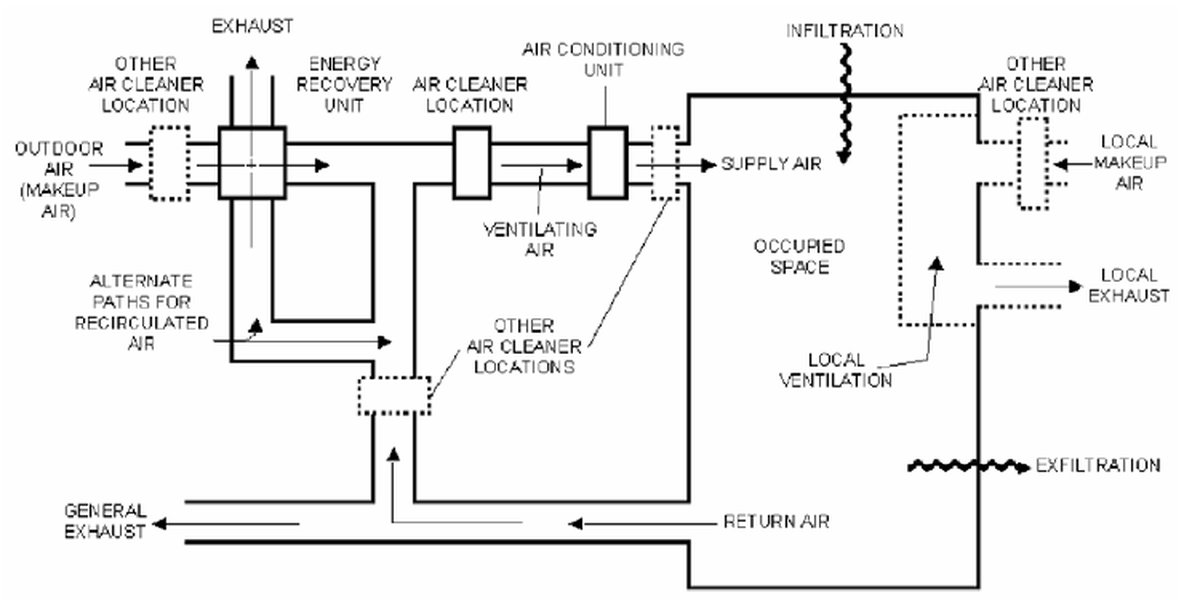
One of the most significant applications of CFD is in the design and optimization of ventilation systems. In confined spaces like hospitals, offices, and classrooms, proper ventilation is paramount for reducing the concentration of airborne pathogens. CFD simulations can:
- Assess Airflow Patterns: Analyze how different ventilation layouts affect air circulation and pathogen dispersion, identifying stagnant zones or high-concentration areas.
- Design Safer Environments: Inform the design of new buildings and the retrofitting of existing ones to ensure optimal airflow that minimizes pathogen spread while also considering energy efficiency. For example, studies have evaluated novel approaches like Personalized Displacement Ventilation (PerDiVent) in hospital rooms.
Enhancing Personal Protective Equipment (PPE)
CFD also contributes to the development and optimization of PPE, such as face masks. By understanding how particles disperse during respiratory events, CFD can help refine mask designs to more effectively block airborne pathogens and minimize leakage, thereby enhancing user protection.
Informing Public Health Policies and Risk Assessment
The quantitative data provided by CFD models is invaluable for guiding public health decisions. It helps in:
- Establishing Social Distancing Guidelines: By predicting the temporal and spatial accumulation of infectious exhaled droplets, CFD assists in formulating safe social distancing recommendations.
- Developing Risk Assessment Models: CFD enables the creation of frameworks that integrate spatial parameters (e.g., room layout) and temporal factors (e.g., exposure duration) to estimate infection probabilities in various settings. This is crucial for designing safety protocols in high-risk environments like intensive care units.
- Guiding Mask Mandates: Insights into droplet dispersion from speech, coughs, and sneezes reinforce the importance of mask usage in reducing community transmission.
Here's a detailed look at some of the key applications of CFD in pathogen transmission:
| Application Area | Description | Impact on Prevention & Control |
|---|---|---|
| Airflow & Ventilation Studies | Simulating air currents and ventilation system performance in various indoor environments (hospitals, offices, public transport). | Optimizing air circulation to dilute and remove airborne pathogens, designing more effective HVAC systems, and identifying high-risk zones. |
| Modeling Respiratory Events | Analyzing the dispersion of pathogen-laden droplets and aerosols from breathing, speaking, coughing, and sneezing. | Understanding transmission mechanisms, informing social distancing guidelines, and assessing the effectiveness of barriers and masks. |
| Environmental Engineering & Waterborne Pathogens | Simulating fluid dynamics in water treatment processes and understanding pathogen spread in aquatic environments. | Improving water purification systems and preventing waterborne disease outbreaks. |
| PPE Optimization | Evaluating the performance of respiratory protective equipment like face masks. | Informing design improvements for masks and respirators to enhance their filtration efficiency and fit. |
| Public Space Design | Simulating airflow patterns and pathogen dispersal in architectural designs of public spaces. | Designing buildings and indoor layouts that naturally mitigate pathogen spread, such as optimizing entryways and common areas. |
| Integration with Epidemic Models | Combining physical CFD simulations with epidemiological models (e.g., SIR) to predict disease progression. | Enhancing accuracy of disease forecasting, informing public health interventions, and simulating the impact of various control measures on a population level. |
| Risk Assessment & Probability Modeling | Calculating the temporal and spatial accumulation of infectious droplets to estimate infection probabilities. | Developing quantitative risk assessment frameworks for high-risk environments, informing safety protocols, and setting exposure limits. |
| Nanobot Medicine & Targeted Therapies | Using CFD to simulate fluid dynamics at the nanoscale for autonomous health monitoring and targeted drug delivery. | Advancing personalized medicine, early disease prevention, and precision therapies by understanding micro-fluidic interactions. |
Challenges and Future Directions in CFD Modeling
Despite its remarkable capabilities, CFD modeling in pathogen transmission faces certain challenges that researchers are actively addressing. The primary limitation lies in the oversimplification of the complex biological physics involved. While CFD excels at physical modeling, integrating the nuanced biological characteristics of pathogens—such as their viability on surfaces, infectivity thresholds, and survival rates in different environmental conditions—remains a significant hurdle. This biological variability can lead to inconsistencies if not properly accounted for.
Bridging the Physics-Biology Gap
Future advancements in CFD are geared towards a more sophisticated integration of biological complexity. This involves:
- Multi-disciplinary Collaboration: Fostering stronger partnerships between fluid dynamicists, virologists, epidemiologists, and medical scientists to create more comprehensive and realistic models.
- Enhanced Data Integration: Incorporating more precise clinical and experimental data, such as real-world respiratory flow rates, detailed droplet size distributions, and pathogen-specific environmental survival parameters.
- Advanced AI Integration: Leveraging physical Artificial Intelligence (AI) algorithms to enhance predictive capabilities, allowing for more autonomous and adaptive simulations that can account for dynamic biological and environmental changes. This could lead to a new era of nanobot medicine, where CFD-driven AI allows nanobots to autonomously monitor health, deliver therapies, and repair tissues.
The Computational Demands
Detailed CFD simulations require substantial computational resources, which can be a limiting factor for large-scale or highly complex scenarios. However, continuous advancements in computing power and algorithmic efficiency are steadily expanding the scope and fidelity of what CFD can achieve. The goal is to move towards even higher-fidelity simulations that can incorporate a broader range of factors, such as pedestrian movement in crowded spaces and real-time environmental fluctuations, to provide truly predictive models for disease progression.
This radar chart illustrates the current capabilities of Computational Fluid Dynamics (CFD) in investigating pathogen transmission, alongside its projected potential for future advancements. The chart evaluates CFD across several critical dimensions: its accuracy in mirroring real-world scenarios, the computational resources it demands, its ability to integrate with complex biological data, its predictive power for designing effective interventions, its versatility across various environments, and its cost-effectiveness in research. While current CFD models offer strong versatility and cost-effectiveness, their accuracy and integration with biological data are areas of ongoing development. The "Potential Future CFD Capabilities" dataset highlights anticipated improvements, particularly in predictive power and the seamless integration of biological complexities, underscoring CFD's evolving role as a frontline tool in combating infectious diseases.
A Holistic View of CFD's Contributions to Disease Control
To further illustrate the multifaceted contributions of CFD to understanding and controlling pathogen transmission, consider the following mindmap. It outlines the key areas where CFD plays a vital role, from fundamental mechanism understanding to practical applications in public health and the challenges that drive future innovation.
This mindmap visualizes the interconnected aspects of CFD's application in understanding and mitigating pathogen transmission. It begins with the fundamental principles of mechanism understanding, detailing how CFD models fluid dynamics to track pathogen behavior. It then branches into the practical prevention and control strategies enabled by CFD, such as optimizing ventilation and informing public health policies. The mindmap further illustrates the diverse modeling approaches and algorithms employed, alongside the wide range of applications and their real-world impact. Finally, it highlights the inherent challenges and crucial future directions, emphasizing the ongoing evolution of CFD in integrating complex biological data and advanced AI for more robust disease management.
Frequently Asked Questions About CFD in Pathogen Transmission
What is Computational Fluid Dynamics (CFD)?
How does CFD help in understanding airborne pathogen spread?
Can CFD predict the effectiveness of ventilation systems?
What are the limitations of using CFD for pathogen transmission?
How is CFD integrated with other models for disease control?
Conclusion
Computational Fluid Dynamics (CFD) stands as a transformative technology in the fight against infectious diseases. By providing an unparalleled ability to visualize and quantify the complex movement of pathogens through fluids, CFD empowers researchers, engineers, and public health officials to understand transmission mechanisms with unprecedented detail. From optimizing hospital ventilation systems and designing safer public spaces to informing critical social distancing guidelines and advancing personalized nanobot medicine, CFD's applications are vast and growing. While challenges related to integrating complex biological data and managing computational demands persist, the ongoing advancements in CFD methodologies and its synergy with artificial intelligence promise even more sophisticated and effective tools for disease prevention and control in the future. As our understanding of fluid dynamics continues to deepen, CFD will remain at the forefront of engineering solutions that safeguard global health.
Recommended Further Reading
- How does ventilation impact airborne virus transmission?
- Applications of AI in epidemiological modeling and disease prediction
- Role of aerosols and droplets in respiratory disease spread
- Advanced computational methods for modeling biological systems