
China and India: Navigating a Complex Future - Friendship or Pragmatic Coexistence?
An in-depth look at the evolving dynamics, recent thaws, persistent challenges, and future trajectory of Sino-Indian relations in 2025.
The relationship between China and India, two of Asia's giants and rising global powers, is a multifaceted tapestry woven with threads of historical connection, economic interdependence, strategic competition, and unresolved disputes. As of early 2025, the question of whether these two nations will forge a path towards genuine friendship or continue a pattern of cautious engagement punctuated by tensions remains a subject of intense scrutiny. Recent developments suggest a "thaw" in relations, but deep-seated issues cast long shadows over the prospects for a truly amicable future.
Key Highlights of the Current China-India Equation
- Recent Diplomatic Thaw: A significant border patrol agreement in late 2024 and subsequent high-level dialogues in early 2025 have signaled an intent to stabilize relations and prevent further escalations, particularly after the 2020 border clashes.
- Economic Interdependence vs. Unease: China regained its position as India's largest trading partner in 2024. While economic drivers push for cooperation, concerns over trade imbalances and India's strategic alignments create an "uneasy" economic relationship.
- Cautious Optimism for 2025: While the 75th anniversary of diplomatic relations in 2025 offers a symbolic opportunity for rapprochement, most analyses point towards cautious progress and pragmatic management of differences rather than a swift move towards deep friendship.
A Historical Lens and the Significance of 2025
From Ancient Ties to Modern Complexities
China and India share millennia of cultural and civilizational exchanges. Diplomatic relations were formally established on April 1, 1950. The early years saw advocacy for principles like the Five Principles of Peaceful Coexistence (Panchsheel). However, this foundation has been tested by significant challenges, most notably unresolved border disputes that led to the 1962 war and periodic clashes, such as the Galwan Valley incident in 2020, which severely strained ties.
The year 2025 marks the 75th anniversary of the establishment of diplomatic relations. Both nations have acknowledged this milestone with gestures emphasizing cooperation and the value of people-to-people connections. Chinese leadership has expressed a desire to advance exchanges in science, education, culture, and tourism. However, India is likely to approach such overtures with a degree of wariness, informed by past experiences and ongoing strategic concerns.
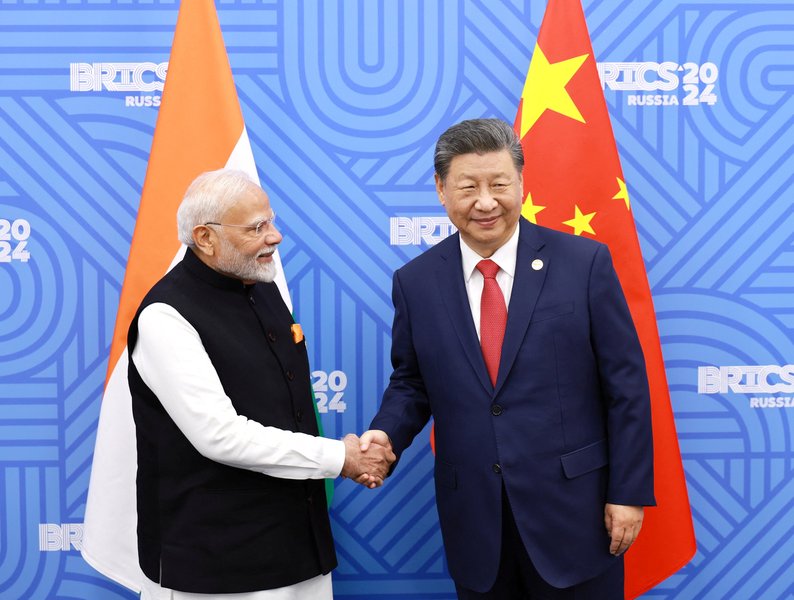
A symbolic handshake between Chinese President Xi Jinping and Indian Prime Minister Narendra Modi, often indicative of the current diplomatic climate.
The Recent Thaw: Signs of De-escalation
Border Agreements and Renewed Dialogue
A significant development in late 2024 was the announcement of a border patrol agreement. This accord aimed to establish clearer "guardrails" to prevent further clashes in disputed border areas, particularly in Ladakh, and allowed for the resumption of patrols. This was followed by a series of high-level meetings in early 2025, including interactions between senior security and foreign affairs officials. These steps represent an important move towards détente, though they do not resolve the underlying territorial questions.
Political Interactions in Early 2025
The first quarter of 2025 saw continued political interactions, building on the momentum from the late 2024 agreements. While disagreements persist, the focus has been on maintaining channels of communication and exploring avenues for constructive engagement. This period is characterized by cautious optimism, with both sides acknowledging the need to manage their complex relationship responsibly.
Navigating the Future: A Mindmap of Influencing Factors
The future trajectory of China-India relations is shaped by a complex interplay of drivers for cooperation and sources of friction. This mindmap illustrates the key elements influencing whether the relationship leans towards greater stability or remains contentious.
(Trade, Mutual Growth Needs)"] id1b["People-to-People Exchanges
(Education, Culture, Tourism)"] id1c["Shared Global Challenges
(Climate Change, Economic Stability)"] id1d["Desire for Regional Stability
(Preventing Conflict Escalation)"] id1e["75th Anniversary Impetus (2025)"] id2["Persistent Challenges & Rivalry"] id2a["Unresolved Border Disputes
(Ladakh, Arunachal Pradesh)"] id2b["Strategic Competition
(Regional Influence, Geopolitics)"] id2c["Lack of Deep Trust
(Historical Baggage, Power Asymmetry)"] id2d["Economic Tensions
(Trade Imbalances, Investment Scrutiny)"] id2e["External Alignments
(India-US ties, China-Pakistan axis)"] id2f["Potential Flashpoints
(Tibet, Dalai Lama Succession)"] id3["Potential Outcomes"] id3a["Cautious Pragmatic Engagement
(Managing Differences, Limited Cooperation)"] id3b["Continued 'Frenemy' Status
(Cooperation in some areas, Competition in others)"] id3c["Risk of Future Tensions
(If underlying issues are not addressed)"] id3d["Gradual Improvement
(Building on recent thaw)"]
This mindmap highlights that while economic needs and a desire for stability can pull China and India closer, deep-seated issues like border disputes and strategic rivalry act as powerful counterweights, making a straightforward "friendship" a challenging goal.
Areas of Potential Cooperation
Economic Ties: A Double-Edged Sword
Economically, China re-emerged as India's largest trading partner in 2024, with India's imports from China exceeding $100 billion. Both nations face domestic economic pressures and recognize the mutual benefits of trade and, potentially, cooperation on infrastructure. However, this economic relationship is often described as "uneasy." India remains concerned about its significant trade deficit with China and has taken steps to scrutinize Chinese investments and reduce dependency in critical sectors. Furthermore, India's growing economic and strategic closeness with other powers, such as the United States, adds another layer of complexity.
People-to-People Exchanges: Building Bridges
Both governments have expressed willingness to enhance exchanges in areas like science and technology, education, culture, and tourism. Efforts are reportedly underway to facilitate visas and resume direct flights, which were disrupted. As of late 2024, approximately 10,000 Indian students were pursuing higher education in China. Such exchanges, including events like the Third China-India Youth Dialogue, are seen as vital for fostering mutual understanding and goodwill. Chinese officials have highlighted the role of youth as potential "envoys of friendship," suggesting a long-term perspective on building stronger societal ties.
This video discusses the 75th anniversary of China-India diplomatic relations, highlighting expectations for renewal and a positive future, including the resumption of direct flights and enhanced people-to-people ties. It reflects the cautious optimism surrounding this milestone.
Persistent Challenges: Hurdles to True Friendship
Despite the recent positive overtures, several fundamental challenges continue to constrain the development of a deep and trusting friendship between China and India.
The Unresolved Border Dispute
The most significant and persistent challenge is the unresolved border dispute along the Line of Actual Control (LAC). While the late 2024 agreement aims to manage tensions, the core territorial disagreements remain. The risk of future stand-offs and skirmishes cannot be discounted, and this issue continues to be a primary source of mistrust. Complete disengagement and de-escalation in all friction points are yet to be fully achieved.

Border personnel meetings between Indian and Chinese military officials are crucial for maintaining peace and tranquility along the disputed border.
Strategic Rivalry and Lack of Trust
China and India are two major powers with competing geopolitical interests and ambitions, particularly in South Asia and the broader Indo-Pacific region. This inherent rivalry shapes their interactions and fosters a deep-seated lack of trust. India is wary of China's growing influence and its strategic partnerships, notably with Pakistan. Conversely, China views India's strengthening ties with the US and other Quad members with suspicion. The perceived power disparity and China's approach to regional dynamics further complicate the trust deficit.
Potential Flashpoints
Beyond the immediate border, other issues hold the potential to reignite tensions. The long-dormant Tibet issue, particularly concerning the succession of the Dalai Lama, is one such sensitive point that could strain relations significantly if not handled with extreme caution by both sides.
China-India Relations Dynamics: A Comparative Radar View
The following radar chart provides a visual representation of key dimensions in the China-India relationship, comparing the perceived status in early 2025 with potential optimistic and pessimistic future scenarios. The scores (ranging notionally from 1 to 10, where 10 is highly positive/strong) are based on qualitative assessments derived from recent analyses.
This chart illustrates that while diplomatic engagement and economic cooperation show moderate strength in early 2025, strategic trust remains low. An optimistic future would see improvements across all dimensions, particularly in border stability and trust. Conversely, a pessimistic scenario would involve deterioration, especially in these critical areas.
Comparative Overview: Drivers vs. Deterrents
To further clarify the complex dynamics, the following table summarizes the key factors propelling the China-India relationship forward versus those holding it back.
| Factors Driving Cooperation & Stability | Factors Hindering Friendship & Deep Trust |
|---|---|
| Economic interdependence and mutual trade benefits. | Unresolved, sensitive border disputes (e.g., LAC). |
| Shared interest in managing regional security and preventing conflict escalation. | Deep-seated strategic rivalry and competition for regional influence. |
| People-to-people exchanges (students, cultural, tourism) fostering understanding. | Significant trust deficit stemming from historical events and power asymmetry. |
| High-level diplomatic engagements and dialogue mechanisms. | Differing geopolitical alignments and partnerships (e.g., India-US, China-Pakistan). |
| Commemoration of milestones like the 75th anniversary of diplomatic ties, offering symbolic opportunities. | Concerns in India over trade imbalances and Chinese investment practices. |
| Potential for collaboration on global issues (e.g., climate change, multilateral forums). | Internal political factors and nationalist sentiments in both countries. |
| Desire for a stable external environment to focus on domestic development. | Potential flashpoints like the Tibet issue and Dalai Lama's succession. |
This table highlights the delicate balance: while there are compelling reasons for China and India to cooperate, the obstacles to a genuine, trust-based friendship are substantial and deeply entrenched.
The Outlook: Pragmatism Over Unbridled Friendship
Considering the array of factors, the consensus among analysts is that the China-India relationship in the foreseeable future is more likely to be characterized by cautious progress and pragmatic engagement rather than a full-fledged friendship. Both nations appear committed to managing their differences and leveraging cooperation where mutual interests align, particularly in the economic sphere. However, the emphasis will likely remain on establishing "guardrails" to prevent conflict and maintain a stable, if sometimes tense, coexistence.
A complete embrace of friendship, in the sense of a close alliance or deep, unconditional trust, seems improbable given the persistent challenges. Instead, the relationship is expected to remain multifaceted—competitive in strategic domains while selectively cooperative in others. The goal for India, as some analysts suggest, is more about stabilizing the relationship and ensuring its own strategic autonomy than achieving a deep bonhomie with Beijing.
Global Implications
The trajectory of China-India relations holds profound significance for the future of Asia and the global order. As two of the world's largest economies and populations, their ability to manage their complex relationship will influence regional stability, global trade patterns, and the evolving dynamics of international power. Their competition for influence, as well as any potential cooperation, will resonate globally.
Frequently Asked Questions (FAQ)
Will the China-India border issues be fully resolved soon? ▼
It is highly unlikely that the complex border disputes between China and India will be fully resolved in the near future. While recent agreements (like the one in late 2024) aim to de-escalate tensions and establish mechanisms to prevent clashes, the fundamental disagreements over territorial claims persist. Resolving these issues would require significant political will and compromise from both sides, which has been elusive for decades. The focus currently is on managing the dispute rather than outright resolution.
How significant are economic ties in their relationship? ▼
Economic ties are very significant. China became India's largest trading partner again in 2024, with substantial trade volumes. This economic interdependence can act as a stabilizing factor, as both countries benefit from trade, especially amidst global economic uncertainties. However, the economic relationship is also fraught with challenges, including India's large trade deficit with China and concerns about market access and unfair competition. India is also pursuing policies to reduce dependency on Chinese imports in critical sectors, making the economic dimension a complex mix of cooperation and unease.
What role do people-to-people exchanges play? ▼
People-to-people exchanges, including student programs, cultural dialogues, tourism, and academic collaborations, are considered important for fostering long-term understanding and goodwill between China and India. Both governments have expressed support for enhancing these exchanges. They can help bridge perception gaps and build connections at a societal level, potentially contributing to a more positive atmosphere for bilateral relations, even if political and strategic issues remain contentious.
Is a full-fledged friendship between China and India likely in the near future? ▼
Based on current analyses and persistent challenges, a full-fledged, trust-based friendship between China and India is unlikely in the near future. The relationship is expected to be characterized by cautious and pragmatic engagement, where both countries manage their significant differences while seeking limited cooperation in areas of mutual interest. Deep-seated issues like border disputes, strategic rivalry, and a significant trust deficit remain major obstacles to achieving a warmer, more amicable relationship akin to friendship.
Recommended Further Exploration
- What are the specific details of the 2024 China-India border patrol agreement and its impact on de-escalation?
- How does the China-India trade relationship influence their diplomatic stances towards each other?
- What are the main points of strategic competition between China and India in the Indo-Pacific region?
- Explore the historical evolution of trust and mistrust in Sino-Indian relations since 1950.
References
Last updated May 11, 2025