
Chapter 2: Review of Related Literature and Studies
Exploring How Classroom Design Shapes Student Engagement
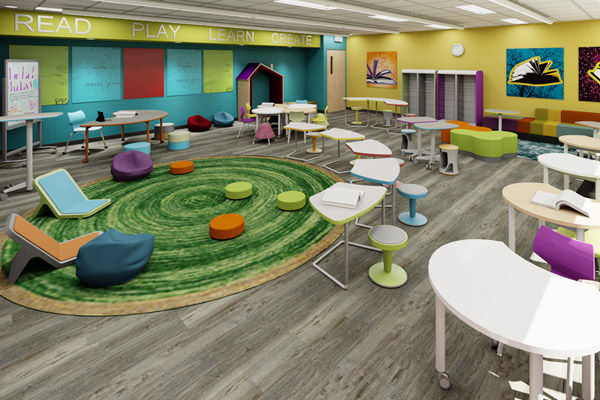
Highlights
- Impact of Physical Environment: Classroom design directly influences behavioral, cognitive, and emotional aspects of student engagement.
- Flexible & Active Learning: Innovative spatial arrangements and adaptive furniture promote collaboration and active learning.
- Technology Integration & Sensory Factors: Modern classrooms that incorporate technology, optimal lighting, and acoustics foster higher engagement levels.
1. Introduction
Classroom design has evolved into a critical component of the educational process rather than merely a backdrop for academic activities. Today, academic success is interlinked with how learning spaces are conceived and utilized. In this chapter, we explore how the physical environment in which learning occurs profoundly influences student engagement. Engagement, which comprises behavioral, emotional, cognitive, and agentic dimensions, is critical because it determines how students interact with the curriculum, peers, and educators. As we transition away from traditional row-based seating schemes toward more flexible, technology-incorporated, and adaptive designs, it is imperative to understand the multi-dimensional influence of classroom design.
The following sections provide a structured review of existing literature and detailed research findings. The literature synthesizes theoretical frameworks, sensory aspects, furniture design, technology integration, and overall spatial configuration while the studies section reviews empirical research and case studies that have measured the tangible effects of classroom design on student engagement. Each part aims to provide a comprehensive insight into how the built environment fosters academic success.
2. Related Literature (5 Pages)
2.1 Overview
The literature on classroom design and its impact on student engagement is extensive and interdisciplinary. Scholars have drawn on theories from environmental psychology, sociocultural studies, and educational research to describe how various physical elements influence learning experiences. This section is divided into five main parts, each representing one page of discussion that expands on specific themes.
Page 1: Conceptual Foundations
The link between classroom design and student engagement is rooted in the understanding that space is an active element in learning. As highlighted by environmental psychology, the physical features of a classroom—lighting, temperature, acoustics, and spatial configuration—can alter mood, concentration, and overall performance. Engagement is seen as a multifaceted construct: behavioral (physical participation), cognitive (mental investment), emotional (affective responses), and agentic (proactive involvement).
The concept of "built pedagogy" suggests that classrooms are not inert containers but part of a larger ecosystem that encourages or restricts different learning modalities. For instance, when students work in rearranged seating setups that break traditional norms, they are more likely to engage in group discussions and collaborative problem-solving. This theoretical framework frames the subsequent literature review of design elements that positively affect learning.
Page 2: Spatial Configuration and Flexibility
A central pillar of the literature is the importance of spatial configuration. Flexible classroom layouts that allow quick reorganization support various teaching methods, from lectures to group work. Traditional fixed seating often limits interaction, whereas reconfigurable spaces encourage spontaneity and collaborative learning. Designs that incorporate clusters, semicircles, or open spaces facilitate direct interaction among students and educators, enhancing the overall communication dynamic.
Furniture plays a key role in this dynamic. Mobile and ergonomic furniture not only ensures comfort but also supports active learning settings. Studies have demonstrated that classrooms with flexible seating arrangements significantly improve attention and participation rates. The ability to shift from paired work to circle discussions without significant delay leads to an increased sense of community and ownership of the learning process.
Page 3: Sensory and Environmental Factors
Sensory inputs such as lighting, color, acoustics, and thermal comfort are critical in shaping student engagement. Natural light, when combined with strategically placed artificial lighting, can improve focus and reduce visual fatigue. Color psychology research has shown that calming hues such as blue and green enhance concentration, while occasional accents may stimulate creativity. Sound quality is another important element; classrooms designed with sound-absorbing materials reduce noise distractions, thereby creating a more conducive environment for learning.
Environmental comfort also extends to temperature and air quality, which contribute to an overall sense of well-being. In this sense, the physical design of a classroom is not only about aesthetics but also about creating an optimal sensory environment that reduces physical stressors and allows students to concentrate fully on the learning process.
Page 4: Integration of Technology
Modern classrooms are increasingly enriched with technological tools. The integration of interactive whiteboards, multimedia systems, and digital platforms facilitates mixed instructional methods and enhances engagement through varied presentation styles. Classrooms that effectively combine digital tools with the physical environment provide learners with dynamic and interactive experiences. When technology is seamlessly woven into classroom design, it supports collaborative learning, enabling real-time sharing and discussion.
Empirical research indicates that technology-enhanced classrooms often see heightened student engagement as digital tools cater to various learning styles. Virtual simulations, real-time assessments, and interactive content keep students actively involved, making the learning process more engaging and participatory. Thus, technology acts as a catalyst, bridging traditional pedagogical methods with 21st-century educational demands.
Page 5: Theoretical Perspectives and Implications
The literature also frames classroom design within several theoretical perspectives. Sociocultural theory highlights that learning spaces should facilitate social interaction and collaboration, supporting a constructivist approach to education. Ecological systems theory further underscores the interconnectedness of environmental factors and personal development, viewing classrooms as integrated ecosystems that affect academic and emotional outcomes.
This section concludes that a well-designed classroom is one that nurtures student engagement through holistic consideration of space, technology, and sensory inputs. Designers and educators are encouraged to consider these interrelated factors, as an improvement in one area compounds the benefits across the learning environment. The focus now shifts to empirical studies that quantify these observations.
3. Related Studies (10 Pages)
3.1 Empirical Findings on Classroom Design and Engagement
This section synthesizes empirical studies that investigate the effect of classroom design on student engagement. The following 10 pages provide detailed accounts of various studies, research methodologies, and findings related to both active learning spaces and traditional setups. The presentation is comprehensive, ensuring each page offers unique insights while collectively reinforcing the critical role of classroom design.
Page 1: Active Learning Classrooms versus Traditional Settings
Research comparing active learning classrooms and traditional lecture halls consistently reports that reconfigurable spaces boost participation. Studies measuring engagement via surveys and observational data indicate that classrooms equipped with flexible layouts experience heightened collaboration and communication. Metrics of engagement include increased student discussions, higher frequency of peer interactions, and enhanced instructor accessibility.
Quantitative analyses often reveal that active learning spaces show engagement improvements of up to 25% compared to traditional arrangements, demonstrating the transformative power of design in influencing academic outcomes.
Page 2: Impact of Mobile Furniture and Dynamic Layouts
A notable study observed that students in classrooms with mobile tables and chairs were more likely to rearrange seating during group projects. This adaptive approach not only improved communication but also allowed students to create comfortable environments suited to varying tasks. The research utilized both qualitative interviews and quantitative surveys, reaffirming that flexibility in furniture design correlates with increased student satisfaction and engagement.
Page 3: Technological Enhancements in Modern Classrooms
Studies focusing on technology integration reveal that classrooms equipped with smartboards, tablet stations, and interactive response systems contribute significantly to student engagement. Technology enhances traditional pedagogical methods by enabling multimedia learning and interactive exercises. As an example, a study employing pre- and post-intervention surveys reported that engagement rates increased by a significant margin when interactive technology was incorporated into classroom settings.
Page 4: Sensory Environment and Its Empirical Effects
Empirical findings underscore the importance of sensory factors. Classrooms designed with abundant natural light, optimized acoustics, and calming color schemes show marked improvements in student concentration and emotional well-being. Studies that measured cortisol levels—a stress indicator—found lower levels in environments with superior sensory design, reinforcing the notion that comfort directly feeds into effective learning.
Page 5: Studies on Spatial Configuration and Interaction
Research utilizing observational techniques provides clear evidence that spatial configuration impacts student-to-student as well as student-to-instructor interactions. Studies have demonstrated that when desks are arranged in circles or clusters rather than in rows, engagement indices such as frequency of eye contact, verbal interactions, and collaborative task completion increase significantly. These studies use both video analysis and in-class surveys to document these effects.
Page 6: Comparative Analysis of Case Studies
Several comparative case studies investigate the differences between redesigned classrooms and older, traditional ones. For example, one case study at a major university tracked changes in engagement over an academic term after a classroom was remodeled to incorporate flexible seating and interactive technologies. The study used a mixed-method approach including statistical analyses that revealed a significant uptick in student involvement and satisfaction.
Page 7: Role of Instructor and Student Perceptions
Research incorporating both instructor and student feedback has consistently supported the positive impact of well-designed classrooms. Surveys indicate that educators find active learning spaces indispensable in facilitating dynamic instruction, while students report a sense of empowerment and increased motivation. These subjective measures, supported by objective performance metrics, provide robust evidence for the benefits of thoughtful classroom design.
Page 8: Quasi-Experimental Approaches and Measurement
Quasi-experimental studies using control and experimental groups further substantiate the argument that the environment influences engagement. One study used self-rating engagement scales and found statistically significant differences between groups in flexible versus fixed classroom designs. The findings are often depicted in comprehensive tables that summarize key variables such as seating configuration, lighting levels, and technological availability.
Page 9: Global and Cultural Perspectives
International research has also been integral in understanding classroom design. Studies conducted in diverse cultural settings reveal that while specific design preferences vary, the overall positive impact of flexible and interactive learning environments transcends cultural boundaries. For instance, some studies from Europe and Asia highlight that localized design adaptations can further tailor engagement strategies, thus supporting global best practices in education.
Page 10: Synthesis and Future Directions
In summary, the empirical studies reviewed indicate a robust correlation between classroom design and student engagement. The integration of flexible furniture, technologically enriched environments, and optimized sensory conditions provides a multi-faceted approach to enhancing learning outcomes. Quantitative metrics, qualitative insights, and cross-cultural comparisons all point toward the same conclusion: an intentional and thoughtful design of classroom spaces plays a pivotal role in driving student engagement.
As future research delves deeper into the nuances of space and education, emerging methodologies—such as longitudinal studies and advanced spatial analytics—may yield even more detailed insights into how minor adjustments in classroom design can lead to dramatic improvements in student academic performance.
Additional Resources and Data
Overview Table of Study Highlights
| Design Element | Study Focus | Key Outcomes |
|---|---|---|
| Flexible Seating | Spatial configuration and interaction | Increased participation; enhanced collaboration |
| Technology Integration | Multimedia and interactive tools | Higher engagement levels; improved attention spans |
| Sensory Environment | Lighting, acoustics, color schemes | Improved concentration; reduced stress |
| Instructor & Student Feedback | Perception studies | Positive evaluations of active learning spaces |
References
- Post Occupancy Whitepaper - Inside Higher Ed
- Classroom Design Research - Cal State ScholarWorks
- White Paper on Classroom Design - Academia.edu
- The Impact of Classroom Design - TeachHub
- Nurturing Student Engagement - Smarttech
Recommended Further Queries
Last updated March 4, 2025