
Unveiling the Core Technologies Behind Clinical Laboratory Analyzers
A comprehensive exploration of the analytical principles driving modern diagnostic instruments.

- 1.Highlights of Diagnostic Technology
- 2.Decoding Hematology Analyzers: The Science of Blood Cell Analysis
- 3.Clinical Chemistry Analyzers: Precision in Biochemical Analysis
- 4.Specialized Assays and Sample Preparation
- 5.Comparative Analysis of Analytical Principles
- 6.Visualizing Analytical Strengths
- 7.The Interconnected World of Laboratory Diagnostics
- 8.FAQ: Deep Diving into Diagnostic Principles
- 9.Conclusion: The Synergy of Science and Technology in Diagnostics
- 10.Recommended Further Exploration
- 11.Referenced Search Results
Highlights of Diagnostic Technology
- Photometry and Spectrophotometry: Many analyzers, such as the Sysmex XP-300 and Roche Cobas c 111, rely on these optical methods for measuring concentrations based on light absorption, adhering to the Beer-Lambert law.
- Electrical Impedance (Coulter Principle): Instruments like the Sysmex XP-300 and Beckman Coulter DxH 500 utilize changes in electrical resistance or conductivity to count and size blood cells.
- Specialized Chemical and Immunological Techniques: Advanced methods like Boronate Affinity (Abbott Afinion 2 for HbA1c) and Sandwich Immunoassay (Hemosure Accu-Reader A100) demonstrate highly specific detection mechanisms.
Clinical laboratories worldwide depend on a sophisticated array of instruments to perform diagnostic tests. These devices, ranging from automated hematology analyzers to specialized chemistry systems, leverage diverse physical and chemical principles to deliver accurate and reliable results. Understanding these underlying mechanisms is crucial for appreciating the precision and capabilities of modern laboratory diagnostics. This comprehensive overview delves into the operational principles of several key laboratory instruments, integrating insights from multiple analytical perspectives.
Decoding Hematology Analyzers: The Science of Blood Cell Analysis
Hematology analyzers are essential for complete blood counts (CBCs) and differential white blood cell counts. These instruments typically combine electrical and optical methods to characterize blood components.
Sysmex XP-300: A Dual-Principle Approach
Photometry for Hemoglobin Quantification
The Sysmex XP-300 employs photometry to measure hemoglobin levels. This method involves converting hemoglobin into a light-absorbing compound, and then measuring the amount of light absorbed. The concentration of hemoglobin is directly proportional to the light absorbed, a relationship described by the Beer-Lambert law. This principle is fundamental in many spectrophotometric applications, where the intensity of light passing through a solution is used to determine the concentration of the analyte.
Impedance Method for Cell Counting
For counting blood cells, the Sysmex XP-300 utilizes the impedance method, also known as the Coulter principle. This technique works by passing a diluted blood sample through a small aperture. As cells, which are poor electrical conductors, pass through this aperture, they cause a momentary change in the electrical resistance of an electrolyte solution. Each change corresponds to a single cell, allowing for accurate counting. The magnitude of the change in resistance is proportional to the cell's volume, enabling size differentiation of various cell types.
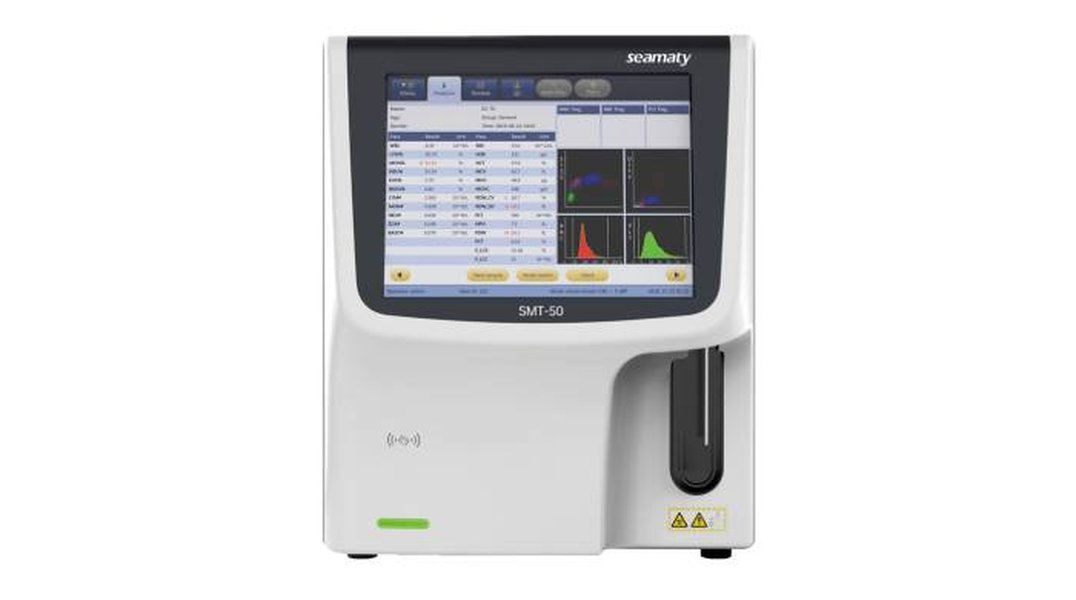
A typical hematology analyzer, illustrating the complexity of modern diagnostic equipment.
Beckman Coulter DxH 500: Advanced Coulter and Optical Integration
The Beckman Coulter DxH 500 also harnesses the Coulter principle for cell counting and sizing. It builds upon this foundation by incorporating sophisticated optical measurements. These optical techniques analyze how light is scattered and absorbed by cells, providing detailed information about their internal structure and morphological characteristics. This combination allows for more comprehensive differentiation of blood cells, crucial for identifying various hematological conditions. The integration of multiple optical channels and advanced algorithms helps in distinguishing cell populations that might appear similar based solely on size.
Clinical Chemistry Analyzers: Precision in Biochemical Analysis
Clinical chemistry analyzers are designed to measure a wide range of analytes in bodily fluids, crucial for assessing organ function, metabolic status, and disease markers.
Roche Cobas c 111: Absorbance Photometry at its Core
The Roche Cobas c 111 primarily relies on absorbance photometry and spectrophotometry. Similar to the hemoglobin measurement in the Sysmex XP-300, this instrument measures the intensity of light absorbed by a colored compound formed during a specific chemical reaction. The concentration of the substance being analyzed is directly derived from this light absorption, again following the Beer-Lambert law. This method is widely used for quantifying various biochemical parameters, including glucose, creatinine, and liver enzymes.
An advanced chemistry analyzer designed for optimal laboratory efficiency.
FUJIFILM DRI-CHEM NX500: Spectral Enzymatic and Electrochemical Methods
The FUJIFILM DRI-CHEM NX500 employs a dual approach for analysis. Its colorimetric method is based on spectral enzymatic reactions, where specific enzymes catalyze reactions that produce colored products. The intensity of this color is then measured spectrophotometrically to determine the concentration of the analyte. Additionally, for electrolyte measurements, the instrument uses the potential method, specifically Ion-Selective Electrodes (ISE). This electrochemical technique measures the electrical potential generated across a membrane that is selectively permeable to a particular ion, with the potential difference governed by the Nernst equation. This allows for precise measurement of ions like sodium, potassium, and chloride.
Specialized Assays and Sample Preparation
Beyond general chemistry and hematology, specialized tests and meticulous sample preparation are vital for accurate diagnostics.
Abbott Afinion 2: Boronate Affinity for HbA1c
The Abbott Afinion 2 is designed for measuring HbA1c, a key indicator for diabetes management. It utilizes the boronate affinity method, which leverages the high chemical selectivity of boronic acid. Boronic acid specifically binds to the sugar groups of glycated hemoglobin (HbA1c). This chemical interaction allows for precise isolation and quantification of HbA1c from other hemoglobin forms, ensuring accurate monitoring of long-term blood glucose control.
Hemosure Accu-Reader A100: The Power of Immunoassays
The Hemosure Accu-Reader A100 employs the sandwich immunoassay method. This technique relies on the highly specific binding of antibodies to antigens. In a typical sandwich immunoassay, the analyte (antigen) is "sandwiched" between two antibodies: a capture antibody attached to a solid phase and a detection antibody that is labeled. This method offers exceptional specificity and sensitivity, making it ideal for detecting low concentrations of specific biomarkers, such as those found in fecal immunochemical tests (FIT) for colorectal cancer screening.
Centurion Centrifuge: The Foundation of Sample Preparation
Before many analytical tests can be performed, samples often require preparation to separate components that could interfere with the assay. The Centurion Centrifuge plays a critical role in this. It separates sample components based on their density using centrifugal force. By spinning samples at high speeds, denser components are forced to the bottom of the tube, while lighter components remain at the top. This process is fundamental for obtaining plasma or serum from whole blood, concentrating cells, or removing particulate matter, thereby preventing interference and ensuring the integrity of subsequent analyses.
This video demonstrates the essential process of centrifugation and aliquoting blood serum and plasma, a critical step before many diagnostic tests.
Comparative Analysis of Analytical Principles
To better understand the diverse applications and strengths of these instruments, a comparative overview of their primary analytical principles is valuable. The following table summarizes the core technologies and their key characteristics.
| Instrument | Primary Analytical Principle | Underlying Scientific Concept | Key Application |
|---|---|---|---|
| Sysmex XP-300 | Photometry & Impedance Method | Beer-Lambert Law, Electrical Resistance Change | Hemoglobin, RBC, WBC, Platelet counts |
| Beckman Coulter DxH 500 | Coulter Principle & Optical Measurements | Electrical Conductivity, Light Scattering/Absorption | Detailed blood cell analysis and differentiation |
| Roche Cobas c 111 | Absorbance Photometry & Spectrophotometry | Beer-Lambert Law | General clinical chemistry, enzyme analysis |
| FUJIFILM DRI-CHEM NX500 | Colorimetric (Enzymatic) & Ion-Selective Electrode (ISE) | Spectral Reactions, Nernst Equation | Dry chemistry analysis, electrolyte measurement |
| Abbott Afinion 2 | Boronate Affinity | Chemical Selectivity (Boronic Acid to HbA1c) | HbA1c measurement for diabetes management |
| Centurion Centrifuge | Centrifugation | Density-based separation using centrifugal force | Sample preparation (plasma/serum separation, cell concentration) |
| Hemosure Accu-Reader A100 | Sandwich Immunoassay | Antigen-Antibody Specific Binding | Specific biomarker detection (e.g., FIT) |
Visualizing Analytical Strengths
The strengths of these different analytical methods can be visualized to appreciate their capabilities in a laboratory setting. Below is a radar chart illustrating the perceived strengths of various analytical principles across key performance indicators.
This radar chart illustrates the comparative strengths of four prominent analytical principles across various performance indicators, rated on a scale of 1 to 5. Photometry, for example, shows high marks in cost-effectiveness and throughput but moderate specificity. Impedance methods excel in throughput and ease of use for cell counting. Boronate affinity and sandwich immunoassays demonstrate superior sensitivity and specificity, reflecting their highly targeted nature, though they may have lower multiplexing capabilities compared to broader spectrophotometric platforms.
Furthermore, a bar chart can highlight the relative complexity of instrumentation versus the interpretability of results across different diagnostic categories.
This bar chart compares the estimated instrument complexity against the interpretability of results across different categories of diagnostic analyses. Hematology and specialized chemistry instruments tend to have higher complexity due to the intricate nature of the parameters they measure. Immunoassays, while complex in their underlying technology, often yield highly specific results that are relatively straightforward to interpret. Sample preparation, while foundational, is depicted as having moderate complexity and interpretability, as its primary role is to enable downstream analyses rather than provide direct diagnostic results.
The Interconnected World of Laboratory Diagnostics
The various instruments and their principles do not operate in isolation but form an interconnected ecosystem in a diagnostic laboratory. The overall workflow often involves multiple stages, from initial sample processing to final analysis and result interpretation.
This mindmap illustrates the typical workflow in a diagnostic laboratory, showcasing how different instruments and their underlying principles contribute to the overall process. From sample collection and preparation, where devices like the Centurion Centrifuge are crucial, to specialized analyses performed by dedicated instruments like the Abbott Afinion 2, each step is vital. Hematology and clinical chemistry analyses form the backbone, utilizing principles such as impedance, photometry, and electrochemistry. Finally, all the analytical data converges for interpretation and reporting, guided by clinical correlation and stringent quality control measures.
FAQ: Deep Diving into Diagnostic Principles
What is the Beer-Lambert law and how is it applied?
How does the impedance method differentiate between blood cells?
What is the significance of Boronate Affinity in HbA1c testing?
Why is centrifugation an essential step in laboratory diagnostics?
How do Immunoassays achieve high specificity?
Conclusion: The Synergy of Science and Technology in Diagnostics
The landscape of clinical laboratory diagnostics is a testament to the synergistic application of diverse scientific principles and advanced engineering. From the fundamental laws of light absorption and electrical impedance to the sophisticated chemical selectivity of boronate affinity and the precise immunological recognition of immunoassays, each instrument plays a vital role in unraveling the complexities of human health. The continuous evolution of these technologies promises even greater precision, speed, and accessibility in diagnosing diseases and monitoring treatment effectiveness, ultimately contributing to improved patient outcomes worldwide.
Recommended Further Exploration
- Understanding the Beer-Lambert Law in Clinical Chemistry
- Principles and Applications of Electrical Impedance in Hematology Analyzers
- Advanced Immunoassay Techniques for Disease Biomarker Detection
- The Role of Centrifugation in Modern Laboratory Sample Processing