
Complete Introduction to CO₂ Capture Technologies
A detailed exploration of methods, utilization, and future breakthroughs
Essential Insights
- CO₂ Capture Importance: Vital for reducing greenhouse gas emissions and mitigating climate change.
- Methods of Capture: Includes post-combustion, pre-combustion, oxy-fuel combustion, and emerging techniques like direct air capture.
- Utilization and Storage: Captured CO₂ can be stored underground or converted into valuable products, enabling a circular carbon economy.
Overview of CO₂ Capture Technologies
Carbon dioxide capture technologies have emerged as a critical solution in the battle against climate change. These technologies aim to reduce CO₂ emissions from industrial sources by capturing the greenhouse gas before it has a chance to enter the atmosphere. By doing so, they help slow down global warming and its adverse impacts on our environment. In this comprehensive introduction, we will examine the importance, methodologies, utilization, storage, current challenges, and future directions of CO₂ capture technologies.
Why CO₂ Capture is Essential
CO₂ is a major contributor to the greenhouse effect, trapping heat in the atmosphere and driving the global warming process. Industrial activities, power generation, and other fossil fuel-dependent processes release vast quantities of CO₂. Therefore, capturing and either reusing or permanently storing CO₂ is paramount in the global strategy to achieve net-zero emissions. By implementing efficient CO₂ capture techniques, industries can not only comply with regulatory emissions standards but also pave the way for a sustainable energy future.
Methods of CO₂ Capture
The methods of capturing CO₂ can be broadly classified into several categories, each possessing unique operational principles and industrial applications. Below is an overview of the primary methods:
Post-Combustion Capture
Overview
Post-combustion capture involves removing CO₂ from the flue gases emitted by power plants or industrial facilities after the combustion of fossil fuels. The dilute concentration of CO₂ in these emission streams is targeted using chemical solvents, primarily amines, that selectively capture CO₂.
One of the main advantages of post-combustion capture is its ability to be retrofitted to existing plants, making it a flexible and relatively straightforward option for reducing emissions.
Pre-Combustion Capture
Overview
In pre-combustion capture, fossil fuels undergo a conversion process before burning. This process, known as gasification, transforms fuel into a synthesis gas (syngas), which is a mixture of hydrogen and CO₂. The CO₂ is then separated from the syngas, and the clean hydrogen can be used as a low-emission fuel. This method is particularly common in integrated gasification combined cycle (IGCC) power plants.
Although pre-combustion capture requires significant alterations to the existing infrastructural setup, it provides the benefit of increased fuel efficiency and the production of valuable hydrogen.
Oxy-Fuel Combustion
Overview
Oxy-fuel combustion is a process in which fuel is burned in nearly pure oxygen instead of air. This combustion method produces a flue gas composed primarily of CO₂ and water vapor, simplifying the separation of CO₂. Despite its energy-intensive nature, the process greatly reduces the presence of nitrogen, making the capture process more straightforward.
Direct Air Capture (DAC)
Overview
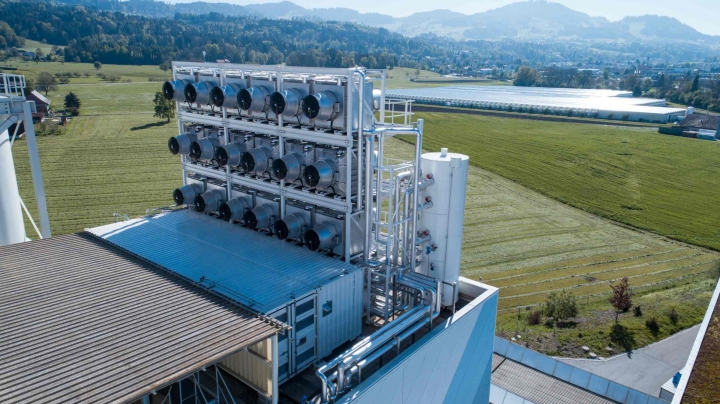
Direct Air Capture (DAC) represents an innovative frontier in CO₂ capture technologies. Unlike traditional methods that target industrial emissions, DAC systems extract CO₂ directly from the ambient air. This technique holds promise for addressing legacy emissions and balancing historical CO₂ accumulations in the atmosphere.
DAC systems use chemical processes, often employing sorbents or solvents, which bind the CO₂ from a low concentration in the air. Though energy-intensive, ongoing research is making DAC more viable and cost-effective.
Emerging Techniques and Innovations
Innovative Materials and Methods
Beyond the traditional methods, researchers are also investigating novel materials such as nanomaterials and metal oxides for CO₂ capture. For example, carbon nanotubes have shown promise for enhancing capture efficiency at lower pressure conditions, while metal oxides like calcium oxide (CaO) are being studied for high-temperature looping cycles. Other cutting-edge techniques such as chemical looping combustion and bioenergy with carbon capture and storage (BECCS) also reveal the potential of integrating biomass and capture technologies to create carbon-negative systems.
Utilization and Storage of Captured CO₂
Captured CO₂ can be deployed in various ways to either permanently sequester it or convert it into marketable products, contributing to both environmental and economic benefits.
Geological Storage
Underground Sequestration
Geological storage involves injecting captured CO₂ deep underground into rock formations. This method uses depleted oil and gas fields or saline aquifers, which serve as secure storage reservoirs. The primary goal is long-term containment, ensuring that the CO₂ remains isolated from the atmosphere indefinitely.
Enhanced Oil Recovery (EOR)
Dual Benefit of Extraction and Storage
In Enhanced Oil Recovery (EOR), captured CO₂ is re-injected into aging oil fields to stimulate oil production. This process not only helps to extract additional oil but also sequesters CO₂ in the geological formations. While EOR provides an economic incentive to capture and store CO₂, it must be carefully managed to ensure that the net environmental benefit remains positive.
Carbon Capture, Utilization, and Storage (CCUS)
Circular Economy Approach
Carbon Capture, Utilization, and Storage (CCUS) strategies extend beyond just storing CO₂. They incorporate converting the captured CO₂ into useful products such as fuels, chemicals, polymers, and building materials like concrete. This innovative approach not only mitigates greenhouse gas emissions but also fosters a circular carbon economy by transforming waste into wealth.
Comparative Analysis and Summary Table
The following table provides a comparative overview of the primary CO₂ capture methods, detailing their key characteristics, benefits, and challenges.
| Method | Description | Benefits | Challenges |
|---|---|---|---|
| Post-Combustion Capture | Capturing CO₂ from flue gases using chemical solvents after combustion | Retrofittable to existing plants; widely used | Energy intensive for solvent regeneration; dilute CO₂ concentration |
| Pre-Combustion Capture | Separating CO₂ from syngas after gasification before combustion | Efficient separation; produces hydrogen for clean fuel | Requires major infrastructural changes; high upfront costs |
| Oxy-Fuel Combustion | Burning fuel in pure oxygen to produce a concentrated CO₂ stream | Simplified CO₂ separation; reduced nitrogen interference | High energy input; oxygen production costs |
| Direct Air Capture | Extracting CO₂ directly from the ambient atmosphere | Addresses legacy CO₂ emissions; potential for decentralized capture | Low CO₂ concentration in air; currently high operational costs |
Technological and Economic Challenges
Despite the promising nature of CO₂ capture technologies, several challenges need to be addressed to ensure their widespread adoption:
High Costs and Energy Requirements
One of the primary barriers is the high cost associated with capturing and processing CO₂. Energy penalties, incurred primarily during the solvent regeneration process in post-combustion capture and oxygen production in oxy-fuel combustion, can significantly increase the overall operating costs. The economic viability often depends on supportive regulatory frameworks and potential revenue streams from CO₂-derived products.
Scalability and Infrastructure
Scaling up CO₂ capture to match the sheer volume of emissions generated globally requires significant investment in infrastructure. Retrofitting existing power plants or designing new facilities to accommodate these technologies can be challenging. The spatial requirements for geological storage or DAC installations further complicate integration into urban or industrial settings.
Research and Development
Ongoing R&D efforts are crucial for advancing the efficiency and cost-effectiveness of CO₂ capture systems. Innovations in material science, such as the development of advanced sorbents, ionic liquids, and nanomaterials, are paving the way for more effective capture methodologies. Future breakthroughs could potentially lower energy consumption and operational costs, thereby easing the path to widespread adoption.
Future Directions and Global Impact
As nations strive to fulfill ambitious climate goals, CO₂ capture technologies will play an increasingly pivotal role in transitioning towards a low-carbon economy. Various international agencies and governments are collaborating to scale up deployment, establish regulatory frameworks, and catalyze research funding to overcome current challenges.
Global Initiatives and Targets
The International Energy Agency (IEA) and other prominent organizations have underscored the need to capture and store billions of tons of CO₂ by mid-century. These efforts are not only aimed at reducing industrial emissions but are also part of broader strategies to meet the Paris Agreement targets and keep global temperature rises below 2°C.
Integration with Renewable Energy
Integrating renewable energy sources with CO₂ capture processes can offset some of the energy penalties incurred during capture. For instance, renewable power can drive the operations of direct air capture systems, reducing the carbon footprint further. The synergy between renewable energy and CO₂ capture technologies creates a robust framework for sustainable industrial practices.
Policy and Economic Incentives
Government incentives and robust policy measures are essential components to support the wide-scale implementation of CO₂ capture and utilization strategies. Carbon pricing, tax credits, and subsidies for clean technology projects can make investments into capture technology more attractive. Moreover, public-private partnerships are increasingly critical as industries collaborate with governments to address climate change challenges while maintaining economic growth.
Real-World Applications and Case Studies
Numerous pilot projects and commercial-scale facilities around the globe are leading the way in CO₂ capture. These projects illustrate the diversity of applications:
Industrial Power Plants
Many modern power plants are adopting post-combustion capture systems to reduce emissions. These plants use chemical solvents to scrub CO₂ from flue gases, demonstrating the feasibility of retrofitting established infrastructure with new technologies.
Chemical and Petrochemical Industries
Pre-combustion capture and oxy-fuel technologies are prominently used in industries where CO₂ is a by-product of chemical processes. In these settings, capturing CO₂ not only minimizes emissions but also provides an opportunity to reuse the gas in the production of chemicals, fuels, and polymers.
Direct Air Capture Installations
Although still emerging, DAC facilities are part of groundbreaking initiatives aiming to counterbalance historical and diffuse emissions. The technology is gradually moving from experimental to commercially viable scales, and early projects indicate promising potential for widespread deployment.
Economic and Environmental Benefits
The adoption of CO₂ capture technologies provides benefits that extend beyond reducing greenhouse gas emissions. Economically, these systems offer opportunities to develop new markets, create jobs, and drive innovation in materials science and chemical engineering. Environmentally, successful implementation can lead to reductions in air pollution and improved public health outcomes.
Impact on the Carbon Market
The captured CO₂ can be funneled back into productive use, thereby creating a circular carbon economy. Converting CO₂ into products such as methanol, building materials, and even synthetic fuels generates revenue streams, ultimately making CO₂ capture a financially attractive proposition in the long term.
Long-Term Sustainability
When coupled with renewable energy sources and supportive governmental policies, the long-term sustainability of CO₂ capture and storage solutions becomes more feasible. Such integration not only helps industries adhere to stricter emissions regulations but also promotes innovation that could lead to further reductions in global carbon emissions.
References
- Carbon Capture - Center for Climate and Energy Solutions
- Direct Air Capture - International Energy Agency
- What is Carbon Capture and Storage? - LSE Grantham Institute
- Carbon Capture Technology - National Grid
- Carbon Capture and Storage 101 - Resources for the Future
Related Queries for Further Exploration
Last updated March 19, 2025