
Unlocking Europe's Net-Zero Future: Which Carbon Capture Technologies Will Lead and at What Cost by 2050?
An in-depth look at the Direct Air Carbon Capture and Storage (DACCS) landscape in Europe, spotlighting dominant technologies and their evolving economics through 2050.
As Europe charts an ambitious course towards climate neutrality by 2050, Direct Air Carbon Capture and Storage (DACCS) technologies are emerging as indispensable tools. These innovative systems capture CO2 directly from the atmosphere, offering a pathway to address hard-to-abate emissions and achieve crucial negative emissions. This analysis delves into the DACCS technologies poised to command the largest market shares in Europe between 2030 and 2050, alongside their projected cost trajectories.
Key Highlights: The Future of DACCS in Europe
- Solid-DAC Dominance: Adsorption-based Solid Direct Air Capture (S-DAC) is overwhelmingly projected to lead the European DACCS market, potentially accounting for over 99% of the direct air capture segment's volume due to its efficiency and scalability.
- Significant Cost Reductions Anticipated: While current DACCS costs are high (around $400-$700/tCO2), substantial decreases are expected, with projections nearing €280 (approx. $300) per tonne of CO2 by 2050, driven by technological advancements and economies of scale.
- Policy and Climate Goals as Key Drivers: The European Union's robust climate targets, including a 55% GHG reduction by 2030 and carbon neutrality by 2050, alongside dedicated funding, are significantly propelling the development and deployment of DACCS technologies.
Dominant DACCS Technologies: The European Outlook (2030-2050)
The European strategy for achieving ambitious climate goals heavily relies on the successful deployment of DACCS. Among the various approaches, two primary technology types are at the forefront: Solid Direct Air Capture (S-DAC) and Liquid Direct Air Capture (L-DAC).
Solid Direct Air Capture (S-DAC): The Frontrunner
S-DAC technologies utilize solid sorbent materials that chemically bind with CO2 from ambient air. Once the sorbent is saturated, the CO2 is released through the application of heat or pressure changes, then compressed for permanent geological storage or utilization.
Projected Market Share and Advantages
Analysts and market reports consistently project S-DAC to hold the largest market volume share in Europe through 2030 and extending to 2050. Some projections indicate S-DAC could capture over 99% of the market share within the direct air capture technology segment itself. In 2024, S-DAC already demonstrated a significant revenue share, around 56-57% of the broader European DACCS market, a trend expected to strengthen.
Several factors contribute to S-DAC's anticipated dominance:
- Higher Efficiency: Solid sorbents often require less energy for regeneration compared to liquid solvents, leading to better overall process efficiency.
- Scalability: Modular S-DAC designs are considered more readily scalable to meet the large-volume capture requirements of the future.
- Lower Operational Costs: Reduced energy consumption and potentially simpler system designs can translate to lower operational expenditures over time.
- Technological Advancement: Significant research and development are focused on improving solid sorbent capacity, durability, and cost-effectiveness.
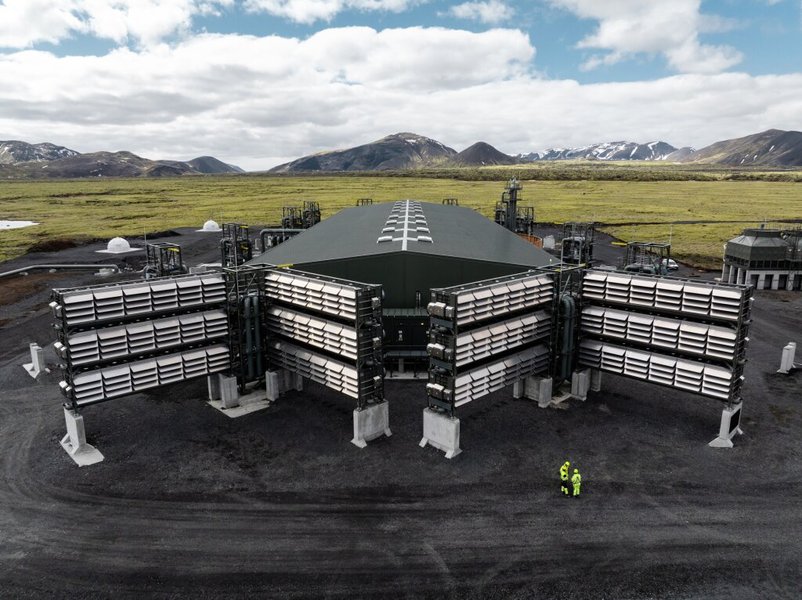
Climeworks' Mammoth plant in Iceland, the world's largest S-DAC facility as of its launch, exemplifies the scaling of solid sorbent technology.
Liquid Direct Air Capture (L-DAC): A Complementary Role
L-DAC technologies typically involve passing air through a chemical solution (e.g., an aqueous hydroxide solution) that absorbs CO2. The CO2 is then released from the solvent through a series of chemical processes, often requiring high temperatures, and prepared for storage or use.
Market Position and Specific Applications
While L-DAC systems are established and operational, they are generally projected to hold a smaller market share compared to S-DAC in Europe. Their role is likely to be complementary, potentially favored in specific industrial integrations or where certain by-products of the L-DAC process can be utilized.
Challenges for L-DAC in achieving market dominance include higher energy requirements for solvent regeneration and potentially more complex plant designs. However, ongoing research aims to improve their efficiency and reduce costs.
Market Volume and Deployment Trajectory
Europe is rapidly accelerating its DACCS deployment to meet its climate commitments. The EU aims for substantial carbon removal capacities in the coming decades.
Targets and Growth
By 2030, European DACCS deployment, if all planned projects materialize, could reach between 3 to 5.5 million tonnes of CO2 captured annually. Some broader carbon capture and storage (CCS) targets, which include DACCS, aim for storing at least 50 million tonnes of CO2 annually by 2030. Looking further ahead, the EU envisions approximately 200 million tonnes per year of permanent CO2 removals from atmospheric and biogenic sources by 2050, with DACCS playing a principal role. The overall EU target for CO2 capture (including industrial sources and DAC) is projected to reach 280 million tonnes by 2040, with about 25% anticipated to come from DAC.
This growth is underpinned by strong policy support, including the European Green Deal, the EU Industrial Carbon Management Strategy, and significant funding opportunities for innovative DACCS projects. Nations like Denmark, the Netherlands, and Sweden are also developing national strategies that are expected to drive large-scale DAC deployment.
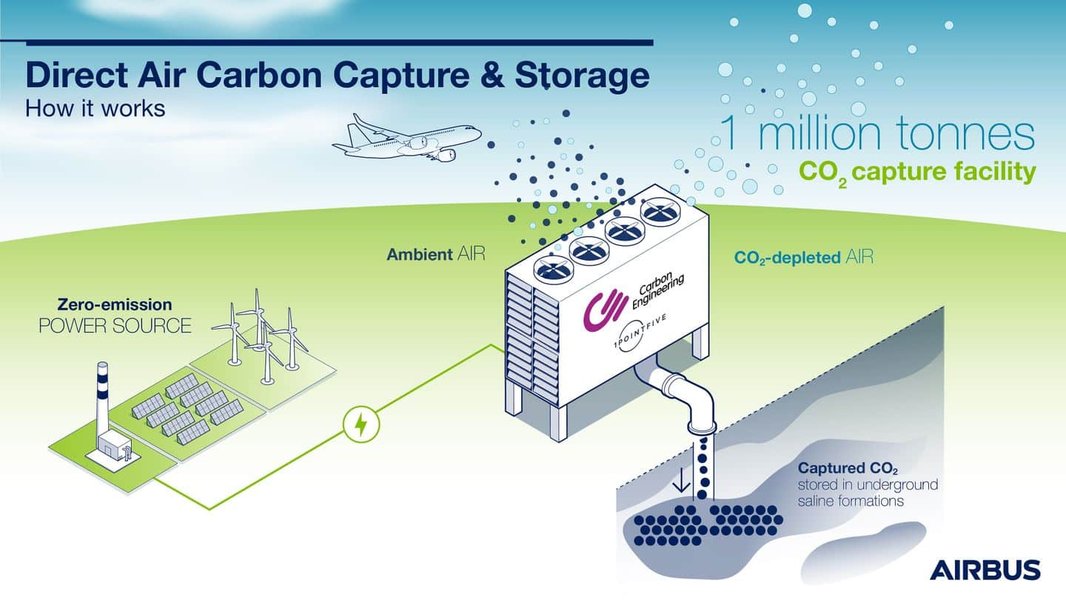
General overview of the DACCS process: Air intake, CO2 separation, and geological storage.
Cost Estimates and Projections (2030-2050)
A critical factor for the widespread adoption of DACCS technologies is their cost. Current costs are relatively high, but significant reductions are anticipated through technological innovation, learning-by-doing, and economies of scale.
Current and Near-Term Costs (up to 2030)
First-of-a-kind (FOAK) DACCS projects globally, including those in Europe, often report costs in the range of $400 to $700 per tonne of net CO2 removed. These figures are influenced by technology readiness, plant scale, energy source and cost, and local regulatory and infrastructure conditions. By 2030, as more projects come online and technologies mature, costs are expected to decrease. Some expert elicitations suggest that average DACCS costs in Europe could fall to around €280 per tonne of CO2, with S-DAC technologies, like advanced liquid solvent variants, potentially reaching around $341 per tonne of CO2 at larger cumulative capacities.
Mid-Century Cost Projections (around 2050)
The long-term cost outlook for DACCS is considerably more optimistic. Expert projections for European projects suggest that DACCS costs could fall dramatically, potentially reaching an average of around €280 (approximately $300) per tonne of CO2 by 2050. Some analyses indicate a broader potential range of $100 to $600 per tonne of CO2, contingent on the specific technology pathway, policy support, and success in innovation.
S-DAC is generally expected to be at the lower end of this cost spectrum due to its inherent advantages in energy efficiency and scalability. Cost reductions will be driven by several factors:
- Technological Learning Curves: Experience gained from deploying successive generations of plants.
- Economies of Scale: Larger plant capacities leading to lower per-unit capital costs.
- Capital Cost Reductions: Innovations in materials, manufacturing, and plant design.
- Energy Efficiency Improvements: More efficient sorbents and processes, and better heat integration.
- Integration with Renewable Energy: Access to low-cost, low-carbon energy is crucial for minimizing both the cost and the lifecycle emissions of DACCS.
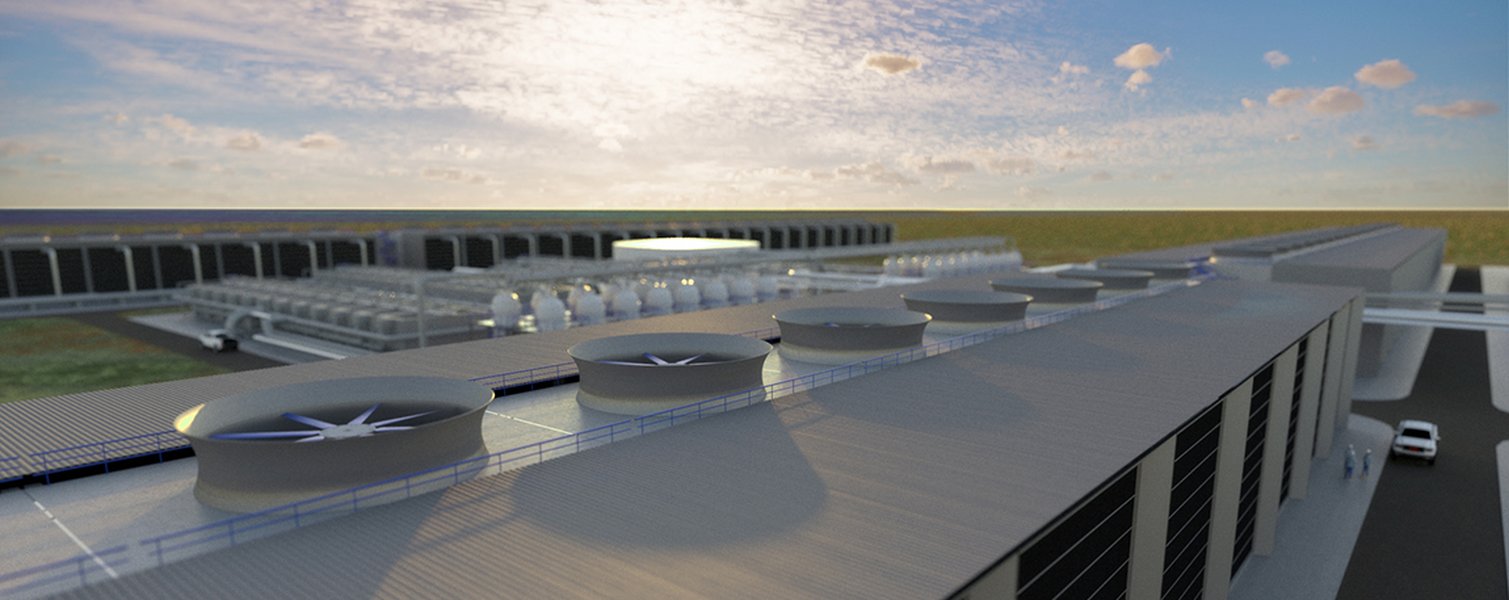
Conceptual rendering of a future large-scale DAC plant, indicative of the scale needed for significant climate impact.
Comparative Outlook: S-DAC vs. L-DAC
The following chart provides an opinionated comparison of Solid DAC (S-DAC) and Liquid DAC (L-DAC) based on several key factors relevant to their deployment in Europe from 2030-2050. The scores (out of 10, higher indicating more favorable) reflect synthesized information on their potential and current standing.
This visualization underscores the stronger projected performance of S-DAC across most critical metrics for future large-scale deployment in Europe, particularly its higher market share potential, scalability, and generally better energy efficiency profile which contributes to its cost reduction outlook.
The DACCS Ecosystem in Europe: A Mindmap View
To understand the multifaceted nature of DACCS deployment in Europe, the following mindmap outlines the key components, from technology types to market drivers and cost considerations. It illustrates the interconnected factors shaping the future of carbon removal in the region.
(Potential $100-$300/tCO2)"] id3_4["Cost Reduction Levers"] id3_4_1["Economies of Scale"] id3_4_2["Technological Learning"] id3_4_3["Renewable Energy Integration"] id3_4_4["Capital Cost Reduction"] id4["Deployment Aspects"] id4_1["CO2 Storage"] id4_1_1["Geological Storage (Saline Aquifers, Depleted Reservoirs)"] id4_2["CO2 Utilization (CCU)"] id4_2_1["Synthetic Fuels"] id4_2_2["Building Materials"] id4_2_3["Chemicals"] id5["Key Challenges"] id5_1["Initial High Costs"] id5_2["Scaling Infrastructure (Transport & Storage)"] id5_3["Energy Requirements & Sourcing"] id5_4["Public Acceptance & Regulation"]
This mindmap highlights that while technology choice is central, successful DACCS deployment is equally dependent on supportive policies, cost reductions through innovation and scale, and the development of robust CO2 transport and storage infrastructure.
Innovations in DAC Technology: Insights from an Expert
The development of more energy-efficient DAC technologies is crucial for reducing costs and improving the overall viability of DACCS. The following video features Amir Shiner, CEO of RepAir Carbon, discussing innovations in DAC technology, including approaches that aim to significantly reduce energy consumption for CO2 removal, and touches upon the European DAC landscape.
This discussion provides valuable context on the technological advancements that could underpin the cost reductions and efficiency gains projected for DACCS technologies in the coming decades. Innovations like those discussed by RepAir, focusing on electrochemical processes or novel sorbents, are key to realizing the potential of DACCS in achieving Europe's climate goals.
Summary Table: DACCS Technologies in Europe (2030-2050)
The table below summarizes the key characteristics, market projections, and cost estimates for the primary DACCS technology types anticipated in Europe for the 2030-2050 timeframe.
| Feature | Solid DAC (S-DAC) | Liquid DAC (L-DAC) |
|---|---|---|
| Capture Mechanism | Adsorption of CO2 onto solid sorbent materials. CO2 is released via heat, pressure, or electrochemical swing. | Absorption of CO2 into a liquid solvent (e.g., hydroxide solutions). CO2 is released typically via high-temperature heating. |
| Projected EU Market Share (2030-2050, within DAC) | Dominant; projected to exceed 90%, potentially over 99% of the direct air capture technology segment. | Niche applications; significantly smaller share compared to S-DAC. |
| Current/FOAK Cost (Overall DACCS) | $400 - $700 / tCO2 (as part of the overall DACCS system cost) | $400 - $700 / tCO2 (as part of the overall DACCS system cost) |
| Projected Cost by 2030 | Expected to lead cost reductions; specific S-DAC systems potentially around $341/tCO2. Average DACCS cost in Europe potentially €280/tCO2. | Costs also expected to decrease but likely to remain higher than S-DAC for large-scale deployment. |
| Projected Cost by 2050 | Expected to be at the lower end of the $100-$300/tCO2 range, with average European DACCS costs around €280/tCO2. | Potentially around $374/tCO2 or higher, less cost-competitive for bulk removal compared to advanced S-DAC. |
| Key Advantages | Generally higher energy efficiency (especially newer methods), better scalability with modular designs, potentially lower operational costs. | Established chemical processes, potential for integration with certain industrial facilities or chemical synthesis pathways. |
| Key Challenges | Sorbent degradation over time, optimizing energy for regeneration, scaling up manufacturing of sorbents and modules. | High energy demand for solvent regeneration, potential for solvent degradation and emissions, water consumption. |
This comparison underscores why S-DAC technologies are widely anticipated to form the backbone of Europe's direct air capture efforts in the decades to come, driven by their favorable techno-economic outlook.
Frequently Asked Questions (FAQ)
What exactly is DACCS?
DACCS stands for Direct Air Carbon Capture and Storage. It is a process that involves capturing carbon dioxide (CO2) directly from the ambient atmosphere (the air around us) using specialized technologies. Once captured, the CO2 is then permanently stored, typically in deep underground geological formations, to prevent it from re-entering the atmosphere. DACCS is considered a negative emissions technology because it results in a net removal of CO2 from the atmosphere.
Why is Solid DAC (S-DAC) expected to dominate in Europe?
Solid DAC (S-DAC) is expected to dominate the European market primarily due to its perceived advantages in energy efficiency, scalability, and potential for lower operational costs compared to Liquid DAC (L-DAC). Many S-DAC systems, particularly those using advanced solid sorbents, can regenerate (release the captured CO2) with lower energy inputs. Their modular design is also seen as more conducive to mass production and deployment at various scales. Ongoing research and development are rapidly improving S-DAC performance and reducing its costs.
What are the main drivers for DACCS development in Europe?
The primary drivers for DACCS development in Europe are its ambitious climate targets, including the goal of achieving net-zero greenhouse gas emissions by 2050 as outlined in the European Green Deal. DACCS is seen as essential for addressing emissions from hard-to-abate sectors (like heavy industry and aviation) and for creating negative emissions to balance out any residual emissions. Strong policy support, EU funding initiatives (e.g., through the Innovation Fund), and national carbon removal strategies are also key drivers.
How much can DACCS costs decrease by 2050?
Current DACCS costs are high, often cited in the range of $400-$700 per tonne of CO2. However, significant cost reductions are anticipated by 2050. Expert projections suggest costs could fall to an average of around €280 (approx. $300) per tonne of CO2 in Europe. Some optimistic scenarios even place costs in the $100-$200 per tonne range for mature technologies with access to cheap renewable energy. These reductions depend on technological advancements, economies of scale, learning-by-doing, and supportive policies.
What role does geological storage play in DACCS?
Geological storage is a critical component of DACCS, representing the "S" (Storage) in the acronym. After CO2 is captured from the air, it must be permanently stored to ensure it doesn't re-enter the atmosphere. Geological storage involves injecting the compressed CO2 deep underground into suitable geological formations, such as depleted oil and gas reservoirs, deep saline aquifers, or unmineable coal seams. The long-term security and permanence of this storage are vital for DACCS to be an effective climate mitigation solution.
Recommended Further Exploration
To delve deeper into related topics, consider exploring these queries:
- What are the latest advancements in Solid-DAC sorbent materials for carbon capture?
- How do European Union policies specifically support the scaling of DACCS projects?
- What are the environmental and land-use impacts of large-scale DACCS deployment?
- Explore the integration of renewable energy sources with DACCS plants to reduce their carbon footprint.
References
Last updated May 9, 2025