
The Profound and Enduring Aftermath of the Cold War
Unpacking the Global and Domestic Legacies of a Half-Century of Geopolitical Rivalry
Key Insights into the Cold War's Legacy
- Global Geopolitical Realignment: The Cold War dramatically reshaped the international system, leading to a bipolar world dominated by the U.S. and the Soviet Union, the formation of opposing alliances like NATO and the Warsaw Pact, and a subsequent unipolar moment with the U.S. as the sole superpower after 1991.
- Technological Acceleration and Innovation: The intense ideological and arms race competition spurred unprecedented advancements in nuclear technology, space exploration (the Space Race), computing (leading to the internet's genesis), and military strategies like proxy wars and mutually assured destruction (MAD).
- Profound Societal and Economic Shifts: Both the U.S. and the Soviet Union experienced significant domestic transformations, including the rise of the military-industrial complex, widespread anti-communist sentiment and the Red Scare in the U.S., economic hardship in the post-Soviet era, and a lasting impact on education, civil liberties, and national identity.
The Cold War, a period of intense geopolitical and ideological rivalry between the United States and the Soviet Union and their respective allies, spanned from the end of World War II in 1945 until the dissolution of the Soviet Union in 1991. Characterized by a lack of direct military conflict between the two superpowers—hence the term "cold"—this era was defined by a multifaceted struggle waged across political, economic, propaganda, espionage, and technological fronts. Its culmination profoundly reshaped the global landscape and left an indelible mark on domestic policies, societies, and international relations that continues to reverberate today.
A World Divided: Geopolitical Restructuring and Ideological Clash
The Cold War fundamentally altered the structure of international politics, creating a deeply divided world. The emergence of two opposing blocs—the capitalist Western Bloc led by the United States and the communist Eastern Bloc spearheaded by the Soviet Union—defined alliances, military strategies, and diplomatic engagements for nearly five decades.
The Formation of Global Blocs and Alliances
Following World War II, the Soviet Union solidified its control over Eastern European countries, establishing satellite governments that led to the metaphorical "Iron Curtain" dividing Europe. In response to perceived Soviet expansionism and the spread of communism, the United States, along with its Western European allies, formed the North Atlantic Treaty Organization (NATO) in 1949. This military alliance was a collective defense pact designed to counter Soviet aggression. The Soviet Union countered this with the creation of the Warsaw Pact in 1955, formalizing its military alliance with Eastern European communist governments. This division led to a global geopolitical realignment, forcing many countries to align with one superpower or risk isolation.
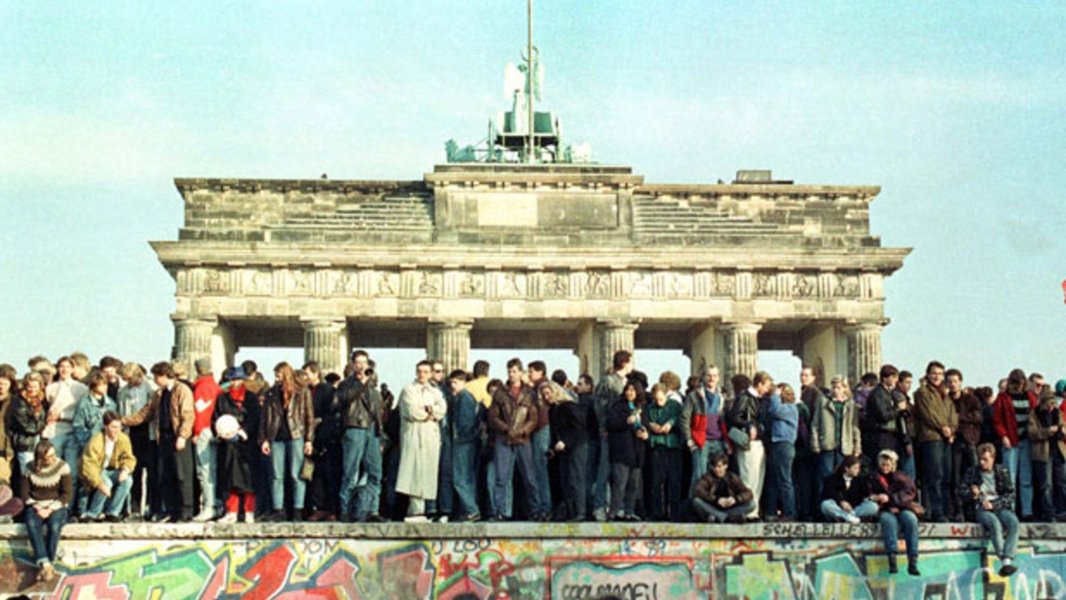
The Berlin Wall, a stark physical representation of the ideological and political divide during the Cold War.
The Strategy of Containment and Proxy Wars
U.S. foreign policy during the Cold War was largely defined by the doctrine of containment, aiming to halt the spread of communism and limit its influence globally. This policy led to significant American involvement in various regional conflicts, often referred to as "proxy wars," where the superpowers supported opposing sides without direct military engagement. Notable examples include the Korean War (1950-1953) and the Vietnam War (1955-1975), which proved devastating to military forces on both sides and disrupted civilian lives. Millions died in these proxy conflicts, particularly in Southeast Asia. These wars also saw the development of new warfare strategies, including asymmetric warfare.
The Cuban Missile Crisis: A Brink of Nuclear Annihilation
The Cold War's stakes were perilously high due to the constant threat of nuclear warfare. The Cuban Missile Crisis in 1962, sparked by the deployment of Soviet missiles in Cuba in response to U.S. missiles in Europe, brought the world to the brink of nuclear catastrophe. This event highlighted the doctrine of Mutually Assured Destruction (MAD), where both superpowers possessed enough nuclear weapons to destroy each other, effectively deterring a full-scale nuclear attack but maintaining a state of constant tension.
Technological Races and Unforeseen Innovations
The intense competition between the U.S. and the USSR fueled an unprecedented race for scientific and technological supremacy, leading to advancements that profoundly impacted modern society.
The Nuclear Arms Race
Nuclear power was central to the Cold War. President Harry Truman's decision to drop atomic bombs on Japan in 1945 marked the dawn of the nuclear age, and the subsequent Soviet development of nuclear weapons intensified the arms race. Both nations invested heavily in developing and stockpiling conventional and nuclear weapons, leading to concerns about nuclear proliferation even after the Cold War's end. This arms race spurred the permanent creation of a powerful peacetime defense and armaments industry, famously dubbed the "military-industrial complex" by President Dwight D. Eisenhower.
The Space Race and Beyond
The technological rivalry extended into space with the "Space Race," a competition to achieve superior spaceflight capabilities. The Soviet Union's launch of Sputnik in 1957 and Yuri Gagarin becoming the first human in space spurred the U.S. to accelerate its own space program, culminating in the Apollo 11 moon landing. These advancements not only showcased national prowess but also drove significant innovations in rocketry, materials science, and computing.
Beyond these highly visible competitions, the Cold War indirectly spurred the development of technologies like the internet, initially conceived for military purposes, and advanced espionage tools, which later found civilian applications, profoundly impacting the modern world.
Domestic Echoes: Societal and Economic Transformation
The Cold War had far-reaching domestic effects within both the United States and the Soviet Union, influencing social structures, economic policies, and national psychology.
Impact on the United States
In the U.S., the Cold War fostered a pervasive sense of anti-communism and fear. The "Red Scare" of the late 1940s and 1950s, fueled by figures like Senator Joseph McCarthy, led to widespread suspicion, blacklisting, and violations of civil liberties for those perceived as communist sympathizers. This era promoted conformity and influenced education, with a struggle for control over curricula to counter perceived socialist ideas. Economically, the Cold War spurred enormous growth in war-related industries, aided by heavy government expansion and investment in infrastructure like the interstate highway system, initially envisioned for troop movement.
This radar chart illustrates a comparative analysis of the Cold War's impact on the United States and the Soviet Union/Russia across several key dimensions. It provides a visual representation of how both superpowers were affected, highlighting areas of greater or lesser influence. For instance, both nations experienced significant military spending, but the Cold War's end led to a severe economic decline in Russia, contrasting with continued U.S. economic growth. The chart also visually depicts the profound geopolitical restructuring that divided the world into two blocs and the intense technological rivalry that pushed the boundaries of innovation in both nations.
Impact on the Soviet Union and its Successor States
For the Soviet Union, the Cold War was equally formative. While state propaganda often fostered animosity towards the U.S., many Soviet citizens did not necessarily harbor personal animosity but did fear nuclear war, particularly during events like the Cuban Missile Crisis. The final years of the Cold War saw growing unrest, symbolized by the tearing down of the Berlin Wall and massive protest movements in several Soviet republics. The dissolution of the Soviet Union in 1991, which marked the end of the Cold War, led to significant economic challenges in Russia, including a dramatic cut in military spending and a severe recession in the 1990s. Millions were left unemployed, and living standards worsened, though the economy experienced significant growth after 1998, returning to 1989 GDP levels by 2005.
Enduring Legacies in the Modern World
The impact of the Cold War did not simply cease with the fall of the Soviet Union. Its legacies continue to shape contemporary international relations, technological landscapes, and societal norms.
Global Shifts and New World Order
The end of the Cold War ushered in what is widely considered a unipolar world, with the United States emerging as the sole remaining "hyperpower." This shift profoundly influenced international politics, shaping alliances and military strategies. While the U.S. gained immense influence, other rising powers also emerged, holding significant sway. The Cold War also influenced decolonization processes, as superpowers often competed to influence anti-colonial movements.
A Cultural and Ideological Aftermath
The ideological struggle between capitalism and communism had a profound effect on civil society globally. The embrace of democratic ideals by many countries, coupled with citizens gaining voting rights and political participation, can be seen as a legacy. The competition between American and Soviet athletes at the Olympic games, occurring every two years, also served as a cultural battleground, further showcasing the rivalry beyond military and political spheres.
This video, "The Cold War: Crash Course US History #37," provides an excellent overview of the Cold War, including its impact on domestic policy, espionage, McCarthyism, and the Red Scare. It's highly relevant to understanding the societal and political transformations within the United States during this tumultuous period.
Lingering Nuclear Concerns and Military Doctrine
Despite significant decreases, the nuclear arsenals created during the Cold War still exist, posing an ongoing concern about their potential future use. The concept of "mutually assured destruction" continues to influence strategic thinking and has been a major factor in maintaining a fragile peace among major powers. Moreover, strategies like proxy wars and asymmetric warfare developed during the Cold War remain relevant in contemporary conflicts.
Key Areas of Enduring Impact
The table below summarizes the key areas where the Cold War left a lasting impact:
| Impact Area | Description of Cold War Influence | Long-Term Legacy/Present-Day Relevance |
|---|---|---|
| Geopolitical Structure | Bipolar world, formation of NATO and Warsaw Pact, division of Europe (Iron Curtain). | Emergence of unipolar world (U.S. hyperpower), regional alliances, ongoing international relations dynamics, and lingering regional instabilities from proxy conflicts. |
| Military & Defense | Nuclear arms race, development of MAD doctrine, rise of military-industrial complex, widespread proxy wars. | Existing nuclear arsenals, continued influence of MAD in deterrence, advanced military technologies, and the enduring presence of defense industries. |
| Technology & Innovation | Space Race (satellites, space exploration), advancements in computing (Internet origins), espionage technology. | Foundational technologies for modern communication and space industries, continued scientific research driven by national security concerns. |
| Domestic Policy & Society (U.S.) | Red Scares, anti-communism, impact on civil liberties, government spending on infrastructure and defense, cultural conformity. | Debates on national security vs. civil liberties, public perception of government intervention, and the entrenchment of defense spending in national budgets. |
| Domestic Policy & Society (Former USSR) | Economic hardship post-dissolution, shift from planned to market economy, social upheaval, and national identity restructuring. | Current economic and political landscapes of former Soviet republics, ongoing challenges of economic transition, and evolving national identities. |
| Culture & Ideology | Global ideological divide (capitalism vs. communism), propaganda, cultural competition (e.g., Olympics). | Prevalence of democratic ideals, understanding of ideological competition, and the lasting impact of historical narratives on national self-perception. |
Frequently Asked Questions (FAQ)
What was the primary characteristic that defined the Cold War?
How did the Cold War influence technological development?
What was the "military-industrial complex" and its significance?
Did the Cold War have a positive legacy?
How did the Cold War affect ordinary citizens?
Conclusion
The Cold War, a unique and protracted ideological struggle, cast a long shadow across the 20th century, profoundly reshaping global politics, economics, and societies. From the division of the world into two competing blocs and the constant threat of nuclear annihilation to the unprecedented technological advancements and deep-seated domestic transformations, its impact was multifaceted and pervasive. Even decades after its formal end, the legacies of the Cold War—including the existing nuclear arsenals, the architecture of international alliances, and the enduring influence of military-industrial complexes—continue to define many aspects of our contemporary world, underscoring its lasting relevance and the importance of understanding this critical period in history.
Recommended Further Exploration
- How did the Cold War impact decolonization movements?
- What were the economic consequences of the Cold War for Eastern Europe?
- Analyze the role of espionage and propaganda during the Cold War.
- How did the Cold War shape contemporary global security challenges?
Referenced Search Results
 tradshad.wordpress.com