
Comprehensive Notes on Cold War Politics
A Detailed Exploration of History, Ideologies, and Global Impacts
Key Takeaways
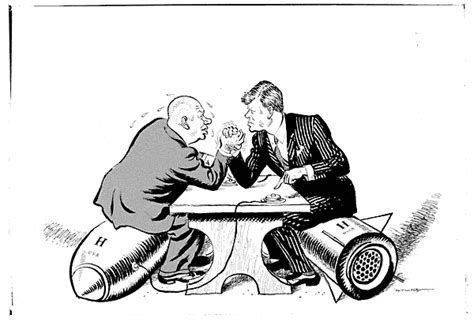
- Ideological Clash: The Cold War was fundamentally driven by the opposing ideologies of capitalism and communism, shaping global alliances and conflicts.
- Global Arenas: The rivalry manifested across various regions, including Europe, Asia, Latin America, Africa, and space, influencing international relations and domestic policies.
- Lasting Impact: The Cold War's legacy continues to influence contemporary geopolitics, military strategies, and economic systems worldwide.
1. Historical and Ideological Context
1.1 Origins and Emergence
The Cold War, spanning from 1947 to 1991, was a period of intense geopolitical tension between the United States (US) and the Soviet Union (USSR), the two preeminent superpowers emerging from World War II. Unlike traditional warfare, the conflict was characterized by ideological, political, economic, and military competition without direct large-scale warfare between the adversaries. The term "Cold War" was coined by George Orwell in 1945, encapsulating the state of hostility without active combat.
1.2 Ideological Foundations
The Cold War was underpinned by a profound ideological divide:
- Capitalism vs. Communism: The US advocated for liberal democracy and free-market capitalism, emphasizing individual liberties and private enterprise. In contrast, the USSR promoted Marxist-Leninist communism, focusing on state-controlled economies, collective ownership, and one-party rule.
- Democracy vs. Authoritarianism: The US model emphasized political pluralism and democratic institutions, while the Soviet model centered on authoritarian governance to maintain state control and suppress dissent.
- Economic Systems: The capitalist economy prized innovation and competition, whereas the communist system prioritized centralized planning and equal distribution of resources.
- Individual Rights vs. Collective Welfare: Capitalism underscored individual freedoms and rights, while communism emphasized collective welfare and societal goals.
2. Doctrines and Policies
2.1 Key Doctrines
- Truman Doctrine (1947): Established the US policy of containment, pledging support to nations resisting communist influence. Initially applied to Greece and Turkey, it set the precedent for US interventionism during the Cold War.
- Marshall Plan (1948): A massive economic aid program aimed at rebuilding Western European economies to prevent the spread of communism through economic stability and growth.
- Policy of Containment: Articulated by diplomat George Kennan, this strategy aimed to halt the expansion of Soviet influence globally through diplomatic, economic, and military means.
- Brezhnev Doctrine (1968): Asserted the USSR's right to intervene in socialist countries to maintain communist regimes, justifying actions such as the invasion of Czechoslovakia.
- Mutual Assured Destruction (MAD): A nuclear deterrence strategy ensuring that both superpowers possessed sufficient nuclear capabilities to destroy each other, thereby preventing the initiation of nuclear war.
2.2 Strategic Initiatives and Policies
- Containment Strategy: Beyond Kennan's initial articulation, this strategy encompassed various initiatives, including economic aid, military alliances, and support for anti-communist movements to curb Soviet expansion.
- Détente (1962-1979): A period of eased tensions and improved diplomatic relations between the US and USSR, marked by treaties like SALT I and the Helsinki Accords.
- Strategic Defense Initiative (SDI): Announced by President Ronald Reagan in 1983, this ambitious project aimed to develop space-based missile defense systems to neutralize Soviet nuclear capabilities.
3. Major Events and Timelines
3.1 Early Cold War (1945-1962)
- 1945-1947: Post-WWII tensions arise as Allied cooperation dissolves; Churchill's "Iron Curtain" speech (1946) symbolizes the division of Europe.
- 1947: Implementation of the Truman Doctrine and launch of the Marshall Plan.
- 1948-1949: Berlin Blockade and Airlift — the USSR attempts to force Western Allies out of Berlin, leading to a massive airlift to supply the city.
- 1949: Formation of NATO as a military alliance of Western nations; USSR successfully tests its first atomic bomb and witnesses the communist takeover in China.
- 1950-1953: Korean War — a proxy conflict between North Korea (supported by China and USSR) and South Korea (backed by the US and UN).
- 1955: Establishment of the Warsaw Pact as a Soviet counterpart to NATO.
- 1961: Bay of Pigs Invasion — a failed US-backed attempt to overthrow Cuban leader Fidel Castro; construction of the Berlin Wall begins.
- 1962: Cuban Missile Crisis — a 13-day standoff over Soviet missiles in Cuba, bringing the world to the brink of nuclear war.
3.2 Détente (1962-1979)
- Period marked by reduced tensions and increased diplomatic engagements between the US and USSR.
- 1963: Limited Test Ban Treaty signed to prohibit nuclear tests in the atmosphere, outer space, and underwater.
- 1972: SALT I Treaty — Strategic Arms Limitation Talks result in agreements to limit nuclear missile deployment.
- 1975: Helsinki Accords — A major diplomatic agreement promoting human rights and easing East-West tensions.
3.3 Second Cold War and Its Conclusion (1979-1991)
- 1979: Soviet invasion of Afghanistan sparks US response, including the Carter Doctrine and Olympic boycott.
- 1983: Launch of the Strategic Defense Initiative (SDI) by President Reagan, intensifying the arms race.
- 1985-1991: Leadership of Mikhail Gorbachev in the USSR introduces policies of glasnost (openness) and perestroika (restructuring), fostering reform and improved relations with the West.
- 1989: Fall of the Berlin Wall symbolizes the collapse of communist regimes in Eastern Europe and the nearing end of the Cold War.
- 1991: Dissolution of the Soviet Union officially marks the end of the Cold War, leading to the emergence of the US as the sole superpower.
4. Treaties and Agreements
4.1 Key Treaties
| Treaty | Year | Purpose |
|---|---|---|
| Truman Doctrine | 1947 | Containment of communism through economic and military aid |
| Marshall Plan | 1948 | Economic reconstruction of Western Europe to prevent communist influence |
| NATO Treaty | 1949 | Military alliance of Western nations against Soviet aggression |
| Warsaw Pact | 1955 | Soviet-led military alliance opposing NATO |
| Limited Test Ban Treaty | 1963 | Prohibition of nuclear tests in specific environments |
| SALT I & II | 1972 & 1979 | Limitation of strategic nuclear arms |
| INF Treaty | 1987 | Elimination of intermediate-range nuclear missiles |
| Helsinki Accords | 1975 | Promotion of human rights and easing of East-West tensions |
5. Arenas of the Cold War
5.1 Europe
Europe was the primary battleground of the Cold War, epitomized by the division of Germany into East and West. The Iron Curtain symbolized the ideological and physical barrier between NATO-aligned Western Europe and Soviet-controlled Eastern Europe. Key events included the Berlin Blockade, the construction and fall of the Berlin Wall, and numerous proxy conflicts within allied nations.
5.2 Asia
In Asia, the Cold War was marked by significant conflicts and power shifts:
- Korean War (1950-1953): A proxy war between North Korea (supported by China and the USSR) and South Korea (backed by the US and UN).
- Vietnam War (1955-1975): A prolonged conflict where the US supported South Vietnam against the communist North, leading to significant loss and regional impact.
- Soviet-Afghan War (1979-1989): The USSR's invasion of Afghanistan prompted US support for Afghan mujahideen, intensifying Cold War tensions.
- Chinese Communist Revolution: The establishment of the People's Republic of China in 1949 aligned the country with the Soviet bloc initially, though later Sino-Soviet split altered dynamics.
5.3 Latin America
Latin America became a critical arena for Cold War interventions:
- Cuban Missile Crisis (1962): The discovery of Soviet missiles in Cuba escalated US-Soviet tensions to a near-nuclear confrontation.
- Interventions in Chile and Nicaragua: The US supported coups and anti-communist movements to prevent the spread of socialism in the region.
5.4 Africa
Africa witnessed numerous proxy wars influenced by the superpowers:
- Angola and Mozambique: Civil wars fueled by support from the US and USSR for rival factions.
- Ethiopia: Soviet support for the Derg regime contrasted with US backing of Somali factions.
5.5 Space Race
The competition for technological and scientific supremacy extended into space:
- Sputnik (1957): The USSR launched the first artificial satellite, igniting the Space Race.
- Apollo 11 (1969): The US achieved a monumental victory by landing the first humans on the Moon.
- Continued advancements included space stations, lunar missions, and satellite deployments reflecting broader Cold War rivalries.
5.6 Arms Race
The accumulation of nuclear and conventional weapons defined the Cold War arms race:
- Massive stockpiling of nuclear arsenals by both superpowers.
- Development of second-strike capabilities ensuring mutual destruction in case of nuclear war.
- Deployment of intercontinental ballistic missiles (ICBMs), submarines, and strategic bombers.
6. Role of Leaders
6.1 United States Leaders
- Harry S. Truman (1945-1953): Implemented the Truman Doctrine and Marshall Plan, establishing the foundation for the US policy of containment.
- Dwight D. Eisenhower (1953-1961): Advocated for a policy of "massive retaliation" and oversaw significant infrastructural projects like the Interstate Highway System.
- John F. Kennedy (1961-1963): Managed the Cuban Missile Crisis and advanced the US Space Race efforts.
- Ronald Reagan (1981-1989): Promoted the Strategic Defense Initiative and engaged in arms reduction treaties with Gorbachev, contributing to the end of the Cold War.
6.2 Soviet Leaders
- Joseph Stalin (1924-1953): Centralized power, expanded Soviet influence in Eastern Europe, and initiated the Berlin Blockade.
- Nikita Khrushchev (1953-1964): Led during the Cuban Missile Crisis, initiated de-Stalinization, and pursued policies of peaceful coexistence.
- Leonid Brezhnev (1964-1982): Oversaw the Brezhnev Doctrine and the Soviet invasion of Afghanistan.
- Mikhail Gorbachev (1985-1991): Introduced glasnost and perestroika, fostering reforms that contributed to the dissolution of the USSR.
6.3 Other Influential Leaders
- Mao Zedong: Leader of the People's Republic of China, initially aligned with the USSR before the Sino-Soviet split.
- Fidel Castro: Cuban leader whose alignment with the USSR led to significant Cold War confrontations, notably the Cuban Missile Crisis.
- Ho Chi Minh: North Vietnamese leader whose struggle against South Vietnam and its US allies was a central theater of the Cold War.
7. Impact and Legacy
7.1 Global Division and Alliances
The Cold War established a bipolar world order, dividing nations into two major blocs led by the US and the USSR. This division gave rise to enduring alliances such as NATO and the Warsaw Pact, shaping international relations for decades. The non-aligned movement also emerged, representing countries striving to remain neutral amidst the superpower rivalry.
7.2 Arms Race and Military Buildup
Both superpowers engaged in an unprecedented arms race, amassing vast nuclear arsenals and pioneering advanced military technologies. This buildup created a state of MAD, deterring direct military confrontation but fostering a perpetual state of readiness and fear of nuclear annihilation.
7.3 Proxy Wars and Regional Conflicts
The Cold War was characterized by numerous proxy wars where the US and USSR supported opposing factions, leading to significant human and economic costs. Conflicts in Korea, Vietnam, Afghanistan, and various African nations resulted in extensive loss of life and regional destabilization.
7.4 Technological and Scientific Advancements
The competition extended beyond the battlefield to areas like space exploration and technological innovation. The Space Race accelerated advancements in satellite technology, computing, and aerospace engineering, leaving a lasting legacy on modern technology and global connectivity.
7.5 Economic Implications
The Cold War exerted significant economic pressure on both superpowers, with massive military expenditures affecting domestic economies. While the US leveraged its economic strength to influence global markets, the USSR struggled with economic stagnation, contributing to its eventual collapse.
7.6 Social and Cultural Impacts
Propaganda campaigns, cultural exchanges, and social movements were deeply influenced by Cold War dynamics. The US and USSR sought to project their ideologies globally, affecting everything from education systems to popular culture and civil rights movements.
7.7 Political Legacy
The dissolution of the USSR marked the end of the Cold War, leading to the US's emergence as the sole superpower. The geopolitical landscape was reshaped with the rise of new powers and the redefinition of international institutions. Modern alliances, security frameworks, and international policies continue to be influenced by the Cold War's historical context.
8. Scholars and Influential Works
8.1 Notable Scholars
- John Lewis Gaddis: Renowned for his works such as The Cold War: A New History, providing comprehensive analyses of the Cold War's dynamics.
- George F. Kennan: His "Long Telegram" and subsequent writings laid the intellectual foundation for US containment policy.
- Anne Applebaum: Author of Iron Curtain, detailing the Soviet suppression of Eastern Europe.
- Zbigniew Brzezinski: In The Grand Chessboard, he discusses American geopolitical strategies during and post-Cold War.
8.2 Influential Books
-
The Cold War: A New History by John Lewis Gaddis
-
The Global Cold War by Odd Arne Westad
-
American Diplomacy by George Kennan
-
Diplomacy by Henry Kissinger
-
Postwar: A History of Europe Since 1945 by Tony Judt
-
Iron Curtain: The Crushing of Eastern Europe, 1944–1956 by Anne Applebaum
9. Additional Information
9.1 Cultural Cold War
The Cold War extended into cultural arenas, with both superpowers leveraging propaganda, arts, sports, and educational exchanges to promote their respective ideologies. Olympic competitions became symbolic battlegrounds, reflecting broader geopolitical tensions.
9.2 Nuclear Deterrence and MAD
Mutual Assured Destruction (MAD) became a cornerstone of nuclear diplomacy, ensuring that neither side would initiate a nuclear conflict due to the guaranteed catastrophic retaliation. This doctrine maintained a precarious peace, emphasizing the importance of strategic stability.
9.3 Legacy and Modern Implications
The Cold War's conclusion reshaped global politics, paving the way for globalization, the rise of new economic powers, and the establishment of international institutions that continue to govern global interactions. The ideological battles and strategic alliances formed during this period still influence contemporary geopolitical strategies and conflicts.
9.4 Continuing Legacies
The end of the Cold War did not eliminate all tensions. Emerging challenges such as the rise of China, regional conflicts in former Soviet states, and ongoing nuclear proliferation issues trace their roots to the Cold War era's unresolved dynamics and structures.
Conclusion
The Cold War was a defining period of the 20th century, characterized by its ideological struggles, geopolitical maneuvers, and profound global impacts. Spanning over four decades, it influenced the political, economic, and social fabric of nations worldwide. The legacy of the Cold War continues to shape today's international relations, military strategies, and societal structures, underscoring its enduring significance in contemporary history.
References
Last updated January 19, 2025