
Unlocking Future Skills: Syllabi for a Dynamic Educational Landscape
Comprehensive course designs integrating cutting-edge technology and immersive experiential learning for tomorrow's challenges.
Embark on a journey through three meticulously designed courses, crafted to equip learners with essential skills for the modern world. This overview provides detailed syllabi, explores relevant educational technologies, and outlines impactful experiential learning opportunities. As of today, Thursday, 2025-05-22, these frameworks reflect current best practices in instructional design and pedagogical innovation.
Highlights: Core Tenets of Our Course Designs
- Comprehensive Learning Pathways: Each syllabus offers clearly defined key learning units, course formats, and essential materials, ensuring a structured and progressive educational experience.
- Technology-Enhanced Education: We identify state-of-the-art EdTech tools tailored to enrich teaching methodologies and foster student engagement across diverse learning environments.
- Immersive Experiential Learning: Courses are designed with multiple hands-on opportunities, bridging theoretical knowledge with practical application to deepen understanding and skill acquisition.
Course 1: Navigating the Digital Frontier: Data, AI, and Society
Course Overview
This course provides a comprehensive exploration of the modern digital landscape, with a strong focus on data science principles, the transformative power of Artificial Intelligence (AI), and their societal implications. Students will develop foundational knowledge in data handling, understand the mechanics and applications of AI, and critically examine the ethical, privacy, and communication challenges in our increasingly connected world.
Key Learning Units
- Foundations of the Digital Age & Data Science: Understanding the digital revolution, core concepts (internet, data, algorithms), historical milestones, data types, and the data science workflow.
- Data Collection, Cleaning, and Exploratory Analysis: Methods and tools for acquiring data, data preprocessing techniques, data visualization, and generating summary statistics.
- Introduction to Artificial Intelligence and Machine Learning: Core AI concepts, supervised and unsupervised machine learning methods, practical applications, and limitations.
- Digital Communication & Social Media Dynamics: Evolution of online communication, the role of social media in information dissemination, online identity formation, and digital citizenship.
- Cybersecurity, Data Privacy, and Digital Ethics: Fundamentals of cybersecurity threats, data protection principles (e.g., GDPR), ethical considerations in AI development, data usage, and algorithmic bias.
- Emerging Technologies and the Future of Work: Exploration of Virtual Reality (VR), Augmented Reality (AR), the Metaverse, and their impact on various industries and the future job market.
Course Format
This course will employ a blended learning model. It combines asynchronous online modules, including video lectures and readings, with weekly synchronous virtual seminars (90 minutes) for discussions, Q&A, and collaborative problem-solving. Lab sessions will provide hands-on experience with data tools and AI models. Assessments will include quizzes, data analysis assignments, a case study on digital ethics, and a final project focusing on a real-world digital challenge.
Course Materials
- Primary Text: "Data Science from Scratch, 2nd Edition" by Joel Grus.
- Supplementary Readings: A curated collection of academic papers, industry reports, and articles on current trends in AI, cybersecurity, and digital ethics.
- Software: Python (with libraries like Pandas, NumPy, Scikit-learn, Matplotlib), Jupyter Notebooks, access to cloud computing platforms for AI model training.
- Online Resources: Datasets from Kaggle, tutorials from industry leaders, and access to a dedicated Learning Management System (LMS) for all course content.
Course 2: Pathways to Sustainability: Environmental Stewardship and Global Action
Course Overview
This interdisciplinary course delves into the complex challenges of environmental sustainability and social equity. Students will explore the scientific underpinnings of environmental issues like climate change and resource depletion, analyze the socio-economic and political dimensions of sustainability, and develop critical thinking skills to propose and evaluate solutions for a more sustainable and just future at local and global levels.
Key Learning Units
- Introduction to Environmental Science & Sustainability: Defining sustainability (environmental, social, economic pillars), historical overview of environmentalism, and core ecological principles.
- Climate Change: Science, Impacts, and Mitigation: The science of climate change, its multifaceted impacts on ecosystems and societies, and strategies for mitigation and adaptation.
- Renewable Energy & Sustainable Resource Management: Exploration of renewable energy technologies (solar, wind, etc.), principles of water, land, and biodiversity conservation, and sustainable resource utilization.
- Environmental Policy, Governance, and Justice: Analysis of environmental regulatory frameworks, global environmental agreements, understanding environmental inequalities, and the principles of environmental justice.
- Sustainable Development Goals (SDGs) & Community Engagement: In-depth study of the UN SDGs, case studies of successful sustainable development initiatives, and strategies for individual and collective action.
- Circular Economy & Sustainable Consumption: Principles of the circular economy (reduce, reuse, recycle, redesign), promoting sustainable production patterns, and fostering responsible consumer behavior.
Course Format
The course will feature a mix of lectures, seminar-style discussions (twice weekly, 60 minutes each), documentary screenings, and guest lectures from environmental scientists, policymakers, and activists. Group projects will focus on analyzing local sustainability challenges and developing actionable solutions. Weekly readings and reflection essays will foster critical engagement with the material. Field visits to relevant sites (e.g., renewable energy installations, conservation areas) will be incorporated where feasible.
Course Materials
- Primary Text: "Environmental Science: A Global Concern, 15th Edition" by Cunningham and Cunningham.
- Reports & Documents: Publications from the IPCC, UN Environment Programme, and relevant governmental agencies.
- Case Studies: A collection of case studies highlighting successful sustainability initiatives and complex environmental challenges.
- Digital Tools: Access to GIS software for mapping exercises, online databases for environmental data, and data visualization tools.
Course 3: Crafting Narratives in the Digital Age: Creative Expression and Storytelling
Course Overview
This workshop-intensive course introduces students to the art and craft of digital storytelling, blending traditional narrative techniques with contemporary digital media tools. Students will learn to create compelling stories across various formats—including text, image, audio, and video—and for diverse audiences and platforms. Emphasis is placed on practical skills, creative exploration, and ethical considerations in digital content creation.
Key Learning Units
- Foundations of Storytelling: Universal elements of narrative (character, plot, setting, theme, voice), adapting traditional structures for digital contexts, and understanding audience and purpose.
- Creative Writing Techniques: Exploring techniques for fiction (e.g., dialogue, pacing), poetry (e.g., imagery, form), and creative nonfiction (e.g., memoir, literary journalism).
- Visual Storytelling: Photography & Graphic Design: Principles of composition, using images to convey emotion and information, and an introduction to graphic design tools for digital narratives.
- Audio Storytelling: Podcasting & Sound Design: Elements of effective audio narration, interviewing techniques, sound recording and editing, use of music and sound effects, and producing short-form audio pieces.
- Video Storytelling: Production & Editing: Basic videography (framing, lighting, sound), non-linear video editing software, and crafting short video narratives for web and social media.
- Interactive & Multiplatform Narratives: Exploring non-linear storytelling, transmedia projects, designing for user interaction, and ethical content distribution.
- The Writer's Craft: Peer Review, Revision & Publishing Pathways: Developing skills in giving and receiving constructive criticism, effective revision strategies, and understanding contemporary publishing opportunities.
Course Format
This is a hands-on, workshop-style course. Weekly sessions (2.5 hours) will include in-class writing exercises, technical demonstrations, peer critique groups, and project-based work. Students will maintain a digital portfolio of their work throughout the semester. Guest speakers (authors, digital media creators) will provide industry insights. Significant time will be dedicated to individual and collaborative creative projects.
Course Materials
- Anthology: A curated collection of exemplary short stories, poems, essays, and digital narratives.
- Craft Texts: "The Elements of Style" by Strunk and White; "Story Genius" by Lisa Cron.
- Software Access: Word processing software, free/open-source audio and video editing tools (e.g., Audacity, DaVinci Resolve), and online platforms for portfolio creation.
- Equipment: Access to a smartphone or basic camera for photo/video assignments; microphone (can be smartphone-based).
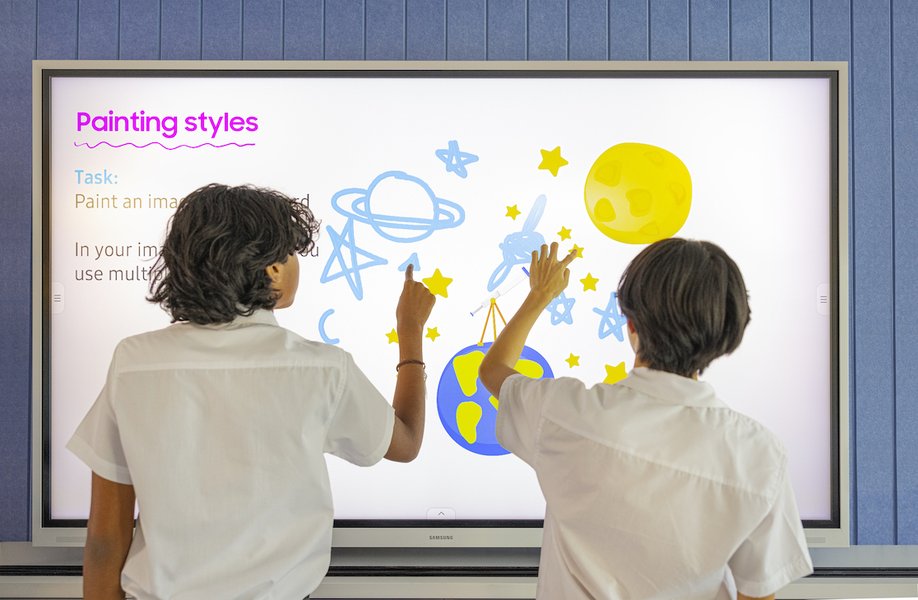
Students engaging in collaborative learning, a cornerstone of modern education.
Recommended Technology and Tools for Enhanced Learning
The effective delivery of these courses can be significantly enhanced by a strategic selection of technology and tools. These resources support various pedagogical approaches, from content delivery and collaboration to assessment and creative production.
Cross-Course Platforms & General Tools
These tools are versatile and can be applied across all three courses:
- Learning Management Systems (LMS): Platforms like Canvas, Moodle, or Google Classroom are essential for organizing course content, assignments, grades, and communication.
- Collaborative Workspaces: Tools such as Google Workspace (Docs, Sheets, Slides), Microsoft Teams, Padlet (digital bulletin board), and Mural (digital whiteboard) facilitate group projects and discussions.
- Interactive Presentation & Engagement: Nearpod, Pear Deck, Mentimeter, and Kahoot! allow for interactive lessons, real-time polling, and gamified quizzes to boost student participation.
- Content Creation & Delivery: Canva for designing visual aids and documents, Screencastify for creating screen recordings and video tutorials, and EDpuzzle for making video lessons interactive.
- Communication Tools: Video conferencing software like Zoom or Google Meet for synchronous sessions and virtual office hours.
Visualizing EdTech Tool Categories
The following mindmap illustrates the key categories of educational technology tools that can support these courses, providing a visual overview of the diverse digital resources available to educators and students.
Course-Specific Tools
For Navigating the Digital Frontier: Data, AI, and Society
- Programming Environments: Jupyter Notebooks, Anaconda Distribution, Google Colab for Python programming.
- Data Visualization: Tableau Public, Power BI, Matplotlib/Seaborn (Python libraries).
- Data Repositories: Kaggle for datasets and competitions, various public government data portals.
- AI/ML Platforms: Cloud-based AI platforms (e.g., Google AI Platform, AWS SageMaker) for more advanced projects.
For Pathways to Sustainability: Environmental Stewardship and Global Action
- Geographic Information Systems (GIS): QGIS (open-source), ArcGIS Online for spatial analysis and mapping.
- Data Visualization Platforms: Tools for visualizing environmental data trends (e.g., Our World in Data, climate modeling visualizers).
- Online Policy Databases: Access to databases from the UN, EPA, and other environmental organizations for policy research.
- Virtual Meeting Tools: Essential for hosting guest speakers from international organizations or remote field locations.
For Crafting Narratives in the Digital Age: Creative Expression and Storytelling
- Writing & Organization: Scrivener (for long-form projects), Evernote or Notion (for idea organization).
- Audio Editing: Audacity (free, open-source), Adobe Audition (professional).
- Video Editing: DaVinci Resolve (free, powerful), Adobe Premiere Pro (professional), CapCut (user-friendly).
- Interactive Storytelling: Twine (for non-linear narratives), Genially or ThingLink (for interactive content).
- Online Publishing Platforms: Medium, Substack, student literary journals, personal blogs (WordPress, Squarespace).
Experiential Learning: Bridging Theory and Practice
Experiential learning is crucial for developing deep understanding and practical skills. Each course incorporates activities that encourage students to apply their knowledge in real-world or simulated contexts.

Hands-on activities are key to effective experiential learning.
For Navigating the Digital Frontier: Data, AI, and Society
- AI Ethics Debate & Policy Proposal: Students research a controversial AI application (e.g., facial recognition, autonomous weapons), participate in a structured debate, and collaboratively draft a policy brief proposing ethical guidelines or regulations.
- Live Data Analysis Challenge: Working in teams, students are given a novel dataset and a specific problem to solve within a limited time frame (e.g., a mini-hackathon), requiring them to apply data cleaning, analysis, and visualization skills under pressure.
- Digital Footprint Audit and Privacy Strategy Development: Students conduct an audit of their personal digital footprint and research data collection practices of common online services. They then develop a personal data privacy and security strategy, presenting their findings and recommendations.
For Pathways to Sustainability: Environmental Stewardship and Global Action
- Community Sustainability Project: Students partner with a local organization or community group to identify a specific environmental challenge (e.g., waste management, urban greening) and develop a practical, evidence-based action plan, presenting it to stakeholders.
- Simulated International Climate Negotiation: Students take on roles representing different countries or interest groups in a mock UN climate summit, negotiating solutions to global climate change based on scientific data and national interests.
- Sustainable Business Model Pitch: Teams develop a business concept for a product or service that addresses an environmental or social problem, creating a comprehensive business plan and pitching it to a panel of "investors" (faculty, local entrepreneurs).
For Crafting Narratives in the Digital Age: Creative Expression and Storytelling
- "Story of Our City" Multimedia Project: Students collaborate to create a collection of digital stories (e.g., short videos, photo essays, podcast episodes) that capture diverse perspectives and experiences within their local community, culminating in a public online showcase.
- Interactive Narrative Design Challenge: Using tools like Twine, students design and build a short interactive narrative (fiction or non-fiction) where audience choices impact the story's direction, focusing on user experience and narrative branching.
- Client-Based Digital Content Creation: Students work with a real (or simulated) client—such as a non-profit, a campus club, or a small business—to produce a piece of digital content (e.g., a promotional video, a social media campaign, an informational infographic) to meet specific communication goals.
Comparative Analysis of Course Focus Areas
The following radar chart provides a visual comparison of the three courses based on key educational dimensions. This helps to illustrate the unique emphasis of each course, such as its theoretical depth, practical application, integration of technology, focus on collaborative work, opportunities for creative output, and engagement with ethical considerations. The scale for each dimension ranges from 1 (lower emphasis) to 5 (higher emphasis), with data points reflecting a qualitative assessment of each course's core design.
Key Pedagogical Approaches
These courses are built upon a foundation of diverse and effective pedagogical approaches designed to maximize student engagement, critical thinking, and knowledge retention. The table below outlines some of the core teaching methodologies employed and how they are applied within the context of these courses.
| Pedagogical Approach | Description | Example Application in Courses |
|---|---|---|
| Project-Based Learning (PBL) | Students gain knowledge and skills by working for an extended period to investigate and respond to an authentic, engaging, and complex question, problem, or challenge. | Developing a sustainable business model (Sustainability), creating a community multimedia project (Digital Narratives), or an ethical tech solution design (Digital Frontier). |
| Blended Learning | Combines online educational materials and opportunities for interaction online with traditional place-based classroom methods. | All courses utilize a mix of asynchronous online modules (lectures, readings) and synchronous virtual or in-person seminars/workshops for discussion and collaboration. |
| Inquiry-Based Learning | A student-centered approach where learning is driven by questioning, critical thinking, and problem-solving. Students explore topics that interest them and develop their own questions. | Students investigating an AI ethical dilemma (Digital Frontier), researching local environmental justice cases (Sustainability), or exploring unconventional narrative structures (Digital Narratives). |
| Peer Instruction & Collaboration | Students work together in groups to discuss concepts, solve problems, and provide feedback on each other's work, fostering a supportive learning community. | Peer review workshops for writing assignments (Digital Narratives), collaborative data analysis projects (Digital Frontier), group presentations on sustainability solutions (Sustainability). |
| Gamification & Interactive Challenges | Incorporating game-like elements (points, badges, leaderboards) or interactive simulations and challenges to increase motivation and engagement. | Using Kahoot! for quizzes, mini-hackathons or data challenges (Digital Frontier), simulated climate negotiations (Sustainability), or interactive narrative design prompts (Digital Narratives). |
Deep Dive: EdTech for Modern Learning
Educational technology (EdTech) plays a pivotal role in transforming traditional classrooms into dynamic, interactive learning environments. The right tools can help educators personalize learning, foster collaboration, and provide engaging content that caters to diverse learning styles. This video explores some innovative EdTech tools that can inspire both teachers and students, showcasing how technology can make learning more accessible and effective. Understanding these tools is key to implementing the technology recommendations within the proposed courses.
Exploring EdTech tools that engage and inspire modern learners.
Frequently Asked Questions (FAQ)
How are these courses structured for online vs. in-person delivery?
What kind of support is available for students new to some of the technologies mentioned (e.g., Python, GIS, video editing)?
How is student progress assessed in these courses?
- Formative Assessments: Quizzes, in-class activities, participation in discussions, and draft submissions to provide ongoing feedback.
- Summative Assessments: Major projects (e.g., data analysis reports, sustainability plans, digital storytelling portfolios), exams (midterm/final, where applicable), presentations, and research papers.
- Practical Skill Assessments: Lab assignments, coding exercises, software proficiency demonstrations, and creative productions.
- Peer and Self-Assessment: Incorporated in group projects and portfolio reviews to develop critical evaluation skills.
Are there prerequisites for these courses, or are they suitable for beginners?
- Navigating the Digital Frontier: Generally designed to be accessible to students with a foundational understanding of computers, but prior exposure to basic statistics or programming concepts can be beneficial, though not always strictly required as introductory material is often covered.
- Pathways to Sustainability: Typically open to students from diverse academic backgrounds with no specific prerequisites, aiming to introduce core concepts to a broad audience.
- Crafting Narratives in the Digital Age: Usually suitable for beginners with an interest in creative expression. Basic computer literacy is expected. While prior writing or media experience is helpful, the course often starts with fundamental principles.
Conclusion
The syllabi presented for "Navigating the Digital Frontier," "Pathways to Sustainability," and "Crafting Narratives in the Digital Age" offer robust frameworks for fostering critical 21st-century skills. By integrating comprehensive learning units, leveraging appropriate educational technologies, and emphasizing experiential learning, these courses aim to provide engaging, relevant, and impactful educational experiences. They are designed not just to impart knowledge, but to cultivate analytical thinking, creativity, ethical awareness, and practical competencies, preparing students for success in an ever-evolving world.
Recommended Next Steps
To further explore related educational concepts and strategies, consider these queries:
- How to design effective assessment strategies for project-based learning in higher education?
- What are best practices for integrating AI ethics into technology-focused curricula?
- Explore case studies of successful community-based environmental action projects led by students.
- What are emerging trends in digital storytelling and their implications for education and media?
Referenced Search Results
The development of these course frameworks was informed by insights from various educational resources. Here are some of the key references consulted: