
Conditional Diffusion Models: Unraveling the Future of Generative AI
A deep dive into the mechanics, applications, and innovations behind conditional diffusion models
Key Highlights
- Advanced Guidance Mechanisms: Conditional diffusion models harness methods like classifier-free guidance to produce outputs aligned with user-specified conditions.
- Wide-ranging Applications: These models power diverse fields including image synthesis, inverse problems, computational biology, and recommender systems.
- Robust Theoretical Framework: They integrate concepts from standard diffusion processes while adapting to conditional probability distributions for optimal performance.
Overview of Conditional Diffusion Models
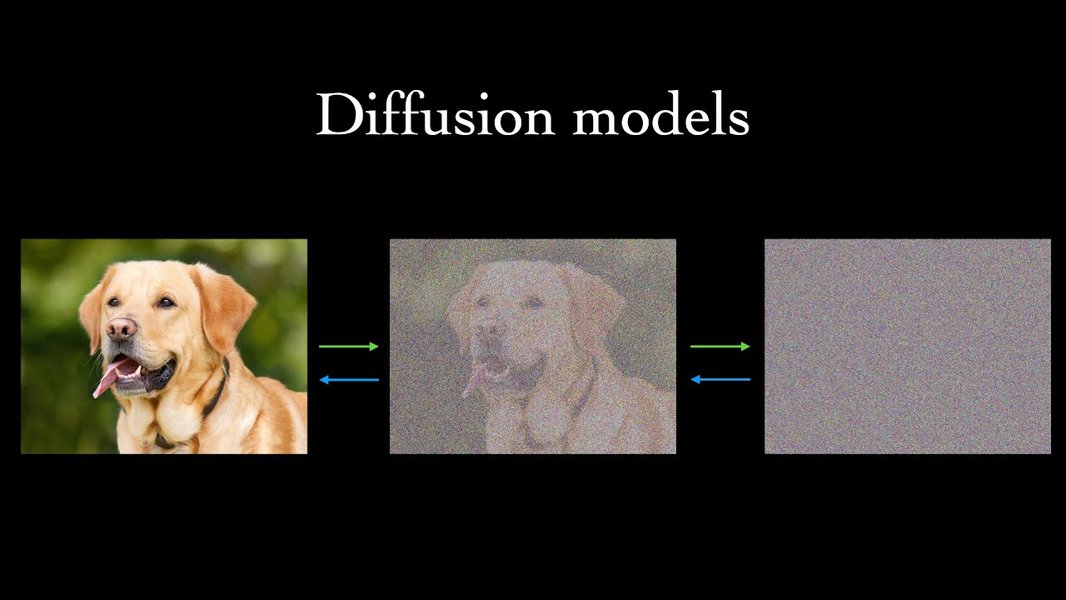
Conditional diffusion models represent an advanced subset of generative algorithms that build upon the core structure of diffusion models. At the foundation, diffusion models work by progressively adding noise to input data until its structure is lost and then methodically reversing this process to reconstruct the original or synthesize new, high-quality samples. Conditional diffusion models enhance this paradigm by integrating extra information—such as textual prompts, class labels, or continuous conditioning signals—into the sampling process. This conditioning steers the outcome towards desired properties, making them exceptionally useful when precision and control are essential in the generation process.
The crucial innovation lies in the way these models incorporate conditional inputs. Instead of simply generating data from an unconditional distribution, conditional diffusion models aim to sample from a conditional probability distribution, expressed as \( p(\textbf{x}\mid \textbf{y}) \), where \( \textbf{y} \) represents the conditioning information. This results in outputs that not only exhibit high fidelity but also adhere closely to the characteristics guided by the condition.
Mechanism of Diffusion Process
The underlying process involves two main steps:
- Forward Diffusion Process: The model progressively adds Gaussian noise to the input data over multiple timesteps until the data is effectively randomized.
- Reverse Diffusion Process: The trained model then learns to invert this noising process by gradually removing noise, thereby generating new data in the reverse order.
When conditions are integrated, the reverse process is altered such that each reverse diffusion step considers both the current noisy data and the conditioning information. This integration ensures that the final sample not only achieves the denoising objective but also aligns with the conditioned requirements provided during the generation process.
Advanced Guidance and Training Techniques
Conditional Guidance Approaches
One of the major advancements in conditional diffusion modelling is the introduction of guidance techniques that facilitate better adherence to the conditioning inputs:
- Classifier Guidance: In this approach, an auxiliary classifier is trained to predict the conditioning variable from the noisy data. During sampling, this classifier guides the reverse process, nudging the output towards the desired condition.
- Classifier-Free Guidance: Instead of relying on an external classifier, this method integrates the conditional information directly into the diffusion model’s training process. The model learns both unconditional and conditional distributions simultaneously. At sampling time, a weighted combination of the two outputs is used to produce a result that is faithful to the desired condition.
These guidance methods ensure that the iterative reverse process correctly interprets the conditioning signals, significantly improving the quality of outputs while maintaining diversity.
Architectural Insights and Training Regimes
The architecture of conditional diffusion models often mirrors that of their unconditional counterparts with specific modifications:
- U-Net Architectures: Many implementations use U-Net style networks interwoven with self-attention layers. These architectures are well-suited for capturing multi-scale features across the diffusion process.
- Positional Encoding: Models incorporate positional encodings of the timesteps to effectively capture the progression of noise addition and removal during both the forward and reverse processes.
- Label Embeddings: Conditioning inputs, such as class labels or continuous variables, are embedded into representations that the network can integrate at different stages. This aids in aligning the noise removal process with the conditions.
Training these models requires carefully structured loss functions that account for both the denoising objective and the fidelity to conditional signals. In practice, this is achieved by blending denoising score matching with conditional regularizers that explicitly tie the output distribution to the conditioning distribution.
Diverse Applications of Conditional Diffusion Models
Image Synthesis and Inverse Problems
Conditional diffusion models have garnered significant attention in the realm of image synthesis. By conditioning on textual prompts or class labels, these models can generate highly detailed images that conform to user-defined specifications. Applications include:
- Digital Art Creation: Artists leverage these models to generate visual artworks based on specific style constraints or themes.
- Medical Imaging: Inverse problems, such as reconstructing high-quality images from partial or corrupted medical scans, benefit from the prior integration provided by conditional models.
- Style Transfer and Image Editing: Users can condition on particular styles or features to transform their photos into different artistic interpretations.
In image reconstruction tasks, conditional diffusion models are adept at solving inverse problems by incorporating additional prior information about the underlying clean image, ensuring that even under extreme noise, the reconstructed image maintains recognizable features.
Computational Biology and Recommender Systems
Beyond image processing, conditional diffusion models are also applied in:
- Computational Biology: Used for designing novel proteins or understanding molecular structures by conditioning on known biological motifs.
- Recommender Systems: By integrating user preferences into the conditional diffusion process, these models can generate highly customized recommendations, transcending the limitations of traditional recommender algorithms.
The adaptability of these models to diverse data distributions makes them exceedingly valuable in scenarios where condition-specific outputs are critical.
Visual Representations and Data Analysis
Radar Chart: Comparative Analysis of Relevant Model Features
The following radar chart provides a visual representation comparing key aspects of conditional diffusion models with respect to standard diffusion and other generative models. The chart evaluates parameters such as conditioning effectiveness, output fidelity, model complexity, training stability, and versatility in application.
Mermaid Mindmap: Conceptual Structure
The following mindmap illustrates the major components related to conditional diffusion models, including their methodological structure, training processes, and real-world applications. This visualization helps in understanding how various elements are interrelated.
Comparative Analysis Table
The table below summarizes key aspects of conditional diffusion models, comparing them to standard diffusion models and other state-of-the-art generative approaches.
| Aspect | Conditional Diffusion Models | Standard Diffusion Models | Other Generative Models |
|---|---|---|---|
| Guidance Method | Classifier-free and classifier guidance | Unconditional noise reversal | GAN-based or autoregressive |
| Output Control | High control with conditioning signals | Limited control over generated output | Variable; often requires additional mechanisms |
| Training Complexity | Complex but robust with data conditioning | Simpler noise addition and removal | Depends on model type; GANs can be unstable |
| Application Versatility | Broad: images, biology, recommendations | Primarily image generation | Varies widely |
Multimedia Integration
Learn by Watching: An Insightful Video
For an engaging introduction to how conditional diffusion models operate and their practical relevance in the field of AI, consider watching this detailed presentation:
Frequently Asked Questions (FAQ)
References
- Conditional Diffusion Models - ML Journey
- Unveil Conditional Diffusion Models with Classifier-free Guidance - arXiv
- Solving Inverse Problems with Conditional Diffusion Models - Zontal
- Awesome Conditional Diffusion Models - GitHub
-
Application in Recommender Systems - ScienceDirect
Recommended Queries
Last updated March 30, 2025