
Counting from 1 to 10
Mastering the Fundamentals of Numbers
Key Takeaways
- Foundational Skill: Counting from 1 to 10 is essential for basic mathematical literacy.
- Multiple Representations: Numbers can be expressed in both words and digits, catering to different learning preferences.
- Cultural Diversity: Understanding numbers in various languages enhances cognitive flexibility and cultural awareness.
Introduction to Counting
Counting from 1 to 10 is one of the first numerical skills that individuals learn. It forms the bedrock of mathematics and is integral to everyday activities, education, and cognitive development. Mastery of these basic numbers enables individuals to perform more complex mathematical operations and enhances their ability to understand and interact with the world around them.
Numerical Representations
Digits vs. Words
Numbers can be represented in various forms, primarily as digits (numerals) or their corresponding words. Understanding both representations is crucial for reading, writing, and performing arithmetic operations.
| Numeral | Word |
|---|---|
| 1 | One |
| 2 | Two |
| 3 | Three |
| 4 | Four |
| 5 | Five |
| 6 | Six |
| 7 | Seven |
| 8 | Eight |
| 9 | Nine |
| 10 | Ten |
Visual Aids in Learning
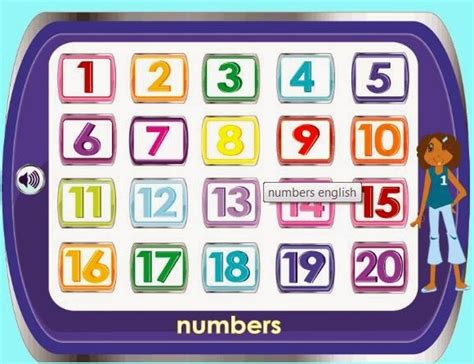
Visual representations of numbers, such as number lines, counting blocks, and visual charts, play a significant role in assisting learners to grasp the concept of numbers and their sequential order. These tools cater to visual learners and can make the abstract concept of numbers more concrete.
<!-- Example of a simple number line -->
  <div class="number-line">
    <span>1</span>
    <span>2</span>
    <span>3</span>
    <span>4</span>
    <span>5</span>
    <span>6</span>
    <span>7</span>
    <span>8</span>
    <span>9</span>
    <span>10</span>
  </div>
Counting in Different Languages
Expanding numerical knowledge to multiple languages not only broadens cultural understanding but also enhances cognitive flexibility. Below is a table showcasing the numbers from 1 to 10 in several widely spoken languages:
| Number | English | Spanish | French | Mandarin | Arabic |
|---|---|---|---|---|---|
| 1 | One | Uno | Un | 一 (Yī) | واحد (Wāḥid) |
| 2 | Two | Dos | Deux | 二 (Èr) | اثنين (Ithnayn) |
| 3 | Three | Tres | Trois | 三 (Sān) | ثلاثة (Thalāthah) |
| 4 | Four | Cuatro | Quatre | 四 (Sì) | أربعة (Arbaʿah) |
| 5 | Five | Cinco | Cinq | 五 (Wǔ) | خمسة (Khamsah) |
| 6 | Six | Seis | Six | 六 (Liù) | ستة (Sittah) |
| 7 | Seven | Siete | Sept | 七 (Qī) | سبعة (Sabʿah) |
| 8 | Eight | Ocho | Huit | 八 (Bā) | ثمانية (Thamāniyah) |
| 9 | Nine | Nueve | Neuf | 九 (Jiǔ) | تسعة (Tisʿah) |
| 10 | Ten | Diez | Dix | 十 (Shí) | عشرة (ʿAsharah) |
Techniques for Effective Counting
Interactive Learning Methods
Engaging learners through interactive methods can significantly enhance the ability to count effectively. Techniques such as counting games, songs, and physical activities help in reinforcing numerical sequences while making the learning process enjoyable.
Counting Games
Games like "Count and Clap" or "Number Hunt" encourage active participation and help in memorizing the numerical order. These games can be tailored to suit various age groups and learning paces.
Music and Rhymes
Incorporating music and rhymes into counting introduces rhythm and repetition, which aid in memory retention. Songs like "One, Two, Buckle My Shoe" make the process of counting enjoyable and memorable.
Utilizing Technology
Modern technology offers a plethora of tools and applications designed to facilitate effective counting. Educational apps provide interactive interfaces where learners can practice counting through visually appealing and engaging activities.
// Simple JavaScript function to count from 1 to 10
  function countToTen() {
    for(let i = 1; i <= 10; i++) {
      console.log(i);
    }
  }

  countToTen();
Applications of Counting
Daily Life
Counting is integral to numerous daily activities such as managing finances, measuring ingredients in cooking, organizing schedules, and keeping track of time. Accurate counting ensures efficiency and precision in these tasks.
Education
In educational settings, counting serves as the foundation for subjects like mathematics, science, engineering, and technology. It aids in developing problem-solving skills and logical reasoning.
Professional Fields
Many professional fields rely on accurate counting and numerical analysis. Areas such as accounting, data analysis, engineering, and software development require a strong grasp of numerical concepts and counting skills.
Mathematical Foundations
Counting Principles
Understanding the principles behind counting, such as one-to-one correspondence, stable order, and cardinality, is essential for grasping more complex mathematical concepts. These principles ensure that each number is associated with a unique quantity and that the sequence of numbers is predictable and consistent.
Beyond 10: Building Blocks for Higher Mathematics
Mastering counting up to 10 lays the groundwork for exploring larger numbers, understanding place value, and performing arithmetic operations like addition and subtraction. It also introduces learners to the concepts of multiplication and division, which are pivotal in higher mathematics.
Challenges in Learning to Count
Learning Disabilities
Individuals with learning disabilities such as dyscalculia may find it challenging to grasp counting and numerical concepts. Early identification and tailored instructional strategies are crucial in supporting these learners.
Lack of Engagement
Without engaging and interactive teaching methods, learners may lose interest in the subject, hindering their ability to learn effectively. Incorporating diverse teaching techniques can mitigate this issue.
Enhancing Counting Skills
Practice and Repetition
Consistent practice and repetition are key to mastering counting. Regular exercises, such as daily counting activities or number games, reinforce numerical sequences and enhance memory retention.
Multisensory Learning
Engaging multiple senses through tactile learning tools like counting beads, auditory cues through songs, and visual aids like number charts can cater to different learning styles and improve overall understanding.
Conclusion
Counting from 1 to 10 is a fundamental skill that serves as the cornerstone for mathematical literacy and everyday functioning. By understanding and utilizing various numerical representations, embracing multilingual counting, employing interactive and technological teaching methods, and addressing potential learning challenges, individuals can effectively master this essential skill. The ability to count accurately and confidently not only facilitates academic and professional success but also enhances cognitive development and problem-solving abilities.
References
Last updated January 19, 2025