
Unlocking the World of Addition for Second Graders
A Comprehensive Guide to Teaching Addition with Engaging Strategies and Tools
Key Insights for Teaching Addition to Second Graders
- Hands-on learning is paramount: Second graders benefit significantly from using physical objects and visual aids to understand the concept of combining quantities.
- Strategies build fluency: Teaching various addition strategies, such as counting on, using number lines, and making tens, helps students solve problems more efficiently and develops number sense.
- Regrouping is a key milestone: Introducing and practicing addition with regrouping is a crucial step in second grade, laying the foundation for more complex arithmetic.
Teaching addition to second graders is a fundamental step in their mathematical journey. At this age, students are transitioning from basic number recognition and counting to understanding the concept of combining groups and mastering addition facts. A strong foundation in addition is essential for their future success in more advanced math topics, including subtraction, multiplication, and division.
Second grade addition typically involves working with single-digit numbers, adding whole tens, and progressing to adding two- and three-digit numbers, often with the introduction of regrouping (carrying over). The goal is not just memorization of facts but developing a deep conceptual understanding of what addition means and becoming flexible problem solvers.
Building the Foundation: Concrete to Abstract
A highly effective approach to teaching addition to young learners, especially second graders, is to move from concrete representations to more abstract concepts. This progression ensures that students grasp the underlying meaning of addition before relying solely on symbols and algorithms.
Using Manipulatives for Hands-On Understanding
Start by introducing addition using tangible objects, or "manipulatives." These can be anything from counting bears and blocks to everyday items like fruit or toys. Have students physically combine two groups of objects and then count the total. This direct experience helps them visualize the process of adding.
For example, present a child with three red blocks and two blue blocks. Ask them to count the red blocks, then the blue blocks. Then, have them push the two groups together and count the total number of blocks. Introduce the vocabulary associated with addition, such as "add," "combine," "altogether," "total," and "sum." Explain that when you add, you are combining quantities to get a larger total.
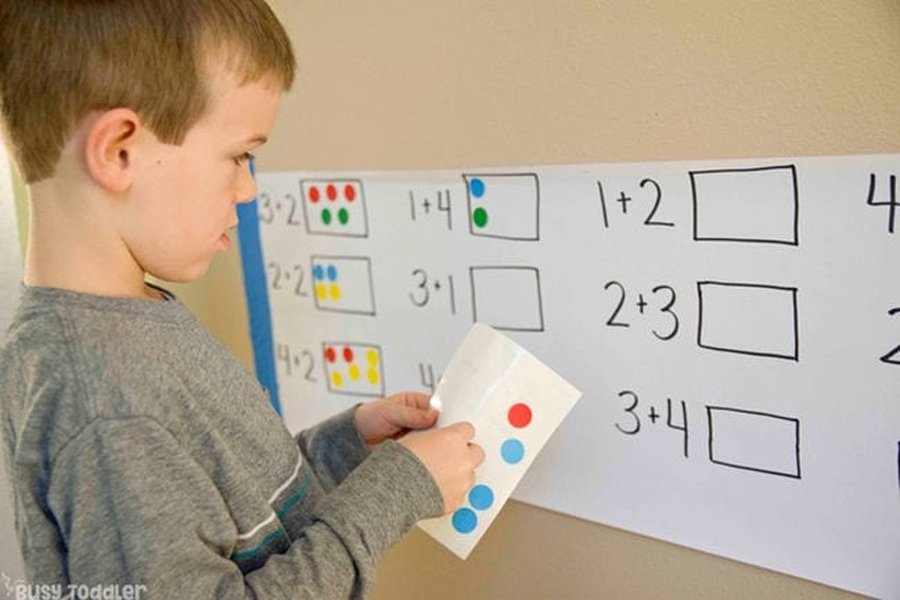
Using colorful blocks for hands-on addition practice.
Transitioning to Visual Aids
Once students are comfortable with physical manipulatives, transition to visual representations. This can include drawing pictures, using ten frames, or using number lines. These tools help bridge the gap between concrete objects and abstract numbers.
Ten frames are particularly useful for visualizing numbers within the context of ten, which is crucial for understanding place value and regrouping. You can use counters or draw dots on a ten frame to represent the numbers being added.
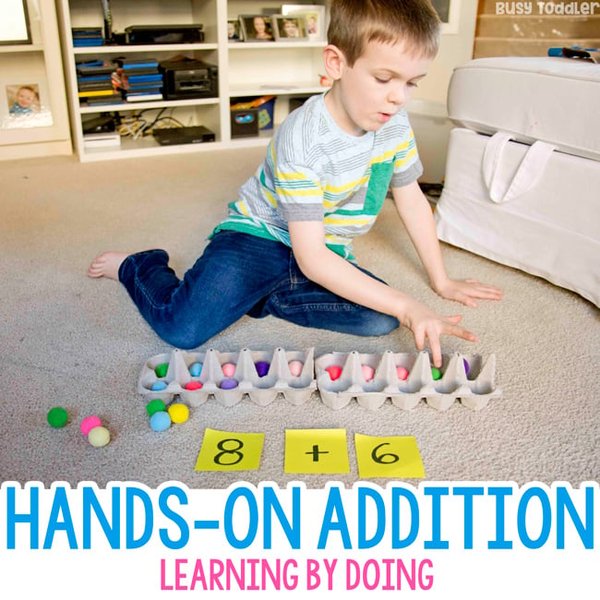
An egg carton used as a ten frame for visualizing addition.
Number lines help students see the relationship between numbers and provide a visual strategy for counting on. To add 3 + 4 on a number line, start at 3 and jump forward 4 spaces, landing on 7.
Introducing Number Sentences and Symbols
Once the concept of combining quantities is understood, introduce the mathematical symbols for addition (+) and equals (=). Explain that the plus sign means to add or combine, and the equals sign means that both sides of the equation have the same value. Start with simple horizontal number sentences like \(2 + 3 = 5\).
It's important to emphasize that the equal sign means "is the same as" or "represents the same value," not just "the answer is." This understanding is crucial for later algebraic thinking.
Exploring Effective Addition Strategies
Teaching second graders a variety of addition strategies empowers them to solve problems in different ways and choose the most efficient method for a given situation. These strategies also contribute to developing their number sense.
Counting On
Counting on is a foundational strategy where students start with the larger number and count up the smaller number. For example, to solve 5 + 3, a student would say "5" and then count "6, 7, 8." This strategy is particularly helpful for adding small numbers.
Making Ten
The "making ten" strategy involves breaking apart one of the addends to make a ten with the other addend. This is especially useful when adding numbers that sum to more than ten. For example, to solve 8 + 5, a student can break 5 into 2 and 3. Then, they add 8 + 2 to make 10, and finally add the remaining 3 to get 13.
Using Doubles and Near Doubles
Students can learn to quickly solve problems involving doubles (e.g., 4 + 4 = 8). Once they know their doubles, they can use this knowledge to solve near doubles (e.g., for 4 + 5, they can think of 4 + 4 = 8 and then add one more to get 9).
Adding in Columns with Regrouping
Second grade is typically when students are introduced to adding multi-digit numbers using the standard algorithm, which involves adding in columns and regrouping. This requires a solid understanding of place value.
Explain that when adding the ones column, if the sum is 10 or greater, they need to "regroup" or carry over the tens digit to the tens column. Similarly, if the sum in the tens column is 10 or greater, they regroup to the hundreds column.
Let's look at an example of adding 27 + 35 with regrouping:
| Tens | Ones | |
|---|---|---|
| 2 | 7 | |
| + | 3 | 5 |
| 6 | 2 | |
In the ones column, 7 + 5 = 12. We write down the 2 in the ones place and regroup the 1 ten to the tens column. In the tens column, we add the regrouped 1 ten, the 2 tens, and the 3 tens: 1 + 2 + 3 = 6 tens. The sum is 62.
Learn about double-digit addition with regrouping in this video.
Engaging Activities and Resources
Making addition practice fun and interactive is key to keeping second graders engaged. Incorporate games, real-life scenarios, and varied practice methods.
Addition Games
Games like addition bingo, card games where students add the values of the cards, or dice games where they add the numbers rolled can make practicing addition facts enjoyable.
Real-Life Connections
Connect addition to everyday situations. For example, when grocery shopping, ask your child to calculate the total cost of two items. When baking, have them help measure ingredients and add quantities. Counting objects around the house or adding the number of steps taken can also provide practical application.
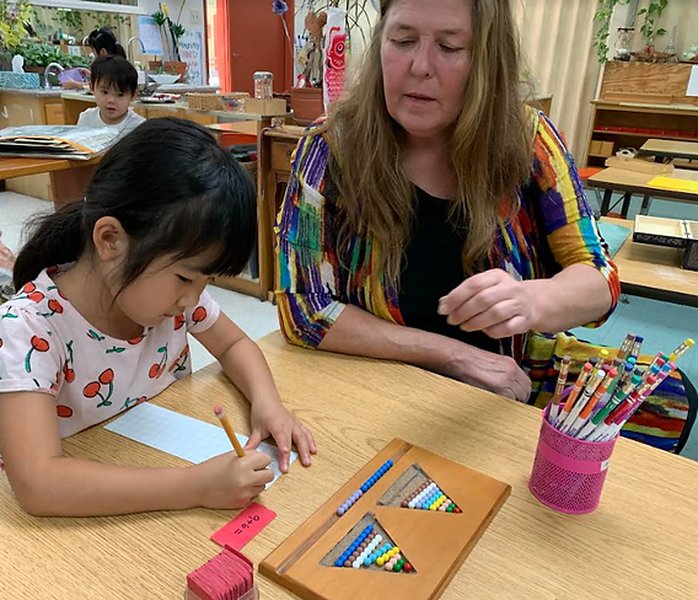
Using Montessori beads to understand addition.
Worksheets and Online Resources
Supplement hands-on activities with worksheets that provide structured practice. Many free printable worksheets are available online, covering topics from single-digit addition to multi-digit addition with regrouping. Online learning platforms and educational websites offer interactive games and lessons that can reinforce addition skills.
Developing Fact Fluency
While understanding the concept is crucial, developing fluency in basic addition facts (sums up to 20) is also important for future mathematical success. Use flashcards, timed drills, or apps to help students memorize these facts in a fun and low-pressure way.
Assessing Progress and Addressing Challenges
Regularly assess your child's understanding of addition. This doesn't always have to be formal testing; observe their problem-solving strategies during activities and listen to their explanations. If they are struggling, revisit the concrete and visual stages and provide additional practice with manipulatives and visual aids.
Common challenges for second graders include difficulty with regrouping, confusion with place value, and relying solely on counting all instead of more efficient strategies like counting on. Patience and targeted practice are key to overcoming these hurdles.
Understanding Different Learning Styles
Remember that children learn in different ways. Some may be visual learners who benefit from seeing pictures and diagrams, while others may be kinesthetic learners who need hands-on activities and movement. Tailor your teaching methods to your child's individual learning style.
Comparing Addition Concepts
Here's a radar chart illustrating the relative emphasis and complexity of different addition concepts for a typical second grader:
This radar chart illustrates the relative focus and difficulty of various addition concepts typically encountered by second graders. Concepts like regrouping and fact fluency are often areas of greater emphasis and complexity.
Frequently Asked Questions About Teaching Second Grade Addition
What is regrouping in addition?
How can I make learning addition fun for my child?
What are some common addition strategies taught in second grade?
When should a second grader master their addition facts?
Recommended Further Exploration
- Explore subtraction strategies for second graders.
- Discover fun math games suitable for 7 and 8 year olds.
- Deepen understanding of place value for second graders.
- Learn more about teaching multi-digit addition with regrouping.
References
Last updated May 20, 2025