
The Crusades: A Historical Parallel to Globalization's Impact on Identity
Examining the intricate dance between unity and division through medieval lenses
Key Takeaways
- Shared external threats can unify diverse groups, fostering temporary solidarity.
- Cultural exchanges during periods of intense interaction can lead to profound identity crises.
- Economic and political intertwining can both integrate societies and exacerbate internal divisions.
Fostering Unity Amidst Shared Challenges
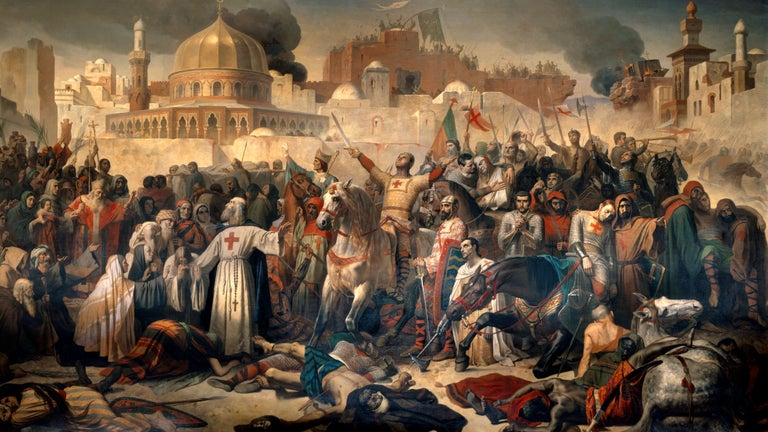
The Crusades stand as a formidable historical instance demonstrating how external pressures can temporarily unify fragmented societies. The incursion of Frankish forces into the Levant created a common adversary for various Arab communities, forging a nascent sense of collective identity. As chronicled in historical accounts, "Le sac de Jérusalem, point de départ d'une hostilité millénaire entre l'Islam et l’Occident, n'aura provoqué, sur le moment, aucun sursaut." This initial unity was pivotal in organizing resistance against the invaders, highlighting how globalization-like forces can catalyze cooperation among disparate groups facing a mutual threat.
Nonetheless, this unity was inherently fragile, frequently undermined by internal divisions and shifting alliances. The arrival of successive waves of Crusaders, each more formidable than the last, intensified anxiety and fear among the Arab populations. As described in the sources, "Les Franj sont aux portes de Nicée, qu'ils commencent à assiéger. Ce ne sont plus, comme en été, des bandes de pillards dépenaillés, mais de véritables armées de milliers de chevaliers lourdement équipés." This escalation mirrors the modern experience of globalization, where increasing external pressures can strain the coherence of unified fronts.
Identity Crisis Through Cultural Encounters and Comparisons
The Crusades instigated profound identity crises within Arab societies as they confronted Frankish cultural, political, and technological practices. Exposure to unfamiliar systems of governance and social customs prompted introspection and reassessment of existing traditions. For instance, the integration of Frankish elements into local societies led to a reevaluation of Arab norms. As noted, "Si l'émir Oussama n'hésite pas à appeler les Templiers 'mes amis', c'est qu'il estime que leurs mœurs barbares se sont polies au contact de l'Orient." This blending of cultures not only questioned the sanctity of traditional Arab institutions but also reflected the broader impacts of globalization-induced cultural diffusion.
Furthermore, the siege of Antioche exemplifies the complex interplay between religious and national identities. The Muslim ruler Yaghi Siyan's decision to expel Christian inhabitants underscores the tension between maintaining religious homogeneity and managing multicultural coexistence. As articulated, "Yaghi Siyan n'a aucune inquiétude quant à la solidité de ses fortifications ou la sûreté de son approvisionnement. Mais tous ses moyens de défense risquent de devenir inutiles si, à un point quelconque de l'interminable muraille, les assiégeants parviennent à trouver un complice." This scenario highlights how globalization-like forces can exacerbate identity-based conflicts, leading to exclusionary practices that fracture societal cohesion.
The Allure and Threat of 'Modernity'
While the term "modernity" was not contemporaneously used, the Crusades introduced transformative ideas and technologies that disrupted traditional Arab societies akin to modern globalization's impact. The transfer of papermaking technology from the Arabs to Europe stands as a testament to this exchange. As observed, "Les occidentaux, qui n’utilisaient encore que le parchemin à leur arrivée en orient, apprendront en Syrie l'art de fabriquer le papier à partir de la paille de blé." This technological innovation not only facilitated administrative advancements in Europe but also signified a shift in cultural dynamics, mirroring the dual-edged nature of globalization where progress and disruption often coexist.
Moreover, the infusion of Frankish military tactics and governance models into the Levantian context disrupted existing social hierarchies and power structures. The adoption and adaptation of foreign practices led to hybridized forms of governance, exemplifying how globalization can lead to both innovation and cultural anxiety. The introduction of new administrative practices challenged traditional norms, prompting societal debates about cultural preservation versus adaptation.
Reformation Through Integration and Hybridization
The Crusades facilitated the reformation of identities through processes of integration and hybridization. The establishment of Frankish states in the Levant resulted in the blending of Western and Eastern cultural practices. Figures like Raymond of Tripoli exemplify this hybrid identity, as he "parle couramment l'arabe, lecteur attentif des textes islamiques," indicating a genuine assimilation into the local culture despite his Western origins. This cultural synthesis highlights how globalization can lead to the emergence of hybrid identities that transcend traditional cultural boundaries, fostering a more interconnected and culturally diverse society.
However, this integration often occurred within a context of power imbalance, where dominant groups imposed their cultural norms upon others. The resulting hybrid identities, while indicative of cooperation, also masked underlying tensions arising from unequal power dynamics. The blending of cultures was not always harmonious, as it frequently involved coercion and resistance, reflecting the complexities inherent in globalization processes.
Fragmentation Through Competition and Exclusion
Conversely, the Crusades also fueled identity fragmentation through competition and exclusion. The decline of cohesive Arab power was partially due to internal divisions and the exploitation of these fissures by external actors. As detailed, "Après tant de défaites successives, tant de déceptions, tant d'humiliations, les trois nouvelles inattendues qui atteignent Damas en cet été de 1100 suscitent bien des espoirs." Internal rivalries and the inability to present a united front against the Frankish threat exacerbated societal fragmentation, mirroring how modern globalization can amplify existing fault lines within societies.
The strategic manipulation of political alliances and betrayals among Muslim rulers further underscored the fragmentation. Personal ambitions and mistrust undermined collective resistance, leading to segmented responses to the Crusader threat. This division not only weakened societal cohesion but also made communities more vulnerable to external manipulation, reflecting the challenges of maintaining unity in the face of globalization-induced pressures.
The Rise of Narrow Identities and Politicization
The Crusades witnessed the rise of narrow identities, where religious fervor was harnessed as a tool for political consolidation. Calls to jihad served dual purposes: galvanizing support for the military campaigns against the Franks and reinforcing religious identities as a means of unifying disparate groups. As observed, "Le but même d'un siège n'est-il pas précisément d'empêcher la circulation des hommes et des vivres?" This blend of religious and political objectives fostered exclusionary identities, where loyalty to the faith was intertwined with political allegiance, often at the expense of broader societal inclusivity.
This politicization of identity facilitated the mobilization of populations but also entrenched divisions within societies. The manipulation of religious identities for political ends created an environment where exclusion and sectarianism could thrive, undermining efforts towards pluralistic and inclusive societal structures. This phenomenon echoes contemporary uses of identity politics in the context of globalization, where strategic appeals to specific identities can both unify and divide communities.
Reformation and Fragmentation of Identities
The Crusades exemplify the dual pathways through which globalization-like forces can reshape identities: through reformation and fragmentation. Integration and hybridization fostered the emergence of new, blended identities, while competition and exclusion deepened internal divisions. This intricate balance underscores the complex impact of globalization on societal identity structures.
On one hand, cultural blending and the adoption of foreign practices led to the creation of hybrid identities that reflected a synthesis of diverse cultural elements. Figures such as Raymond of Tripoli, who seamlessly navigated between Western and Eastern cultural spheres, embodied the potential for harmonious identity integration. On the other hand, internal power struggles and strategic exclusions driven by overarching religious and political motives resulted in fragmented identities, highlighting the challenges of maintaining unity amidst globalization’s multifaceted pressures.
Lessons from the Crusades for Modern Globalization
Analyzing the Crusades through the lens of globalization offers valuable insights into the contemporary dynamics of cultural exchange, economic interdependence, and identity formation. The historical account reveals that while external pressures can foster temporary unity, the sustainability of such cohesion is contingent upon addressing internal divisions and promoting inclusive identity frameworks.
One significant lesson is the fragility of pluralistic identities in the face of powerful external forces. The Crusades demonstrated how easily societal cohesion could be disrupted by both internal rivalries and external manipulations. Modern globalization similarly poses challenges to societal unity, where economic disparities and political conflicts can undermine efforts towards inclusive and cohesive societal structures.
Another critical takeaway is the importance of fostering hybrid identities that embrace cultural diversity while maintaining respect for traditional norms. The integration of Frankish and Arab cultural practices during the Crusades highlights the potential for cultural synthesis to create more resilient and adaptable societal identities. In the contemporary context, encouraging cultural hybridization can facilitate smoother navigation through globalization’s complexities, promoting both innovation and cultural preservation.
Additionally, the politicization of identity observed during the Crusades serves as a cautionary tale for contemporary society. The strategic manipulation of religious and cultural identities for political gain can lead to exclusion and societal fragmentation. To mitigate such risks, modern societies must strive for political systems that promote inclusivity and resist the divisive utilization of identity-based rhetoric.
Finally, the economic and technological exchanges that occurred during the Crusades underscore the transformative potential of globalization. The transfer of knowledge and technology not only spurred economic growth but also facilitated intercultural understanding. Embracing such exchanges in the modern era can drive progress while fostering mutual respect and collaboration among diverse cultures.
Conclusion
The Crusades, as illustrated through historical sources, offer a profound parallel to the modern phenomenon of globalization and its impact on identity. The period was marked by intense cultural exchanges, economic interdependence, migration, and the formation of new political entities, all of which profoundly reshaped societal identities. These historical events demonstrate the dual nature of globalization's impact: it can simultaneously foster unity and engender deep-seated identity crises, leading to both the reformation and fragmentation of identities.
Understanding the complexities of identity formation during the Crusades provides contemporary society with valuable lessons on navigating the multifaceted challenges posed by globalization. By fostering inclusive and hybrid identities, addressing internal divisions, and promoting intercultural understanding, modern societies can harness the positive aspects of globalization while mitigating its potential to fragment and destabilize social cohesion.
References
- Cross-Cultural Trade and Cultural Exchange During the Crusades
- Theorizing the Crusades: Identity, Institutions, and Religious War in Medieval Latin Christendom
- The Crusades: Consequences & Effects - World History Encyclopedia
- The Impact of Holy Land Crusades on State Formation - Lisa Blaydes
- Crusades Impact: Economic & Cultural Effects | Vaia
- Crusades and Identity
- The Crusades Are Still Being Fought
- How the Crusades Stay with Us - Medievalists.net
- Crusaders, Paris and ISIS. How Medieval Events Continue in the Modern World
- Conclusion Crusading our Contemporary | The Crusades: A Very Short Introduction
- Remembering the Crusades: Myth, Image, and Identity
- The Crusades in Modern Memory: Legacy and Interpretation
- Theorizing the Crusades: Identity, Institutions, and Religious War in Medieval Latin Christendom
- PDF: The Crusades and Identity
Last updated January 21, 2025