
Common Misconceptions in Decimal Comparisons
Understanding Misconceptions and Correct Strategies for Comparing Decimals
Key Highlights
- Accurate Alignment: One of the most crucial steps is aligning decimal points to correctly understand the place value and magnitude of numbers.
- Place Value Understanding: Misinterpreting the role of digits based on their place — tenths, hundredths, etc. — is a frequent error.
- Length vs. Value: A longer decimal does not always equate to a larger value, and vice versa; understanding this is key to avoiding common pitfalls.
Introduction
Comparing decimals is a fundamental skill in mathematics that, despite its apparent simplicity, can often lead to misconceptions. These errors typically arise from an incorrect application of whole number comparisons to decimals. Since decimals are expressed in fractional terms, understanding how each digit’s placement after the decimal point influences the overall value is essential. This article provides an in-depth discussion of the common misconceptions and offers sound strategies to correct them, thereby enabling a more robust and accurate interpretation of decimal numbers.
Understanding Decimals and Place Value
A decimal is a representation of a number that uses a point to separate the integer part from the fractional part. The digits to the right of the decimal point represent fractions, with each successive digit having a place value that is a tenth of the previous position. For example, in the decimal 0.456, the digit 4 is in the tenths place, 5 in the hundredths, and 6 in the thousandths. The correct comparison of decimals requires a careful examination of these place values.
Decimal Alignment and Its Importance
One of the foundational steps when comparing decimals is ensuring that the decimal points are accurately aligned. Without proper alignment, one might incorrectly compare digits that represent different place values. For example, comparing 0.6 with 0.700 without lining up the decimal points can lead to erroneous conclusions. When written vertically with aligned decimal points, it is easier to see that both numbers represent the same value when trailing zeros are correctly understood to be placeholders.
Common Error: Misalignment
Misalignment occurs when decimals are compared as if they were strings, i.e., looking at the number of digits rather than their respective place values. This can lead to mistakes such as concluding that 0.612 is less than 0.61, even though when aligned properly, it is clear that 0.612 is larger. To avoid such pitfalls, always rewrite numbers with the same number of decimal places by appending trailing zeros if necessary.
Leading Zeros and Their Significance
The use of leading zeros, especially before the decimal point, is essential in maintaining proper place value. A common misconception is ignoring these zeros, which play a crucial role in understanding the magnitude of the decimal. Consider the comparison between 0.6 and 0.700. While the number of digits might suggest a difference, understanding that 0.6 is equivalent to 0.600 clarifies that the value is proportionate. The number of digits after the decimal point should not be taken as a direct indicator of magnitude.
Misinterpretation of Leading Zeros
Some students mistakenly assume that the absence or presence of trailing zeros changes the magnitude of the number. A decimal like 0.50 is identical in value to 0.5, and recognizing this fact is pivotal. Careful attention to both leading and trailing zeros enhances the understanding of the true value contingent on place value rather than the mere appearance of numbers.
Common Misconceptions in Decimal Comparisons
Several misconceptions about decimal comparisons persist, largely due to ingrained habits from whole number comparisons. Below, we detail these misconceptions and provide clarity on why each is incorrect.
Whole Number Bias
One of the predominant mistakes is applying whole number logic to decimals. For example, people tend to believe that a number with more digits is inherently larger. In whole numbers, higher digit count often leads to a larger magnitude (e.g., 100 is greater than 9). However, this heuristic does not apply to decimals. A longer decimal does not necessarily represent a larger quantity since each digit's placement relative to the decimal point determines its value.
Example: Longer vs. Shorter Decimals
When evaluating 0.45 and 0.8, one might mistakenly reason that because 0.45 has more digits, it could be larger than 0.8. However, correct alignment and place value consideration reveal that 0.8 (or 0.80) is indeed greater than 0.45, as the tenths place holds more significance than the hundredths place.
Misinterpretation of Place Value
Each digit in a decimal number carries weight based on its distance from the decimal point. A common misconception is that digits retain their face value regardless of position. For instance, the digit 9 in 0.9 is not equivalent to a 9 in a larger whole number; its value is confined to the tenths place. Failure to appreciate the diminishing value of digits as one moves rightward can lead to the misjudgment of numbers like 0.9 versus 0.10. Here, even though "10" appears greater if one mistakenly considers the digits in isolation, recognizing that 0.10 is merely 0.1 dispels the error.
Clarifying Place Value
A clear demonstration of place value occurs when comparing 0.9 and 0.476. At first glance, the presence of a 9 may seem dominant; however, when examined with proper understanding of place value — tenths versus hundredths and thousandths — it becomes apparent that the placement influences the number’s magnitude. The digit in the highest place value determines the overall comparison result. Therefore, placing emphasis on the tenths, hundredths, and subsequent digits is crucial.
Length Misconceptions: Longer vs. Shorter Decimals
The misconception of "longer is larger" or "shorter is larger" can create significant confusion. For many, a longer decimal compared to a shorter one is interpreted as larger, but this is not inherently true. The additional digits in a decimal can represent more precision but do not necessarily increase the value unless they confirm a higher digit in a significant place value.
Demonstrative Comparison
Consider the decimals 0.700 and 0.7. While 0.700 has more digits, it is identical in value to 0.7. This is because trailing zeros do not count towards the magnitude. On the other hand, a decimal such as 0.45 is truly less than 0.8. The critical factor is understanding that digits positioned in the tenths place have more weight than those in the hundredths, rendering the length of the decimal purely cosmetic rather than indicative of a larger value.
Misalignment Errors
Another common source of error is the misalignment of decimal points when comparing numbers. By neglecting to properly align the decimals, one might inadvertently compare digits of different place values, consequently leading to incorrect conclusions. For example, if the decimals 0.6 and 0.700 are written without alignment, one might assume that 700 is magnitudinally greater due to the number of digits present, overlooking that the magnitude is determined by the correct place values.
Proper Alignment Techniques
To avoid such mistakes, the following alignment techniques are encouraged:
| Technique | Description | Example |
|---|---|---|
| Vertical Alignment | Write numbers in a column aligning the decimal points vertically. |
0.6 0.700 |
| Trailing Zeros | Append zeros to shorter decimals to match the number of digits. |
0.6 → 0.600 0.700 remains unchanged. |
| Column Comparison | Compare corresponding digits from leftmost (highest place value) to rightmost. | For 0.600 vs. 0.700, compare 6 vs. 7 in the tenths place. |
These techniques help maintain accuracy when comparing decimals, ensuring that misconceptions due to misalignment are minimized.
Rounding Misconceptions
Rounding decimals before comparison is another common error. Students might round decimals to simplify the comparison process; however, rounding can obscure minor yet significant differences between values. The precision of decimals is lost once rounding is applied, particularly when the decimals are very close to each other. It is important to compare the exact digits rather than rounded values to avoid oversimplifying a nuanced comparison.
Example of Rounding Fallacies
Consider comparing 0.456 and 0.462. Rounding both numbers to one decimal place would result in 0.5 for both values, thus obscuring the fact that 0.456 is slightly less than 0.462. Maintaining the original precision allows for a true evaluation of the differences between the decimals.
Strategies to Enhance Decimal Comparison Skills
Addressing these misconceptions requires active instruction and visual tools to reinforce accurate understanding of decimal place values and correct comparison techniques. Below are several strategies that can be implemented:
Place Value Models and Visual Aids
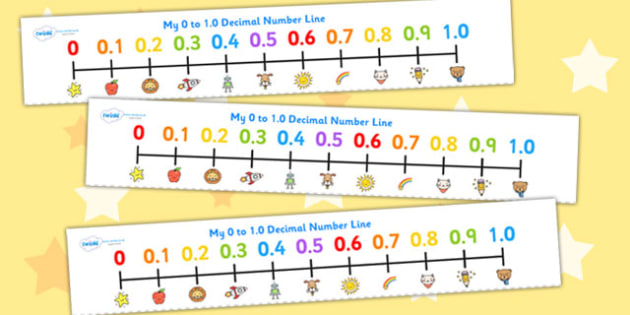
Utilizing place value models such as number strips, grids, or hundredths squares can be highly beneficial. These models provide a concrete visualization of the numerical distance between decimals, helping learners appreciate the relative contributions of each place value. By graphically representing decimals, these tools can bridge the gap between abstract numerical concepts and tangible understanding.
Number Lines
A number line is an effective way to represent decimal values. Plotting decimals on a number line emphasizes their relative sizes and positions. For example, placing 0.5, 0.55, and 0.6 on a number line visually demonstrates that 0.6 is greater than both 0.5 and 0.55, regardless of the number of digits presented.
Benchmarking Techniques
Benchmark numbers such as 0.5, 0.25, or 0.75 can serve as reference points when comparing decimals. These benchmarks assist students in quickly approximating where a decimal stands relative to a known quantity. Incorporating benchmarking into classroom instruction enables learners to use these fixed points as guides, thereby refining their decision-making process when comparing decimal numbers.
Practical Application
Teachers can provide exercises where students must position various decimals relative to a chosen benchmark on a number line. This practice not only reinforces the correct conceptual understanding but also builds confidence in identifying subtle differences in magnitude.
Interactive Digital Tools and Practice Exercises
In the digital age, interactive tools such as educational software and online games present an engaging format for practicing decimal comparisons. These digital resources often provide immediate feedback, helping students identify mistakes and correct misconceptions in real time. Practice exercises that simulate real-life scenarios – such as comparing prices or measurements – contextualize decimals in practical applications, thereby enhancing comprehension.
Classroom and Home Practice
In addition to interactive digital resources, repetitive practice through worksheets, quizzes, and peer activities are recommended. Consistent practice helps internalize the correct procedures and diminishes the impact of pre-existing biases or misconceptions.
Integrative Summary of Misconceptions and Best Practices
The common misconceptions in decimal comparisons stem largely from the inappropriate borrowing of whole number logic and a lack of understanding of place value. The following summary encapsulates the main issues and the corrective strategies to overcome them:
| Misconception | Description | Corrective Strategy |
|---|---|---|
| Whole Number Bias | Applying whole number digit counting to decimals. | Emphasize place value and align decimal points. |
| Leading/Trailing Zero Misunderstandings | Misinterpreting zeros as changing magnitude. | Reinforce that trailing zeros do not alter the value and always consider full decimal alignment. |
| Alignment Errors | Not aligning decimal points, leading to misinterpretation. | Write numbers vertically and include trailing zeros as necessary. |
| Length Misconception | Assuming a longer decimal means a larger number. | Understand that additional digits provide precision but not increased magnitude unless significant. |
| Rounding Errors | Rounding decimals prematurely and losing precision. | Compare decimals in their exact form; round only after making a precise comparison if needed. |
This integrated summary reinforces the notion that a deep understanding of decimal structure — focusing on place value, alignment, and proper visual representation — is the most effective way to counteract common misconceptions.
Conclusion
In conclusion, misconceptions in decimal comparisons are widespread and arise primarily from the improper application of whole number logic, neglecting the importance of place value, and misaligning decimals. By employing methods such as aligning decimals properly, understanding the significance of leading and trailing zeros, and using visual aids like number lines and models, students can solidify their grasp on this important aspect of mathematics. Educators play a pivotal role in reshaping these misunderstandings through the use of dynamic teaching tools and continuous practice. As we move towards a more nuanced and accurate appreciation of decimals, both traditional and digital methods of instruction are essential in enabling learners to navigate and compare decimals with greater confidence and accuracy.
References
- Decimal Ordering Tips - Berkeley Model
- Errors and Misconceptions in Decimals - Scribd Document
- Comparing Decimals - Third Space Learning
- Comparing Decimals - Cuemath
- Comparing Decimals Discussion - Brainly
- Ordering Decimal Numbers - FixItMaths
-
Scientific Article on Decimal Misconceptions - ScienceDirect
Recommended
Last updated February 22, 2025