
Practical Exercises for Decimal Comparisons
Engaging and Effective Decimal Comparison Strategies for Learners
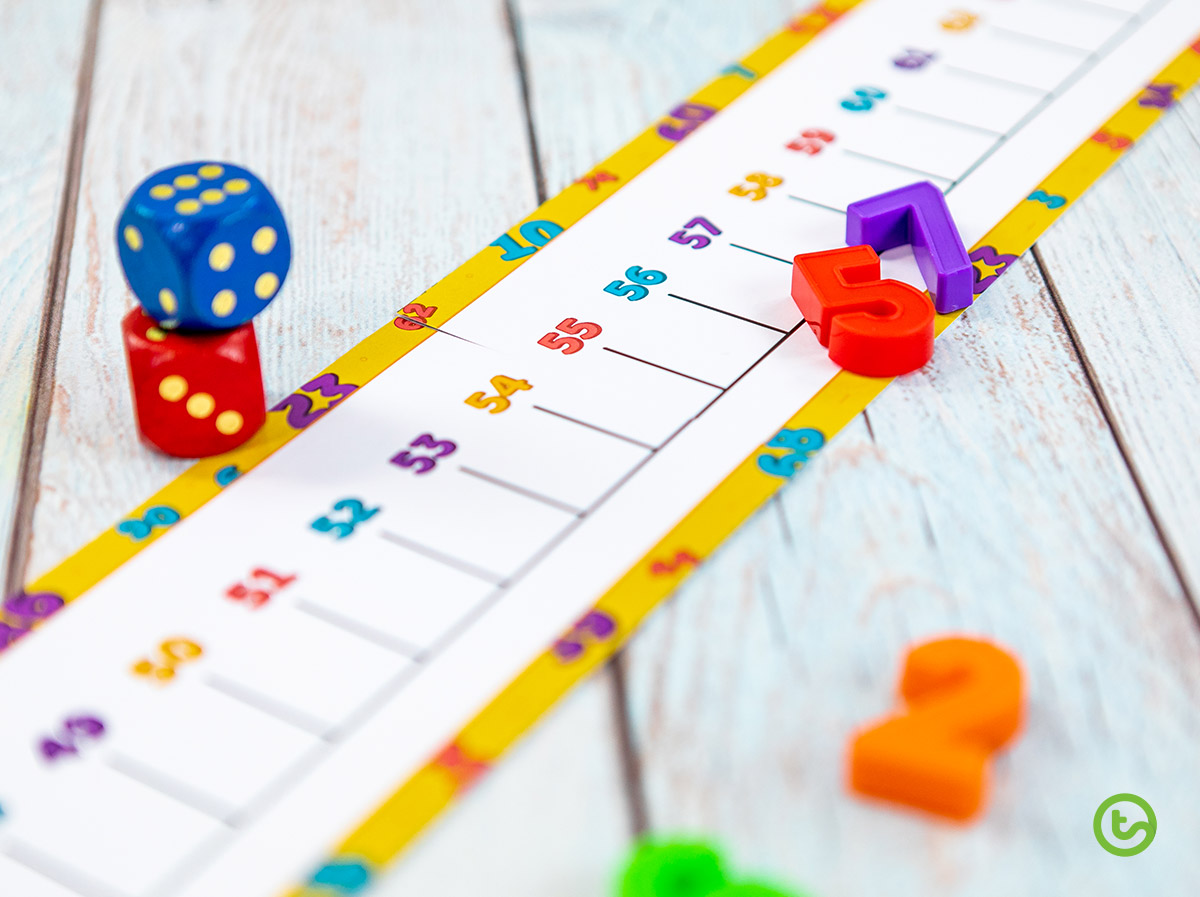
Key Highlights
- Visual and hands-on methods: Integrate number lines, place value charts, and manipulatives to concretize decimal concepts.
- Real-world connections: Use practical scenarios and word problems to emphasize relevance in everyday life.
- Progressive challenges: Implement exercises from simple comparisons to multi-decimal number ordering with varied difficulty levels.
Introduction
Decimals are an essential component of the mathematics curriculum from elementary through middle school. Practical exercises for comparing decimals not only help in understanding the concept of place value and decimal magnitude but also assist in developing numerical reasoning skills. The exercises outlined here span from simple worksheets and number line activities to hands-on model-based learning and real-life contextual scenarios, aiming to appeal to various learning styles. This comprehensive guide provides detailed explanations, examples, and practical tips to compare decimals effectively.
Understanding Decimal Comparisons
To compare decimals, one must understand the structure of a decimal number. A decimal number is comprised of a whole number part and a fractional part, separated by a decimal point. Comparing decimals involves analyzing digits from left to right, beginning with the highest place value. If digits align (e.g., comparing 0.7 with 0.70), one can append zeros to make the number of decimal places equal without altering the value, which facilitates straightforward comparisons.
Key Concepts in Decimal Comparison
Place Value Importance
The basis for decimal comparison lies in the understanding of place value. With place value charts, students can visually see the value of each digit in a decimal number. For instance, comparing 0.9 with 0.91 requires an understanding that adding zeroes can clarify which number has a greater thousandth, hundredth, or tenth value. Starting at the ones place and moving right, each digit indicates whether a decimal is larger or smaller than the other. Such comparisons help in building a strong conceptual foundation.
Normalization by Adding Zeros
To reduce confusion when decimals have different numbers of digits, students are taught to normalize the numbers by appending zeros. For example, when comparing 0.9 and 0.91, converting 0.9 to 0.90 makes the comparison more intuitive. This practice not only simplifies the immediate task but also reinforces the invariant nature of the decimal’s value regardless of the presentation.
Comparison Symbols
Utilizing the symbols greater than (>), less than (<), and equal to (=) provides a systematic method to classify and compare decimals. Students learn to decide among these symbols based on which digits in corresponding places are larger, cementing an integral part of mathematical communication.
Practical Exercises for Decimal Comparisons
Below is an in-depth look into various practical exercises that target different cognitive and learning styles. These exercises range from structured worksheets to dynamic interactive games and model-based learning through physical representations of decimals.
Worksheets and Structured Exercises
Worksheets are a conventional but highly effective method to practice decimal comparisons. They can be tailored for different levels of difficulty:
Basic Worksheets
Early practice involves comparing decimals with single-digit fractional parts. For example, students might be given a problem asking to compare 0.7 and 0.8. Such worksheets often include the following steps:
- Identifying the whole number and the fractional parts.
- Appending zeros to equalize the number of decimal digits if necessary.
- Using comparison symbols to decide which value is greater or lesser.
Advanced Worksheets
For more advanced learners, worksheets cover comparisons up to three or four decimal places. These worksheets guide students through comparing decimals like 3.456 and 3.018. The focus here is on deeper analysis by addressing multiple place values in a systematic manner:
- Comparison starts from the largest place value (the ones place) and progresses to tenths, hundredths, and so on.
- Students are encouraged to write out the comparison statements detailing each step.
Visualization with Number Lines
One of the richest visual approaches to comparing decimals is to represent them on a number line. This method helps students see the relative positions of decimal values, making abstract ideas more concrete.
Drawing and Labeling Number Lines
Teachers can begin by drawing a horizontal line and marking equal intervals. Students then plot decimals such as 0.4, 0.6, and 0.8, visually assessing their order on the line. This activity reinforces the understanding of magnitude and the inherent ordering of the number system.
Interactive Number Line Activities
In addition to static drawings, interactive digital number lines allow students to drag and drop decimal values to their appropriate positions. These exercises not only increase engagement but also provide immediate visual feedback on errors.
Using Place Value Charts
Place value charts serve as a structured tool to break down each component of a decimal number. Students can write decimals in columnar format, with each column representing a particular place value. This visual breakdown helps elucidate why one decimal is larger or smaller than another.
Column Comparison Method
For instance, comparing 0.78, 0.783, and 0.784 can be simplified by placing each digit in a column under the appropriate label (ones, tenths, hundredths, thousandths). Starting from the leftmost column, the order is determined by whichever decimal has the higher value in the first column where there is a difference.
Hands-On Manipulatives
Hands-on activities using objects such as base-ten blocks, decimal tiles, or even coins simulate the abstract concept of decimals. These manipulatives allow students to engage physically with the numbers, making the abstract more tangible.
Using Base-Ten Blocks
Base-ten blocks represent different place values. When comparing decimals, students can use these blocks to physically represent values like 0.9 (nine tenths blocks) versus 0.91 (nine tenths blocks plus one hundredth block). Such visual and tactile methods strengthen understanding through kinesthetic learning.
Coins and Currency
Using currency is a familiar context for many students. For example, comparing amounts like $27.98 and $27.89 can be made relatable by using coins and bills. Students can physically count and compare money, reinforcing the principles of decimal comparison in real-world contexts.
Interactive Games and Digital Tools
Interactive games provide a dynamic way for students to learn decimal comparisons. These digital tools offer immediate feedback and often incorporate challenges and rewards to motivate learners.
Decimal Comparison Games
Various online games allow students to solve tasks by comparing decimals. For example, a game might require students to roll virtual dice and combine the results to form a decimal, and then compare that number to a target value. These games can make learning a fun and competitive experience.
Interactive Worksheets and Slides
Many digital platforms offer slide-based activities where students can engage with decimal models interactively. These platforms often simulate a classroom environment and allow for iterative practice, making updates and corrections as needed.
Word Problems and Real-World Scenarios
Incorporating word problems into decimal comparison exercises helps bridge the gap between abstract mathematical concepts and real-life applications. By situating problems within familiar contexts such as shopping, cooking, or budgeting, learners gain a deeper understanding of why these skills matter beyond the classroom.
Practical Examples
A common exercise might involve comparing the prices of items on a shopping list: if one product costs $15.75 while another is $15.50, students must decide which item is more expensive. Such exercises stimulate critical thinking and enhance decision-making skills.
Complex Word Problems
More involved scenarios may require students to order a set of mixed decimals or determine the best purchase option when discounts and taxes are included. These challenging exercises test the students’ ability to integrate multiple decimal comparison methods.
Comparative Table of Exercises
The table below summarizes various types of practical exercises for decimal comparisons, highlighting the exercise type, description, and key benefits:
| Exercise Type | Description | Key Benefits |
|---|---|---|
| Worksheets (Basic) | Focus on comparing decimals with one or two decimal places using <, >, and = symbols. | Enhances fundamental understanding; introduces normalization (adding zeros). |
| Worksheets (Advanced) | Tasks with decimals up to three or four places, involving systematic digit comparison. | Develops attention to detail and systematic problem-solving. |
| Number Line Activities | Plotting decimals on a drawn or digital number line to visualize order. | Strengthens spatial reasoning and the concept of magnitude. |
| Place Value Charts | Utilizing columns to detail each decimal digit by place value. | Reinforces understanding of place value; clarifies digit significance. |
| Hands-On Manipulatives | Using base-ten blocks, decimal tiles, or coins to represent values. | Makes abstract decimals tangible; caters to kinesthetic learners. |
| Interactive Games | Digital games that involve comparing constructed decimals or placing decimals in order. | Motivates through gamification; provides immediate feedback. |
| Real-World Word Problems | Contextual problems involving shopping, budgeting, or measurements. | Bridges theoretical concepts with practical applications; improves critical thinking. |
Integrating Decimal Comparisons in Curriculum
Educators can embed decimal comparison exercises into various segments of the curriculum to provide a robust learning experience. For a balanced approach:
Step-by-Step Integration
Begin with a review of place value and the structure of decimals, ensuring that every student understands the base-ten system. Once the basics are in place, teachers can introduce practical exercises, starting with simple worksheets and gradually moving to more complex activities like interactive games and real-world problems.
Initial Phase
During the initial phase, educators should focus on familiarizing students with basic decimal comparisons. This can start with:
- Worksheet problems focusing on one or two decimal places.
- Activities like comparing 0.9 and 0.91 by adding zeros, which reinforces normalization.
- Simple games that engage students in determining whether one decimal is greater than or less than another.
Intermediate Phase
Once fundamental skills are solid, introduce more complex challenges:
- Ordering exercises that involve multiple decimals, pushing students to organize numbers from least to greatest.
- Interactive number line tools where students can visualize decimal positions dynamically.
- Model-based activities using place value charts and base-ten blocks for a tactile understanding of comparisons.
Advanced Phase
For students who excel and are ready for further challenges:
- Word problems that integrate real-life scenarios, such as budget comparisons and time management tasks.
- Digital platforms and interactive games that reward correct comparisons and offer hints for errors.
- Collaborative group work where students can spot-check each other’s reasoning and explain their methods.
Examples of Decimal Comparison Exercises
Illustrative examples can make the methods described above even clearer. Here are several examples covering a range of exercises:
Example 1: Comparing Two Decimals
Exercise
Compare 0.9 with 0.91:
First, add a zero to 0.9, transforming it into 0.90. Then, comparing digit by digit, note that while the whole number part remains the same (zero), the tenths remain the same (9 versus 9) and the hundredths show 0 for 0.90 and 1 for 0.91. Accordingly, 0.90 is less than 0.91.
Example 2: Ordering Decimals with Multiple Places
Exercise
Order the decimals 0.78, 0.783, and 0.784 from smallest to largest:
Start by aligning the decimals:
- For 0.78, consider it as 0.780.
- Compare each corresponding digit: 7 (tenths), 8 (hundredths), and then compare 0 versus 3 versus 4 (thousandths).
The order thus becomes: 0.78, 0.783, 0.784.
Example 3: Comparing Decimals with Whole Numbers
Exercise
Compare 3.456 and 3.018:
Since both start with 3 in the ones place, the focus shifts to the decimal parts. Comparing the tenths: 4 (from 3.456) is greater than 0 (from 3.018). Therefore, 3.456 is greater than 3.018.
Example 4: Real-World Application
Exercise
Imagine two individuals, Frederick and Samantha, who saved $27.98 and $27.89, respectively. By comparing the amount after the decimal point, particularly the tenths and hundredths places, one can determine that Frederick saved more.
Example 5: Number Line Activity
Exercise
Draw a number line spanning at least from 0 to 1 and mark points for decimals such as 0.4, 0.6, and 0.8. Students observe that the decimals are placed in increasing order along the line. This method is particularly effective for visual learners.
Additional Techniques and Considerations
In addition to the primary exercises described above, several supplementary techniques ensure a rounded educational approach:
Cut-and-Glue Activities
Cut-and-glue activities are innovative exercises where students physically rearrange decimal cards into the correct order. This hands-on method can be set up easily in the classroom, making abstract decimals more interactive and memorable.
Dice Games for Decimal Generation
Dice games can be utilized to create random decimals which students can then compare. For instance, rolling two dice to form a decimal and comparing it with a target number sharpens quick-thinking and reinforces the comparison process in a playful setting.
Integration with Technology
Modern educational software includes interactive worksheets and games specifically targeting decimal comparisons. Such platforms often include real-time problem-solving challenges, hints, and rewards. These technologies not only make learning fun but also adapt to individual student levels.
Collaborative Group Work
Group exercises where students discuss and analyze decimal comparisons promote deeper understanding. In these settings, students explain their reasoning to peers, reinforcing their own learning while contributing to collaborative problem solving.
Best Practices for Teaching Decimal Comparisons
Educators should employ a blend of the following best practices to maximize the effectiveness of decimal comparison exercises:
Sequential Learning
Establish a clear progression starting with simple comparisons and moving toward more complex scenarios. This scaffolding approach ensures that each learner builds confidence and competence gradually.
Visual Supports
Utilize multiple forms of visual aids such as number lines, charts, and manipulatives to ensure that students who struggle with abstract concepts can see and touch the representations.
Incorporate Real-World Contexts
Contextualizing decimal comparisons within real-life scenarios solidifies the understanding that the skills learned are applicable outside of the classroom. Incorporating elements such as money, measurements, and time management can enhance relevance and student engagement.
Frequent Feedback and Reiteration
Regular formative assessments through interactive quizzes and individual feedback sessions help maintain progress and identify areas needing additional focus. This continuous cycle of coaching and practice accelerates mastery of decimal comparison skills.
Implementing Decimal Comparisons in Diverse Learning Environments
Adapting these exercises to varied learning environments is essential. Whether in traditional classrooms, virtual learning spaces, or hybrid models, the flexibility of these exercises makes them suitable for all settings.
Traditional Classroom Settings
Teachers in physical classrooms can rely on manipulatives and group activities. Using whiteboards to sketch number lines, distributing worksheets, and facilitating group discussions stimulate peer learning and provide immediate feedback.
Virtual and Blended Learning
With the rise of digital classrooms, many interactive tools and digital worksheets have been developed. Teachers can assign virtual group work where students collaborate on shared documents or use online platforms that simulate hands-on activities.
Home-Schooling and Self-Study
For students engaging in home-schooling or self-study, digital worksheets, interactive simulations, and guided video instructions can supplement traditional paper-based exercises. This independence encourages students to take ownership of their learning while still receiving structured aids.
Conclusion and Final Thoughts
In conclusion, a multifaceted approach to decimal comparisons enhances both cognitive understanding and practical competence. The exercises discussed incorporate visual aids, hands-on activities, and real-life scenarios to cover a wide spectrum of learning styles and levels. By transitioning seamlessly from basic worksheets to advanced dynamic games, educators ensure that students are not only proficient in comparing decimals but are also able to apply these skills in everyday contexts.
The integration of numeracy skills at a young age fosters greater confidence in mathematical reasoning and problem-solving. Whether through physical manipulatives, interactive digital tools, or collaborative problem-solving sessions, each exercise contributes uniquely to a robust mathematical foundation. Students engage deeply with the content, and as they progress from comparing simple decimals to tackling more involved word problems, their understanding becomes more intuitive.
Ultimately, varied and practical exercises for decimal comparisons prepare learners for future mathematical challenges, ensuring they are well-equipped for more advanced studies. Teachers and educators are encouraged to continually assess and adapt these exercises to suit individual learning needs and classroom dynamics. This adaptability is key to maintaining an engaging and effective learning environment.
References
- Comparing Decimals Worksheet for Grades 4-6 - MyKidsWay
- Comparing Decimals - SplashLearn
- Comparing Decimals Resource Guide - Third Space Learning
- Compare Decimal Numbers Up to 4 Places - Math Games
- Comparing Decimals Worksheets - MathWorksheets4Kids
- Comparing Decimals Worksheets - 15Worksheets
- Decimal Comparison Worksheets - TutoringHour
- Comparing Decimals Activities - TeachersPayTeachers
- Compare Decimals Word Problems - Khan Academy
Recommended Queries
Last updated February 22, 2025