
Psoriasis Unveiled: Understanding This Chronic Skin Condition and Its Management (Not Cure)
Delving into the definition, types, triggers, and the current landscape of psoriasis treatments.
Key Insights into Psoriasis
- Psoriasis is a chronic autoimmune disease: It's characterized by an overactive immune system causing rapid skin cell growth, leading to inflamed, scaly patches. It is not contagious.
- Currently, there is no cure for psoriasis: While the condition cannot be permanently eliminated, numerous effective treatments exist to manage symptoms, reduce flare-ups, and improve quality of life.
- Treatment is focused on symptom management: Strategies include topical medications, light therapy, oral systemic drugs, and biologic therapies, tailored to individual needs.
Unraveling Psoriasis: More Than Just a Skin Condition
What Exactly is Psoriasis?
Psoriasis is a long-lasting (chronic) inflammatory skin condition that stems from a disorder of the immune system. In individuals with psoriasis, the immune system mistakenly sends out faulty signals that accelerate the growth cycle of skin cells. Normally, skin cells mature and are shed from the skin's surface over about a month. However, in psoriasis, this process is dramatically sped up, occurring in just a few days. Because the body can't shed these excess skin cells quickly enough, they pile up on the surface of the skin, forming the characteristic lesions associated with the condition. These patches are typically red or pink (though they can appear purple or grayish on darker skin tones), dry, itchy, and covered with silvery-white or grey scales.
Psoriasis can appear on any part of the body, including the scalp, elbows, knees, lower back, face, palms, and soles of the feet. It can also affect the fingernails and toenails, and in some cases, the joints, leading to a condition known as psoriatic arthritis.
The Immune System's Role
At its core, psoriasis is an autoimmune disease. This means the body's immune system, which is designed to fight off infections and diseases, mistakenly attacks healthy cells and tissues. In the case of psoriasis, specific immune cells called T-cells become overactive. These T-cells trigger other immune responses, including the release of inflammatory chemicals called cytokines (like TNF-alpha, IL-17, and IL-23). This inflammation then leads to the rapid proliferation of skin cells (keratinocytes) and the formation of psoriatic plaques. While the precise trigger for this immune malfunction isn't fully understood, a combination of genetic predisposition and environmental factors is believed to play a significant role.
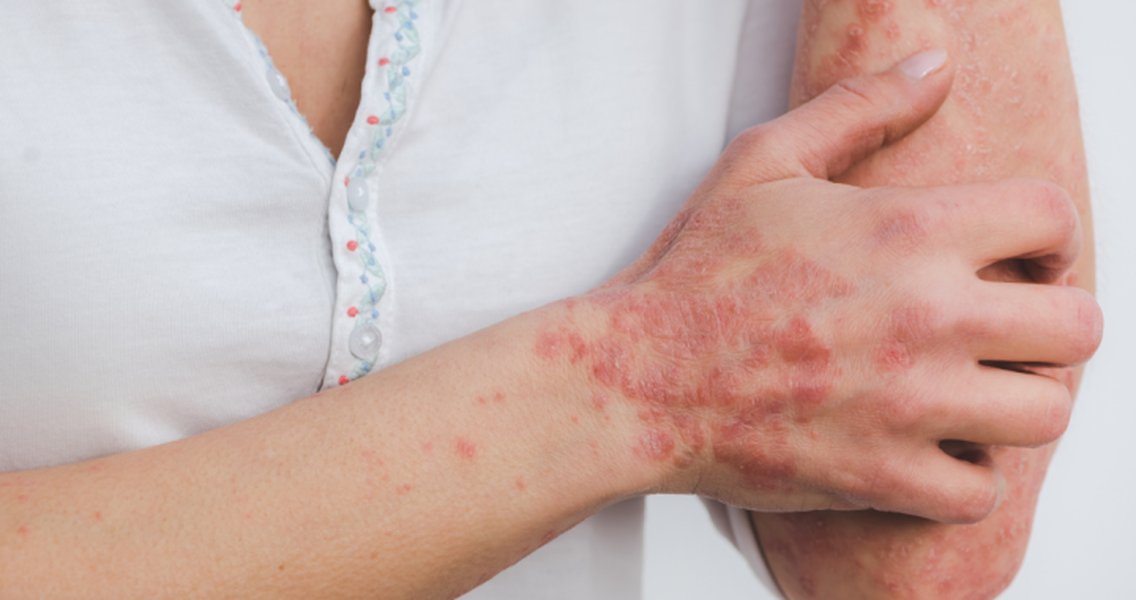
Visual representation of how psoriasis affects skin cell growth due to immune system activity.
The Many Faces of Psoriasis: Understanding the Types
Psoriasis manifests in several different forms, each with unique characteristics. The type of psoriasis determines the appearance of the rash and its location on the body.
- Plaque Psoriasis (Psoriasis Vulgaris): This is the most common type, affecting about 80-90% of people with psoriasis. It is characterized by well-defined, raised, red or pink patches of skin (plaques) covered with silvery-white scales. These plaques often appear on the elbows, knees, scalp, and lower back. They can be itchy and sometimes painful.
- Guttate Psoriasis: This type often appears suddenly, frequently following a bacterial infection like strep throat. It presents as small, dot-like or drop-shaped, red or pink scaly lesions, usually on the trunk, arms, and legs. Guttate psoriasis can resolve on its own or sometimes develop into plaque psoriasis.
- Inverse Psoriasis (Flexural Psoriasis): Inverse psoriasis affects skin folds, such as the armpits, groin, under the breasts, and around the genitals. It appears as smooth, bright red, inflamed patches without the typical scaling seen in plaque psoriasis, primarily because of the moist environment in these areas. It can be worsened by friction and sweating.
- Pustular Psoriasis: This is a less common form characterized by widespread or localized patches of skin with white, pus-filled blisters (pustules). The pus is non-infectious, consisting of white blood cells. Pustular psoriasis can be triggered by certain medications, infections, stress, or abrupt withdrawal of systemic corticosteroids. It can be severe and may require immediate medical attention, especially in its generalized form.
- Erythrodermic Psoriasis: This is a rare, severe, and potentially life-threatening form of psoriasis that affects most of the body surface. It causes widespread, fiery redness and shedding of scales in large sheets. Symptoms include intense itching or burning, changes in body temperature, and an increased heart rate. Erythrodermic psoriasis requires urgent medical care.
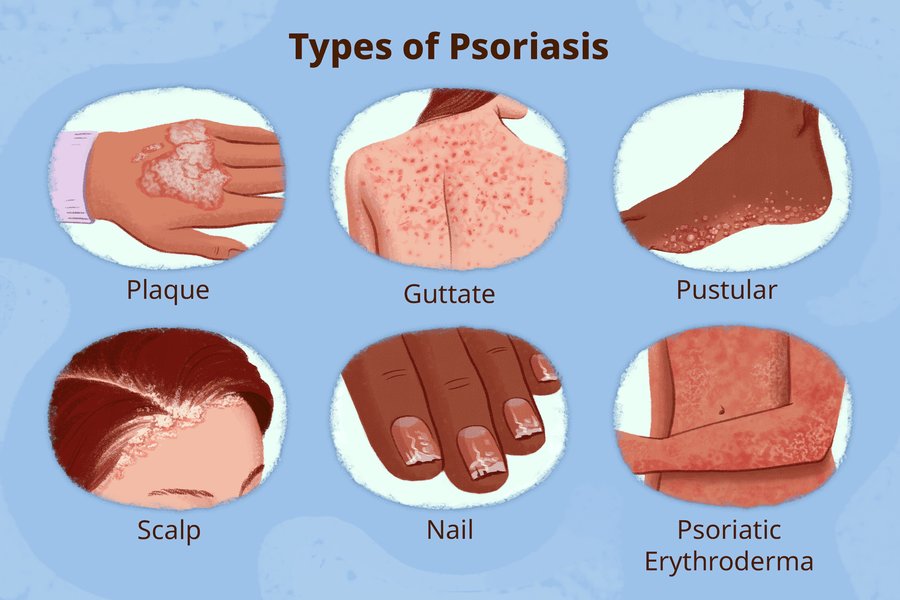
Illustrations depicting common types of psoriasis.
Identifying the Signs: Common Symptoms and Triggers
Recognizing Psoriasis Symptoms
The symptoms of psoriasis can vary widely depending on the type and severity, but some common signs include:
- Red, raised, inflamed patches of skin.
- Silvery-white or greyish scales on the red patches.
- Dry, cracked skin that may itch, burn, or bleed.
- Itching, soreness, or a burning sensation in the affected areas.
- Thickened, pitted, or ridged fingernails and toenails. In some cases, nails may detach from the nail bed (onycholysis).
- Swollen and stiff joints, which are symptoms of psoriatic arthritis, a condition that affects about 30% of people with psoriasis.
Psoriasis symptoms often come and go in cycles, with periods of flare-ups (when symptoms are severe) alternating with periods of remission (when symptoms are mild or absent).
What Sparks a Flare-Up? Understanding Psoriasis Triggers
While the underlying cause of psoriasis is genetic and immune-related, various environmental factors can trigger or worsen flare-ups. Identifying and avoiding these triggers can be an important part of managing the condition.
Genetic Predisposition
A family history of psoriasis increases the risk of developing the condition. Specific genes, particularly those related to immune system function (like certain HLA antigens), have been linked to psoriasis susceptibility.
Environmental and Lifestyle Triggers
- Infections: Bacterial infections (especially streptococcal infections like strep throat) or viral infections can trigger guttate psoriasis or exacerbate existing psoriasis.
- Skin Injury (Koebner Phenomenon): Trauma to the skin, such as cuts, scrapes, sunburn, bug bites, or even tattoos and piercings, can lead to new psoriatic lesions at the site of injury.
- Stress: High levels of stress are a well-known trigger for psoriasis flare-ups. Stress can impact the immune system and worsen inflammation.
- Medications: Certain drugs can trigger psoriasis or make it worse. These include lithium (used for bipolar disorder), beta-blockers (for high blood pressure), antimalarial drugs, and nonsteroidal anti-inflammatory drugs (NSAIDs) like ibuprofen. Rapid withdrawal of systemic corticosteroids can also cause severe flare-ups.
- Weather: Cold, dry weather can often worsen psoriasis symptoms, while warm, sunny weather (and moderate sun exposure) may improve them for some individuals.
- Smoking: Smoking is a significant risk factor for developing psoriasis and can increase its severity.
- Heavy Alcohol Consumption: Excessive alcohol intake can trigger flare-ups and may reduce the effectiveness of some psoriasis treatments.
- Obesity: Being overweight or obese is associated with an increased risk of psoriasis and can make the condition more severe and harder to treat, possibly due to chronic inflammation associated with excess fat tissue.
The following mindmap illustrates the interconnectedness of psoriasis aspects, including its definition, common types, typical symptoms, and the various factors that can cause or trigger flare-ups.
Chronic autoimmune skin disease
Rapid skin cell turnover"] id2["Types"] id2a["Plaque Psoriasis
(Most common, scaly patches)"] id2b["Guttate Psoriasis
(Small, drop-like spots)"] id2c["Inverse Psoriasis
(In skin folds, smooth red patches)"] id2d["Pustular Psoriasis
(Pus-filled blisters)"] id2e["Erythrodermic Psoriasis
(Widespread redness, severe)"] id3["Common Symptoms"] id3a["Red, inflamed patches"] id3b["Silvery scales"] id3c["Itching & Burning"] id3d["Dry, cracked skin"] id3e["Nail changes (pitting, discoloration)"] id3f["Joint pain (Psoriatic Arthritis)"] id4["Causes & Triggers"] id4a["Genetic Predisposition"] id4b["Immune System Dysfunction"] id4c["Environmental Triggers"] id4c1["Infections (e.g., Strep throat)"] id4c2["Skin Injury (Koebner phenomenon)"] id4c3["Stress"] id4c4["Medications (Beta-blockers, Lithium)"] id4c5["Weather (Cold, dry)"] id4c6["Lifestyle Factors (Smoking, Alcohol, Obesity)"]
The Quest for Relief: Is There a Cure for Psoriasis?
One of the most common questions individuals diagnosed with psoriasis ask is whether there's a cure. Currently, as of May 2025, there is no known cure for psoriasis. It is a chronic, long-lasting condition that can persist throughout a person's life, often characterized by periods of flare-ups and remissions.
Because psoriasis is an autoimmune disease rooted in the body's immune system and genetic predispositions, completely eliminating it is not yet possible with current medical science. The goal of treatment is therefore not to cure the disease, but to:
- Control symptoms and reduce inflammation.
- Slow down the rapid growth of skin cells.
- Remove scales and smooth the skin.
- Prevent or minimize flare-ups.
- Improve the patient's overall quality of life.
While a cure remains elusive, significant advancements in medical research have led to a wide array of effective treatments that can help manage psoriasis, often leading to significant skin clearance and long periods of remission.
Navigating Treatment Pathways: Managing Psoriasis in 2025
Although psoriasis cannot be cured, a variety of treatments can effectively control its symptoms. Treatment plans are highly individualized, depending on the type and severity of psoriasis, the extent of skin involvement, the presence of psoriatic arthritis, the patient's overall health, and personal preferences. Often, a combination of therapies is used.
Topical Therapies: First Line of Defense
Applied directly to the skin, topical treatments are usually the first choice for mild to moderate psoriasis. They can also be used in conjunction with other treatments for more severe cases.
- Corticosteroids: These anti-inflammatory creams, ointments, lotions, gels, foams, and shampoos are the most frequently prescribed medications for psoriasis. They reduce redness, swelling, itching, and scaling. Strengths vary from mild (e.g., hydrocortisone) to very potent. Long-term use or use of strong corticosteroids can cause side effects like skin thinning.
- Vitamin D Analogues: Synthetic forms of vitamin D, such as calcipotriene (Dovonex) and calcitriol (Vectical), slow down skin cell growth, flatten lesions, and remove scales. They are often used with or in rotation with corticosteroids.
- Retinoids: Tazarotene (Tazorac) is a topical retinoid (a synthetic form of vitamin A) that can help normalize DNA activity in skin cells and slow their proliferation. It may cause skin irritation and increase sensitivity to sunlight. Not recommended during pregnancy.
- Calcineurin Inhibitors: Tacrolimus (Protopic) and pimecrolimus (Elidel) are ointments that reduce inflammation and plaque buildup. They are particularly useful for sensitive areas like the face and skin folds, where corticosteroids might cause side effects.
- Salicylic Acid: Available over-the-counter and by prescription, salicylic acid helps to lift and remove scales, making it easier for other topical medications to penetrate the skin. It's often found in shampoos for scalp psoriasis.
- Coal Tar: A byproduct of coal processing, coal tar has been used for decades to treat psoriasis. It helps slow skin cell growth and reduce inflammation, itching, and scaling. It can be messy, stain clothing, and has a strong odor.
- Moisturizers: Emollients and heavy creams help to combat the dryness, scaling, and cracking associated with psoriasis. Regular moisturizing is a key component of managing the condition.
Phototherapy: Harnessing Light for Healing
Phototherapy, or light therapy, involves exposing the skin to specific wavelengths of ultraviolet (UV) light under medical supervision. It's used for moderate to severe psoriasis or when topical treatments aren't sufficient.
- UVB Phototherapy:
- Broadband UVB: Uses a wider range of UVB light.
- Narrowband UVB (NB-UVB): Uses a smaller, more targeted part of the UVB spectrum. NB-UVB is now more commonly used as it's generally more effective and has fewer side effects than broadband UVB. Treatments are typically given 2-3 times a week.
- Psoralen plus Ultraviolet A (PUVA): This treatment combines a light-sensitizing medication called psoralen (taken orally or applied topically) with exposure to UVA light. PUVA is a potent treatment for more severe psoriasis but carries a higher risk of side effects, including nausea, headache, burning, and an increased long-term risk of skin cancer.
- Excimer Laser: This type of phototherapy delivers high-intensity UVB light to targeted small areas of affected skin, sparing healthy skin. It's useful for localized plaque psoriasis, especially on the scalp, hands, and feet.
- Natural Sunlight: Small, regular doses of sunlight can improve psoriasis, but it's crucial to avoid sunburn, which can worsen it. Consult a doctor before using sunlight as a treatment.
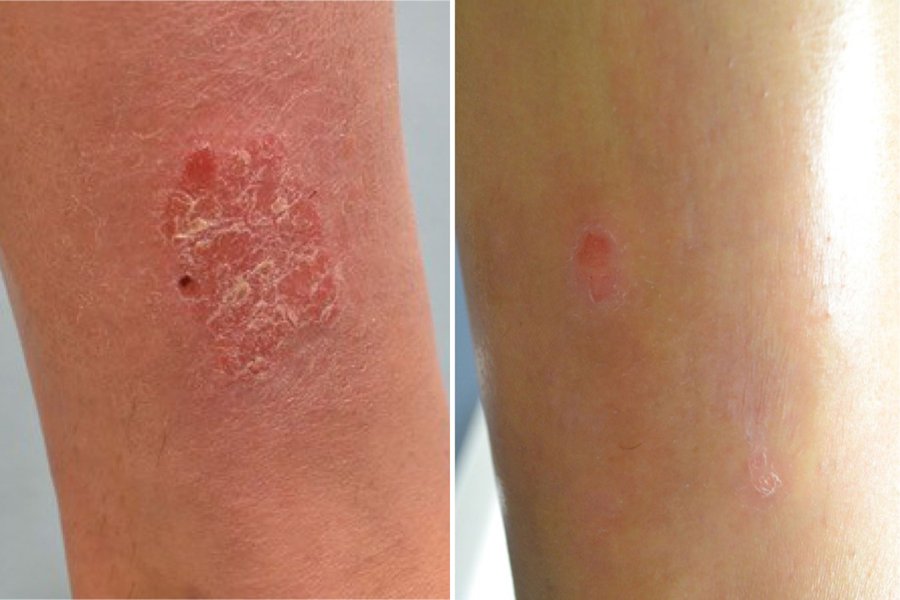
Example of targeted phototherapy (Excimer Laser) used for psoriasis treatment.
Systemic Medications: Addressing Moderate to Severe Cases
For individuals with moderate to severe psoriasis, or those who haven't responded to topical treatments or phototherapy, doctors may prescribe oral or injected medications that work throughout the body (systemically).
- Methotrexate: This immunosuppressant drug slows down the production of skin cells and reduces inflammation. It's taken orally or by injection, typically once a week. Regular blood tests are needed to monitor for potential side effects, including liver damage and decreased production of blood cells.
- Cyclosporine: Another potent immunosuppressant, cyclosporine also calms the immune system to reduce psoriasis symptoms. It's effective but can cause kidney problems, high blood pressure, and other side effects, so it's usually used for short periods and requires careful monitoring.
- Acitretin: An oral retinoid (related to vitamin A) that helps control the multiplication of skin cells. It can be effective, especially for pustular and erythrodermic psoriasis, but has potential side effects, including dry skin and lips, hair loss, and liver problems. It must not be used by women who are pregnant or planning to become pregnant due to a high risk of birth defects.
- Apremilast (Otezla): An oral medication that works by inhibiting an enzyme called phosphodiesterase 4 (PDE4) involved in the inflammation process. It's generally well-tolerated but can cause gastrointestinal side effects and, rarely, mood changes.
Biologics: Targeted Immune Modulation
Biologics are a newer class of systemic drugs, administered by injection or intravenous (IV) infusion. They are derived from living organisms and target very specific parts of the immune system that are involved in psoriasis. They are generally reserved for moderate to severe psoriasis that hasn't responded to other treatments or for individuals with psoriatic arthritis.
Biologics work by blocking the action of specific types of immune cells (like T-cells) or proteins (like tumor necrosis factor-alpha (TNF-alpha), interleukin 17 (IL-17), interleukin 23 (IL-23), or interleukins 12 and 23). Examples include:
- TNF-alpha inhibitors: Etanercept (Enbrel), adalimumab (Humira), infliximab (Remicade), certolizumab pegol (Cimzia).
- IL-17 inhibitors: Secukinumab (Cosentyx), ixekizumab (Taltz), brodalumab (Siliq), bimekizumab (Bimzelx) – the latter also targets IL-17F.
- IL-23 inhibitors: Guselkumab (Tremfya), tildrakizumab (Ilumya), risankizumab (Skyrizi).
- IL-12/23 inhibitors: Ustekinumab (Stelara).
Biologics can be very effective but also carry risks, such as an increased susceptibility to infections, as they suppress parts of the immune system. Regular monitoring by a healthcare provider is essential.
Emerging and Alternative Approaches
Research into psoriasis is ongoing, with new treatments continually being developed. For instance, novel compounds activated by blue light (like MRS7787 mentioned in recent research) show promise for modulating immune activity. Personalized medicine approaches, potentially involving genetic testing, aim to tailor treatments more precisely in the future.
Some individuals explore complementary and alternative therapies, such as special diets, vitamin supplements (like fish oil), aloe vera, Oregon grape, or acupuncture. While some may find these helpful for mild symptoms, the scientific evidence supporting their efficacy is often limited. It's important to discuss any alternative therapies with a doctor to ensure they are safe and don't interfere with conventional treatments.
The following table summarizes the main categories of psoriasis treatments:
| Treatment Category | Mechanism of Action | Examples | Commonly Used For |
|---|---|---|---|
| Topical Therapies | Reduce local inflammation, slow skin cell growth, remove scales | Corticosteroids, Vitamin D analogues (calcipotriene), Retinoids (tazarotene), Salicylic acid, Coal tar | Mild to moderate psoriasis; can be combined with other treatments for severe cases. |
| Phototherapy | UV light slows rapid skin cell growth and reduces inflammation | Narrowband UVB (NB-UVB), PUVA (Psoralen + UVA), Excimer laser | Moderate to severe psoriasis, or psoriasis unresponsive to topicals. |
| Systemic Medications (Oral/Injected) | Suppress the immune system or slow skin cell proliferation throughout the body | Methotrexate, Cyclosporine, Acitretin, Apremilast | Moderate to severe psoriasis, psoriatic arthritis, or when other treatments are ineffective. |
| Biologic Therapies | Target specific components of the immune system involved in psoriasis inflammation | TNF-alpha inhibitors (e.g., Adalimumab), IL-17 inhibitors (e.g., Secukinumab, Bimekizumab), IL-23 inhibitors (e.g., Guselkumab) | Moderate to severe psoriasis, particularly cases resistant to other therapies, and psoriatic arthritis. |
Visualizing Psoriasis Management Efficacy Factors
Managing psoriasis involves considering various aspects of treatment beyond just skin clearance. The radar chart below provides a conceptual comparison of different treatment categories based on several factors. These are generalized perceptions and individual experiences can vary significantly. Factors include: Symptom Relief (effectiveness in reducing itching, scaling, redness), Speed of Action (how quickly improvements are seen), Long-Term Control (ability to maintain remission), Convenience (ease of use, frequency of administration), and Side Effect Profile (lower score indicates more favorable/fewer side effects).
This chart is intended for illustrative purposes to show how different treatment modalities might compare across these conceptual factors. A lower score on 'Side Effect Profile' indicates a more favorable profile (fewer or less severe side effects). Higher scores on other metrics indicate better performance. Always consult with a healthcare professional for personalized treatment advice.
Living with Psoriasis: Impact and Associated Conditions
Psoriasis is more than a cosmetic issue; it can significantly affect a person's physical comfort and emotional well-being. The itching, pain, and appearance of psoriatic lesions can impact daily activities, sleep, self-esteem, and social interactions. Many individuals with psoriasis experience feelings of embarrassment, anxiety, and depression. The chronic nature of the disease and the need for ongoing management can also be a source of stress.
Furthermore, psoriasis is recognized as a systemic inflammatory condition, meaning the inflammation associated with it can affect other parts of the body. People with psoriasis, particularly those with severe disease, have an increased risk of developing other serious health problems, including:
- Psoriatic Arthritis: Affects up to 30% of people with psoriasis, causing joint pain, stiffness, and swelling.
- Cardiovascular Disease: Including heart attack and stroke.
- Metabolic Syndrome: A cluster of conditions including high blood pressure, high blood sugar, excess body fat around the waist, and abnormal cholesterol levels.
- Type 2 Diabetes.
- Obesity.
- Inflammatory Bowel Disease: Such as Crohn's disease.
- Certain Cancers: Such as lymphoma and non-melanoma skin cancer (though the risk for skin cancer can also be influenced by treatments like PUVA).
- Kidney Disease.
- Eye conditions: Such as uveitis.
This highlights the importance of comprehensive care for individuals with psoriasis, addressing not only the skin symptoms but also monitoring for and managing these associated conditions.
Understanding Psoriasis: A Deeper Dive
To further understand what psoriasis entails, its autoimmune nature, and how it affects individuals, the following video provides a concise overview. It discusses the basics of the condition, helping to clarify why it occurs and its common manifestations.
This video from Cleveland Clinic offers a clear explanation of what psoriasis is, highlighting its autoimmune basis and impact on skin cells.
The video emphasizes that psoriasis is an immune-mediated condition where inflammation drives skin cells to reproduce too quickly. This foundational understanding is key to comprehending why treatments focus on modulating the immune system and slowing cell turnover, rather than achieving a "cure" in the traditional sense. It also touches upon the systemic nature of the disease, hinting at why it can be linked to other health issues. Knowing these aspects helps patients and their families better navigate the complexities of living with and managing psoriasis.
Frequently Asked Questions (FAQ)
Is psoriasis contagious?
No, psoriasis is not contagious. It is an autoimmune condition, meaning it is caused by issues within your own immune system, not by an infection that can be passed from person to person. You cannot "catch" psoriasis from someone else by touching them or sharing items.
Can diet affect psoriasis?
While there's no specific "psoriasis diet" proven to cure the condition, some people find that certain foods can trigger or worsen their symptoms, while others may help. Maintaining a healthy, balanced diet rich in anti-inflammatory foods (like fruits, vegetables, and omega-3 fatty acids) and avoiding processed foods, red meat, and excessive alcohol may be beneficial. Weight management is also important, as obesity can exacerbate psoriasis. It's best to discuss dietary changes with your doctor or a nutritionist.
What is psoriatic arthritis?
Psoriatic arthritis (PsA) is a type of inflammatory arthritis that affects some people with psoriasis. It can cause pain, stiffness, and swelling in and around the joints. PsA can affect any joint in the body, including the fingers, toes, wrists, knees, ankles, and spine. Early diagnosis and treatment are important to prevent joint damage.
Can psoriasis go away on its own?
Psoriasis is a chronic condition, meaning it is generally lifelong. However, symptoms can fluctuate. Some people may experience periods of remission where their skin clears up, sometimes for extended periods, even without treatment. Guttate psoriasis, in particular, can sometimes resolve completely after the initial outbreak, especially in children. However, for most types of psoriasis, symptoms tend to recur without ongoing management.
Are there any new breakthroughs in psoriasis treatment?
Yes, research in psoriasis is very active. Recent years have seen the development of highly effective biologic drugs that target specific immune pathways, like IL-17 and IL-23 inhibitors (e.g., bimekizumab). Ongoing research explores new oral treatments, topical agents, and even novel approaches like compounds activated by blue light. Personalized medicine, aiming to tailor treatments based on an individual's genetic makeup and specific disease characteristics, is also an area of growing interest for future psoriasis management.
Recommended Further Exploration
- What are the long-term side effects of biologic treatments for psoriasis?
- How does stress specifically trigger psoriasis flare-ups at a cellular level?
- Can lifestyle changes like diet and exercise significantly reduce psoriasis severity?
- What is the latest research on genetic markers for predicting psoriasis development and severity?
References
Last updated May 7, 2025