
Learning DHAM for Neurodivergent Students
A structured strategy for mastering the Dynamic Histogram Analysis Method
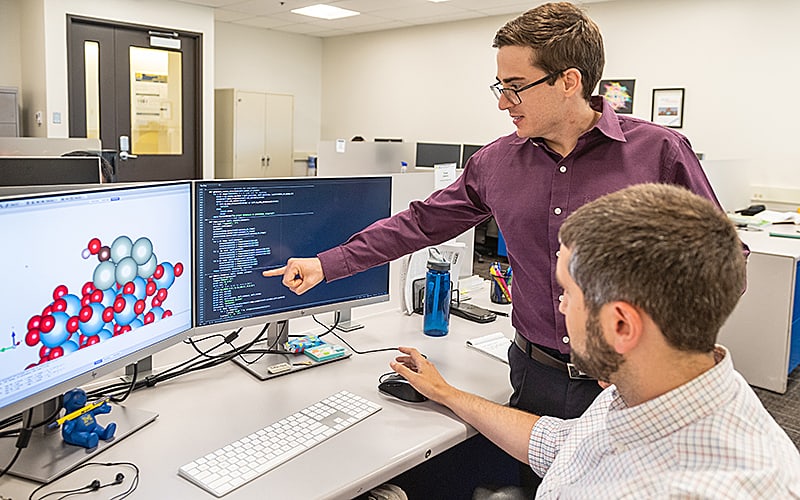
Key Highlights
- Multi-sensory Visual Learning: Utilize diagrams, flowcharts, and simulation videos to bridge abstract concepts.
- Step-by-Step Conceptual Breakdown: Divide DHAM into manageable parts, starting with basic principles from diverse scientific fields.
- Supportive Learning Environment: Incorporate regular breaks, interactive tools, collaborative sessions, and assistive technology.
Understanding the Fundamentals of DHAM
Dynamic Histogram Analysis Method (DHAM) is a computational technique typically used in molecular simulations to calculate free energy landscapes and reaction rates. In essence, DHAM helps scientists understand how molecules change over time, using data from simulations to determine the likelihood of transitions between different molecular states. This approach builds on the concept of histograms by analyzing state transitions and the time spent in each state, which can then be used to extract kinetic and thermodynamic information.
For a neurodivergent student who may be grappling with ADHD, ASD, and dyscalculia, and who might have foundational gaps in fields such as chemistry, physics, mathematics, and computer science, the key is to break down these complex ideas into smaller, more accessible parts. It is important to emphasize understanding the overall ideas and interconnections instead of getting lost in numerical intricacies.
Tailored Strategies for Learning DHAM
1. Building the Conceptual Foundation
Identifying Knowledge Gaps
Start by identifying the specific areas where you may have challenges—in basic principles of chemistry, physics, mathematics, and computer science. Recognize that all these fields provide building blocks for understanding DHAM. It is acceptable to take some time to revisit fundamental topics such as:
- Basic statistical analysis
- Probability and data interpretation
- Simple chemical principles
- Elementary physics, especially how energy and force interact
- Introduction to computer simulations
Tailored resources that start at the very foundations can be extremely helpful. Many online platforms such as Khan Academy and Coursera offer courses that are specifically designed for learners who need a slower pace or a more visual approach.
2. Breaking Down DHAM Into Manageable Components
Concept Segmentation
DHAM can initially seem overwhelming, so it is crucial to separate the method into its key components:
- Understanding the Objective: The method aims to compute free energy landscapes and the kinetics of molecular transitions by constructing histograms from simulation data.
- Analyzing Time Spent in States: It includes tracking how long a molecule stays in one state (or bin) and counting the transitions between states.
- Using a Global Markov Model: Instead of relying solely on local equilibria within each simulation window, DHAM applies a global approach to better approximate rates and energetic differences.
Tackling each of these components separately can alleviate the sense of being overwhelmed, allowing you to build complexity gradually.
3. Visual and Practical Learning Tools
Leveraging Visual Aids
Given that neurodivergent learners often benefit from visual representations, it is essential to employ diagrams, charts, and animations. These materials can visually break down:
- How molecular states are mapped out
- Transitions between these states via a dynamic histogram
- Comparisons with real-world systems like traffic flow or game scenarios
Interactive simulations are particularly effective. They allow you to see the effects of changing different parameters in real time, turning abstract concepts into concrete visual experiences.
Creating Hands-On Projects
Hands-on activities, such as simple programming exercises or using dedicated simulation software, are beneficial to see DHAM principles in action. For instance, one project approach could involve:
- Using a graphical user interface to simulate particle movements
- Constructing basic histograms to capture state transitions
- Comparing different simulation conditions to see how transitions vary
These projects not only make the learning process interactive but also allow you to manipulate simulation parameters to see direct outcomes of theoretical concepts.
4. Accommodations for ADHD, ASD, and Dyscalculia
Creating an Organized Environment
A quiet and organized workspace is key. For students with ADHD, reducing distractions is paramount. Use tools like timers or structured schedules to allocate study and break periods effectively. Creating a physical or digital checklist of topics and tasks can also guide the learning process.
Use of Assistive Technology
Assistance for dyscalculia might include using calculators, computer algebra systems, or apps that help with numeracy. Software with user-friendly interfaces that perform complex computations can let you focus on understanding concepts rather than performing challenging numerical calculations.
Flexible Learning Pace
It is essential to take regular breaks to prevent cognitive overload—especially crucial for learners with ADHD. Setting frequent intervals for rest and physical movement can improve focus and retention over extended periods.
Practical Applications and Real-World Examples
Understanding DHAM is not only a theoretical exercise; it has practical implications in fields such as drug discovery, materials science, and biophysics. Some of the key real-world applications include:
- Free Energy Landscape Analysis: DHAM is used to compute the free energies of various molecular states in simulations. By understanding these landscapes, researchers can predict reaction pathways and the stability of different molecular conformations.
- Kinetic Rate Calculation: The method’s ability to use transition histories allows it to compute rates at which molecules transition from one state to another, often providing more accurate values compared to traditional methods when simulation windows do not reach full equilibration.
- Biophysical Systems: In biophysics, DHAM helps in studying biomolecular interactions and the effects of environmental factors on protein folding or ligand binding.
Interactive Learning Table
The table below summarizes key components of DHAM, its challenges, and strategies for neurodivergent learners:
| Component | Description | Learning Strategy |
|---|---|---|
| Basic Principles | Foundational knowledge in statistics, chemistry, physics, and computer science | Start with fundamental courses and online tutorials with clear explanations |
| Concept Segmentation | Breaking down DHAM into manageable parts, like state transitions and kinetic analysis | Learn one component at a time through step-by-step guides |
| Visual Learning | Utilizing diagrams, videos, and interactive simulations to illustrate concepts | Incorporate visual aids, flowcharts, and software simulations |
| Environmental and Assistive Adaptations | Accommodations for ADHD, ASD, and dyscalculia including structured schedules and assistive tools | Create a distraction-free study space and use digital tools for numerical tasks |
| Hands-On Projects | Practical implementations of DHAM concepts in simulations or programming tasks | Engage with coding exercises and real-world simulation projects |
Leveraging Resources and Community Support
Alongside individual study, connecting with a broader learning community can substantially enhance your understanding of DHAM. Whether it’s an online forum, a dedicated study group, or one-on-one mentoring, working with others allows you to exchange ideas and gain clarity on challenging topics. Here are some resource strategies:
Digital and Online Resources
Numerous digital resources are available to break down the fundamental concepts. Video tutorials, online courses, and interactive simulations make it easier to grasp the intricate details of DHAM. Try accessing:
- Video series on molecular simulations in biophysics.
- Interactive modules on free energy calculations and Markov state models.
- Online courses that gradually introduce the concept from fundamental principles to advanced applications.
Websites like Khan Academy, Coursera, and several library databases offer curated content that is both engaging and easy to understand.
Mentoring and Peer Collaboration
Given the complexity of DHAM, consider working with a tutor or mentor who has experience in the subject matter and in teaching students with neurodivergent profiles. This personalized attention can help tailor explanations to your learning style and pace.
Participating in study groups can also be very beneficial. Explaining concepts to peers often reinforces your understanding while exposing you to new perspectives and problem-solving techniques.
Encouraging Perseverance Through Creative Learning
It is important to recognize and harness your individual strengths. Many neurodivergent students excel in creative thinking and pattern recognition, skills that are valuable when learning complex subjects like DHAM. Incorporating creative projects into your study routine can transform the learning process into a more engaging and enjoyable experience.
Creative Approaches to DHAM
Analogies and Real-World Examples
For instance, comparing DHAM to a real-world scenario—like tracking how traffic moves through different intersections in a city—can help you visualize and relate to the process of molecular transitions and state changes. Each intersection (or state) and the distance traveled between them (transition rates) become tangible, making the abstract concepts of DHAM accessible.
Developing Personal Projects
Engage in projects where you can utilize your inherent creativity. This could be as simple as using computer simulation tools to model a basic molecular system or as complex as designing animations that illustrate the dynamics of molecular interactions. These projects not only solidify your practical understanding of DHAM but also build confidence in applying technical knowledge in creative ways.
Essential References
Here are several key resources that explore the DHAM method and provide deeper insights into its background, theory, and practical applications:
- Dynamic Histogram Analysis To Determine Free Energies and Rates From Biased Simulations - ACS Publications
- Direct Calculation with DHAM - ACS Publications
- Electron Transfer Rates with DHAM - ChemRxiv
- Applications in Molecular Simulations - ACS Publications
- Foundations of Weighted Histogram Analysis Method (WHAM) - Semantic Scholar
Recommended Further Exploration
Last updated March 11, 2025