
Why No Return to Earth: Unraveling the Multifaceted Challenge
Exploring technical dilemmas, existential threats, and the irreversible journey away from our home planet
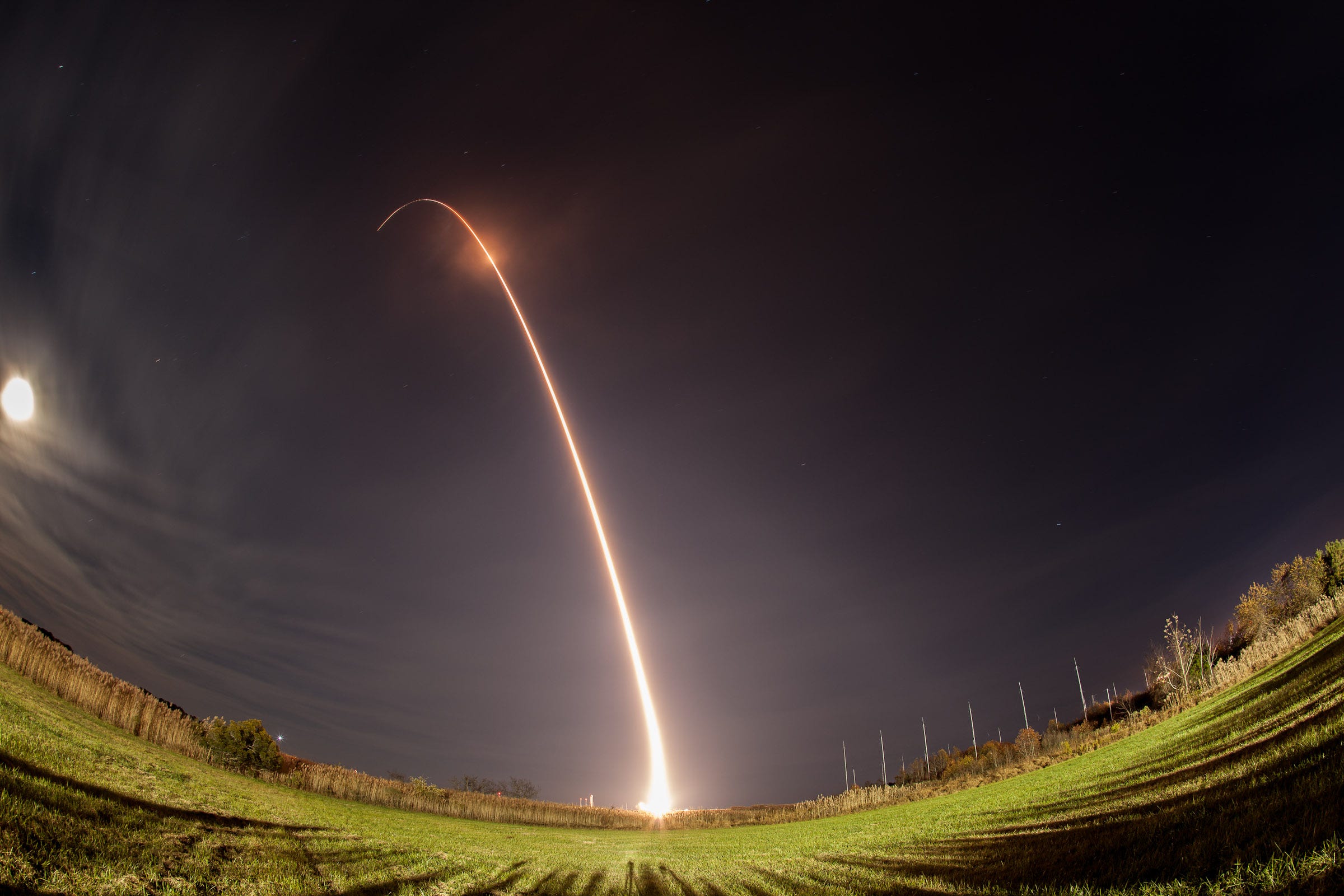
Key Insights
- Complexity of Space Missions: Astronaut returns can be delayed or altered due to technical malfunctions, safety protocols, and even political influences impacting spacecraft readiness.
- Existential Threats: Beyond the realm of space travel, climate change, nuclear risks, pandemics, and even celestial impacts contribute to a shift in our relationship with Earth.
- Philosophical and Metaphorical Journey: The concept of ‘no return’ can also reflect the transformative, irreversible changes both in technology and in the human condition, prompting a deeper questioning of our origins and destiny.
Introduction
The idea of a "no return to Earth" resonates across various contexts—from the high-stakes world of space exploration to the sobering realities of climate change and other existential threats. This script invites you to examine why returning to Earth may become a Sisyphean challenge. We explore technical delays surrounding modern space missions, delve into the perils of environmental degradation, and even discuss the dramatic narratives found in popular culture and political debate. This narrative is not just about physical return but represents a metaphorical understanding of irreversible change.
Part I: Technical and Logistical Challenges in Space Missions
Spacecraft Dilemmas
Modern space exploration is rife with technical hurdles. A case in point is the story of NASA astronauts such as Sunita Williams and Barry Wilmore, whose return to Earth was delayed due to critical issues with the originally designated spacecraft, the Boeing Starliner capsule. Initially planned for a brief stay at the International Space Station (ISS), technical glitches rendered Starliner unsafe for immediate crewed missions. Consequently, NASA had to reassign the return journey to a SpaceX Dragon capsule—an adjustment that delayed their homecoming by more than nine months.
Safety Protocols and Readjustment
When astronauts re-enter Earth’s gravitational field after extended stays in microgravity, elaborate safety protocols are mandatory. One such precaution includes transporting astronauts via stretchers due to the re-introduction of gravity which can trigger severe "space motion sickness" and challenges in physical readjustment. This practice, while seemingly excessive, underscores the complex nature of human adaptation and the inherent risks of returning from long-term space missions.
Political and Administrative Influences
There have been debates and conjectures regarding the influence of political agendas in decisions regarding space missions. Some interpretations suggest that delays could have components beyond mere technical issues, including political decision-making processes. Although NASA consistently cites technical and safety concerns, public discourse sometimes links these delays to external influences—arguing that political strategies might indirectly play a role in prolonging the mission. Whether technical, political, or logistical in origin, these delays highlight the intricate management involved in ensuring that space travel remains as safe as humanly possible.
Part II: The Broader Spectrum of “No Return” Narratives
Existential Threats to Earth’s Habitability
Beyond space travel, the notion of “no return” stretches into the realm of environmental and existential challenges that threaten the long-term habitability of Earth. Climate change alone stands as a formidable force. Scientists warn that if global temperatures continue to rise unchecked, we might cross a "point of no return," where irreversible changes in the Earth’s climate system become inevitable. Such changes include catastrophic weather events, rising sea levels, and an overall degradation of life-supporting ecosystems.
Climate Change and Ecosystem Collapse
Climate-induced phenomena such as massive wildfires, flooding coastal cities, and intensifying hurricanes have already begun to alter the landscape dramatically. The idea of a “no return” scenario in this context isn’t purely speculative—it’s supported by scientific models forecasting ecological collapse if substantial mitigation measures are not enacted. This irreversible tipping point could mark the transition from a thriving biosphere to a compromised, less hospitable planet.
Other Catastrophic Scenarios
In addition to climate change, several other threats underline the "no return" narrative:
- Nuclear War: The possibility of nuclear conflict presents a terrifying scenario where the devastation inflicted on Earth could render it uninhabitable for future generations. The lasting impacts of radiation, widespread destruction of infrastructure, and long-term environmental damage illustrate why such conflicts are considered a last resort by world leaders.
- Pandemics: Global health crises, as exemplified by the COVID-19 pandemic, highlight how rapidly and destructively diseases can impact society. A far more virulent outbreak could potentially decimate populations and alter ecosystems, making recovery and normalcy—a return to a semblance of our previous way of life—nearly impossible.
- Asteroid Impact: Though statistically improbable, the cosmic threat of a significant asteroid impact looms over human civilization. An impact of sufficient magnitude could lead to massive tsunamis, global firestorms, and an extreme loss of life, thereby marking a scenario where returning to the known Earth becomes an afterthought in the aftermath of catastrophic change.
Human Resilience Versus Planetary Limits
The human spirit is resilient, often overcoming physical and psychological challenges. However, technological and adaptive strategies have their limits when faced with planetary-scale events. Whether it be the prolonged challenges of space travel or the irreversible sweep of environmental change, these scenarios force us to confront an inevitable question: When do we reach a point where returning to a former state—be it Earth or a way of life—is no longer possible?
Part III: A Scripted Narrative of “No Return to Earth”
Scene 1: Departure into the Unknown
(The scene opens in a high-tech space control room. Monitors flash data and images of the cosmos. An astronaut gazes out at the distant Earth, now a shrinking blue orb beyond the viewport.)
Narrator (V.O.): "In the infinite vastness of space, where each moment is marked by both wonder and danger, humanity dares to chart the unknown. Our journey is not just a physical passage but a leap into realms fraught with technical hazards, political negotiations, and existential threats."
Scene 2: Technical Turbulence
(Flashback to the ISS where astronauts Sunita and Barry, aboard a spacecraft with a troubled history, are seen engaging with mission control. The tension is palpable as engineers scramble to resolve critical anomalies in the spacecraft’s systems.)
Engineer (urgent): "Our primary capsule—the Starliner—is not meeting safety parameters. We must switch to an alternative plan using the SpaceX Dragon capsule, even if it delays the return by months."
Narrator (V.O.): "In the realm of space exploration, the margin for error is razor-thin. Delays and technical adjustments are not signs of failure but evidence of human resolve to ensure every journey is as safe as it is groundbreaking."
Scene 3: The Weight of Global Catastrophes
(The scene transitions from the sterile environment of the spacecraft to vivid images of Earth under siege by climate change. Coastal cities are shown submerged, forests reduced to smoldering ash, and communities struggling against nature’s fury.)
Narrator (V.O.): "Back on Earth, a different kind of battle is being waged. The relentless advance of climate change, exacerbated by human activity, has pushed our planet toward a dangerous tipping point. The once predictable seasons now bring devastation, and the Earth we knew may no longer exist."
Environmental Scientist: "We are nearing a state where reversing the damage becomes nearly impossible. Future generations may inherit a planet so transformed that the concept of returning to a 'normal' Earth is nothing more than a nostalgic memory."
Scene 4: Unyielding Adversaries
(Cut to intense scenes depicting fallout from a nuclear explosion, rapid evacuation during a severe pandemic, and a dramatic reenactment of an asteroid hurtling toward Earth.)
Narrator (V.O.): "Whether it is the specter of nuclear war, the swift spread of a pandemic, or the catastrophic impact of an asteroid, our planet faces adversaries that can alter human existence irrevocably. Each scenario tests our limits and forces us to confront the unsettling possibility that, after such events, a return to Earth as we once knew it might be forever out of reach."
Scene 5: The Philosophical Divide
(A solitary astronaut drifts against the backdrop of space. Their voice is introspective and measured.)
Astronaut: "As I gaze back at Earth—a fragile orb suspended in the void—I reflect on whether our journey into the unknown is purely an act of exploration or a renunciation of the past. Perhaps, in our quest for knowledge and progress, we have started to forge a future that leaves behind the Earth we once cherished."
Narrator (V.O.): "In this moment of profound isolation, the astronaut embodies the very essence of the 'no return' narrative. The expedition into space transcends a mere physical voyage—it is a philosophical odyssey that questions whether returning to the Earth of old is even desirable, or if we are destined for an irreversible transformation."
Part IV: A Comparative Insight Table
| Aspect | Context | Description |
|---|---|---|
| Space Exploration | Technical & Political | Delays resulting from spacecraft malfunctions, safety protocols, and administrative or political decision-making. |
| Environmental Crisis | Climate Change | Irreversible damage from global warming, ecological collapse, and the impending tipping points that warn of no return. |
| Global Catastrophes | Nuclear, Pandemic, Asteroids | Risks that present immediate and long-lasting impacts on the planet’s habitability and human society. |
| Philosophical Shift | Metaphorical Journey | An existential reconsideration of progress, questioning if returning to a past state of Earth is even possible or desirable. |
Part V: Reflecting on the Journey
The Duality of Return
Throughout this narrative, the duality of the concept "no return to Earth" has become apparent. On one hand, we have the tangible, technical, and logistical challenges of otherworldly travel that may delay or even jeopardize an astronaut’s safe homecoming. On the other hand, there is the metaphorical discussion surrounding our collective future on a planet undergoing irreversible change.
The synthesis of these ideas tells us that the challenges of return are multi-layered. Whether battling the vacuum of space with all its unforgiving technical hazards or facing the existential dread of an Earth marred by human impact, the narrative encapsulates a broader truth. The choices made today in space exploration, environmental policy, and global cooperation will determine if the future holds promise or if we are truly embarking on a journey without return.
Epilogue: Embracing a New Frontier
As this script unfolds its narrative arc, the underlying message emerges: The notion of "no return to Earth" is not simply a lament but a call to action. It challenges us to reconsider how we approach not only the wondrous, yet perilous frontier of space, but also the way we steward our home planet.
Whether it is reinforcing technical standards for spacecraft, engaging in vigorous environmental advocacy, or pondering the philosophical implications of progress and change, we stand at a precipice. Our future decisions will determine if we can safeguard a thriving Earth and ensure that our odyssey remains one of triumphant exploration rather than irreversible loss.
References
- Stranded NASA Astronauts - Live Science
- NASA Astronauts Return Delay - AP News
- NASA Astronauts & Space Adaptation - Al Jazeera
- Climate Change Point of No Return - HowStuffWorks
- Irreversible Climate Change - SGR
Recommended Queries
Last updated March 23, 2025