
Artificial Intelligence: Unveiling the Silent Revolution Shaping Our Tomorrow
Beyond the hype, discover how AI is subtly and profoundly rewriting the rules of our world, one algorithm at a time.
Artificial Intelligence (AI) has quietly transitioned from a realm of science fiction speculation to a tangible force woven into the fabric of our daily existence. It's the subtle intelligence curating your newsfeed, the advanced system aiding doctors in diagnosing complex ailments, and the engine powering the next generation of innovations. But beyond these surface-level interactions, AI represents a profound shift in how tasks are accomplished, problems are solved, and even how we perceive intelligence itself. This exploration delves into the multifaceted world of AI, examining its journey, its current impact, and the critical questions it poses for our collective future, all while aiming to capture the nuanced and reflective style characteristic of human thought and expression.
Key Insights into the World of AI
- Ubiquitous Integration: AI is no longer a futuristic concept but a present-day reality, deeply embedded in diverse sectors from healthcare and finance to entertainment and transportation, transforming operations and experiences.
- Dual-Edged Sword: While offering immense benefits like enhanced efficiency, groundbreaking discoveries, and personalized services, AI also presents significant challenges including ethical dilemmas, job market disruptions, and privacy concerns that demand careful navigation.
- The Human Element: Despite AI's prowess in processing data and mimicking cognitive functions, uniquely human attributes like profound creativity, emotional depth, nuanced understanding, and ethical discernment remain distinct, highlighting the ongoing importance of human oversight and ingenuity.
The Genesis and Evolution of Intelligent Machines
From Theoretical Concepts to Transformative Technology
The journey of Artificial Intelligence began not with a sudden burst of innovation, but as a gradual unfolding of ideas. Formally recognized as an academic discipline in 1956, the early aspirations for AI were ambitious, envisioning machines capable of complex problem-solving akin to human intellect. This path, however, was not linear. It navigated periods of fervent optimism and substantial funding, interspersed with "AI winters"—times of disillusionment when progress seemed to stall against the high wall of expectations and technological limitations. Yet, each setback paved the way for new approaches and eventual breakthroughs. The relentless march of computing power, coupled with the exponential growth of available data, has fueled recent surges in AI development. Innovations like machine learning, where systems learn and improve from data without explicit programming, and more recently, generative AI models like ChatGPT and Bard, have captured global attention. These systems demonstrate a remarkable ability to understand and generate human-like text, create images, and assist in a myriad of complex tasks, signaling a new era of AI capabilities and societal integration.
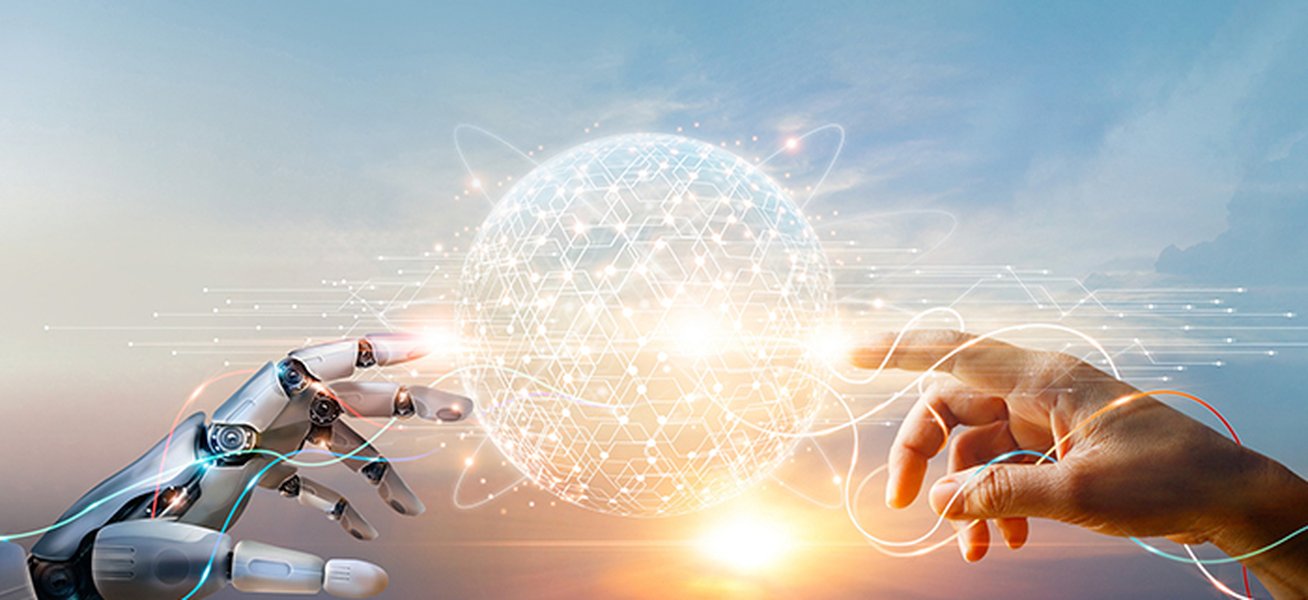
Visualizing the interconnected social impacts of Artificial Intelligence.
AI's Pervasive Influence Across Industries
Reshaping How We Work, Heal, Learn, and Live
The transformative power of AI is not confined to a single domain; its applications are sprawling across virtually every sector, fundamentally altering established practices and unlocking new potentials.
Healthcare Revolution
In medicine, AI is making significant strides. AI algorithms analyze medical images—X-rays, CT scans, MRIs—with remarkable speed and accuracy, often detecting diseases like cancer or diabetic retinopathy at earlier, more treatable stages. It's also being used to personalize treatment plans by analyzing a patient's genetic makeup and medical history, predict disease outbreaks, and accelerate drug discovery processes. Virtual health assistants and AI-powered diagnostic tools are becoming increasingly common, extending the reach of medical expertise.
Finance and Banking Reimagined
The financial world leverages AI for a multitude of tasks. Algorithmic trading, fraud detection, and risk management are key areas where AI excels. Machine learning models can identify suspicious transaction patterns far more effectively than traditional methods, safeguarding assets. AI-driven chatbots provide instant customer support, and robo-advisors offer personalized investment advice, democratizing financial planning.
Transportation's Autonomous Future
AI is at the heart of the development of autonomous vehicles. Self-driving cars, trucks, and drones rely on sophisticated AI systems to perceive their environment, make driving decisions, and navigate complex traffic scenarios. Beyond autonomous driving, AI optimizes logistics, manages traffic flow in smart cities, and enhances public transportation systems for efficiency and safety.
Education Tailored to the Individual
In education, AI offers the promise of personalized learning experiences. Adaptive learning platforms can adjust the pace and content of lessons to suit individual student needs, identify areas where a student is struggling, and provide targeted support. AI tools also assist educators with administrative tasks, such as grading, and can help in creating more engaging and interactive educational content. Language translation tools powered by AI are breaking down communication barriers in multicultural classrooms.
Business Operations and Customer Experience
Businesses are increasingly adopting AI to automate repetitive tasks, enhance operational efficiency, and gain deeper insights from data. AI-powered analytics help in understanding customer behavior, personalizing marketing campaigns, and optimizing supply chains. In customer service, AI chatbots handle routine inquiries, freeing human agents to address more complex issues, thereby improving overall customer satisfaction.
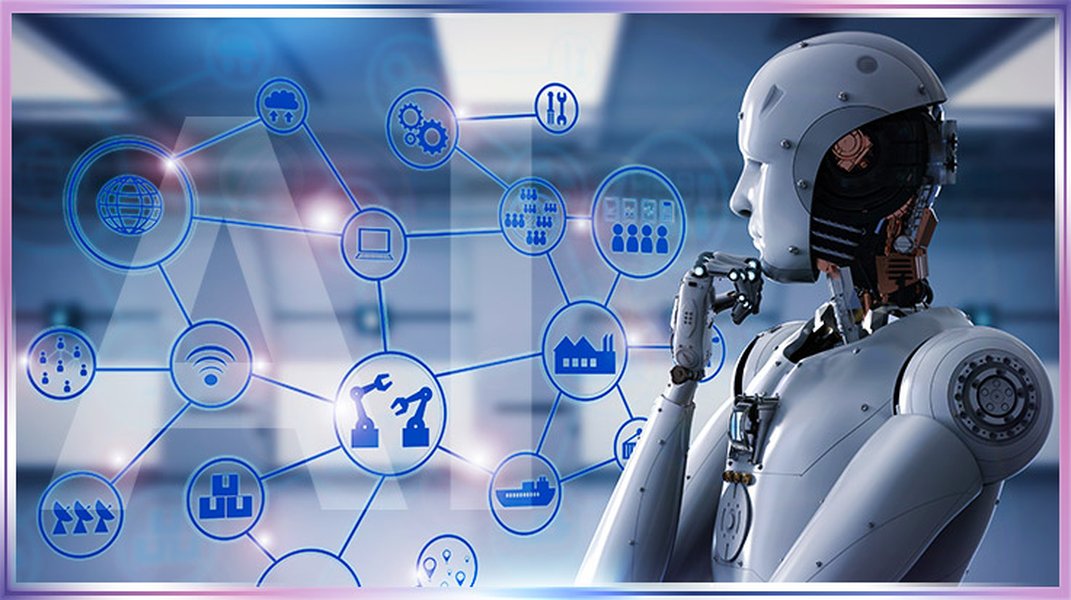
AI in action: A glimpse into its diverse real-world applications.
The Duality of AI: Unprecedented Benefits and Critical Considerations
Artificial Intelligence presents a complex tapestry of profound advantages interwoven with significant ethical and societal challenges. Understanding this duality is crucial for harnessing AI's potential responsibly.
The Bright Side: Transformative Advantages
The benefits offered by AI are vast and compelling. It dramatically boosts efficiency and productivity by automating mundane and repetitive tasks across industries, from manufacturing floors to office workflows. This frees up human capital to focus on more creative, strategic, and complex problem-solving. AI's capacity for data-driven decision-making is unparalleled; it can analyze enormous datasets to uncover patterns, insights, and correlations that might be imperceptible to humans, leading to more informed strategies in business, science, and governance. In fields requiring high precision, AI can reduce human error, such as in medical diagnostics or complex manufacturing processes. Furthermore, AI is a catalyst for innovation, powering new products, services, and even scientific discoveries. It plays a role in tackling global challenges, from climate change modeling and resource optimization to developing personalized medicine and enhancing accessibility for people with disabilities.
Navigating the Shadows: Ethical and Societal Hurdles
Despite its promise, the ascent of AI is accompanied by legitimate concerns. Job displacement is a primary worry, as automation driven by AI could reshape labor markets, particularly affecting roles that are routine or cognitive-intensive. The International Monetary Fund has highlighted that advanced economies might experience these shifts more acutely. Privacy is another critical issue, as many AI systems rely on vast quantities of personal data, raising questions about surveillance, data security, and consent. The potential for bias in AI systems is a significant ethical challenge. If AI models are trained on biased data, they can perpetuate and even amplify existing societal inequalities in areas like hiring, loan applications, or criminal justice. Ensuring fairness, transparency, and accountability in AI algorithms is paramount. The development of autonomous systems, particularly in weaponry (Lethal Autonomous Weapon Systems - LAWS), sparks profound ethical debates about human control over life-and-death decisions. Moreover, an over-reliance on AI could potentially erode human skills and critical thinking if not balanced appropriately.
Comparative Strengths: AI and Human Intelligence
To better understand the role of AI, it's insightful to compare its current capabilities with enduring human strengths. The following chart offers a conceptual comparison across several dimensions. Note that these are generalized assessments and AI capabilities are rapidly evolving.
This radar chart visualizes a comparative assessment between AI capabilities and typical human strengths across key cognitive and operational domains. For instance, AI generally excels in Data Processing Speed and Consistency in Repetitive Tasks due to its computational nature. Humans, on the other hand, typically demonstrate superior Emotional Intelligence, complex Ethical Reasoning, and genuine Creativity & Originality rooted in lived experience and consciousness. While AI can learn patterns and generate novel combinations (Pattern Recognition, Adaptability to New Data), human understanding often involves deeper contextual awareness and intuitive leaps. This comparison highlights that AI and human intelligence are often complementary, with AI augmenting human capabilities rather than simply replacing them across the board.
The Indispensable Human Touch
Human writing and creativity spring from a rich tapestry of personal experiences, emotions, and consciousness. Authors imbue their work with nuance, metaphor, humor, and cultural context—elements that AI, despite its pattern-matching prowess, struggles to replicate with genuine authenticity. Humans engage with empathy, take ethical responsibility for their creations, and can adapt their communication with a subtlety born of social understanding. While AI can generate text that is grammatically correct and even stylistically sophisticated, it lacks the lived experience and intentionality that underpin true human expression. This distinction is vital, especially when considering the "humanness" of content. AI-generated text may achieve high levels of clarity and accuracy, but the depth of emotional resonance and original insight often remains the hallmark of human authorship.
Mapping the Landscape of Artificial Intelligence
To grasp the multifaceted nature of AI, a mindmap can provide a structured overview of its core components, applications, benefits, and the critical considerations surrounding its development and deployment. This visual representation helps in understanding the interconnectedness of various aspects of AI.
(Diagnosis, Drug Discovery)"] id2b["Finance
(Fraud Detection, Algorithmic Trading)"] id2c["Transportation
(Autonomous Vehicles, Logistics)"] id2d["Education
(Personalized Learning, Admin Tools)"] id2e["Business
(Automation, Customer Service)"] id2f["Entertainment
(Recommendation Systems, Content Generation)"] id3["Major Benefits"] id3a["Increased Efficiency & Productivity"] id3b["Improved Decision-Making"] id3c["Automation of Repetitive Tasks"] id3d["Innovation & New Discoveries"] id3e["Enhanced Personalization"] id3f["Solving Complex Problems"] id4["Critical Challenges & Risks"] id4a["Ethical Dilemmas
(Bias, Accountability)"] id4b["Job Displacement & Economic Impact"] id4c["Privacy & Data Security Concerns"] id4d["Lack of Transparency (Black Box Problem)"] id4e["Potential for Misuse (e.g., Autonomous Weapons)"] id4f["Over-Reliance & Skill Atrophy"] id5["The Future of AI"] id5a["Advancements in AI Capabilities"] id5b["Deeper Integration into Society"] id5c["Need for Robust Governance & Regulation"] id5d["Human-AI Collaboration"] id5e["Ongoing Societal Adaptation"]
This mindmap illustrates that Artificial Intelligence is not a monolithic entity but a broad field encompassing various sub-disciplines (Core Concepts). These concepts fuel a wide array of Applications across numerous sectors, leading to significant Benefits. However, these advancements are paralleled by substantial Challenges & Risks that society must address. The Future of AI hinges on navigating these complexities through thoughtful development, ethical frameworks, and proactive governance, fostering a symbiotic relationship between human intelligence and artificial capabilities.
A thought-provoking discussion on AI's impact featuring Mustafa Suleyman (DeepMind co-founder) and historian Yuval Noah Harari, exploring its immediate and near future, control, and agency. This debate delves into the profound questions AI raises for humanity.
The dialogue captured in such discussions underscores the urgency and complexity of understanding AI's trajectory. Experts like Suleyman, with deep technical insight, and Harari, with a broad historical and philosophical perspective, highlight the multifaceted nature of AI's influence. They often touch upon how AI might reshape fundamental aspects of human life, from employment and social structures to individual autonomy and the very definition of consciousness. The debate about AI's "agency"—its capacity to act independently and make choices—is particularly salient, as it forces us to consider the level of control humans will or should retain over increasingly intelligent systems. These conversations are vital for fostering public awareness and informing policy decisions to ensure that AI development aligns with human values and long-term well-being.
AI in Practice: A Sectoral Snapshot
The following table summarizes some key applications of AI across different sectors, highlighting the tangible benefits being realized. This is not exhaustive but provides a glimpse into AI's diverse utility.
| Sector | Key AI Applications | Primary Benefits |
|---|---|---|
| Healthcare | Medical image analysis (e.g., cancer detection), predictive diagnostics, personalized medicine, drug discovery, virtual health assistants | Improved diagnostic accuracy, earlier disease detection, personalized treatments, accelerated research, increased access to care |
| Finance | Algorithmic trading, fraud detection and prevention, credit scoring, risk management, AI-powered customer service (chatbots), robo-advisors | Enhanced security, more accurate risk assessment, efficient trading, improved customer experience, democratized financial advice |
| Transportation | Autonomous vehicles (cars, trucks, drones), traffic management systems, predictive maintenance for vehicles, route optimization, logistics planning | Increased safety, improved efficiency, reduced congestion, optimized fuel consumption, enhanced supply chain management |
| Education | Personalized learning platforms, intelligent tutoring systems, automated grading, plagiarism detection, AI-driven content creation, language translation tools | Tailored learning experiences, improved student engagement, reduced teacher workload, enhanced accessibility, better learning outcomes |
| Manufacturing | Predictive maintenance for machinery, quality control through computer vision, supply chain optimization, robotics and automation, generative design | Reduced downtime, improved product quality, increased production efficiency, safer working environments, innovative product development |
| Retail & E-commerce | Personalized recommendations, demand forecasting, inventory management, AI-powered chatbots for customer support, sentiment analysis of customer reviews | Enhanced customer experience, optimized stock levels, increased sales, improved customer loyalty, better understanding of market trends |
This table demonstrates the breadth of AI's impact. From life-saving applications in healthcare to efficiency gains in manufacturing and personalized experiences in retail, AI is fundamentally altering how industries operate and deliver value. The consistent themes across these applications are automation of complex tasks, deeper insights from data, and the potential for significant improvements in performance and outcomes.
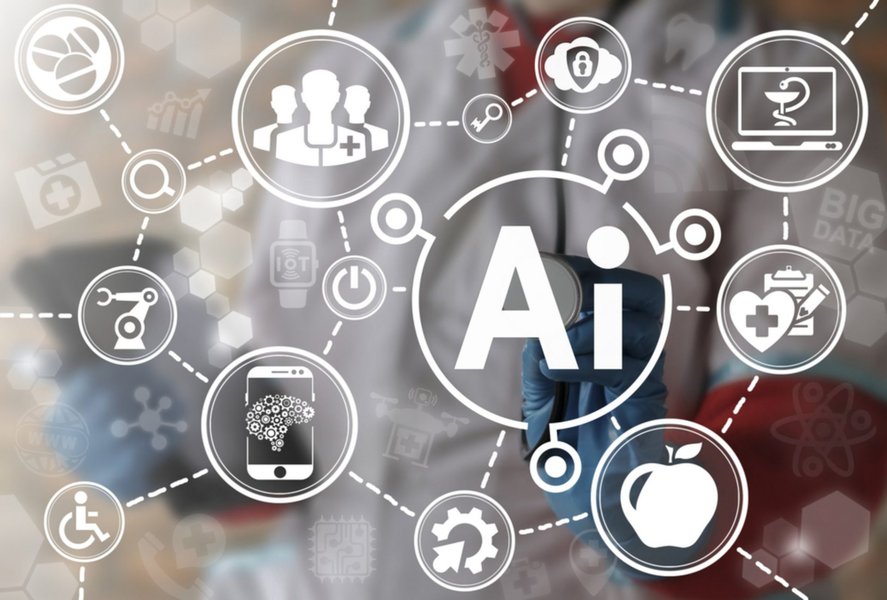
Conceptual art illustrating the pervasive and interconnected nature of Artificial Intelligence.
Shaping a Responsible AI Future
Balancing Innovation with Ethical Imperatives
As Artificial Intelligence becomes increasingly sophisticated and integrated into the fabric of society, the path forward demands a concerted effort to guide its development responsibly. The trajectory of AI is not predetermined; it will be shaped by the choices we make today. This involves fostering innovation while proactively addressing the ethical, social, and economic challenges it presents. Establishing robust governance frameworks, promoting transparency and accountability in AI systems, and ensuring that AI development is aligned with human values are paramount. Public discourse, involving experts from diverse fields, policymakers, and the general public, is essential for navigating the complexities of AI. The goal is to create a future where AI augments human capabilities, enhances well-being, and contributes to solving global challenges, rather than exacerbating inequalities or posing existential risks. Education and continuous learning will also play a crucial role in preparing society for an AI-driven world, enabling individuals to adapt to new job market realities and engage critically with AI technologies.
Frequently Asked Questions about AI
What exactly is Artificial Intelligence (AI)?
At its core, Artificial Intelligence refers to the capability of computer systems to perform tasks that typically require human intelligence. These tasks include learning from experience, recognizing patterns, understanding natural language, making decisions, and solving problems. AI encompasses a broad range of technologies, including machine learning, deep learning, natural language processing (NLP), and computer vision.
How is AI different from human intelligence?
While AI can excel at specific tasks, especially those involving large datasets and pattern recognition, it currently lacks the general understanding, consciousness, emotional depth, and true creativity inherent in human intelligence. Human intelligence is shaped by lived experiences, intuition, complex social understanding, and ethical reasoning in ways that AI does not replicate. AI operates based on algorithms and data, whereas human intelligence is far more multifaceted and nuanced.
What are the main benefits of AI?
AI offers numerous benefits, including increased efficiency and productivity through automation, improved accuracy in tasks like medical diagnosis, enhanced decision-making by analyzing vast amounts of data, personalization of services and products, and the potential to solve complex global challenges in areas like climate change, healthcare, and scientific research.
What are the ethical concerns associated with AI?
Key ethical concerns include potential job displacement due to automation, biases in AI algorithms leading to unfair outcomes, privacy violations from data collection and surveillance, lack of transparency and accountability in AI decision-making (the "black box" problem), and the potential misuse of AI technology, such as in autonomous weapons systems or for spreading misinformation.
Will AI take over human jobs?
AI is likely to transform the job market rather than simply eliminate jobs wholesale. While some tasks and roles may become automated, new jobs requiring different skills, particularly those involving AI management, development, and collaboration with AI systems, are expected to emerge. The transition will likely require societal adaptation, reskilling, and a focus on uniquely human capabilities that AI cannot easily replicate, such as complex problem-solving, creativity, and emotional intelligence.
Recommended Further Exploration
To delve deeper into the nuances of Artificial Intelligence, consider exploring these related queries:
- How is generative AI transforming creative industries?
- What are the most pressing ethical guidelines needed for AI development?
- Explore the future of human-AI collaboration in the workplace.
- What advancements in AI are expected in the next decade?
References
Last updated May 15, 2025