
From Concept to Cash: Strategically Evaluating Your Code-Based Business Ideas
A detailed analysis of complexity, maintenance, and profit potential for your tech ventures, tailored to your citizen developer skills.
Highlights: Key Insights for Your Decision
- Restaurant Reservation Marketplace: Emerges as the most promising, balancing moderate development complexity with high profitability potential and leveraging current market trends.
- AI Sign-up Bot: Presents the highest overall complexity, primarily due to significant ethical and legal hurdles that severely undermine its profitability, despite potentially manageable technical aspects for a citizen developer.
- Music Streaming Channel: Offers moderate to high profit potential but is characterized by high development and maintenance complexity, fierce competition, and significant licensing challenges.
Unpacking Your Tech Ventures: A Deep Dive into Complexity and Profit
Embarking on a new code-based venture is an exciting prospect, especially with your background as a citizen developer comfortable with no-code tools, Docker, APIs, GitHub, and AI assistance. Below is a detailed analysis of your three ideas, ranked from most complex to least difficult overall, considering initial development, ongoing maintenance, and potential profitability.
1. The AI Agent/Bot for Automated Web Form Sign-ups
This idea involves creating an AI agent or bot to browse websites, specifically political campaigns and for-profit schools, to automatically fill out sign-up forms for users to receive more information.
Development & Maintenance Complexity: High
Initial Development: This is arguably the most complex idea when all factors are considered. While AI assistance and your existing skills can help, building a robust and reliable bot for this purpose involves several significant challenges:
- Advanced Automation: The bot needs sophisticated web scraping capabilities to identify and interact with diverse and dynamically changing web forms across countless websites. This requires more than basic scripting.
- AI for Adaptability: AI would be crucial for accurately identifying form fields, understanding context, and adapting to different website structures. However, training and maintaining such AI can be demanding.
- Anti-Bot Measures: Websites, particularly those of political campaigns and educational institutions, often employ CAPTCHAs, IP blocking, and other anti-bot technologies. Circumventing these consistently and ethically is a major technical hurdle.
- Ethical and Legal Framework: The core functionality itself raises significant red flags. Automated sign-ups without explicit, informed consent can violate anti-spam laws (e.g., GDPR, CAN-SPAM Act), website terms of service, and data privacy regulations. Building in compliance and ethical safeguards adds layers of complexity. For instance, many websites explicitly prohibit automated interactions.
Ongoing Maintenance: Maintenance for such a bot would be continuous and intensive:
- Website Changes: Websites frequently update their structure and security, requiring constant adjustments to the bot's scraping and form-filling logic.
- Evolving Anti-Bot Tech: As anti-bot measures become more sophisticated, the bot will need ongoing development to remain functional.
- Legal & Compliance Monitoring: Staying abreast of and adhering to evolving data privacy laws and terms of service across various jurisdictions is a significant, ongoing task.
- Error Handling & Monitoring: The bot will require robust error handling and continuous monitoring to detect and fix issues, such as failed sign-ups or incorrect data submissions.
Profitability Potential: Very Low & High Risk
The profitability of this idea is highly questionable and fraught with risk. While there might be a perceived market for automated lead generation, the methods involved are problematic:
- Ethical Concerns: Generating sign-ups without genuine user intent is ethically dubious and can be perceived as spamming or misrepresentation. This can severely damage your reputation and the reputation of any client using such a service.
- Legal Liabilities: Violations of anti-spam laws and website terms of service can lead to severe penalties, including fines and legal action. The risk of lawsuits and regulatory scrutiny is very high.
- Market Acceptance: Legitimate political campaigns and educational institutions are increasingly wary of leads generated through questionable means, as they often result in low engagement and can harm their brand.
- Sustainability: A business model built on circumventing website protections and potentially violating regulations is inherently unsustainable.
While technically, a basic prototype might seem achievable with AI assistance, the overarching legal and ethical complexities make this venture extremely difficult to execute profitably and responsibly. The potential for reputational damage and legal repercussions far outweighs any perceived financial gains from selling such "leads."
2. The Music Streaming Channel
This concept involves creating a channel with hours of pre-recorded or live audio content, accompanied by limited visuals, for users to stream.
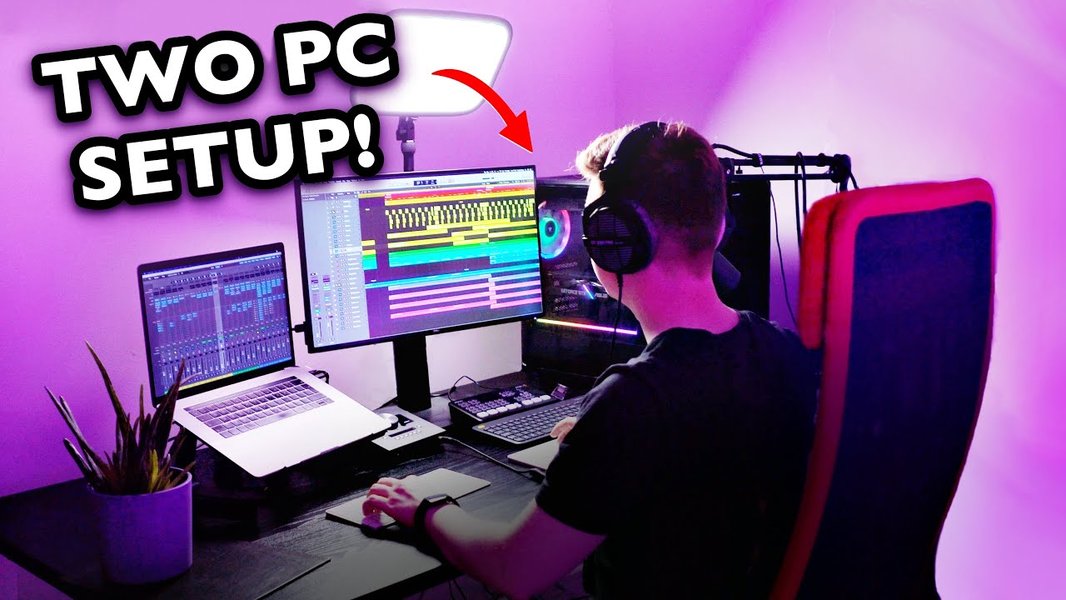
A well-equipped home studio can be the starting point for a music streaming channel.
Development & Maintenance Complexity: Moderate to High
Initial Development: Developing a music streaming service, even with limited visuals, is a substantial undertaking:
- Audio Processing & Streaming: Efficiently encoding, storing, and streaming large volumes of audio content requires robust backend infrastructure. Ensuring smooth playback across various devices and network conditions is technically challenging.
- Content Management System (CMS): A system to upload, organize, tag, and manage hours of audio is essential.
- User Interface (UI) & User Experience (UX): Creating an intuitive and engaging interface for users to discover, browse, and play content is critical for adoption.
- Licensing & Copyright: This is a major hurdle. Streaming copyrighted music requires complex and often expensive licensing agreements with rights holders (labels, publishers, artists). Operating without proper licenses can lead to severe legal consequences. If you plan to use royalty-free or original content, this complexity is reduced but limits content variety.
- Infrastructure: Scalable server capacity and significant bandwidth are necessary for audio streaming, potentially leading to high hosting costs. Docker can help manage deployments, but the underlying infrastructure needs are significant.
- Live Streaming: Adding live streaming capabilities further increases complexity, requiring real-time audio ingestion, processing, and delivery.
Ongoing Maintenance:
- Content Acquisition & Updates: Continuously adding new content and managing existing libraries.
- Licensing Management: Ensuring ongoing compliance with licensing terms and royalty payments if copyrighted material is used.
- Server Management & Scaling: Monitoring server performance, managing security updates, and scaling infrastructure as the user base grows.
- Bug Fixes & Feature Enhancements: Addressing technical issues and updating the platform based on user feedback and market trends.
Profitability Potential: Moderate to High (but Challenging)
The music streaming market is vast but also intensely competitive, dominated by giants like Spotify and Apple Music.
- Monetization Models: Revenue can be generated through advertising, subscription fees, or a freemium model.
- Niche Opportunities: Focusing on a specific niche (e.g., indie artists, specific genres like ambient or classical, curated spoken word content) can help differentiate your service and attract a dedicated audience.
- High Operating Costs: Bandwidth, storage, and potential licensing fees can significantly impact profit margins.
- User Acquisition: Attracting and retaining users in a saturated market requires substantial marketing efforts and a compelling unique selling proposition.
While the potential for revenue exists, achieving profitability is a significant challenge due to high initial investment, ongoing operational costs, and intense competition. Your familiarity with APIs and Docker can be beneficial for the technical aspects, but the business and legal sides, especially licensing, require careful navigation.
3. The Marketplace for Buying & Selling Restaurant Reservations
This idea is to create a platform where users can list (sell) coveted restaurant reservations they hold, and other users can buy them at a set price or by making an offer. Verification of the reservation would be a key feature.
Development & Maintenance Complexity: Moderate
Initial Development: Creating a marketplace platform has its complexities, but it's generally more manageable than a full-fledged streaming service or a legally sensitive AI bot, especially with your skills:
- Core Marketplace Features: User registration, listing creation (including uploading verification), search and discovery, offer/bidding mechanics, and secure payment processing are essential. No-code/low-code tools can accelerate the development of these features.
- Verification System: This is crucial for building trust and preventing fraud. It might involve users uploading screenshots or confirmation emails, potentially with AI-assisted review or manual checks initially. Ensuring the legitimacy of reservations is paramount.
- Payment Gateway Integration: Integrating with services like Stripe or PayPal for secure transaction handling is necessary. APIs make this feasible.
- User Communication: A system for buyers and sellers to communicate (e.g., regarding transfer of reservation details) will be needed.
- UI/UX Design: A clean, intuitive interface for both buyers and sellers is important for user adoption.
Ongoing Maintenance:
- Fraud Monitoring & Dispute Resolution: Actively monitoring for fraudulent listings and managing disputes between users will be a key operational task.
- Customer Support: Providing support for user queries and issues.
- Platform Updates: Regular updates for security, bug fixes, and potentially new features based on user feedback.
- Managing Restaurant Relations (Potentially): While not directly a technical maintenance task, navigating the relationship with restaurants (who may have mixed feelings about such a marketplace) is an ongoing operational consideration. Some restaurants dislike scalping.
Profitability Potential: High
This idea taps into a clear market demand, as evidenced by existing platforms and the high prices some reservations command.
- Strong Demand: Securing reservations at popular, high-end restaurants can be very difficult, creating a market for a resale platform.
- Monetization Models: Revenue can be generated through transaction fees (a percentage of the sale price), listing fees, or premium features for sellers/buyers.
- Proven Concept: Similar marketplaces already exist (e.g., Appointment Trader, Cita Marketplace), demonstrating market viability. Some individuals are reportedly earning significant income by reselling reservations.
- Scalability: The platform can scale by expanding to more cities or types of reservations (e.g., exclusive events).
- Ethical Considerations: While legal in many places, the practice of reselling reservations ("scalping") can be viewed negatively by restaurants and some consumers. Operating transparently and ensuring fair practices will be important.
This idea offers a strong balance of achievable development complexity (especially leveraging no-code tools and APIs) and high profit potential. The main challenges lie in building a trustworthy verification system and managing the marketplace dynamics effectively.
Comparative Analysis: Visualizing Your Options
To help you visualize the trade-offs between these ideas, the radar chart below compares them across key dimensions relevant to a citizen developer. Scores range from 1 (low) to 10 (high). For example, a high 'Development Complexity' score means it's more complex, while a high 'Profitability Potential' is desirable.
This chart highlights that the Reservation Marketplace scores favorably on profitability and manageable complexity for your skillset. The AI Sign-up Bot carries the highest ethical/legal risk and lowest profitability, despite potentially high technical skill requirements. The Music Streaming Channel sits in between on profitability but is high on complexity and competition.
Strategic Pathways: A Mindmap for Your Ideas
The mindmap below breaks down each of your business ideas into their core components, challenges, and potential monetization routes. This can help you think through the different facets of each venture.
Audio Streaming, CMS, UI/UX, Licensing"] ms_chal["Key Challenges
High Competition, Content Costs,
Infrastructure Scalability, Copyright"] ms_mon["Monetization Strategies
Subscriptions, Advertising,
Niche Content Focus, Freemium"] aib["AI Sign-up Bot"] aib_func["Core Functionality
Web Scraping, Automated Form Filling,
AI for Site Adaptation"] aib_hurd["Major Hurdles
CAPTCHAs & Anti-Bot Measures,
High Variability in Web Forms,
Severe Legal & Ethical Issues (Spam, Privacy)"] aib_via["Profitability & Viability
Extremely Low / Negative,
High Risk of Legal Action & Reputational Damage"] rrm["Restaurant Reservation Marketplace"] rrm_plat["Platform Elements
User Registration & Profiles,
Secure Reservation Verification,
Listing Management, Bidding/Offer System,
Payment Processing"] rrm_succ["Key Success Factors
Building Trust & Credibility,
Effective Verification Process,
User Acquisition (Buyers & Sellers),
Managing Restaurant Perceptions"] rrm_rev["Revenue Streams
Commission on Sales,
Listing Fees, Premium Features,
Subscription Tiers"]
This visual breakdown should assist in identifying the critical path and potential roadblocks for each idea, aligning them with your resources and risk appetite.
Idea Viability at a Glance
The table below provides a summary ranking and key attributes for each idea, ordered from most complex overall to least complex overall based on the detailed analysis.
| Idea | Overall Complexity Ranking (1=Most Complex) | Initial Development Difficulty | Ongoing Maintenance Load | Profitability Outlook | Primary Key Risk Factor |
|---|---|---|---|---|---|
| AI Agent/Bot for Sign-ups | 1 | High (Technical & Legal Setup) | High (Constant Adaptation & Monitoring) | Very Low / Negative | Severe Ethical & Legal Issues |
| Music Streaming Channel | 2 | Moderate to High (Technical & Licensing) | Moderate to High (Content, Servers, Licenses) | Moderate (Challenging Market) | Licensing Costs & Market Competition |
| Marketplace for Restaurant Reservations | 3 | Moderate (Leveraging No-Code/APIs) | Moderate (Fraud, Support, Disputes) | High | Reservation Verification & Trust |
Insights from the Resale Market: The Restaurant Reservation Scene
The concept of a marketplace for restaurant reservations is gaining traction, partly due to the difficulty of securing tables at exclusive dining spots. The video below discusses the phenomenon of buying and selling reservations, offering context on how such platforms operate and the demand they cater to. Understanding this existing ecosystem can provide valuable insights if you choose to pursue this idea.
Platforms like AppointmentTrader, mentioned in various reports, illustrate that a secondary market for reservations not only exists but can be quite lucrative. They facilitate transactions where individuals who snag hard-to-get reservations can sell them to others willing to pay a premium. This model, while sometimes controversial (with some restaurants disliking "scalpers"), highlights a clear consumer demand. Your platform would need to focus on robust verification to build trust and potentially differentiate itself through ease of use or specific market focus.
Frequently Asked Questions (FAQ)
Which idea is fastest to get to an MVP (Minimum Viable Product)?
The Marketplace for Restaurant Reservations likely offers the quickest path to an MVP. You can leverage no-code or low-code platforms for many core marketplace functionalities (user accounts, listings, basic communication). Integrating a payment API (like Stripe Connect for marketplaces) and focusing initially on a manual or semi-automated verification process could get a basic version operational relatively quickly. Your familiarity with APIs would be a significant asset here.
What are the biggest legal pitfalls to watch out for across these ideas?
Each idea has distinct legal considerations:
- AI Sign-up Bot: This is riddled with pitfalls. Primary concerns include violating anti-spam laws (e.g., GDPR in Europe, CAN-SPAM in the US which require consent for commercial electronic messages), data privacy laws (regarding the collection and use of personal information for sign-ups), and website terms of service (many sites prohibit automated access or bot activity). The risk of lawsuits or being blacklisted is very high.
- Music Streaming Channel: The main legal challenge is music licensing. Streaming copyrighted music without proper licenses from performance rights organizations (PROs like ASCAP, BMI, SESAC), record labels, and music publishers constitutes copyright infringement, leading to hefty fines and legal action. Even "limited visuals" don't negate these requirements.
- Restaurant Reservation Marketplace: While generally less legally fraught, potential issues include ensuring compliance with local consumer protection laws regarding resale, managing disputes over fraudulent reservations, and potentially navigating terms of service from primary reservation platforms if you integrate with them. Some restaurants may also have policies against the resale of their reservations.
How can my citizen developer skills (no-code, Docker, APIs, GitHub, AI-assisted) be best leveraged?
Your skills are highly valuable for all three, but their application varies:
- Restaurant Marketplace: No-code tools for frontend/marketplace logic, APIs for payments and potentially communication (e.g., Twilio), Docker for deploying any custom backend components (e.g., a verification microservice), GitHub for version control. AI could assist in developing verification algorithms or customer service bots.
- Music Streaming: APIs for integrating with audio processing services or content delivery networks (CDNs). Docker for packaging and deploying the streaming application. GitHub for managing the codebase. AI could be used for music recommendation algorithms or content tagging, though this is more advanced. No-code tools might help with a simple frontend or admin panel.
- AI Bot: APIs for interacting with websites (though often restricted), AI-assisted development for scripting the bot's logic and web scraping. Docker for packaging the bot. GitHub for code. However, the ethical/legal constraints limit the practical application of these skills for *this specific bot idea*.
The Reservation Marketplace likely offers the best synergy, allowing you to build a robust MVP by combining these tools effectively.
Are there specific no-code/low-code platforms well-suited for any of these ideas?
Yes, several platforms could be beneficial:
- Restaurant Reservation Marketplace: Platforms like Bubble, Sharetribe, or Webflow (with member/e-commerce features) could be used to build the core marketplace. For backend logic or specific needs, you might combine these with tools like Xano or Backendless.
- Music Streaming Channel: While a full-fledged streaming service is complex, no-code tools like Bubble or Glide could potentially create a simple interface for curated, embedded audio content if you manage the streaming backend separately (e.g., using a third-party streaming host API). However, for robust streaming, custom development or specialized BaaS (Backend as a Service) for media is often needed.
- AI Sign-up Bot: No-code automation platforms like Make (formerly Integromat) or Zapier can perform some web interactions and form submissions, but they are generally not designed for complex, adaptive web scraping or bypassing anti-bot measures needed for your AI bot idea. Specialized RPA (Robotic Process Automation) tools exist but often require more configuration and may still face the same ethical/legal hurdles.
Recommended Next Steps
Based on this analysis, you might want to explore these related questions further:
- How can I design a secure and user-friendly verification system for an online marketplace handling sensitive items like reservations?
- What are the most effective and ethical monetization strategies for a niche online marketplace?
- What are the specific legal and licensing requirements if I were to focus a music streaming service solely on independent artists or royalty-free content?
- What are some ethical and effective alternatives to automated web sign-ups for lead generation that leverage AI?
References
Last updated May 12, 2025