
Project Report: Face Recognition Using Convolutional Neural Networks (CNN)
An in-depth exploration of CNN-based facial recognition systems
Key Takeaways
- Robust Architecture: CNNs are capable of efficiently extracting hierarchical facial features through specialized layers.
- Comprehensive Dataset Usage: Effective face recognition depends heavily on varied and properly annotated facial datasets.
- Practical Applications: High-accuracy face recognition systems impact security, attendance, and personalized user experiences.
Introduction
Face recognition is a transformative technological advancement within computer vision, empowering numerous applications such as security systems, smart attendance, and human-computer interaction. In recent years, Convolutional Neural Networks (CNNs) have emerged as the leading machine learning models for tackling image-based tasks due to their robust ability to extract spatial hierarchies of features directly from pixel data. This report provides a comprehensive analysis of developing a face recognition system using CNNs, outlining the objectives, methodology, architecture design, dataset preparation, experiments, results, and future directions.
Project Objectives
The primary goal of this project is to design and implement a facial recognition system leveraging a CNN architecture. The system is expected to:
- Accurately identify individuals in a diverse array of imaging conditions.
- Extract and learn robust facial features from images.
- Handle variations in lighting, pose, and expression through effective pre-processing and data augmentation.
- Integrate with real-time applications such as surveillance and access control systems.
Background and Applications
Face recognition has evolved from manual feature extraction methods to sophisticated deep learning algorithms that improve both speed and accuracy. Early techniques relied on handcrafted features and shallow learning methods; however, the advent of CNNs has revolutionized the field by automating feature extraction and classification processes. Today, CNN-based systems are not only accurate but also efficient enough for practical deployment in systems such as:
- Security and Surveillance: Identification and verification of individuals in high-security areas.
- Smart Attendance Systems: Automated monitoring in educational institutions and workplaces.
- Authentication: Verification for smartphones, laptops, and secure access points.
- Human-Computer Interaction: Enhancing personalized user experiences by recognizing users.
Technical Methodology
Dataset Creation and Management
A critical component of any CNN-based system is the dataset. In a typical face recognition project, the datasets generally comprise images captured under various conditions, including differences in lighting, orientation, and expression. Common datasets include public face databases that encompass large numbers of identities and multiple images per identity. Alternatively, custom datasets may be constructed based on the application's requirement.
Key considerations include:
- Quality: High-resolution images that capture key facial features.
- Diversity: Inclusion of varied demographic groups, poses, and expressions.
- Annotation: Proper labeling of images by identity, facilitating supervised learning.
- Augmentation: Using techniques such as rotation, scaling, and horizontal flips to expand the dataset and mitigate overfitting.
Example Dataset Table
| Dataset Feature | Description |
|---|---|
| Image Resolution | High-resolution images to capture facial details |
| Annotations | Labels for identities and expressions |
| Diversity | Varied lighting, pose, and background conditions |
| Augmentation Methods | Rotation, scaling, flipping, etc. |
CNN Architecture
The architecture of the CNN model is central to the project's success. A typical CNN architecture for face recognition consists of several layers that process raw input images to generate robust feature descriptors. Below is a breakdown of common layers:
- Convolutional Layers: These layers apply filters to input images to extract features such as edges, textures, and patterns. Stacking convolutional layers helps in building up complex patterns and hierarchies of facial structures.
- Pooling Layers: Often following convolutional layers, pooling layers reduce the spatial dimensions and computational complexity, thereby providing translation invariance.
- Dropout Layers: Used to prevent overfitting by randomly disabling a subset of neurons during training, ensuring that the model generalizes well on unseen data.
- Fully Connected (Dense) Layers: After multiple convolutional and pooling stages, dense layers interpret the learned features and perform the final classification, assigning each input image to an identity.
Some implementations may integrate advanced layers such as attention mechanisms or even recurrent layers to capture temporal aspects in video-based face recognition. However, a typical feedforward CNN suffices for static images.
Training Methodology
The training process involves splitting the original dataset into training and testing subsets, with a common practice being a 90/10 division. During training:
- The model is exposed to the large pool of training images and iteratively adjusts its weights using backpropagation and gradient descent methods to reduce the loss function.
- Data augmentation strategies are applied to enhance the dataset diversity and improve model robustness.
- Key performance metrics such as accuracy, precision, recall, and F1-score are monitored throughout training. The testing subset is used to evaluate model performance and ensure it generalizes well to new data.
Hyperparameter tuning plays a significant role in enhancing model performance. Factors such as learning rate, batch size, and the number of convolutional layers are adjusted for optimal results.
Evaluation and Results
Performance is typically measured by how accurately the model classifies multiple facial images into known identities. Studies have reported accuracy ranging from the low 80s to nearly 100%, depending on the dataset and model complexity.
The evaluation stage can include:
- Confusion matrices to illustrate the classification performance across multiple classes.
- Metrics such as precision and recall to evaluate the ability of the system to correctly identify positive cases and avoid false alarms respectively.
- Visualization of feature maps, which can provide insights into how the CNN model perceives and processes facial features.
In an example implementation, a CNN model achieved training accuracies above 97% and testing accuracies varying around 83%-99% depending on the image quality and complexity of the dataset. Such models can be further enhanced by fine-tuning on larger and more diverse datasets.
Implementation Details
The implementation of a CNN-based face recognition system is predominantly carried out using programming languages such as Python, which provides extensive support for deep learning frameworks. Key technologies and libraries include:
- TensorFlow: Widely used for designing and training deep neural networks with an extensive ecosystem for supporting complex computations.
- Keras: A high-level API that runs on top of TensorFlow, simplifying the process of building and training neural networks.
- OpenCV: Often utilized for pre-processing tasks, such as face detection and image normalization, before feeding images into the CNN.
- Data Augmentation Libraries: Tools that assist in generating variations of the original dataset, further enhancing the model's robustness.
Below is a simplified pseudo-code snippet illustrating a CNN implementation:
# Import necessary libraries
import tensorflow as tf
from tensorflow.keras.models import Sequential
from tensorflow.keras.layers import Conv2D, MaxPooling2D, Flatten, Dense, Dropout
from tensorflow.keras.preprocessing.image import ImageDataGenerator

# Initialize the model
model = Sequential()

# Convolutional and pooling layers
model.add(Conv2D(32, (3, 3), activation='relu', input_shape=(64, 64, 3)))
model.add(MaxPooling2D(pool_size=(2, 2)))
model.add(Dropout(0.25))

# Additional convolutional layers
model.add(Conv2D(64, (3, 3), activation='relu'))
model.add(MaxPooling2D(pool_size=(2, 2)))
model.add(Dropout(0.25))

# Flattening and dense layers
model.add(Flatten())
model.add(Dense(128, activation='relu'))
model.add(Dropout(0.5))
model.add(Dense(num_classes, activation='softmax'))

# Compile the model
model.compile(optimizer='adam', loss='categorical_crossentropy', metrics=['accuracy'])

# Data augmentation
datagen = ImageDataGenerator(rotation_range=10, width_shift_range=0.1, height_shift_range=0.1, horizontal_flip=True)

# Fit the model
model.fit(datagen.flow(train_images, train_labels, batch_size=32), epochs=50, validation_data=(val_images, val_labels))
This pseudo-code demonstrates the integration of key CNN components with data augmentation techniques to build a robust face recognition system.
Practical Applications and Future Directions
Current Applications
The practical applications of CNN-based face recognition systems are vast and continuously expanding. Notable implementations include:
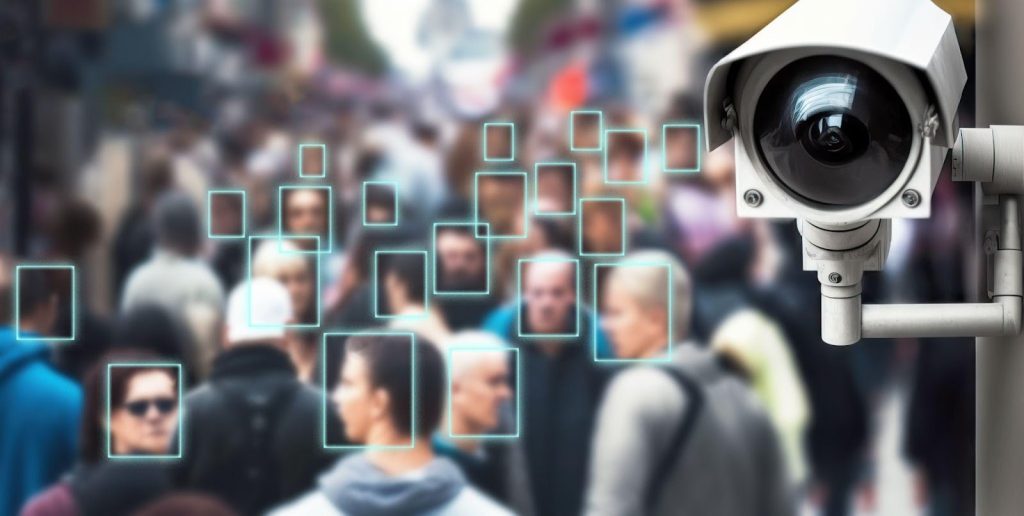
- Security and Surveillance: Real-time face recognition systems integrated with CCTV cameras for identifying persons of interest, thus bolstering security protocols.
- Smart Attendance: Automated attendance systems in educational institutions and workplaces that leverage face recognition to ensure accurate record-keeping.
- Access Control: Secure authentication methods for private spaces, mobile devices, and online platforms.
- Personalized User Experiences: Applications in retail and customer service environments where recognizing a customer leads to tailored service options.
Future Research Directions
As face recognition technology continues to evolve, several avenues for further research and improvement have emerged:
- Enhanced Model Complexity: Investigating deeper CNN architectures and integrating attention mechanisms to improve accuracy and feature extraction.
- Real-Time Deployment: Optimizing models for lower latency, making them more suitable for real-time video processing.
- Ethical Considerations: Addressing privacy issues and ensuring models are deployed ethically with appropriate safeguards to prevent misuse.
- Augmented Reality (AR) Integration: Combining face recognition with AR to develop innovative applications in gaming, virtual meetings, and more.
- Handling Adversarial Attacks: Researching methods to make CNN models more resilient against adversarial inputs and spoofing attempts.
Challenges and Considerations
Data Quality and Diversity
The success of any face recognition system heavily depends on the quality of the dataset used. Ensuring diverse and high-quality images is crucial to minimize bias and improve overall accuracy. Projects must address challenges including:
- Variability in lighting, background, and occlusion in real-world scenarios.
- The need for large annotated datasets to cover the spectrum of human diversity.
- Mitigating overfitting through data augmentation and proper regularization techniques.
Computational Complexity and Real-Time Performance
Implementing a CNN that performs well in a real-time environment is a significant challenge. While deep architectures can offer high accuracy, they often come at the cost of increased computational load. Factor considerations include:
- Balancing depth and computational efficiency to achieve real-time recognition.
- Optimizing models through techniques like pruning and quantization.
- Utilizing hardware accelerators such as GPUs and TPUs to reduce inference time.
Ethical and Privacy Issues
With the increasing adoption of facial recognition technology, ethical concerns have become paramount. It is essential to implement strict data governance and adhere to privacy regulations to mitigate misuse. Key points include:
- Ensuring transparency in data collection and model training processes.
- Implementing safeguards to prevent unauthorized surveillance and misuse of facial data.
- Engaging with policymakers and ethical bodies to develop guidelines for responsible use.
Comparative Analysis of CNN Models
Various CNN architectures have been applied to face recognition systems, and a comparative analysis can offer insights into their relative strengths. Below is a simplified table comparing key architectures, where design complexity and performance metrics are considered.
| Model Architecture | Key Features | Performance Range |
|---|---|---|
| LeNet-Based | Foundational model with few layers, effective for basic feature extraction | 83% - 90% accuracy |
| Deep CNN (e.g., 16-20 layers) | High depth, utilization of dropout and pooling layers for improved feature hierarchies | 93% - 99% accuracy, depending on data quality |
| Advanced Architectures with Attention Mechanisms | Integrated attention modules to focus on salient regions, improving resilience against variations | 95% - 99% accuracy |
The choice of architecture often depends on application-specific requirements such as the trade-off between computational efficiency and recognition accuracy.
Conclusion
This comprehensive report examined the development and implementation of a face recognition system using Convolutional Neural Networks (CNNs). Through detailed analysis of dataset considerations, CNN architecture, training methodologies, and performance evaluation, it is evident that CNNs offer robust and reliable solutions for facial feature extraction and classification. Practical applications span across security, smart attendance, and personalized user experiences, while future enhancements can focus on improving real-time performance, further model accuracy, and addressing ethical challenges.
The ongoing evolution of CNN architectures and the integration of emerging techniques point toward an exciting future for face recognition technology. Researchers and practitioners continue to refine these models, which promise improved efficiency and accuracy in real-world applications, while also ensuring that ethical considerations remain at the forefront of technological advancements.
References
- Project Report-Face Expression Recognition using Convolutional Neural Networks (CNN) - GitHub
- Facial Expression Recognition System using Convolutional Neural Networks - ResearchGate
- Face Recognition Using OpenCV CNN - GitHub
- Face recognition: a convolutional neural-network approach - IEEE Xplore
- Face Recognition using Deep Learning CNN in Python - Thinking Neuron
-
Face recognition using CNN and siamese network - ScienceDirect
- Implementing Face Recognition Using Deep Learning and Support Vector Machines - CodeMag
- Human face recognition based on convolutional neural network and principal component analysis - Taylor & Francis Online
-
Face Recognition using CNN - Kaggle
More
Last updated February 19, 2025