
Unraveling the Farmer's Sheep: A Riddle of Wording, Not Numbers!
Discover why the answer to this classic brain teaser lies in careful reading, not complex calculation.
This intriguing question about a farmer and his sheep is a classic riddle designed to test your attention to detail and language comprehension rather than your mathematical prowess. Let's break down the logic step-by-step.
Key Insights at a Glance
- The Crucial Phrase: The key to solving this riddle lies in understanding the phrase "all but 9 run away," which means "all except 9" ran away.
- The Remaining Sheep: Because all sheep *except* for 9 ran away, precisely 9 sheep did not run away. These are the sheep that are left.
- The Distraction: The initial number of sheep (17) is included to potentially mislead you into performing a subtraction (17 - 9 = 8). While 8 sheep did indeed run away, the question asks how many are left.
Decoding the Riddle: Language is Key
The riddle states: "A farmer has 17 sheep, and all but 9 run away. How many are left?"
The most critical part of this sentence is the phrase "all but 9". In English, this construction means "everyone/everything except for the specified number".
Step-by-Step Reasoning
- Starting Point: The farmer begins with 17 sheep. This is the initial total.
- The Event: An event occurs where sheep run away. The description of this event is "all but 9 run away".
- Interpretation: This phrasing tells us which sheep *did not* participate in the running away. "All but 9" signifies that 9 sheep are excluded from the group that ran away. Therefore, 9 sheep remained behind.
- Calculating the Runaways (Optional): While not needed for the final answer, we can determine how many sheep ran away by subtracting the remaining sheep from the total: 17 (total) - 9 (remaining) = 8 (ran away).
- The Answer: The question asks "How many are left?". Based on the interpretation of "all but 9", the number of sheep left is exactly 9.
Why It's a Riddle, Not Just Math
This problem is structured as a riddle because it uses language in a way that can be easily misinterpreted if you're focused solely on the numbers. It tests comprehension skills:
- Misdirection: Presenting two numbers (17 and 9) often prompts people to perform a calculation, typically subtraction. The most common incorrect assumption is that 9 sheep ran away, leading to the answer 17 - 9 = 8.
- Focus on Semantics: The solution hinges entirely on the meaning of "all but". Understanding this phrase correctly bypasses the need for complex arithmetic and directly reveals the answer.
- Common Structure: This "all but X" structure is common in word riddles and brain teasers, often involving animals or objects, to encourage careful reading and logical deduction over rote calculation.
Visualizing the Logic
Herd Mentality: The Remaining Flock
Here's an image representing sheep in a field, perhaps similar to the farmer's flock before some decided to roam.
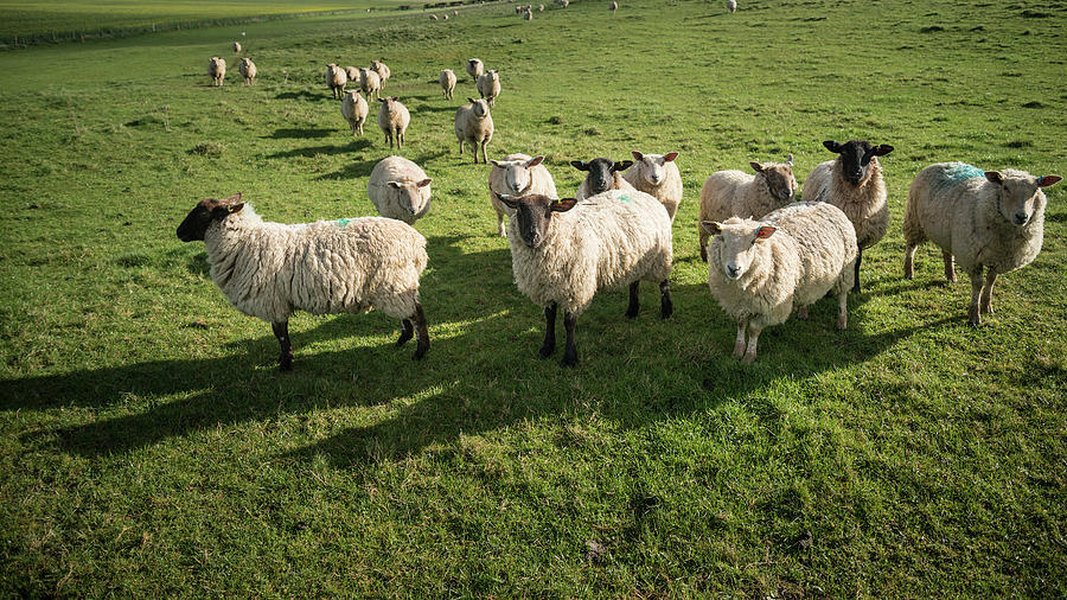
A flock of sheep enjoying the pasture. In our riddle, 9 such sheep remained with the farmer.
Mapping the Riddle's Structure
This mindmap illustrates the flow of logic in solving the farmer's sheep riddle, from the initial conditions to the final answer based on interpreting the key phrase.
Riddle Logic vs. Standard Math Problems
This riddle highlights differences between language-based puzzles and typical mathematical problems. The radar chart below contrasts these approaches based on several factors. Riddles like this one rely heavily on interpreting language nuances (Language Focus) and often employ misdirection (Deception Level), whereas standard math problems usually involve more direct calculations and depend more on given context or variables (Context Dependency, Direct Calculation).
Chart Interpretation
As the chart suggests, the sheep riddle scores high on 'Language Focus' and 'Deception Level' but low on 'Numerical Complexity' and 'Direct Calculation Focus'. Conversely, a standard math problem typically reverses this pattern, requiring less linguistic interpretation but more emphasis on calculation and contextual understanding.
Similar Riddles: Recognizing the Pattern
This "all but X" format is a common trope in riddles. Understanding its structure helps in solving similar puzzles quickly. Here’s a table showing how the logic applies consistently:
| Riddle Premise | Key Phrase | Number Remaining / Not Affected | Calculation for the 'Action' Group |
|---|---|---|---|
| A farmer has 17 sheep | "all but 9 run away" | 9 | 17 - 9 = 8 (ran away) |
| A farmer has 19 sheep | "all but 7 run away" | 7 | 19 - 7 = 12 (ran away) |
| A farmer has 17 sheep | "all but 9 die" | 9 | 17 - 9 = 8 (died) |
| There are 20 apples in a basket | "all but 5 are rotten" | 5 | 20 - 5 = 15 (rotten) |
| 10 birds are on a fence | "all but 3 fly away" | 3 | 10 - 3 = 7 (flew away) |
In each case, the number following "all but" directly indicates the quantity that remains or is unaffected by the stated action.
Visual Explanation: A Similar Riddle Solved
This video discusses a very similar riddle ("A farmer has 17 sheep. All but 9 die. How many are left?"). While the action is different ("die" instead of "run away"), the logical structure and the interpretation of "all but 9" are identical. Watching this can help reinforce the concept.
The video explains clearly that "all but 9 die" means 9 sheep survived, directly mirroring the logic that "all but 9 run away" means 9 sheep remain. This confirms that the key is the linguistic structure, not the specific action described.
Frequently Asked Questions (FAQ)
Is the starting number of sheep (17) important for the final answer?
No, the number 17 is not important for determining how many sheep are left. The phrase "all but 9 run away" directly tells you that 9 sheep remained. The number 17 only serves to potentially distract you or to allow calculation of how many sheep actually ran away (17 - 9 = 8).
What exactly does the phrase "all but" mean in this context?
In this context, "all but" means "all except" or "everyone/everything with the exception of". So, "all but 9 run away" means that every sheep ran away, with the exception of 9 sheep. Those 9 are the ones who stayed.
Is this primarily a math problem or a language puzzle?
It's primarily a language puzzle or a riddle that tests reading comprehension and logical deduction based on wording. While it involves numbers, the core challenge lies in correctly interpreting the phrase "all but 9", not in performing calculations.
Could the answer ever be 8? Why might someone think that?
The answer is definitively 9, not 8. Someone might arrive at 8 by misinterpreting the riddle as a standard subtraction problem: "If there are 17 sheep and something happens involving the number 9, maybe I should subtract?" This leads to 17 - 9 = 8. However, 8 represents the number of sheep that ran away, not the number that remained.
Recommended Explorations
If you found this riddle interesting, you might want to explore these related topics:
- How do word riddles test critical thinking skills?
- What are common logical fallacies found in brain teasers?
- Explore mathematical riddles involving animals.
- Can you explain other riddles that rely on interpreting language carefully?
References
Last updated May 4, 2025