
Unveiling the Intricacies of Fe₂O₃ Structure through Pauling’s Laws
A comprehensive analysis of hematite using chemical coordination principles
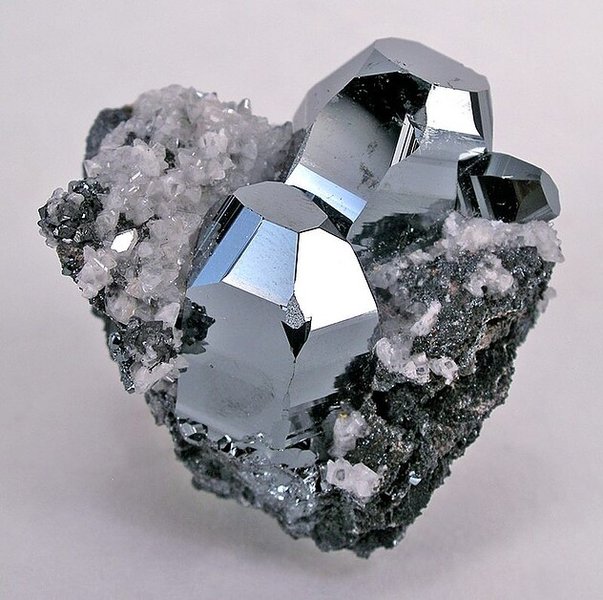
Highlights
- Radius Ratio Rule: Establishes the octahedral coordination of Fe³⁺ in Fe₂O₃ based on ionic size contrasts.
- Electrostatic Valence Rule: Ensures charge neutrality by balancing bond strengths between Fe and O ions.
- Polyhedral Sharing and Structural Uniformity: Explains how shared polyhedra (corners, edges, faces) and minimal variation maintain stability.
Overview of Fe₂O₃ and Pauling’s Laws
The structure of Fe₂O₃, commonly known as hematite, stands as a hallmark case in solid-state chemistry where the application of Pauling’s four rules yields deep insights. These rules — the Radius Ratio Principle, the Electrostatic Valence Principle, the Sharing of Polyhedral Elements, and the Principle of Parsimony — collectively provide a framework to understand the geometric arrangement and stability of the compound. Although some deviations exist due to complex distortions in actual materials, the laws illuminate the balance between ionic sizes, bond strengths, and lattice connectivity that define hematite’s crystal structure.
Detailed Analysis of Pauling’s Rules in Fe₂O₃
Pauling’s First Rule: The Radius Ratio Principle
Conceptual Foundation
This principle posits that the coordination number (i.e., the number of anions surrounding a cation) within an ionic compound is dictated by the ratio of the cation’s ionic radius to that of the anion. The underlying idea is that a stable arrangement arises from the effective packing of ions where the cations must fit snugly within the interstices formed by the anions treated as rigid spheres.
Application to Fe₂O₃
In Fe₂O₃, the Fe³⁺ ions are significantly smaller compared to the O²⁻ ions. Estimates place the radius of Fe³⁺ at approximately 0.64 Å while O²⁻ is around 1.38–1.40 Å. The ratio, roughly 0.46–0.47, surpasses the threshold necessary for octahedral coordination (near 0.414). Consequently, each iron ion is enveloped by six oxygen atoms in a distorted octahedral geometry. This configuration aligns well with the corundum structure typical of hematite and lays the foundation for a robust crystalline lattice.
Pauling’s Second Rule: The Electrostatic Valence Principle
Conceptual Foundation
This rule underscores that for an ion to be stable within a crystal, the sum of the strengths of the bonds emanating from its neighboring cations must exactly counterbalance its charge. The electrostatic bond strength (denoted as s) is given by the ratio of the cation’s charge (z) to its coordination number (ν), underlining an indirect connection between ionic charges and geometric arrangement.
Application to Fe₂O₃
For hematite, each Fe³⁺ ion carries a charge of +3 and is bonded with typically six O²⁻ anions, implying an individual bond strength of roughly +3/6 = +0.5. As oxygen’s charge is -2, it ideally requires contributions from four Fe³⁺ ions (4 × 0.5 = 2) to achieve charge neutrality. Although subtle deviations arise from octahedral distortions—where bond lengths and strengths might vary slightly—the overall arrangement satisfies the electrostatic balance criterion expected from Pauling's second rule.
Pauling’s Third Rule: Sharing of Polyhedral Elements
Conceptual Foundation
This rule examines how the connectivity between coordination polyhedra affects the overall stability of an ionic structure. Sharing of polyhedral corners is energetically less costly than sharing edges. Moreover, face-sharing is the most destabilizing configuration, primarily because of the enhanced repulsive interactions between the cations sharing the common face. The minimization of such unfavorable contacts is pivotal in the design of stable ionic lattices.
Application to Fe₂O₃
In the corundum structure typical of α-Fe₂O₃, FeO₆ octahedra are interconnected by sharing corners, edges, and in some cases, faces. While the ideal scenario would favor predominantly corner sharing to dampen cation-cation repulsion, the real structure does involve edge—and in certain configurations—face sharing. However, the structural distortions evident in hematite create slight deviations in bond lengths which help disperse the electrostatic repulsions. This compromise stabilizes the overall structure despite the presence of less favorable interactions, rendering the structure as a whole energetically viable.
Pauling’s Fourth Rule: The Principle of Parsimony
Conceptual Foundation
According to this rule, ionic crystals tend to adopt structures in which the number of fundamentally different types of coordination polyhedra is minimized. Essentially, nature tends to favor simplicity; a uniform environment for a given ion type contributes to overall stability. A structure with fewer types of polyhedral arrangements implies a lower overall lattice energy due to the consistency in bonding arrangements.
Application to Fe₂O₃
Fe₂O₃ exemplifies this principle rather strikingly: despite slight variations within the octahedral coordination polyhedra due to distortions from perfect symmetry, the structural motif remains predominantly based on a singular type of coordination — namely, the FeO₆ octahedron. Such uniformity in the local environment of Fe³⁺ ions minimizes potential irregularities and ensures that the vast majority of the structure adheres to a stable, repeatable pattern.
Integration: Polymorphism and Crystallographic Nuances
Besides hematite (α-Fe₂O₃), iron(III) oxide may exist in various polymorphic forms such as maghemite (γ-Fe₂O₃), bixbyite (β-Fe₂O₃), ε-Fe₂O₃, and the less common ζ-Fe₂O₃. Among these, hematite remains the most stable and widely studied. In hematite, the corundum structure is observed with FeO₆ octahedra sharing a mixture of corners, edges, and faces. Although Pauling's third rule ideally discourages significant face-sharing, the distorted polyhedra in hematite accommodate some degree of this sharing without compromising the overall mechanical rigidity and electronic properties of the crystal.
This interplay of idealized principles and real-world deviations highlights the practical complexity of crystal chemistry. For Fe₂O₃, the balance between maintaining high coordination numbers (favorable as per the radius ratio), ensuring charge neutrality (the electrostatic valence), managing polyhedral sharing (avoiding destabilizing interactions), and simplifying the repeating motif, manifests as a robust yet subtly complex structure that has significant implications in both geology and material science.
Visual and Comparative Analysis
Comparative Table of Pauling's Rules and Their Application
| Pauling's Rule | Description | Application in Fe₂O₃ |
|---|---|---|
| First Rule | Determines coordination based on the cation-to-anion radius ratio. | Fe³⁺ (0.64 Å) and O²⁻ (1.38 Å) yield a ratio (~0.46), leading to a sixfold (octahedral) coordination. |
| Second Rule | Ensures local charge balance via electrostatic bond strengths. | Each Fe³⁺ contributes +0.5 per bond to O²⁻; four contributions per oxygen balance its -2 charge. |
| Third Rule | Minimizes destabilizing effects of sharing polyhedral elements, especially edges and faces. | Hematite’s structure uses primarily corner-sharing, with limited edge/face-sharing mitigated by octahedral distortions. |
| Fourth Rule | Favors simplicity via a minimal number of distinct coordination types. | The uniform FeO₆ octahedral environment across the lattice reinforces structural stability. |
This table summarizes how each of Pauling's rules is satisfied in the arrangement of ions in hematite, and highlights minor deviations managed by the inherent distortions in the FeO₆ polyhedra.
Graphical Representation of Stability Parameters
The following radar chart visually represents the relative “strength” or compatibility of each Pauling’s rule when applied to Fe₂O₃. The chart integrates my evaluations, taking deviations and compensating distortions in the crystal structure into account.
Conceptual Mindmap: Linking Pauling’s Laws to Fe₂O₃'s Structural Features
The following mindmap diagram provides a high-level conceptual overview of how each of Pauling’s rules integrates with the specific features observed in Fe₂O₃, acting as a visual guide to navigating the connections among ionic radii, bond strengths, and polyhedral arrangements.
Supplementary Educational Resource
For those seeking a dynamic demonstration of crystal structures and coordination chemistry, the video below provides an engaging visual walkthrough of Fe₂O₃'s Lewis structure and a discussion on whether its bonding is more ionic or covalent. This video reinforces many of the principles outlined above and serves as an accessible introduction to the application of Pauling's rules in real materials.
FAQ
What is the significance of the radius ratio in determining coordination?
The radius ratio between cation and anion determines the type of coordination polyhedron formed. A ratio above a critical value favors a certain coordination number, such as the octahedral coordination found in Fe₂O₃, ensuring a stable packing arrangement that minimizes voids and maximizes electrostatic attraction.
How does the electrostatic valence rule ensure charge neutrality?
This rule balances the bond strength contributions from the cations so that the total bond strength reaching each anion equals its charge. For Fe₂O₃, even with mild distortions, the distribution of +0.5 per Fe-O bond maintains overall electrical neutrality.
Why are polyhedral sharing modes important in crystal structures?
Different sharing modes (corner, edge, face) involve varying degrees of cation-cation repulsion. Optimizing these interactions helps maintain stability, as excessive sharing (especially face sharing) can lead to destabilization due to increased repulsive forces countered by structural distortions.
What makes the hematite structure unique among Fe₂O₃ polymorphs?
Hematite is the most stable form of Fe₂O₃ due to its highly regular corundum structure that largely satisfies Pauling's rules. Its predominantly octahedral coordination with subtle distortions offers a balance between structural efficiency and electrostatic charge stabilization, distinguishing it from metastable polymorphs like maghemite.
References
- Hematite Analysis - De Gruyter
- Pauling's Rules - Wikipedia
- Fe₂O₃ Structure - BYJU'S
- Iron(III) Oxide Overview - Wikipedia
- Fe₂O₃ Properties - Collegedunia
Recommended Further Queries
Last updated March 31, 2025