
Unlocking Federal Funds: The Legal Keys to Moving Appropriated Money
A deep dive into the statutes and authorities governing fund transfers in U.S. federal government contracts.
In the intricate world of federal government contracting, the financial lifelines—appropriated funds—are governed by a strict set of rules. A core principle is that money allocated by Congress for a specific purpose cannot be arbitrarily shifted to another. Moving funds between different appropriations or their legal subdivisions is permissible only when explicitly authorized by law. This framework ensures accountability, transparency, and adherence to the fiscal responsibilities entrusted by the public. Understanding these legal pathways is crucial for any entity involved in federal procurement.
Essential Insights: Navigating Fund Transfer Authority
- Explicit Statutory Authority is Paramount: No funds can be moved between appropriations without a clear legal basis, primarily found in appropriations acts or specific federal statutes.
- Key Legislative Pillars: The Antideficiency Act and the Purpose Statute form the bedrock of fiscal law, preventing unauthorized fund movements and use.
- Diverse Mechanisms for Transfers: Authorities range from broad provisions in annual appropriations acts to specific statutes like the Economy Act for interagency needs or department-specific laws (e.g., for Defense or Energy).
The Legal Bedrock: Why Fund Movements Are Tightly Controlled
The management of public money in the United States is rooted in constitutional principles and reinforced by a robust legal framework. This ensures that taxpayer dollars are spent according to the will of Congress and for their intended purposes.
Constitutional and Foundational Statutes
The Appropriations Clause
The U.S. Constitution, in Article I, Section 9, Clause 7, states: "No Money shall be drawn from the Treasury, but in Consequence of Appropriations made by Law." This foundational "power of the purse" granted to Congress means that all federal spending must be authorized through an appropriations act. This clause inherently restricts the executive branch's ability to redirect funds without legislative consent.
The Purpose Statute (31 U.S.C. § 1301)
Often referred to as the "Purpose Statute," 31 U.S.C. § 1301(a) mandates that: "Appropriations shall be applied only to the objects for which the appropriations were made except as otherwise provided by law." This statute is a cornerstone of federal fiscal law, directly prohibiting the use of funds for purposes other than those specified by Congress. Consequently, moving funds from one appropriation account (with its specific purpose) to another (with a different purpose) requires explicit legal authority to override this general prohibition.
The Antideficiency Act (31 U.S.C. §§ 1511–1519)
The Antideficiency Act (ADA) is a critical piece of legislation that prevents federal agencies from spending more money than Congress has appropriated. It also prohibits agencies from entering into contracts or obligations that exceed available funding or obligating funds in advance of an appropriation, unless specifically authorized. Relevant to fund movements, the ADA reinforces the need for proper authority before transferring funds, as an unauthorized transfer could lead to deficiencies in either the source or recipient appropriation, or result in obligations not sanctioned by law.
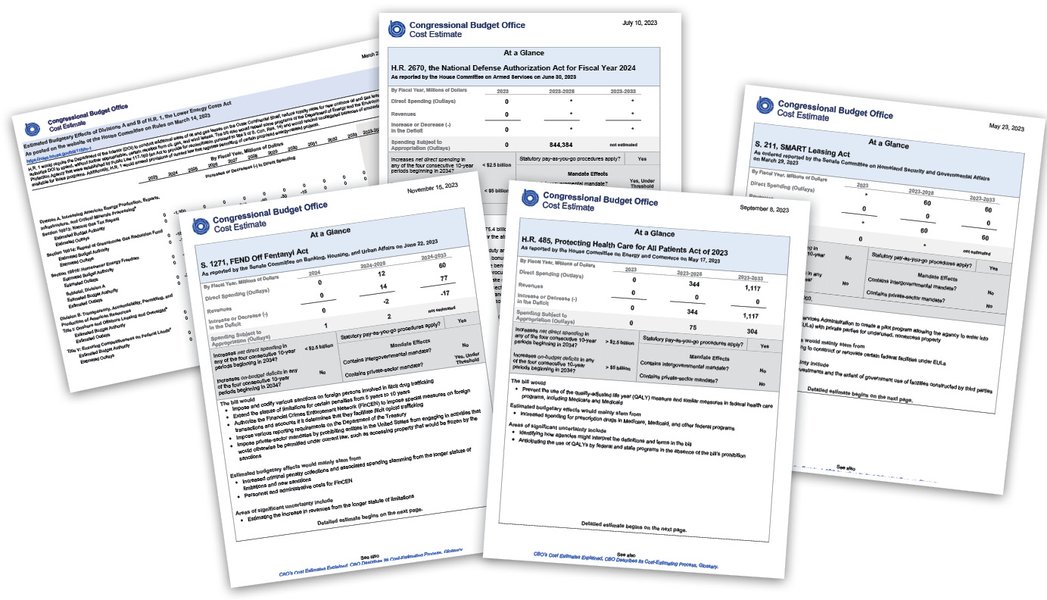
Artwork related to the Congressional Budget Office's appropriations requests, illustrating the formal budgetary process.
Mechanisms for Moving Money: Transfers vs. Reprogramming
While both involve shifting funds, "transfer" and "reprogramming" have distinct meanings in federal fiscal law, particularly concerning the level of authority required.
Understanding Transfers
A transfer involves shifting budgetary authority from one appropriation account to another. Because this moves funds between distinct congressionally established pots of money, often with different purposes or periods of availability, it almost invariably requires specific statutory authority. This authority typically specifies the accounts involved, the maximum amount transferable, and any conditions or reporting requirements.
Understanding Reprogramming
Reprogramming, on the other hand, refers to shifting funds within a single appropriation account. For example, an agency might reprogram funds from one project to another if both fall under the same general appropriation. While seemingly less impactful than a transfer, reprogramming can also be subject to statutory limitations, administrative rules, and congressional notification or approval requirements, especially if the amounts are significant or involve moving funds between different programs, projects, or activities (PPAs) explicitly identified in budget justifications or committee reports.
Statutory Gateways: How Fund Transfers Are Authorized
Explicit legal authority is the key to unlocking the movement of funds. This authority primarily comes from annual appropriations acts or permanent statutes.
Annual Appropriations Acts
These are the most common vehicles for granting transfer authority. Congress often includes specific provisions in annual or supplemental appropriations acts that allow agencies to transfer funds under certain conditions. These can be:
- General Provisions: Some appropriations acts contain "general provisions" applicable to multiple agencies or accounts, granting limited transfer authority, often capped by a percentage of the source appropriation or a fixed dollar amount.
- Account-Specific Provisions: Authority may be granted to transfer funds between specified accounts within a particular agency or for a specific program.
- Department-Wide or Agency-Wide Authority: Broader authorities may allow a department or agency head to transfer funds between various accounts under their jurisdiction, usually with limitations and congressional notification prerequisites.
Permanent Statutory Authorities
Beyond annual acts, several permanent statutes provide mechanisms for fund transfers:
31 U.S.C. § 1532 – Transfers of Appropriations
This statute provides a general framework, stating that the head of an executive agency can transfer appropriations and funds between accounts if "expressly authorized by law or an appropriation Act." This underscores that a separate authorization is always needed.
The Economy Act (31 U.S.C. § 1535)
The Economy Act allows federal agencies to procure goods or services from other federal agencies on a reimbursable basis. This is known as an interagency acquisition. When an agency places an order under the Economy Act, it effectively transfers funds from its appropriation to the servicing agency to cover the costs. This requires a written Determination and Findings (D&F) by the requesting agency, stating that the order is in the best interest of the government, that the goods or services cannot be obtained as conveniently or cheaply from a commercial source, and that the servicing agency is able to provide them. The funds transferred retain the purpose and time limitations of the original appropriation.
Department-Specific Statutes
Certain departments have specific statutes authorizing fund transfers tailored to their unique operational needs. Examples include:
- 10 U.S.C. § 2214 (Department of Defense): This statute authorizes the transfer of amounts in working capital funds or between appropriations for military functions within the Department of Defense, but generally requires such authority to also be provided in an annual DoD Appropriations Act. Transferred funds merge with the receiving appropriation and are available for the same purposes and time period.
- 42 U.S.C. § 7269 (Department of Energy): This law permits the Secretary of Energy to transfer funds between appropriations within the department, but only when explicitly authorized in an appropriation act. Such transfers are typically subject to fiscal year limitations and must align with the original purposes of the appropriations.
Visualizing Fund Transfer Authority Characteristics
Different statutory authorities for transferring funds possess varying characteristics regarding their scope, source, flexibility, complexity, and the level of congressional oversight involved. The radar chart below offers a comparative, opinionated visualization of these aspects for some common transfer mechanisms. The scores (ranging notionally from 1 to 10, where higher means more of the characteristic) are illustrative, helping to understand the nuances of each authority type.
This chart illustrates, for example, that Economy Act transfers have broad applicability (many agencies can use it) and rely on a stable permanent statute, but might involve moderate procedural complexity. In contrast, a DoD-specific authority like 10 U.S.C. § 2214 has narrow applicability (DoD only) but may offer significant flexibility if authorized by the annual appropriations act, often with intense congressional oversight.
A Concrete Example: Transfer Authority in Action
To illustrate how statutory authority for fund transfers works, consider a provision often found in annual appropriations acts. For instance, the Consolidated Appropriations Act, 2023, provided various specific transfer authorities.
Example: Environmental Protection Agency (EPA) Transfer
An appropriations act might grant the EPA Administrator authority to transfer funds. A hypothetical, yet typical, provision could read:
"For an additional amount for ‘Environmental Programs and Management’, $X,XXX,XXX,XXX: Provided, That the Administrator of the Environmental Protection Agency is authorized to transfer up to $Y,YYY,YYY of funds appropriated herein for the Great Lakes Restoration Initiative to other federal departments or agencies to carry out activities in support of the Initiative: Provided further, That such transferred funds may be merged with and be available for the same purposes and for the same time period as the appropriation to which transferred: Provided further, That the Administrator shall notify the Committees on Appropriations of the House of Representatives and the Senate not less than 15 days in advance of any such transfer."
In this example:
- The Source of Authority: The appropriations act itself.
- The Actors: The EPA Administrator is authorized to make the transfer.
- The Scope: Funds from the Great Lakes Restoration Initiative appropriation can be transferred.
- The Recipients: Other federal departments or agencies involved in the Initiative.
- The Amount: Limited to a specified dollar amount ($Y,YYY,YYY).
- Conditions:
- Funds are for activities supporting the Initiative.
- Transferred funds merge with the recipient's appropriation (same purpose and time).
- Congressional Notification: The House and Senate Appropriations Committees must be notified 15 days prior to the transfer.
This type of explicit language provides the clear statutory authority required to move funds between different accounts (EPA's to another agency's) and even between different agencies, which would otherwise be prohibited.
Navigating the Landscape: A Mindmap of Fund Transfer Authorities
The following mindmap provides a conceptual overview of the key elements involved in understanding statutory authority for federal fund transfers, from the foundational legal principles to specific mechanisms and considerations.
Federal Fund Transfers"] id1["Core Legal Principles"] id1a["Appropriations Clause
(U.S. Constitution, Art. I, Sec. 9)"] id1b["Purpose Statute
(31 U.S.C. § 1301)"] id1c["Antideficiency Act
(31 U.S.C. §§ 1511-1519)"] id2["Types of Fund Movements"] id2a["Transfers
(Between Appropriation Accounts)"] id2b["Reprogramming
(Within an Appropriation Account)"] id3["Sources of Transfer Authority"] id3a["Annual Appropriations Acts"] id3aa["General Provisions"] id3ab["Account-Specific Language"] id3ac["Department-Wide Authority"] id3b["Permanent Statutes"] id3ba["31 U.S.C. § 1532
(General Transfer Authorization Needed)"] id3bb["Economy Act
(31 U.S.C. § 1535 - Interagency)"] id3bc["Agency-Specific Statutes
(e.g., 10 U.S.C. § 2214 for DoD,
42 U.S.C. § 7269 for DoE)"] id4["Key Procedural Considerations"] id4a["Explicit Authorization is Essential"] id4b["Congressional Notification or Approval"] id4c["Documentation
(e.g., Determination & Findings for Economy Act)"] id4d["Adherence to Purpose and Time Limits"] id5["Illustrative Example"] id5a["EPA Transfer for Great Lakes Restoration
(Authorized by Annual Appropriations Act)"]
This mindmap helps to visualize the interconnectedness of legal doctrines, types of authorities, and procedural requirements that govern the movement of federal funds.
Key Statutes at a Glance
The table below summarizes the primary statutes and authorities governing the transfer of funds in federal government contracts, outlining their general rules or the authority they provide.
| Statutory Reference / Authority Type | General Rule / Authority Provided | Primary Locus of Specific Authorization |
|---|---|---|
| U.S. Constitution, Art. I, Sec. 9, Cl. 7 (Appropriations Clause) | No money drawn from Treasury except by appropriations made by law. | N/A (Foundational Principle) |
| 31 U.S.C. § 1301 (Purpose Statute) | Funds must be used only for the purposes for which they were appropriated. | Requires specific overriding statutory authority for change of purpose. |
| 31 U.S.C. §§ 1511–1519 (Antideficiency Act) | Prohibits obligations or expenditures exceeding appropriations or in advance/absence of appropriations; prohibits unauthorized transfers. | N/A (Prohibitory/Regulatory Statute) |
| Annual Appropriations Acts | May include specific transfer authorities (e.g., general provisions, account-specific language). Often the direct source of transfer permission. | Within the text of the specific Appropriations Act. |
| 31 U.S.C. § 1532 (Transfers of Appropriations) | Allows agency head to transfer appropriations if expressly authorized by law or an appropriation act. | The separate law or appropriations act providing the express authorization. |
| 31 U.S.C. § 1535 (Economy Act) | Authorizes interagency acquisitions; funds are transferred from the requesting agency to the servicing agency. | The Economy Act itself, conditioned on a D&F. |
| 10 U.S.C. § 2214 (DoD Specific) | Authorizes transfer of DoD working capital funds or between military function appropriations, usually requiring enabling language in an annual DoD Appropriations Act. | The statute itself, typically activated by an annual Appropriations Act. |
| 42 U.S.C. § 7269 (DoE Specific) | Authorizes Secretary of Energy to transfer funds between DoE appropriations when explicitly authorized in an appropriation act. | The statute itself, activated by an annual Appropriations Act. |
This table highlights that while some statutes provide frameworks, the actual permission to transfer funds often resides in the detailed language of annual appropriations acts or other specific authorizing statutes.
Understanding Federal Spending Rules
The complexities of federal appropriations law can be daunting. The following video provides a basic explanation of the rules governing how federal money is spent, offering context to the principles discussed regarding fund transfers.
Video: "The Rules for Spending Federal Money – Part One" provides an introductory overview of appropriations law.
This video touches upon foundational concepts that underpin why fund movements are so carefully controlled, emphasizing the legal constraints on federal expenditures.
Frequently Asked Questions (FAQ)
What is the main difference between a fund transfer and reprogramming? +
A transfer involves shifting budgetary authority between two separate appropriation accounts. This nearly always requires specific statutory authority because it moves funds across Congressionally-defined boundaries. Reprogramming is the movement of funds within the same appropriation account, for instance, from one project to another under that account. While less stringent, significant reprogramming may still require statutory authority or, more commonly, adherence to agency guidelines and congressional notification or approval, especially if it alters program priorities significantly.
What are the consequences of moving funds without proper statutory authority? +
Moving funds without proper statutory authority can lead to serious violations of federal fiscal law. This could result in a violation of the Antideficiency Act (31 U.S.C. §§ 1511–1519), which prohibits obligating or expending funds in excess or advance of an appropriation, or for purposes other than those for which funds were appropriated (a violation of the Purpose Statute, 31 U.S.C. § 1301). Violations can lead to administrative discipline for responsible officials, including suspension or removal from office, and in some cases, criminal penalties (though rare). Illegally obligated funds may also need to be de-obligated, and improper payments may need to be recovered.
Are there typically limits on the amount of funds that can be transferred? +
Yes, transfer authorities almost always come with limitations. These limits can be expressed as a maximum dollar amount, a percentage of the source or destination appropriation, or a cap on the net change to an appropriation. The specific limitations are detailed in the authorizing statute or appropriations act provision. The purpose of these limits is to ensure that transfers do not unduly distort the appropriations made by Congress or significantly alter program funding levels without explicit, high-level approval.
Who is responsible for approving fund transfers within the federal government? +
The authority to approve fund transfers is typically vested in high-level agency officials, such as the agency head (e.g., Secretary of a Department) or their designee, as specified in the authorizing statute. However, even with internal agency approval, many significant transfers require prior notification to, or sometimes approval from, relevant congressional committees (usually the House and Senate Appropriations Committees, and sometimes authorizing committees). This congressional oversight ensures that the legislative branch retains control over the ultimate use of appropriated funds.
Recommended Further Exploration
- What are the specific procedures for notifying Congress about fund reprogramming and transfers?
- How does the Economy Act differ from other interagency contracting vehicles?
- Can funds be transferred between different fiscal years, and under what authority?
- Explore detailed examples of Antideficiency Act violations related to unauthorized fund movements.
References
Last updated May 9, 2025