
Key Research Challenges in Federated Learning
Exploring the Frontiers of Decentralized Machine Learning
Key Takeaways
- Privacy and Security: Ensuring data privacy and safeguarding against various security threats remain paramount in federated learning.
- Communication Efficiency: Optimizing communication protocols to handle bandwidth constraints and reduce latency is crucial for scalable FL systems.
- Handling Statistical Heterogeneity: Addressing non-IID data distributions and ensuring model fairness across diverse datasets are significant ongoing challenges.
1. Privacy and Security
Data Privacy and Protection
In federated learning (FL), maintaining the confidentiality of sensitive data during the collaborative training process is critical. Techniques such as differential privacy (DP) and secure multi-party computation (SMPC) are employed to ensure that individual data points remain private. However, these methods often introduce trade-offs between model accuracy and computational overhead.
Model Security
FL systems are susceptible to various attacks, including model poisoning, model inversion, and membership inference. Model poisoning involves adversaries injecting malicious updates to corrupt the global model, while model inversion attacks aim to reconstruct private training data from model parameters. Developing robust defenses against these threats is a major focus of current research.
Secure Communication Protocols
Ensuring secure transmission of model updates between clients and the central server is essential. Advanced encryption techniques like homomorphic encryption and secure aggregation protocols are being explored to protect data in transit without incurring excessive computational costs.
Decentralized Trust
Establishing trust in decentralized FL systems, especially when involving untrusted participants, remains a significant challenge. Mechanisms to verify the integrity of participating clients and ensure honest participation are critical to the reliability of FL models.
2. Communication Efficiency
Bandwidth Constraints
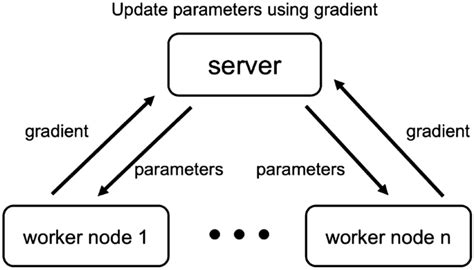
Federated learning involves frequent communication between numerous devices and a central server, which can lead to significant bandwidth consumption and high latency. To mitigate these issues, research is focused on reducing communication costs through model compression, quantization, and sparsification techniques that minimize the size of model updates transmitted over the network.
Adaptive Communication Strategies
In heterogeneous network environments where devices have varying computational capabilities and network conditions, developing adaptive algorithms that can adjust communication frequency and model update sizes based on device capabilities is essential for maintaining efficiency and scalability.
Efficient Compression Techniques
Advanced compression methods, such as gradient sparsification and quantization, are being developed to reduce the amount of data that needs to be transmitted during FL training. These techniques help in lowering the communication overhead without significantly compromising model performance.
3. Handling Statistical Heterogeneity
Non-IID Data Distributions
Federated datasets are often non-independent and identically distributed (non-IID), which can lead to biased or suboptimal global models. Addressing non-IID data requires advancements in algorithms that can effectively aggregate and learn from diverse data distributions across different clients.
Label Deficiency and Data Imbalance
In many FL scenarios, labeled data is scarce or unevenly distributed among clients, leading to challenges in training accurate and generalized models. Semi-supervised and unsupervised learning techniques are being explored to mitigate these issues by leveraging unlabeled data and ensuring balanced contributions from all participants.
Model Personalization
Tailoring global models to meet the specific needs of individual clients without sacrificing privacy or overall performance is an ongoing research area. Personalization strategies, such as meta-learning and multi-task learning, aim to create models that are both generalized and adaptable to local requirements.
4. Scalability and System Heterogeneity
Large-Scale Deployment
Scaling federated learning to accommodate thousands or millions of devices poses significant challenges in terms of resource allocation, synchronization, and maintaining efficiency. Research is focused on optimizing server architectures and synchronization protocols to handle large-scale FL deployments effectively.
Device Heterogeneity
Clients participating in FL systems have diverse hardware, software, and power constraints. Developing lightweight and adaptive algorithms that can operate efficiently across heterogeneous devices is crucial for the robust performance of FL models.
Cross-Device and Cross-Silo Settings
Federated learning operates in different environments, such as cross-device (involving numerous edge devices) and cross-silo (involving a few institutional participants). Each setting presents unique scalability and heterogeneity challenges that require specialized solutions to ensure effective FL operations.
5. Fairness and Bias
Data Bias Mitigation
Local datasets in FL systems may not be representative of the global population, leading to biased models that reinforce existing societal biases. Research efforts are directed towards developing fairness-aware algorithms that ensure equitable model performance across different subgroups and data distributions.
Fair Incentive Mechanisms
Designing fair and effective incentive mechanisms to encourage diverse participation in FL systems is a complex challenge. Incentives must account for varying data contributions and computational capabilities of different clients to promote balanced and inclusive model training.
Equity in Model Training
Ensuring that clients with limited data or weaker computational resources are adequately represented in the training process is essential for the inclusivity and generalizability of FL models. Strategies to balance contributions and address client imbalances are critical areas of ongoing research.
6. Theoretical Foundations
Convergence Guarantees
Many FL algorithms, including popular methods like Federated Averaging (FedAvg), lack robust theoretical guarantees for convergence, especially in non-convex settings. Developing solid theoretical frameworks to ensure that FL models reliably converge to optimal solutions is a key research priority.
Generalization Across Diverse Environments
Understanding how FL models generalize across diverse datasets and varied operational environments is an open problem. Research is focused on improving the generalization capabilities of FL models to ensure they perform well across different domains and use cases.
7. Integration with Emerging Technologies
Edge Computing
Integrating federated learning with edge computing infrastructure enables real-time, low-latency applications by processing data closer to the source. This synergy is particularly beneficial for applications requiring immediate data analysis and decision-making.
Blockchain Technology
Leveraging blockchain technology in federated learning systems can enhance security and transparency by providing immutable records of model updates and ensuring decentralized trust among participants. This integration is being explored to address trust issues in FL environments.
Hybrid Learning Paradigms
Combining federated learning with other machine learning paradigms, such as neurosymbolic AI, reinforcement learning, and unsupervised learning, can lead to more versatile and robust FL systems capable of handling a wider range of tasks and challenges.
8. Applications and Domain-Specific Challenges
Healthcare
Federated learning holds significant potential in healthcare by enabling collaborative model training without sharing sensitive patient data. Challenges in this domain include ensuring regulatory compliance, data standardization, and addressing the diverse nature of medical data across institutions.
Finance
In the financial sector, FL can facilitate fraud detection and risk assessment while preserving data privacy. Research is focused on overcoming challenges related to data heterogeneity, regulatory constraints, and maintaining the security of sensitive financial information.
Internet of Things (IoT) and Smart Devices
Federated learning is being applied to IoT and smart devices to enable scalable, energy-efficient, and real-time processing. Critical challenges in this area include managing resource constraints, ensuring data privacy, and achieving seamless integration with existing IoT infrastructures.
9. Optimization and Model Performance
Efficient Optimization Techniques
Developing optimization algorithms that reduce the number of communication rounds and accelerate model convergence is essential for practical FL implementations. Techniques such as adaptive learning rates and asynchronous updates are being explored to enhance optimization efficiency.
Handling Staleness and Asynchronous Training
In scenarios where device participation is intermittent, managing staleness in model updates and ensuring synchronization in asynchronous training environments is a significant challenge. Research aims to develop robust mechanisms that can handle delayed updates without compromising model integrity.
Hyperparameter Tuning in Federated Settings
Effective hyperparameter tuning strategies tailored for federated learning environments are necessary to optimize model performance. This involves developing decentralized approaches to hyperparameter optimization that account for the distributed nature of FL systems.
10. Legal and Ethical Challenges
Regulatory Compliance
Federated learning must navigate complex data protection laws such as GDPR, HIPAA, and CCPA. Ensuring that FL models adhere to these regulations while maintaining privacy and security is an ongoing challenge that requires clear guidelines and robust compliance mechanisms.
Transparency and Accountability
Ensuring that decisions made by federated models are explainable and accountable is particularly important in sensitive domains like healthcare and finance. Developing frameworks that provide transparency without compromising client privacy is a key area of research.
Conclusion
Federated learning presents a promising approach to collaborative machine learning that prioritizes data privacy and decentralization. However, it faces a multitude of research challenges ranging from privacy and security to communication efficiency, scalability, fairness, and legal compliance. Addressing these challenges is essential for the widespread adoption and effectiveness of federated learning systems across various domains.
References
Last updated January 19, 2025