
Addressing Non-IID Data Challenges in Federated Learning Systems
Exploring techniques to overcome heterogeneous data in decentralized environments
Key Highlights
- Data Diversity Impact: Non-IID data creates challenges due to heterogeneous distributions across clients.
- Mitigation Strategies: Techniques such as data augmentation, local adaptation, and specialized algorithms stabilize convergence.
- Performance Improvement: Tailored methods like FedProx, SCAFFOLD, and dynamic regularizers enhance global model accuracy.
Understanding Non-IID Data in Federated Learning
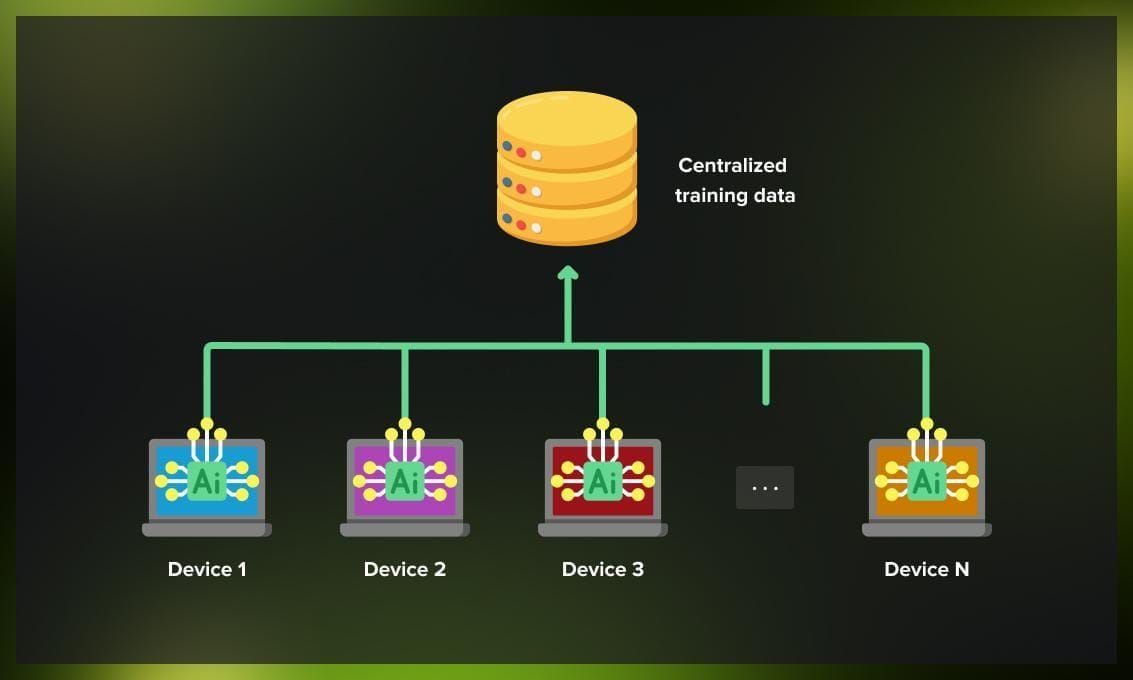
Federated Learning (FL) presents an innovative approach that enables multiple devices to collaboratively train a shared global model while maintaining data privacy by keeping raw data on local devices. However, one of the significant challenges in FL is dealing with non-independent and identically distributed (non-IID) data. Non-IID data refers to the variability in data distributions across different clients or nodes.
In a real-world scenario, data generated on heterogeneous devices tend to reflect distinct patterns, feature distributions, and class balances. For instance, users of mobile devices produce data that is unique to their geographical location, behavioral habits, and individual interests. Such differences lead to variations in data characteristics, known as heterogeneity, feature skew, label skew, and quantity skew. These discrepancies can adversely impact the learning process by inducing bias, slowed convergence, and decreased overall model performance.
Challenges Posed by Non-IID Data in Federated Learning
Diversity in Data Distribution
Non-IID conditions mean that the data on each client does not just differ in volume but also in its statistical properties. For example, if one client contains data from only a subset of classes (label skew), the global model may become overfitted to those classes and underperform on unseen data from other classes. This diversity directly leads to:
- Feature Skew: The variations in the underlying features cause misalignment in the feature representations learned by each client.
- Label Skew: Different clients may have exclusive or imbalanced representations of classes, making it challenging to create a universally performing model.
- Quantity Skew: The variability in the amount of data per client results in unequal contributions during the aggregation process, affecting convergence rates.
Statistical and Convergence Challenges
The statistical imbalance of non-IID data can lead to a model that performs inconsistently across different devices. In certain cases, the model may converge rapidly in one client environment but struggle in another due to the differences in data distribution. The heterogeneity also necessitates additional communication rounds and complex update mechanisms, making the global model training process less efficient.
From a convergence perspective, the increased variance in updates among clients further necessitates robust adaptive algorithms to align local and global model parameters. This misalignment can manifest as:
- Uneven learning dynamics across clients.
- Increased communication overhead.
- Poor generalization capabilities on unseen data.
Strategies for Mitigating Non-IID Data Challenges
Data-Level Approaches
Data Augmentation
Data augmentation is an effective technique to alleviate the inherent imbalances pose by non-IID distributions. By employing transformations such as rotation, scaling, and flipping, the local dataset can be artificially enriched. This process generates more features that are similar across different clients, aiding in homogenizing the dataset. Augmented data can help to balance unequal class distributions and reduce variances in local model updates.
Shared Subset Creation
Creating a small globally shared subset of data accessible to participating devices is another practical solution. This subset acts as a reference point during model aggregation, assisting in achieving consistency across local models by balancing supplemental missing or underrepresented data representations. This sharing method ensures that the global model becomes more robust to extreme variances in local data.
Algorithm-Level Adaptations
Local Adaptation and Fine-Tuning
One successful approach to managing non-IID data is developing personalized or adaptive models. After the initial federated aggregation, clients can fine-tune the global model to better suit their local data characteristics. This process, often referred to as local adaptation, allows individual clients to adjust model parameters to specific data patterns, thereby enhancing local performance without diverging significantly from the global model.
Transfer Learning Techniques
Transfer learning leverages pre-trained models from related tasks to provide a robust starting point for the federated learning process. By incorporating knowledge from external models, the initial weights are better aligned, which can help bridge the disparities caused by non-IID data. The pre-trained models carry learned representations that are more generalizable across diverse datasets, resulting in improved convergence and stability.
Contrastive Learning Approaches
Techniques like Model-Contrastive Learning (MOON) have been instrumental in addressing the misalignment between local and global representations. MOON operates by adjusting local updates to maximize the consistency between local representations and the global model features. By tackling the inherent representation drift, the algorithm helps in achieving a more uniform learning process across clients.
Model Aggregation and Regularization Techniques
FedProx Framework
FedProx introduces a proximal term in the loss function, ensuring that local updates are not too far removed from the global model. This regularization helps reduce the “drift” that occurs when clients train on disproportionate samples, aligning the individual model updates towards the global objective.
Dynamic Regularization and FedDyn
FedDyn employs a dynamic regularizer that updates the local models in a manner that aligns them more effectively with the global model. This approach adapts to each client’s data distribution by modifying the weight of the regularizer based on the local data characteristics. The dynamic adjustment minimizes the discrepancy introduced by non-IID data and encourages uniform convergence.
Variance Reduction via SCAFFOLD
SCAFFOLD tackles the issue of client drift by explicitly modeling and correcting the divergence in local updates. It employs control variates, which adjust the local gradients to counteract the systemic variance introduced by non-IID data. This variance reduction technique significantly enhances the stability and performance of the federated model.
Normalization Techniques: FedNova
FedNova works by normalizing the contribution of each client based on the number of training epochs performed locally. By adjusting the scale of the updates, it ensures fairness in the aggregation process so that clients with less data do not disproportionately affect the global model. This normalization leads to an unbiased update process that enhances overall model performance.
Comparative Overview of Strategies
To better illustrate these strategies, the following table summarizes key approaches, their primary benefits, and the challenges they address.
| Strategy | Implementation | Benefits | Challenges Addressed |
|---|---|---|---|
| Data Augmentation | Apply transformations to enrich local datasets | Enhanced data balance and representation | Feature and label skew |
| Shared Subset | Include a global data reference during training | Uniform dataset representation | Statistical imbalance |
| Local Adaptation | Fine-tuning global models on local data | Better individual performance | Client-specific data variation |
| Transfer Learning | Initialize models with pre-trained weights | Improved initial convergence | Data heterogeneity |
| Contrastive Learning (MOON) | Adjust local updates to align representations | Mitigates local update drift | Inconsistent representation learning |
| FedProx & FedDyn | Add regularization terms to local training losses | Reduces deviation from global model | Uneven training updates |
| SCAFFOLD | Utilize control variates to correct local gradients | Variance reduction and stability | High variance among clients |
| FedNova | Normalize updates by local training epochs | Fair aggregation among clients | Contribution imbalance |
Implementation Best Practices
Frameworks and Datasets
Implementation of these strategies can be carried out on popular federated learning frameworks such as TensorFlow Federated, PySyft, and LEAF. These platforms provide the necessary tools and simulation environments to test and deploy various techniques.
Common datasets used to evaluate performance include MNIST, CIFAR-10, and Fashion-MNIST. By experimenting on these datasets, researchers can benchmark the effectiveness of each strategy under controlled yet diverse data conditions.
Client Selection Strategies
Selecting the appropriate clients based on data characteristics plays a crucial role in improving the training process. Adaptive client selection methods prioritize devices with more balanced and representative data, thereby reducing the communication rounds needed for convergence. This strategy not only enhances model performance but also minimizes energy and computational overhead on less capable devices.
Evaluation Methods
Rigorous evaluation procedures—including testing, post-training calibration, and performance monitoring—are necessary to quantify the effectiveness of the deployed strategies. Metrics such as convergence speed, model accuracy, and generalization on novel data sets serve as key indicators of success in managing non-IID data in FL environments.
Future Directions and Research Opportunities
Emerging Algorithms
Continued research in federated learning is expanding the toolkit with novel algorithms designed explicitly to address non-IID challenges. Techniques combining clustering with adaptive weighting, improved communication protocols, and complex regularization schemes are paving the way for more robust federated learning systems.
Researchers are also exploring the integration of reinforcement learning to manage client selection and strategy adaptation in real-time. These dynamic approaches could further harmonize the updates coming from highly heterogeneous environments.
Broader Applications
The implications of solving non-IID challenges extend far beyond academic research. Industries such as healthcare, finance, and mobile communications stand to benefit greatly from more reliable federated learning systems. Enabling effective learning from decentralized data while preserving privacy has immediate applications in personalized healthcare diagnostics, secure financial modeling, and real-time recommendations on smart devices.
Collaborative Research and Open Data
Collaborations among academic institutions and industry leaders foster an open exchange of ideas, datasets, and benchmarks. These cooperative efforts accelerate progress towards more universally applicable federated learning systems and ensure that practical challenges such as non-IID data receive rigorous scrutiny.
References
- Federated Learning With Non-IID Data: A Survey - IEEE Xplore
-
A state-of-the-art survey on solving non-IID data in Federated Learning - ScienceDirect
- Navigating the Diversity: Tackling Non-IID Challenges in the Future of Federated Learning - Medium
- Understanding Federated Learning Challenges and Solutions for Non-IID Data
- Federated Learning with Non-IID Data - arXiv.org
Recommended Further Exploration
Last updated March 11, 2025