
Understanding the Role of Filament Length in Self-Pollination
An in-depth exploration of how filament morphology supports reproductive success
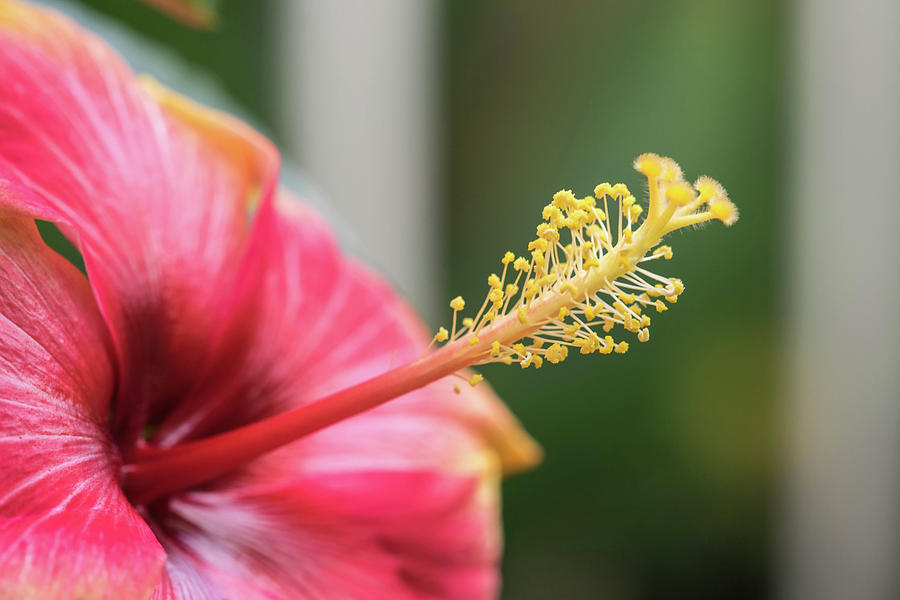
Key Insights
- Positioning and Alignment: The filament’s length positions the anther close to the stigma, enhancing pollen transfer.
- Adaptive Mechanisms: Variation in filament length, controlled by genetic and environmental factors, facilitates either self- or cross-pollination.
- Dynamic Regulation: Specific signaling pathways regulate filament elongation to ensure reproductive success under different conditions.
Introduction
In flowering plants, successful reproduction often hinges on the intricate design and function of reproductive structures. One crucial feature is the filament – a slender stalk that supports the anther, the pollen-producing organ of the stamen. The length of the filament plays a pivotal role in promoting self-pollination, a process that ensures reproductive success when pollinators are scarce or conditions are not ideal for cross-pollination. This article delves into the various mechanisms through which filament length influences self-pollination, drawing on a range of scientific studies and conceptual frameworks.
Mechanisms of Self-Pollination Influenced by Filament Length
1. Positioning the Anther for Optimal Pollen Transfer
Proximity to the Stigma
The filament acts as a supporting structure that positions the anther such that it lies close to or directly above the stigma – the receptive part of the pistil. When the anther is positioned within an optimal distance from the stigma, the chances that pollen will come into contact with the sticky surface of the stigma increase dramatically. This process is crucial for self-pollination, especially in scenarios where external factors, like the activity of pollinators, are limited.
The strategic positioning due to a longer filament ensures that even without the aid of external pollinators, the pollen can be transferred directly from the anther to the stigma. This is particularly beneficial in the early morning or in environments where climatic conditions do not favor the presence of pollinators.
Delayed Self-Pollination
In many flowering species, a longer filament allows for a phenomenon known as “delayed self-pollination.” Initially, the flower may attempt cross-pollination, but if this does not occur, the structural arrangement – aided by the filament – ensures that pollen eventually reaches the stigma autonomously. This mechanism is an evolutionary hedge against unpredictable pollinator visits.
2. Alignment of the Reproductive Organs
Stamen and Pistil Coordination
Successful self-pollination largely depends on the spatial alignment between the male (stamen) and female (pistil) reproductive organs. The filament’s growth and elongation are critical in aligning the anther with the stigma so that pollen transfer becomes efficient.
Research shows that when the filament length is well-synchronized with the size and orientation of the pistil, there is a significantly higher likelihood of automated pollen transfer occurring. This alignment is a fine example of morphological adaptation, whereby the flower’s architecture evolves to maximize reproductive efficiency. For instance, certain species of Arabidopsis thaliana exhibit this property, where the optimal filament length is crucial for ensuring that the growing anthers are always favorably positioned relative to the stigma.
Barriers to Cross-Pollination
While facilitating self-pollination, the filament can also erect physical barriers that limit the effectiveness of cross-pollination. In some cases, an over-long filament or an unusual curvature may block incoming pollen from other flowers, further promoting self-fertilization. This dual role—enhancing self-pollination while simultaneously reducing cross-pollination opportunities—enables plants to adapt to their environmental conditions, ensuring that reproduction is not completely dependent on external pollinators.
3. Environmental and Hormonal Regulation of Filament Length
Genetic and Hormonal Pathways
The elongation of the filament is not a random process but is tightly governed by genetic instructions and hormonal signals. Studies have identified peptide signaling pathways, particularly those involving EPFL peptides, that modulate the growth rate of the filament. These hormones influence cell proliferation in the filament, ensuring that its elongation synchronizes with other developmental processes of the flower.
The interplay between genetic factors and environmental cues, such as temperature variations and light intensity, allows for a dynamic response in filament length. For example, in cooler temperatures where pollinator activity is less frequent, the filament may elongate further to promote self-pollination, thereby safeguarding the plant's reproductive success. This adaptive mechanism highlights the evolution of plants to fine-tune their reproductive strategies, ensuring that every potential opportunity for fertilization is optimized.
Response to Environmental Stress
Environmental stresses such as water scarcity or unusual temperature gradients can directly impact the development of floral parts. In some plant species, part of the adaptation involves adjusting the filament length. This adjustment is a strategic response that either brings the anther closer to the stigma for self-pollination or, conversely, delays self-pollination in favor of attracting a cross-pollinator when conditions improve.
4. Interaction with Other Floral Structures
Filament and Style Dynamics
The interplay between the filament and the style (the stalk connecting the stigma to the ovary) is a crucial factor in determining self-pollination success. When the growth rates of these structures are balanced, it increases the likelihood that the anther will directly contact the stigma. In contrast, any significant discrepancy can either impede or promote self-pollination, depending on the physical arrangement.
For instance, if the filament grows too slowly or remains too short, the pollen-producing anther may not reach the stigma, thus impairing self-fertilization. Conversely, a well-elongated filament can facilitate contact by ensuring that the pollen is delivered in the right location and at the right time, even as the flower undergoes various developmental stages.
Species-Specific Adaptations
It is important to note that the filament length optimal for self-pollination varies among species. Some plants have evolved to possess longer filaments as a direct response to the absence of reliable pollinators, while others maintain shorter filaments to encourage cross-pollination, thus promoting genetic diversity. This diversity of strategies underscores the importance of the filament in floral morphology and reproductive ecology.
5. Detailed Comparative Table of Filament Functions
To appreciate the multifaceted role of filament length in self-pollination, consider the following table which compares the key aspects of filament function and their biological implications:
| Aspect | Function in Self-Pollination | Biological Impact |
|---|---|---|
| Positioning of Anther | Ensures close proximity to the stigma | Maximizes pollen transfer efficiency; enhances reproductive success |
| Alignment of Floral Organs | Synchronizes stamen and pistil orientation | Facilitates precise pollen deposition; minimizes reliance on pollinators |
| Delayed Self-Pollination Mechanism | Permits autonomous self-fertilization if cross-pollination fails | Provides reproductive assurance under adverse conditions |
| Genetic Regulation | Modulates growth via EPFL peptide signaling | Maintains developmental timing and optimal structure formation |
| Adaptive Response to Environmental Cues | Adjusts filament elongation based on external stimuli | Enhances resilience and reproductive success in varying climates |
Advanced Considerations
Evolutionary Implications of Filament Length Variation
Evolutionarily, the structure and length of the filament represent an adaptive trait that has been honed by natural selection. The variation in filament length among flowering plants is a testament to the diverse reproductive strategies that have evolved over millions of years. In environments where pollinators are unpredictable, selection pressures favor those plants that can successfully pollinate themselves. A longer filament ensures that the necessary contact between the anther and stigma is maintained, thereby promoting self-pollination in less than ideal conditions.
Additionally, plant species exhibiting a high degree of filament plasticity may be better equipped to deal with environmental shifts. This adaptability work in tandem with other mechanisms—such as changes in petal orientation and alterations in the style’s length—showcasing a coordinated developmental strategy aimed at reproductive assurance.
Comparative Case Studies
Case studies of species such as Arabidopsis thaliana and those within the Asteraceae family have provided insight into how filament length is critical to reproductive success. In Arabidopsis, research has revealed that specific signal pathways, including those mediated by EPFL peptides, drive filament elongation precisely when self-pollination is essential for seed production. Conversely, in some members of the Asteraceae, a discrepancy in the growth rate between the filament and the style can indicate mechanisms that either guide self-pollination or encourage cross-pollination, based on the plant’s reproductive strategy.
These case studies underscore that while longer filaments generally promote self-pollination through improved contact between the anther and stigma, the exact benefit can vary. In some species, a longer filament is directly correlated with increased self-fertilization, while in others, it functions more as a safeguard—ensuring reproductive success when cross-pollination does not occur.
Practical Implications and Research Outlook
Application in Breeding and Agriculture
The knowledge of how filament length influences self-pollination has practical implications for agriculture and plant breeding. In crops where self-pollination is desired—for traits like uniformity and stability—understanding the genetic and hormonal mechanisms behind filament elongation can aid in the development of new cultivars with optimized floral architectures. By selecting for plants that exhibit beneficial filament traits, breeders can devise varieties that require less reliance on pollinators, thus ensuring high seed yields even in less than ideal environmental conditions.
Future Research Directions
Future research in this domain is likely to focus on dissecting the molecular underpinnings of filament growth regulation. With advances in genetic editing and molecular biology, researchers are beginning to pinpoint the key genes and signaling pathways—such as the EPFL-mediated mechanisms—that dictate filament length. These studies not only enhance our understanding of floral biology but also carry the potential to revolutionize crop breeding strategies in a rapidly changing climate.
References
- Filament in Plants Definition - Green Packs
- EPFL Peptide Signaling and Stamen Elongation - Wiley Online Library
- Self-Pollination Mechanisms - PubMed
-
Self-Pollination Overview - ScienceDirect
- Floral Morphology Research - Taylor & Francis Online
Recommended Further Queries
Last updated March 20, 2025