
Fluorescence Spectroscopy
Unveiling Molecular Secrets with Light Emission Techniques
Key Takeaways
- Excitation and Emission: Fluorescence spectroscopy relies on illuminating a sample with a specific wavelength of light, which excites electrons that then emit light of a longer wavelength upon returning to the ground state.
- Sensitivity and Specificity: This technique is renowned for its high sensitivity, enabling the detection of very low concentrations of analytes, and offers detailed insights into molecular structure and environment.
- Wide-Ranging Applications: It is extensively used in biochemical research, environmental monitoring, medical diagnostics, and material science to analyze molecular interactions and structural dynamics.
Introduction to Fluorescence Spectroscopy
Fluorescence spectroscopy, an analytical technique often also known as fluorimetry or spectrofluorometry, is a cornerstone method used to study the emission of light by substances after they have absorbed electromagnetic radiation. This technique harnesses the principle that certain molecules (fluorophores) can absorb light at one wavelength and subsequently emit light at a longer wavelength—a phenomenon centrally described by the Stokes shift. By analyzing the emitted spectrum, researchers gain crucial insights into the nature of the emitting molecules, their environment, and how external factors such as temperature, pH, and solvent polarity affect their behavior.
This comprehensive modality has evolved into a powerful tool in research and industry alike, finding applications ranging from biological imaging and diagnostics to environmental monitoring and material sciences. The underlying mechanism is not only sensitive enough to detect trace amounts of substances but also offers non-intrusive and non-destructive analysis, making it indispensable in modern laboratories.
Fundamental Principles
The Process of Fluorescence
At its core, fluorescence spectroscopy is founded on the interaction between light and matter. When a fluorophore is illuminated by light, typically in the ultraviolet (UV) or visible region, it absorbs photons and its electrons are excited to higher energy states. Once in an excited state, the excited electrons relax back to their ground state, releasing energy in the form of fluorescent light. Importantly, this emitted light has a longer wavelength than the incident light due to energy losses in the system—a concept known as the Stokes shift.
Key Mechanisms
The key mechanisms that govern fluorescence include:
- Absorption: The initial step where photons are absorbed by fluorophores, elevating electrons to higher energy levels.
- Excitation: The process of promoting electrons from the ground state to an excited state through the absorption process.
- Emission: As electrons return to the ground state, they emit energy in the form of light at wavelengths longer than the absorbed light.
- Quenching: Various physical and chemical interactions (such as collisional quenching or complex formation) can reduce fluorescence output.
These mechanisms impart fluorescence spectroscopy its remarkable sensitivity, as even minute changes in molecular environment or structure can alter the fluorescence behavior—a characteristic that is exploited in both qualitative and quantitative analyses.
Instrumentation in Fluorescence Spectroscopy
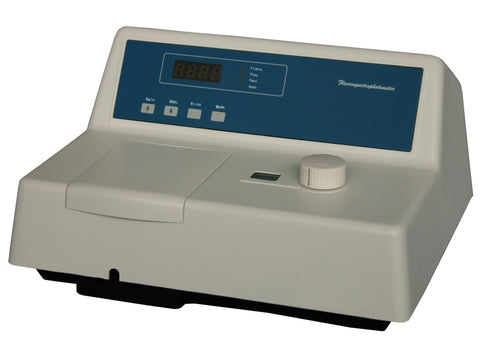
The precision and effectiveness of fluorescence spectroscopy are greatly influenced by the design and quality of the instrumentation. A typical fluorescence spectrometer consists of the following key components:
| Component | Function |
|---|---|
| Excitation Source | Generates the specific wavelengths required to excite the sample. Common sources include xenon lamps, lasers, LEDs, and mercury-vapor lamps. |
| Monochromators or Filters | Select and isolate the wavelengths of incident and emitted light to ensure precise excitation and detection. |
| Sample Holder | Often a cuvette or specialized container where the sample is maintained during analysis. |
| Detector | Typically a photomultiplier tube (PMT) or charge-coupled device (CCD) that captures and quantifies the emitted photons. |
| Data Analysis System | Hardware and software used to process the data, generating spectra that can be interpreted for qualitative and quantitative insights. |
Each component plays a critical role in ensuring reliable and reproducible measurements by accurately controlling and measuring the excitation and emission of light. The integration of advanced detectors and sophisticated data analysis systems enables researchers to push the boundaries of sensitivity and resolution.
Analytical Techniques and Measurements
Key Measurements in Fluorescence Spectroscopy
Fluorescence spectroscopy leverages several core measurements to extract detailed information about a sample:
Emission Spectrum
The emission spectrum is a graphical representation of the fluorescence intensity as a function of wavelength. It provides insight into the energy states and properties of the fluorophore and is essential for identifying specific molecular species. By analyzing the shape and peak position of the emission spectrum, researchers can discern subtle differences in molecular structure and environment.
Excitation Spectrum
Conversely, the excitation spectrum measures the intensity of fluorescence as a function of excitation wavelength while keeping the emission wavelength fixed. This approach not only confirms the identity of the fluorophore but also optimizes the excitation wavelength for maximal fluorescence emission.
Fluorescence Lifetime
Fluorescence lifetime is the time that a molecule spends in the excited state before emitting a photon. This measurement is particularly useful as it provides additional information on the interactions and dynamic processes occurring within the sample. Lifetime measurements are less sensitive to intensity variations, offering robust insights into molecular environments and energy transfer processes.
Quantum Yield
Quantum yield is defined as the ratio of the number of emitted photons to the number of photons absorbed. This metric is critical for assessing the efficiency of the fluorescent process within a sample. Higher quantum yields imply more efficient fluorescence, which is pivotal in applications like imaging and sensor development.
Data Acquisition and Analysis
The data obtained from fluorescence spectroscopy are analyzed to derive quantitative information about molecular concentrations, structural dynamics, and environmental conditions. Spectral data are typically processed through advanced software systems that can deconvolve complex overlapping peaks, compensate for background signals, and provide high-resolution spectra. In research settings, this allows for detailed studies of reaction kinetics, energy transfer processes, and protein conformational changes.
The versatility in data analysis has expanded the range of applications for fluorescence spectroscopy, particularly when combined with other analytical techniques such as high-performance liquid chromatography (HPLC), which further refines the identification and quantification of molecular species.
Applications of Fluorescence Spectroscopy
Biological and Medical Diagnostics
One of the most prominent applications of fluorescence spectroscopy is in the realm of biological and medical diagnostics. Fluorescence-based techniques are foundational in imaging techniques, such as fluorescence microscopy, where they allow for the visualization of cellular structures, protein localization, and dynamic processes within living cells.
Specific applications include the study of protein interactions through Förster resonance energy transfer (FRET) and the detection of biomarkers that indicate disease states. The high sensitivity of fluorescence allows for early diagnosis by identifying abnormal protein aggregations or concentrations that could be indicative of conditions such as cancer or neurodegenerative diseases.
Environmental Monitoring
Fluorescence spectroscopy is also widely used for environmental analysis. In water quality monitoring, the technique is employed to detect organic pollutants, trace levels of contaminants, and to assess bacterial contamination. The sensitivity of fluorescence spectroscopy enables the detection of pollutants at very low concentrations, facilitating proactive environmental management and ensuring compliance with safety regulations.
In atmospheric studies, fluorescence measurements are used to trace aerosols, volatile organic compounds (VOCs), and other airborne pollutants. These analyses not only monitor current environmental quality but also help in understanding broader climatic trends and the impact of anthropogenic activities.
Material Science and Chemistry
The field of material science benefits significantly from fluorescence spectroscopy, which is employed to analyze semiconductors, organic compounds, and novel materials such as organic light-emitting diodes (OLEDs). The technique assists in evaluating the photophysical properties of these materials and in optimizing their performance in devices.
In chemical analysis, fluorescence spectroscopy is used to study reaction kinetics, binding interactions, and conformational shifts in molecules. It provides researchers with real-time insights into molecular behavior and the mechanisms underlying chemical reactions.
Advances in Biotechnology and Immunotechnology
In biotechnology, fluorescence spectroscopy plays a crucial role in techniques such as flow cytometry, which assesses cellular properties by examining fluorescence emitted from tagged cellular components. This technique is invaluable for sorting cells, monitoring immune responses, and conducting high-throughput screening in drug discovery.
Additionally, in immunotechnology, fluorescence-based assays are used to characterize the binding of antibodies to antigens. Such applications are fundamental for vaccine development, clinical diagnostics, and monitoring immune health.
Advantages and Considerations
Merits of Fluorescence Spectroscopy
Fluorescence spectroscopy offers several distinct advantages that have fueled its widespread adoption in multiple fields:
- High Sensitivity: The ability to detect low levels of fluorescence enables the monitoring of trace analytes, making it essential for applications that require precise quantification at minimal concentrations.
- Non-destructive Analysis: Since the technique does not alter or damage the sample during measurement, it is ideally suited for delicate biological specimens and other sensitive materials.
- Rapid Data Collection: With advancements in instrumentation and data processing, fluorescence measurements can be performed quickly, allowing for efficient real-time monitoring of dynamic processes.
- Versatility: The method can be tailored to a wide range of samples by selecting specific excitation and emission wavelengths, making it applicable across various scientific disciplines.
- Detail-Rich Outputs: Both qualitative and quantitative data are obtainable, providing a comprehensive picture of the molecular landscape, including structural details and environmental interactions.
Challenges and Considerations
Despite its significant advantages, fluorescence spectroscopy does encounter some challenges that must be carefully managed:
- Photobleaching: Prolonged exposure to excitation light can permanently reduce the fluorescence capability of a sample. Mitigating photobleaching often requires careful calibration and control of exposure intensity and duration.
- Quenching Effects: The presence of quenchers—substances that reduce fluorescence—can complicate the interpretation of spectra. This often necessitates the use of controls or correction factors during data analysis.
- Interferences: Background fluorescence and light scattering can affect the accuracy of measurements. Advanced filtering and monochromation are used to minimize such interferences, but their careful implementation is critical.
- Calibration Demands: For quantitative analysis, sophisticated calibration methods are required to account for variations in instrument response and environmental conditions.
- Complex Data Interpretation: The overlapping spectral features in complex mixtures may demand advanced data processing techniques, including multivariate analysis or computational deconvolution methods.
Advanced Topics in Fluorescence Spectroscopy
Time-Resolved Fluorescence Studies
One of the more advanced applications involves time-resolved fluorescence spectroscopy. This technique examines the decay of fluorescence intensity over time, offering insights into the dynamic processes that occur following excitation. By measuring the fluorescence lifetime, researchers can distinguish between multiple fluorescent species, study energy transfer mechanisms, and gain a deeper understanding of molecular interactions.
The temporal resolution afforded by time-resolved methods is particularly useful in complex biological systems where multiple processes occur simultaneously. Detailed lifetime measurements help to elucidate interactions at a molecular level which might otherwise be masked in steady-state spectra.
Fluorescence Anisotropy
Fluorescence anisotropy, another advanced technique, measures the polarization of emitted light. Anisotropy is influenced by the rotational mobility of the fluorophore during the excited state. By assessing changes in anisotropy, scientists can infer information about molecular size, shape, and the degree of interaction with the surrounding environment. This is particularly useful for studying binding interactions between proteins and other biomolecules.
Anisotropy measurements are frequently applied in drug discovery and biochemical assays, where they provide key insights into molecular dynamics and the binding efficiency between ligands and receptors.
FRET (Förster Resonance Energy Transfer)
FRET is a powerful adjunct technique used in conjunction with fluorescence spectroscopy. It involves energy transfer between two fluorophores—a donor and an acceptor—that are in close proximity. This phenomenon is highly distance-dependent and can be used to measure nanoscale distances and interactions between biomolecules. FRET is widely used to explore the conformational changes in proteins and nucleic acids, offering a window into the real-time dynamics of molecular interactions.
By mapping the efficiency of energy transfer between closely associated fluorophores, researchers can derive structural and kinetic information that is critical for understanding biological processes at the molecular level.
Future Directions and Innovations
Integration with Other Analytical Techniques
The future of fluorescence spectroscopy lies in its integration with complementary analytical methods. Coupling with techniques such as high-performance liquid chromatography (HPLC) enhances the separation and identification of complex mixtures, enabling rapid and precise analyses in both clinical and environmental settings.
Moreover, advances in detector sensitivity, laser technology, and computational data analysis continue to push the boundaries of what fluorescence spectroscopy can achieve. Researchers are increasingly employing multi-modal approaches, combining fluorescence spectroscopy with Raman spectroscopy, mass spectrometry, or even electron microscopy, to gain multi-dimensional insights into complex systems.
Miniaturization and Portable Devices
Another promising avenue is the miniaturization of fluorescence instrumentation for portable applications. Handheld fluorometers and lab-on-a-chip devices are being developed to provide rapid, on-site analysis in fields ranging from environmental monitoring to point-of-care diagnostics. This evolution not only enhances accessibility but also paves the way for real-time measurements in remote settings.
The move towards miniaturized systems is driven by advances in microfluidics, optical engineering, and low-power electronics, which together are making fluorescence spectroscopy an even more adaptable tool for modern science.
Conclusion
Fluorescence spectroscopy stands as a paragon in the realm of analytical techniques, unparalleled in its ability to probe molecular structure, dynamics, and interactions. Its foundation, based on the absorption and subsequent emission of light by fluorophores, allows for the extraction of a vast array of data crucial for understanding the underlying properties of materials. The high sensitivity and versatility inherent in fluorescence spectroscopy have cemented its role across disciplines—ranging from medical diagnostics and environmental monitoring to material science and biochemical research.
Ongoing advances in instrumentation and data analysis, coupled with emerging technologies such as time-resolved studies and FRET, promise to extend the capabilities of this technique even further. As we continue to explore the microscopic world, fluorescence spectroscopy will undoubtedly remain an essential tool in revealing the subtle nuances of molecular behavior, contributing significantly to scientific discovery and technological innovation.
References
- Fluorescence Spectroscopy - Wikipedia
- What is Fluorescence Spectroscopy? - Horiba
- Fluorescence Spectroscopy: The Basics - JASCO Inc.
- Fluorescence Spectroscopy: Principle, Instrumentation, Uses - Science Info
More
Last updated February 19, 2025