
Mastering Food Delivery Operations for Success
A Deep Dive into the Logistics, Challenges, and Technology Powering the Modern Food Delivery Ecosystem
Food delivery operations have become a cornerstone of the modern restaurant and food service industry. What was once a niche offering has transformed into a critical revenue stream, driven by evolving consumer demands for convenience and the widespread adoption of online ordering platforms. Effective food delivery logistics are paramount, encompassing everything from managing incoming orders and preparing food to optimizing delivery routes and ensuring timely, safe transportation to the customer's doorstep. This comprehensive guide explores the intricacies of food delivery operations, highlighting key challenges, essential strategies, and the technologies that are shaping the future of this dynamic sector.
Key Insights into Food Delivery Operations
- Logistics are Critical: Successful food delivery hinges on efficient logistics, involving order management, food preparation, packaging, route optimization, and timely delivery to ensure customer satisfaction and minimize waste.
- Technology is a Game Changer: Advanced software, including online ordering systems, delivery management platforms, and AI-driven route optimization tools, is essential for streamlining operations, enhancing efficiency, and improving the customer experience.
- Challenges Require Strategic Solutions: Food delivery operations face challenges such as maintaining food quality during transit, managing fluctuating demand, optimizing delivery times, and controlling costs. Overcoming these requires careful planning, technology adoption, and strategic partnerships.
Understanding Food Delivery Logistics
Food delivery logistics encompass the entire process of getting a prepared meal from the restaurant or food provider to the customer. This involves a complex chain of activities that must be carefully managed to ensure efficiency, maintain food quality, and meet customer expectations. The scope of food logistics extends beyond just the final delivery, including aspects of the supply chain that bring ingredients to the kitchen (B2B logistics) and the last-mile delivery to the consumer (B2C logistics).
The Food Logistics Supply Chain
The food logistics supply chain is a multifaceted network. It begins with sourcing ingredients from farms or suppliers, followed by processing and packaging. These goods are then transported, often via road, sea, air, or rail, to warehouses or distribution centers. From there, they are delivered to restaurants, grocery stores, or directly to consumers. In the context of prepared food delivery, the restaurant acts as a key node in this chain, receiving ingredients and transforming them into ready-to-eat meals for dispatch.
B2B vs. B2C Food Logistics
There are two primary types of food logistics relevant to the delivery ecosystem:
- B2B Food Logistics: This involves the wholesale transportation of food products between businesses. For restaurants and ghost kitchens, this means receiving ingredients and supplies from distributors. Efficient B2B logistics ensure that restaurants have the necessary inventory to fulfill orders.
- B2C Food Logistics: This is the direct delivery of prepared food to the consumer's doorstep. This is the most visible aspect of food delivery and is where factors like delivery speed, order accuracy, and food condition upon arrival are critical for customer satisfaction.
Key Components of Food Delivery Operations
Managing food delivery operations involves several interconnected components:
- Order Management: Receiving and processing orders accurately and efficiently, whether through proprietary platforms, third-party apps, or phone calls.
- Food Preparation: Preparing meals to order while coordinating with the delivery process to ensure freshness and timely handoff to drivers.
- Packaging: Using appropriate packaging that maintains food temperature and quality during transit, prevents spills, and is often designed with sustainability in mind.
- Inventory Management: Keeping track of ingredients and prepared food to minimize waste and ensure availability.
- Fleet Management: Managing a fleet of delivery drivers, whether employed directly or through a third-party service. This includes scheduling, tracking, and communication.
- Route Optimization: Planning the most efficient routes for deliveries to reduce transit time, fuel costs, and improve delivery speed.
- Payment Processing: Handling online payments and potentially cash on delivery.
- Customer Service: Addressing customer inquiries, issues, and feedback related to their orders and delivery experience.
Challenges in Food Delivery Logistics
Despite the booming market, food delivery operations face several significant challenges that can impact profitability and customer satisfaction.
Maintaining Food Quality and Safety
Ensuring food arrives at the customer's location in the same condition it left the kitchen is a major challenge. Factors like temperature control, packaging integrity, and transit time all play a crucial role. Perishable goods require careful handling and often necessitate cold chain logistics to prevent spoilage and maintain safety standards.
Optimizing Delivery Times and Efficiency
Customers expect fast and accurate deliveries. Optimizing delivery routes to handle multiple orders efficiently while minimizing transit time is complex, especially in urban areas with traffic congestion and parking issues. Delays can lead to dissatisfied customers and potential food spoilage.
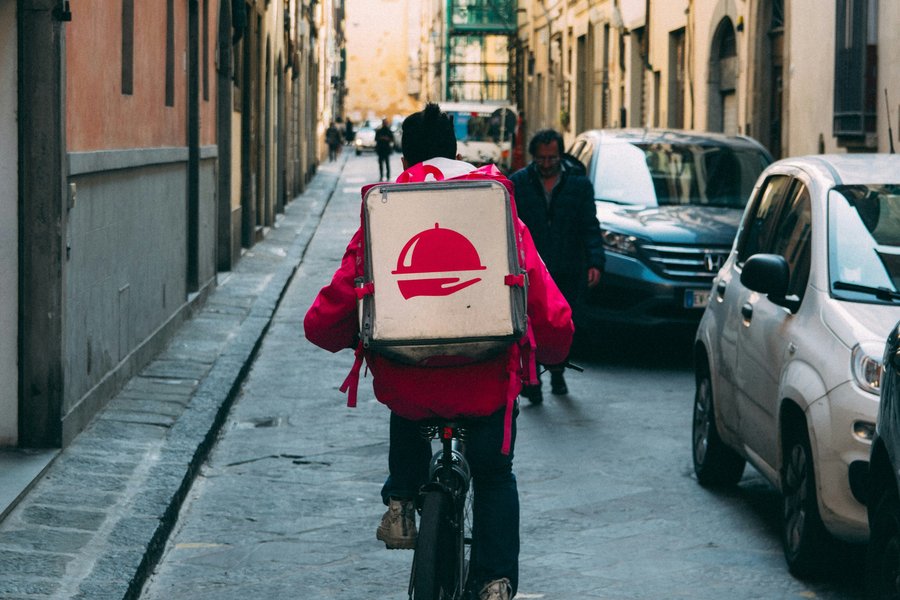
The image below illustrates the concept of last-mile delivery for restaurants, the final and often most challenging leg of the food delivery journey.
Last-mile delivery in food service.
Managing Fluctuating Demand
Food delivery demand can be highly unpredictable, with peaks during meal times and on weekends. Restaurants and delivery services need to scale their operations and driver availability to meet these fluctuations without overspending on resources during slower periods.
High Operational Costs
Delivery operations involve various costs, including fuel, vehicle maintenance, driver wages or commissions, and packaging. Controlling these costs while providing a competitive delivery service is essential for profitability.
Competition and Market Saturation
The food delivery market is highly competitive, with numerous platforms and restaurants vying for customers. Standing out requires efficient operations, a seamless customer experience, and effective marketing.
Leveraging Technology for Optimization
Technology plays a vital role in overcoming the challenges of food delivery logistics and enhancing operational efficiency.
Online Ordering Systems
Online ordering systems are the gateway for customers to place delivery orders. These systems should be user-friendly, integrate with restaurant POS systems, and accurately convey order details to the kitchen and delivery team.
Delivery Management Software
Delivery management software provides a centralized platform for managing the entire delivery process. Features typically include:
-
Real-time order tracking
-
Automated dispatching
-
Driver management and communication
-
Route optimization
-
Performance analytics
Route Optimization and AI
Advanced algorithms and Artificial Intelligence (AI) are used for route optimization, helping delivery services plan the most efficient routes based on factors like traffic, delivery locations, and driver availability. AI can also assist in forecasting demand and optimizing resource allocation.
Ghost Kitchens and Virtual Restaurants
Ghost kitchens (also known as cloud kitchens or dark kitchens) are facilities optimized solely for food delivery and takeout. They lack a traditional dine-in area and are designed to streamline delivery operations. Virtual restaurants are brands that operate out of existing restaurant kitchens or ghost kitchens and cater exclusively to online orders.
Ghost kitchens are designed for delivery and takeout, emphasizing efficient food preparation and packaging for transit.
Example of food packaging from a cloud kitchen concept.

Strategies for Successful Food Delivery Operations
Restaurants and delivery services can implement various strategies to improve their food delivery operations and achieve greater success.
Optimizing the Order and Preparation Workflow
Streamlining the process from order placement to food preparation and handoff to the driver is crucial. This involves clear communication between front-of-house, kitchen staff, and delivery personnel.
Choosing the Right Delivery Model
Restaurants can choose between managing their own delivery fleet or partnering with third-party delivery platforms. Each model has its advantages and disadvantages in terms of cost, control, and reach.
Enhancing Packaging and Presentation
Investing in high-quality packaging that maintains food temperature, prevents spills, and presents the meal attractively upon arrival can significantly improve the customer experience.
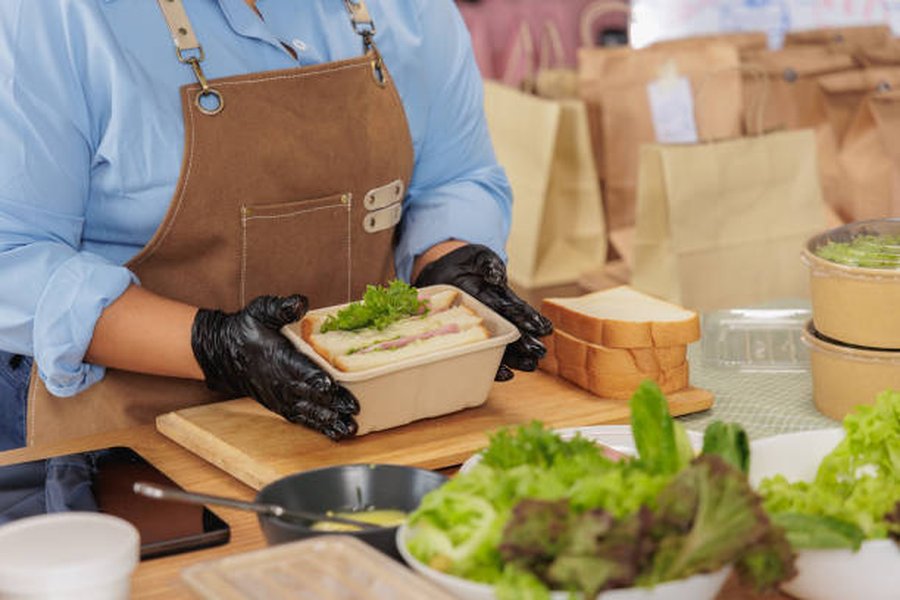
Effective packaging is crucial for maintaining food quality during delivery.
Example of food packaging designed for delivery.
Leveraging Data Analytics
Analyzing data from online orders and delivery operations can provide valuable insights into customer behavior, popular menu items, delivery patterns, and areas for improvement. This data can inform decisions on menu optimization, staffing, and marketing.
Building Strong Customer Relationships
Providing excellent customer service, addressing issues promptly, and offering loyalty programs can help build customer loyalty in a competitive market.
Leading Food Delivery Platforms and Software
The food delivery ecosystem is populated by major delivery platforms and software providers that facilitate online ordering and delivery management. Some of the prominent players include:
| Platform/Software | Key Features/Focus |
|---|---|
| DoorDash | Leading third-party delivery platform with a wide restaurant network. |
| Uber Eats | Major third-party delivery platform, leveraging Uber's logistics network. |
| Grubhub | Established third-party delivery platform with a focus on restaurant partnerships. |
| Square Online | Provides online ordering systems integrated with Square POS. |
| Olo | Offers digital ordering and delivery solutions for restaurants. |
| Tookan | Delivery management software for optimizing delivery operations. |
| Deliverect | Integrates orders from multiple platforms into one system. |
| ChowNow | Provides commission-free online ordering systems for restaurants. |
| Delivety | All-in-one OMS for cloud kitchens and virtual restaurants. |
The Future of Food Delivery Logistics
The food delivery logistics market is expected to continue its growth trajectory, driven by ongoing urbanization, digital transformation, and evolving consumer preferences. Future trends may include increased adoption of AI and automation in logistics, expansion into delivering other goods beyond prepared meals, and greater emphasis on sustainable delivery practices.
The following video provides an overview of some of the best food delivery software applications available for restaurants, highlighting how technology can improve delivery operations and boost revenue.
Exploring top food delivery software for restaurants.
FAQ
What are the main components of food delivery logistics?
The main components include order management, food preparation, packaging, inventory management, fleet management, route optimization, payment processing, and customer service.
What are the biggest challenges in food delivery operations?
Key challenges include maintaining food quality and safety during transit, optimizing delivery times and efficiency, managing fluctuating demand, controlling high operational costs, and navigating market competition.
How can technology improve food delivery logistics?
Technology such as online ordering systems, delivery management software, route optimization algorithms, and AI can streamline operations, improve efficiency, enhance the customer experience, and provide valuable data insights.
What is the difference between B2B and B2C food logistics?
B2B food logistics involves the wholesale transportation of food between businesses (e.g., suppliers to restaurants), while B2C food logistics is the direct delivery of prepared food from a restaurant to the consumer.
What are ghost kitchens?
Ghost kitchens are facilities optimized for food delivery and takeout, lacking a traditional dine-in area. They are designed to streamline the food preparation and dispatch process for delivery orders.
References

Last updated May 5, 2025