
Optimizing Food Delivery Operations: A Comprehensive Analysis
Exploring Transportation and Assignment Models for Enhanced Efficiency
This report delves into the critical operational aspects of the food delivery industry, focusing on the implementation and impact of transportation and assignment models. The rapid growth of online food delivery services has underscored the need for efficient and intelligent systems to manage the complex logistics of connecting restaurants, couriers, and customers. This study examines how various models and methodologies are employed to optimize delivery routes, assign orders to couriers, and ultimately enhance overall operational efficiency and customer satisfaction.
Key Highlights
- Transportation and assignment models are fundamental to optimizing food delivery operations, addressing challenges such as courier routing, order batching, and minimizing delivery times.
- Advanced techniques, including integer programming, machine learning, and heuristic algorithms, are increasingly used to solve complex assignment and routing problems in real-time.
- The choice of business model significantly influences operational strategies, with integrated and platform-to-consumer models having distinct approaches to logistics and courier management.
Introduction
The online food delivery market has experienced exponential growth, transforming the dining landscape and creating new operational challenges for businesses. As the volume of orders increases and customer expectations for fast and reliable delivery rise, the efficiency of the delivery process becomes paramount. This necessitates a thorough understanding and optimization of the underlying operational mechanisms, particularly in the areas of transportation and order assignment. The traditional methods of manual dispatch and routing are no longer sufficient to handle the complexity and scale of modern food delivery.
Need of the Study
The competitive nature of the food delivery industry demands continuous improvement in operational efficiency to reduce costs, minimize delivery times, and enhance customer satisfaction. Inefficient transportation and assignment processes can lead to delayed deliveries, increased operational expenses, and dissatisfied customers, ultimately impacting the profitability and sustainability of food delivery businesses. This study is needed to investigate and highlight the effective models and strategies employed to optimize these critical operational functions.
Objective of Study
The primary objective of this study is to analyze the application of transportation and assignment models in optimizing food delivery operations. This includes identifying the key factors influencing these operations, exploring different modeling techniques used for courier assignment and routing, and evaluating their impact on efficiency and service levels. The study aims to provide insights into best practices and potential areas for improvement in the operational strategies of food delivery platforms.
Scope of the Study
This study focuses on the operational aspects of online food delivery, specifically examining the transportation and assignment problems faced by food delivery platforms. It covers various modeling approaches, algorithmic solutions, and their practical implementation in real-world scenarios. The scope includes analyzing the factors considered in courier assignment, the methodologies for optimizing delivery routes, and the overall impact of these strategies on key performance indicators such as delivery time, cost, and courier utilization. While the study acknowledges the broader ecosystem of food delivery (including restaurant operations and customer interfaces), the primary focus remains on the logistics and assignment layers.
Limitations of the Study
The study's limitations include relying on publicly available information and research papers, which may not always provide granular data on the proprietary algorithms and real-time operational strategies of specific food delivery companies. The dynamic nature of the industry, with constantly evolving technologies and business models, means that some findings may be subject to rapid change. Additionally, the complexity of real-world operational constraints, such as traffic conditions, weather, and courier availability fluctuations, can be challenging to fully capture and model in a generalized study.
Review of Literature
The existing literature on food delivery operations highlights the significance of efficient courier routing and order assignment. Research indicates that these problems are often modeled as variants of the Vehicle Routing Problem (VRP) and the Assignment Problem. Studies have explored the use of integer programming to minimize cost functions that account for delays and cancellations in assigning orders to couriers. The integration of courier location, order origin, and destination are fundamental inputs for these models. Machine learning techniques, combined with optimization algorithms like the Hungarian algorithm, have shown promise in improving task assignment for smart delivery systems.
The literature also emphasizes the impact of different food delivery business models on operational strategies. Models range from order-only platforms where restaurants handle delivery to fully integrated models where the platform manages the entire process, including a dedicated delivery fleet. The choice of model influences the complexity of the assignment and routing problems and the potential for optimization.
Recent research explores advanced concepts like order batching, where multiple orders are grouped for delivery by a single courier to improve efficiency. The urgency of orders, demand density, and distance are key factors in determining optimal batching and assignment. The emerging use of mixed fleets, including drones and human couriers, introduces new complexities and opportunities for optimization in infrastructure planning and order assignment.
Research Methodology
Research Design
This study employs a descriptive and analytical research design. It involves reviewing existing literature, analyzing theoretical models related to transportation and assignment problems, and examining case studies and research findings on their application in the food delivery sector. The research aims to describe the current state of practice and analyze the effectiveness of different approaches.
Sampling Size and Procedure
This study does not involve primary data collection through surveys or experiments with a specific sample size of individuals or businesses. Instead, the "sample" consists of a curated selection of relevant academic papers, industry reports, and case studies that provide insights into the operational models and techniques used in food delivery. The selection procedure involves searching academic databases and online resources using keywords related to food delivery, logistics, transportation, assignment problems, and operational research.
Data Collection Method
The data collection method for this study is based on secondary data from published sources. This includes research articles from peer-reviewed journals, conference papers, industry analysis reports, and relevant online resources. The focus is on collecting information related to:
- Different food delivery business models and their operational implications.
- Mathematical models and algorithms used for courier assignment and route optimization (e.g., Integer Programming, VRP variants, Assignment Problem).
- The application of machine learning and artificial intelligence in food delivery logistics.
- Key performance indicators used to evaluate the efficiency of food delivery operations.
- Case studies or examples of operational strategies implemented by food delivery companies.
Data Analysis Tools
The data analysis in this study is primarily qualitative and analytical. It involves synthesizing information from the collected literature to identify common themes, best practices, and the effectiveness of different operational models and techniques. Comparative analysis will be used to evaluate the strengths and weaknesses of various assignment and routing algorithms. While no specific statistical software will be used, the analysis will involve interpreting the findings of quantitative studies presented in the reviewed literature.
Transportation and Assignment Models in Food Delivery
At the core of efficient food delivery operations lie sophisticated transportation and assignment models. These models aim to solve complex optimization problems in real-time, considering a multitude of factors to ensure timely and cost-effective deliveries. The primary challenges involve assigning available couriers to incoming orders and determining the most efficient routes for these couriers.
Courier Assignment
Courier assignment is the process of matching available delivery personnel to customer orders. This is not a simple one-to-one mapping; it often involves considering multiple orders, courier locations, estimated pick-up and delivery times, and the characteristics of the orders (e.g., size, fragility, required temperature). The goal is to assign orders in a way that minimizes total delivery time, reduces courier idle time, and maximizes the number of successful deliveries within promised time windows.
Mathematical models like the Assignment Problem, a classic problem in linear programming, can be used as a basis for courier assignment. However, the dynamic nature of food delivery requires more advanced approaches. Integer programming models are commonly employed to formulate the assignment problem with various constraints and objectives, such as minimizing total travel distance or maximizing the number of on-time deliveries.
Factors influencing courier assignment include:
- Courier Location and Availability: The real-time position and current status (available, en route to pick-up, en route to delivery) of each courier.
- Order Details: Pick-up location (restaurant), drop-off location (customer), order size, and urgency.
- Estimated Travel Times: Predicted travel times between locations, often incorporating real-time traffic data.
- Courier Capacity: The number or size of orders a courier can handle at once.
- Service Level Agreements: Promised delivery times to customers.
Machine learning can play a significant role in improving assignment accuracy by predicting travel times more precisely and forecasting demand in specific areas, allowing for proactive positioning of couriers.
Visual representation illustrating applications of the assignment model.
Transportation and Routing Models
Once orders are assigned to couriers, the next crucial step is determining the optimal delivery routes. This involves the application of transportation and routing models, which are often variants of the Vehicle Routing Problem (VRP). The VRP seeks to find the most efficient routes for a fleet of vehicles to deliver goods to a set of locations.
In the context of food delivery, the VRP is dynamic, with new orders constantly arriving and requiring real-time adjustments to existing routes. Factors considered in food delivery routing include:
- Multiple Stops: Couriers often handle multiple orders in a single trip, requiring efficient sequencing of pick-ups and drop-offs.
- Time Windows: Orders often have implicit or explicit time windows for pick-up and delivery.
- Real-time Conditions: Traffic congestion, road closures, and other unforeseen events necessitate dynamic re-routing.
- Courier Capacity and Constraints: Vehicle type, carrying capacity, and working hours of the courier.
Heuristic and metaheuristic algorithms are commonly used to solve the dynamic VRP in food delivery due to the computational complexity of finding optimal solutions in real-time. Adaptive Large Neighborhood Search (ALNS) and other techniques are employed to find good quality routes quickly.
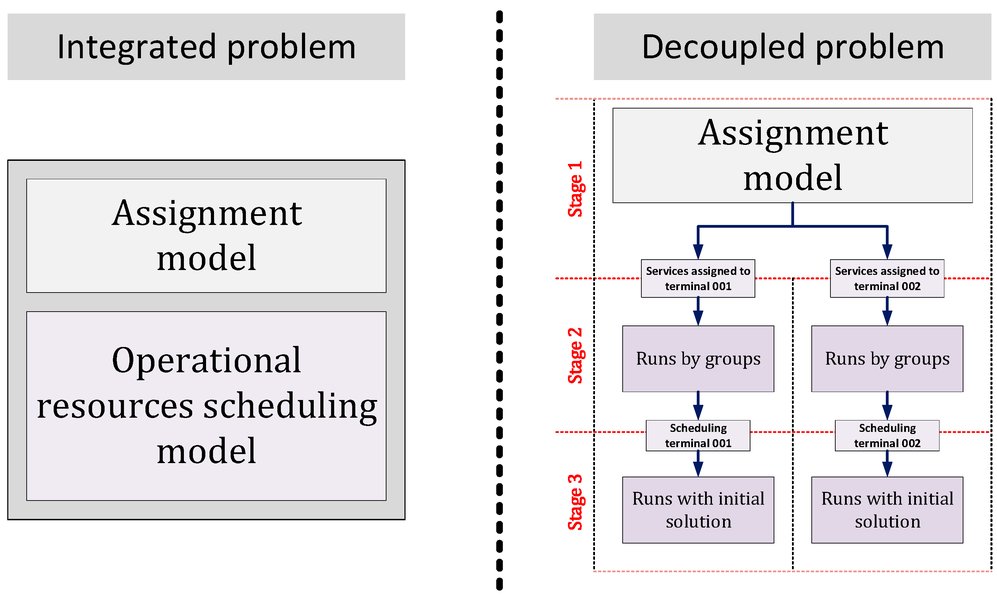
Depiction of an integrated framework for real-time logistics operations.
Integrated Assignment and Routing
Increasingly, food delivery platforms are moving towards integrated assignment and routing models. Instead of assigning orders and then routing, these models consider assignment and routing simultaneously to find globally optimal solutions. This is particularly important when dealing with batched orders, where the assignment of a group of orders to a courier is interdependent with the optimal route for delivering those orders.
Advanced optimization techniques and machine learning are used to develop integrated models that can handle the complexity of real-time operations. The goal is to make assignment and routing decisions that are not just locally optimal but contribute to the overall efficiency of the entire delivery network.
Industry/Company Profile (General Overview)
The food delivery industry is characterized by a diverse range of players, from large multinational platforms to smaller local services. These companies operate based on various business models, which significantly influence their operational strategies. Some common business models include:
- Platform-to-Consumer (Aggregator) Model: The platform provides a marketplace for customers to order from various restaurants and typically handles the delivery logistics using its own fleet of couriers or third-party logistics providers. Examples include DoorDash, Uber Eats, and Deliveroo.
- Restaurant-to-Consumer Model: Restaurants manage their online ordering and delivery operations, often using their own delivery personnel. This model gives restaurants more control but requires significant investment in logistics infrastructure.
- Integrated Model: Some companies integrate food preparation and delivery, often operating through cloud kitchens (also known as ghost kitchens) that are optimized for delivery-only operations.
Regardless of the specific model, successful food delivery companies heavily rely on technology platforms, including mobile apps for customers and couriers, dispatching systems, and sophisticated algorithms for assignment and routing. Operational efficiency is a key differentiator in this competitive market.
This video discusses how online food delivery systems are transforming dining operations, touching upon the operational models used in the industry.
Data Analysis & Interpretation
Analyzing the data from food delivery operations is crucial for identifying areas of inefficiency and evaluating the effectiveness of implemented models. Key metrics and data points that are typically analyzed include:
- Delivery Time: Total time from order placement to delivery. This can be broken down into preparation time, pick-up time, and travel time.
- On-Time Delivery Rate: Percentage of orders delivered within the estimated or promised time window.
- Courier Utilization: The percentage of time couriers are actively engaged in pick-ups or deliveries.
- Cost per Delivery: The average cost associated with completing a single delivery, including courier pay, fuel, and platform overhead.
- Number of Orders Batched: The extent to which orders are grouped together for delivery.
- Customer Satisfaction: Feedback and ratings related to delivery speed and service.
- Rejection Rate: The percentage of orders that couriers decline.
Interpreting this data involves identifying trends, correlations, and anomalies. For instance, consistently high delivery times in a specific area might indicate issues with routing algorithms or insufficient courier availability. A low courier utilization rate could suggest inefficient assignment processes. By analyzing these metrics in conjunction with the applied assignment and routing models, companies can gain insights into what is working well and what needs improvement.
Data analysis tools, often incorporating machine learning and statistical methods, are used to process large volumes of operational data. Predictive analytics can forecast demand and travel times, further enhancing the accuracy of assignment and routing models.
Findings
Based on the review of literature and general understanding of food delivery operations, several key findings emerge regarding the application of transportation and assignment models:
- Optimization is Essential: Effective transportation and assignment models are not merely beneficial but essential for the profitability and competitiveness of food delivery businesses.
- Dynamic and Real-time Challenges: The dynamic nature of incoming orders and real-time factors like traffic require algorithms that can adapt and re-optimize continuously.
- Integrated Approaches are Superior: Models that integrate assignment and routing generally outperform those that treat these problems in isolation, especially for batched deliveries.
- Technology Adoption is High: Leading food delivery platforms heavily invest in technology, including AI and machine learning, to power their operational algorithms.
- Data is Crucial for Improvement: Continuous monitoring and analysis of operational data are vital for refining models and identifying areas for optimization.
- Business Model Influences Operations: The chosen business model dictates the level of control and the specific operational challenges faced by a food delivery company.
Suggestions
Based on the findings, the following suggestions can be made to improve food delivery operations through transportation and assignment models:
-
Invest in Advanced Algorithms: Companies should leverage advanced optimization algorithms and machine learning techniques for more accurate and dynamic assignment and routing.
-
Focus on Integrated Modeling: Develop and implement integrated models that consider assignment and routing simultaneously to optimize overall network efficiency.
-
Enhance Real-time Data Utilization: Improve the collection and integration of real-time data, such as traffic conditions and courier availability, into decision-making processes.
-
Implement Predictive Analytics: Utilize machine learning for predicting demand patterns and travel times to enable proactive operational adjustments.
-
Continuously Monitor and Analyze Performance: Establish robust systems for tracking key operational metrics and use data analysis to identify bottlenecks and opportunities for improvement.
-
Optimize Order Batching Strategies: Develop sophisticated algorithms for order batching that consider factors beyond just proximity, such as order urgency and compatibility.
-
Provide Ongoing Courier Training and Support: While not a modeling aspect, well-trained couriers who understand the operational system can contribute significantly to efficiency and customer satisfaction.
Conclusion
The operational efficiency of food delivery services is heavily reliant on the effective application of transportation and assignment models. These models, ranging from classical optimization techniques to modern machine learning approaches, are essential for addressing the complexities of courier assignment, route optimization, and order batching in a dynamic environment. By strategically implementing and continuously refining these models based on data analysis, food delivery companies can significantly reduce operational costs, improve delivery times, and enhance the overall customer experience. The future of food delivery operations lies in increasingly sophisticated, integrated, and data-driven approaches to logistics and assignment.
FAQ
What is the primary challenge in food delivery operations?
The primary challenge in food delivery operations is efficiently matching incoming orders with available couriers and determining the optimal routes for timely delivery, considering dynamic factors like traffic and new orders.
How do transportation models help in food delivery?
Transportation models, particularly variants of the Vehicle Routing Problem, help in food delivery by determining the most efficient routes for couriers to pick up and deliver orders, minimizing travel distance and time.
What is courier assignment in food delivery?
Courier assignment is the process of assigning specific customer orders to available delivery couriers, taking into account factors such as courier location, order pick-up and drop-off points, and estimated travel times.
What role does machine learning play in food delivery operations?
Machine learning plays a significant role by enabling more accurate predictions of travel times, forecasting demand, and potentially improving the performance of assignment and routing algorithms through pattern recognition and optimization.
What are the different business models in food delivery?
Common business models include the Platform-to-Consumer (Aggregator) model, where a platform handles delivery, the Restaurant-to-Consumer model, where restaurants manage their own delivery, and the Integrated model, which may involve cloud kitchens and in-house delivery.
References
Last updated May 9, 2025