
Chapter II: Review of Related Literature and Studies
Exploring the Role of Soft Skills in Maritime Career Applications
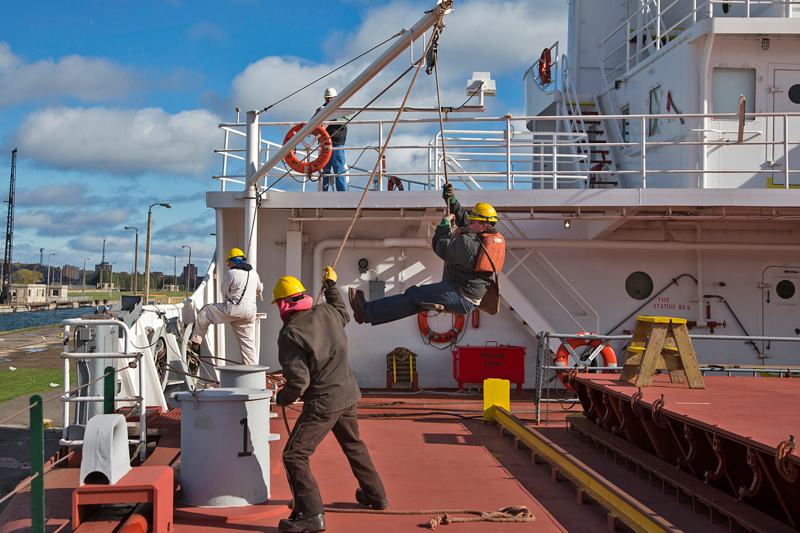
Key Highlights
- International Recognition: The maritime industry increasingly acknowledges soft skills as essential alongside technical know-how.
- Foundational Competencies: Communication, teamwork, leadership, and adaptability are central in ensuring safety and operational efficiency.
- Bridging Educational Gaps: Integrating soft skills training into curriculum significantly enhances career readiness among marine transportation students.
Foreign Literature Review on Soft Skills in Maritime Careers
The global maritime industry has experienced a paradigm shift in recognizing the critical role of soft skills in ensuring operational safety, efficiency, and overall crew wellbeing. As demands for more holistic competencies increase, numerous studies, journal articles, and maritime industry reports spotlight the importance of integrating these skills in training programs.
Importance of Soft Skills in Maritime Operations
Historically, maritime training focused predominantly on technical proficiency and navigational expertise. However, recent literature underscores a growing consensus that soft skills are indispensable. Research consistently points to the need for non-technical capabilities such as effective communication, leadership, teamwork, problem-solving, emotional intelligence, and adaptability. These skills directly affect safety outcomes, operational efficiency, and the ability to manage onboard emergencies or conflicts.
For instance, reports indicate that soft skills enable better understanding and quicker responses during crisis situations. The tradition of tightly-knit work environments on board vessels demands seamless interaction among crew members. Studies by recognized maritime institutes explain that, when soft skills are adequately developed, miscommunication is reduced, conflict resolution improves, and overall morale is enhanced.
Core Soft Skills Identified
Most contemporary foreign literature agrees on a set of soft skills fundamental for maritime professionals:
- Communication: Essential for providing clear instructions, coordinating tasks, and ensuring that safety protocols are understood and followed.
- Teamwork: Critical in small, high-pressure environments where coordinated efforts are necessary to manage complex operations.
- Leadership: Beyond formal authority, leadership in maritime contexts involves decision-making and guiding crew during routine operations and emergencies.
- Problem-Solving: Vital for analyzing unique challenges at sea, from mechanical failures to unexpected environmental conditions.
- Emotional Intelligence: Enables crew members to handle stress, empathize with colleagues, and foster a collaborative atmosphere.
- Adaptability and Flexibility: Important for adjusting to rapidly changing situations, such as adverse weather or evolving technological demands.
Operational Significance and Career Impact
Multiple sources highlight that the integration of soft skills is directly linked to enhanced operational safety and improved team performance. For example, studies conducted within the maritime sector report that efficient communication and teamwork reduce errors and incidents at sea. Moreover, leadership and problem-solving capacities are directly correlated with successful crisis management.
One seminal study conducted in the Greek shipping industry demonstrated that crews with robust soft skills exhibited superior performance, which was also reflected in their income levels and career progression. The consensus in international reports is that companies are increasingly investing in continuous soft skills training as a means to retain talent and improve operational reliability.
Training and Development Approaches
Global literature emphasizes varied methods to develop these competencies among maritime professionals. Traditional training modules are now being supplemented with online courses, simulation exercises, and scenario-based learning. These innovative strategies aim to simulate real-life challenges encountered at sea, thereby reinforcing the practical application of soft skills.
Foreign studies illustrate that programs incorporating soft skills development not only enhance crew performance but also boost confidence and workplace safety. Institutions around the globe have updated their curricula to incorporate soft skills assessments, structured workshops, and peer feedback mechanisms. This holistic approach ensures that maritime professionals are well-prepared to handle both technical and non-technical aspects of their roles.
Theoretical Perspectives
The theoretical foundation regarding soft skills in maritime contexts is often anchored in frameworks such as emotional intelligence and adaptive expertise. Researchers argue that these frameworks serve as the backbone of soft skills training:
- Emotional Intelligence Framework: Focuses on self-awareness, self-regulation, motivation, empathy, and social skills. It posits that a crew member with high emotional intelligence can deal effectively with stress and interpersonal issues, thereby contributing to overall safety and operational effectiveness.
- Adaptive Expertise: Expands on the ability to adapt knowledge in novel situations – a necessary skill given the unpredictable and complex nature of maritime operations.
These frameworks provide a theoretical lens through which the practical implications of soft skills training can be evaluated. They stress the criticality of balancing technical training with the development of personal and interpersonal proficiencies.
Theoretical and Conceptual Frameworks
In establishing a solid academic foundation, it is essential to outline both theoretical and conceptual frameworks that underpin the study of soft skills in maritime career application. The theoretical framework draws from various models including the emotional intelligence framework and adaptive expertise. These models are integrated to explain the dynamics between soft skills awareness and practical maritime operations.
Theoretical Framework: Emotional Intelligence and Adaptive Expertise
In the context of maritime careers, the emotional intelligence model explains how individuals manage their emotions and interact with colleagues under high-stress conditions. Crew members with high emotional intelligence tend to demonstrate resilience, effective conflict resolution, and efficient decision-making. On the other hand, the concept of adaptive expertise highlights the ability of individuals to modify strategies in response to unforeseen challenges.
The fusion of these two frameworks in maritime education provides insights into how soft skills contribute not only to individual performance but also to team cohesion and overall safety standards. In practice, this balanced approach ensures that both cognitive and non-cognitive skills are given due emphasis in training programs.
Conceptual Framework: Linking Soft Skills to Career Success
The conceptual framework for this study visually and theoretically outlines the relationships among key variables:
- Awareness of Soft Skills: Students' knowledge and recognition of soft skills and their necessity in maritime operations.
- Training and Development Methods: The educational strategies and hands-on exercises aimed at cultivating these non-technical competencies.
- Operational Readiness: The preparedness to handle real-world maritime challenges, measured in terms of team effectiveness, safety, and decision-making during emergencies.
- Career Advancement: The influence of soft skills awareness and practical applications on long-term career progression and job performance.
The link between these factors is elaborated via various internationally recognized models of learning and performance, emphasizing the importance of a well-rounded educational approach that bridges technical knowledge with soft skills acumen.
Below is an HTML table summarizing key soft skills and their operational significance within maritime contexts:
| Soft Skill | Description | Operational Significance |
|---|---|---|
| Communication | Clear exchange of information, instructions, and feedback. | Ensures coordinated operations and safe navigation. |
| Teamwork | Collaboration among crew members in a high-pressure environment. | Promotes shared responsibility and crisis management. |
| Leadership | Guiding and inspiring teams with decision-making skills. | Enhances morale and ensures timely and effective responses in emergencies. |
| Problem-Solving | Ability to analyze issues and implement effective solutions. | Critical in adapting to unpredictable maritime conditions. |
| Emotional Intelligence | Managing emotions to maintain relationships and performance under stress. | Facilitates conflict resolution and builds cohesive teams. |
| Adaptability | Adjusting to changing situations and operational challenges. | Essential for dealing with unforeseen events and dynamic environments. |
Synthesis of the Art and Identification of Research Gaps
A synthesis of the reviewed foreign literature reveals several overarching themes. First and foremost is the recognition that soft skills are not merely complementary to technical knowledge; they are foundational to successful maritime operations. The reviewed studies consistently show that soft skills training contributes significantly to improved crew performance, better safety protocols, and enhanced crisis management.
Despite the clear emphasis on important competencies such as communication, leadership, and teamwork, there exists a notable gap in the literature specifically addressing the systematic integration of these skills within maritime educational programs. Many studies focus on the operational benefits of soft skills in the professional realm, yet there is limited research detailing how well these competencies are understood, developed, and applied by students in marine transportation academic settings.
This gap is particularly significant for institutions like MPCF-LC, where the foundational training of third-year BSMT students must adapt to the broader requirements of modern maritime operations. The emerging research calls for a deliberate and structured incorporation of soft skills into the curriculum—one that not only addresses theoretical perspectives but also practical applications through simulations, team exercises, and scenario-based training.
Bridging this gap is critical for producing maritime professionals who are not only technically competent but also proficient in the human dynamics essential for effective ship management and crisis resolution.
Local and Foreign Comparisons in Context
While foreign literature offers a robust framework for understanding the importance of soft skills, local studies have started to consider these findings in relation to specific maritime educational contexts. Local research efforts emphasize that maritime training institutions must address the unique challenges of their socio-cultural environment while incorporating international best practices.
The synthesis of local and foreign literature shows that both contexts agree on the necessity of soft skills. However, the foreign literature provides the groundwork for advanced training methodologies and theoretical models, which can be adapted to suit local conditions. Integrating these insights helps create a more comprehensive educational strategy, thereby enhancing the overall readiness of marine transportation students.
Definition of Key Terms
Soft Skills
Non-technical abilities that involve interpersonal, communication, emotional, and problem-solving skills. These skills are critical in ensuring effective teamwork and leadership in high-pressure environments.
Maritime Career Application
The process where maritime professionals apply both technical and non-technical skills to manage ship operations, ensure safety, and navigate challenges inherent in maritime environments.
Awareness on Soft Skills Operations
The recognition, understanding, and value placed on the acquisition and practical execution of soft skills within maritime training and day-to-day operations.
Operational Readiness
The preparedness of maritime professionals to face real-world challenges, including the effective management of safety, teamwork, and decision-making in dynamic environments.
Implications for Maritime Education at MPCF-LC
The literature underscores the imperative for maritime academies like MPCF-LC to embed soft skills into their curriculum intentionally and systematically. Given the operational complexities of the modern maritime environment, it is essential for third-year BSMT students to have a balanced education that fosters both technical and non-technical proficiencies.
Incorporating soft skills training not only improves immediate operational readiness but also contributes to longer-term career development and job satisfaction. It creates a robust framework where students can engage in practical, scenario-based learning, peer evaluations, and reflective exercises that enhance their emotional intelligence, leadership, and teamwork.
The integration of these training modules into the curriculum can be expanded through collaborations with industry experts, participation in internships, and access to modern simulation technologies. The goal is to create a learning ecosystem where theoretical knowledge is continuously interwoven with practical applications, ensuring that graduates are well-equipped for the dynamic demands of maritime careers.
References
- Maritime Industry Shifts Focus on Soft Skills - Maritime Technology Review
- The Importance of Soft Skills in Maritime Careers - LinkedIn
- Rethinking Soft Skills in Maritime Industry - Safety4Sea
- Essential Soft Skills for Seafarers - Seaplify
- Soft Skills Training and its Commercial Benefits - Maritime Fairtrade
Recommended Queries for Further Insights
Last updated March 9, 2025