
Unveiling the Hydroxyl Landscape: FTIR's Role in Polymer Characterization
Explore how Fourier Transform Infrared (FTIR) spectroscopy precisely measures hydroxyl and hydroxide groups in agar, agaropectin, and agarose polymers.
Key Insights into FTIR and Hydroxyl Group Analysis
- FTIR's Core Capability: Fourier Transform Infrared (FTIR) spectroscopy is a robust analytical technique capable of identifying and characterizing functional groups, including hydroxyl (OH) groups, within polymers like agar, agaropectin, and agarose.
- Quantitative and Qualitative Power: While primarily known for qualitative identification, advanced FTIR techniques and careful spectral analysis enable the indirect quantification of hydroxyl groups per polymer molecule, providing insights into their relative abundance and bonding environments.
- Spectral Fingerprinting: Hydroxyl groups exhibit characteristic broad absorption bands between 3200-3400 cm⁻¹ due to hydrogen bonding and sharper peaks between 3600-3700 cm⁻¹ for free O-H radicals, serving as unique "molecular fingerprints" for these critical functional groups.
Understanding Your Query: A Precise Translation
Clarity on the role of FTIR in polymer analysis.
The content you provided translates to English as follows:
"But as far as I know, FTIR can measure the number of hydroxy or hydroxide groups per polymer molecule of agar, agaropectin, or agarose as you mentioned. Your company's technology and related instruments are definitely more professional than ours."
This statement accurately reflects the capabilities of FTIR spectroscopy in the analysis of these specific biopolymers, highlighting its utility in quantifying critical functional groups.
The Power of FTIR Spectroscopy in Polymer Science
Delving into the mechanism and applications of FTIR.
Fourier Transform Infrared (FTIR) spectroscopy is a cornerstone analytical technique in polymer science, widely utilized for both identifying and characterizing molecular structures. It operates by measuring the absorption of infrared radiation as it passes through a sample. When infrared light interacts with a material, specific wavelengths are absorbed by covalent bonds within the molecules, causing them to vibrate. This unique pattern of absorbed wavelengths generates a distinct "molecular fingerprint," which is invaluable for determining the chemical composition and structural characteristics of the material.
For biopolymers such as agar, agaropectin, and agarose, which are polysaccharides derived from red algae, FTIR is particularly effective due to their rich composition of hydroxyl (OH) groups. These hydroxyl groups are fundamental to their properties, contributing to their hydrophilic nature and gelling capabilities. The ability of FTIR to detect and characterize these groups makes it an indispensable tool for research and industrial applications.
Identifying Functional Groups with FTIR
FTIR's primary strength lies in its capacity to identify and characterize specific functional groups or chemical bonds. For hydroxyl groups, typical FTIR spectra of agar and agarose exhibit a broad absorption band in the region around 3200-3400 cm⁻¹. This broadness is characteristic of O-H stretching vibrations and is often attributed to hydrogen bonding between hydroxyl groups, leading to a range of vibrational energies. Furthermore, sharp peaks can appear between 3600-3700 cm⁻¹ for free O-H radicals not involved in hydrogen bonding, providing more specific insights into their bonding environment.
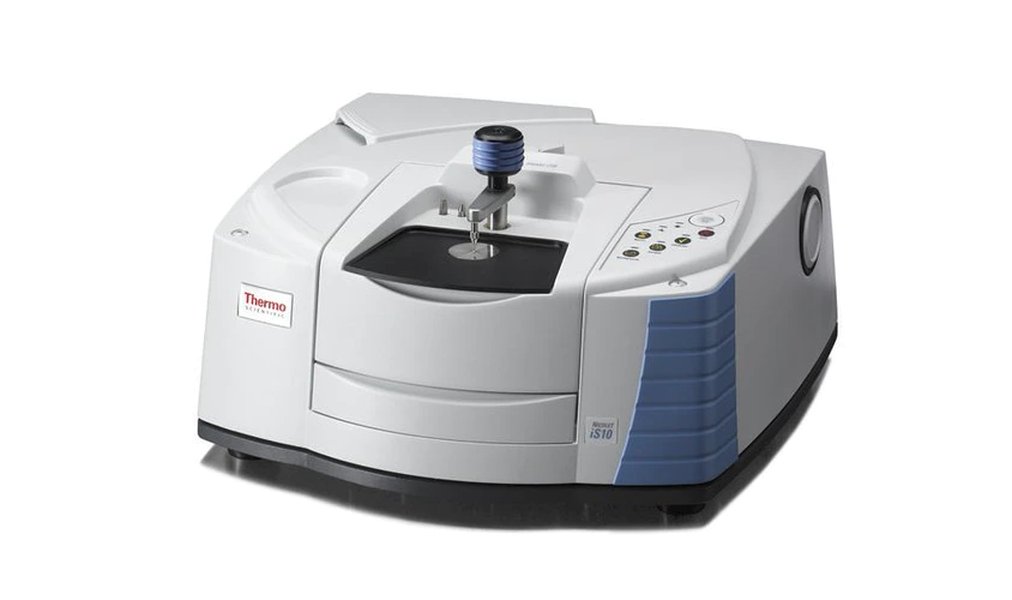
An example of FTIR Spectroscopy equipment used for material analysis.
Beyond Identification: Towards Quantification
While FTIR excels at qualitative analysis, enabling the identification of the presence and type of functional groups, it can also provide indirect quantitative information. By analyzing the intensity and area under specific absorption peaks, and comparing them to calibration curves derived from known standards, researchers can estimate the relative abundance of hydroxyl groups. This approach is particularly useful for monitoring chemical modifications to polymers, where the introduction or alteration of functional groups can be observed and quantified through changes in the FTIR spectrum. For example, the derivatizability of hydroxyl groups in agarose allows for the introduction of various ligands, crucial for applications like affinity chromatography, and FTIR can effectively monitor these changes.
Hydroxyl Groups in Agarose, Agar, and Agaropectin: A Detailed Look
The structural importance and FTIR detection of OH groups.
Agarose, a linear polymer of repeating agarobiose units, is rich in hydroxyl groups. Each agarobiose unit, composed of D-galactose and 3,6-anhydro-L-galactose, contains multiple hydroxyl groups that are responsible for its water solubility, hydrophilic character, and gelling properties. These OH groups readily form hydrogen bonds, which are critical for the formation of the gel network structure. Similarly, agar, a complex mixture containing both agarose and agaropectin, and agaropectin itself, also possess abundant hydroxyl groups that influence their physical and chemical behaviors.
This video explains the key differences between agar and agarose, highlighting how their structural variations, particularly related to hydroxyl group exposure, influence their distinct applications and properties.
FTIR Spectrum Characteristics for Hydroxyl Groups
The characteristic FTIR absorption peaks for hydroxyl groups in these polysaccharides are well-documented:
- Broad O-H Stretching (3200-3400 cm⁻¹): This region is indicative of hydrogen-bonded hydroxyl groups, which are prevalent in the polysaccharide structure due to inter- and intramolecular interactions. The broadness of this band is a direct result of the varying strengths of these hydrogen bonds.
- Free O-H Stretching (3600-3700 cm⁻¹): Sharper, less intense peaks in this higher wavenumber range correspond to hydroxyl groups that are not involved in hydrogen bonding. Their presence and relative intensity can provide insights into the degree of hydrogen bonding within the polymer matrix.
By integrating the area under these peaks, and utilizing advanced spectroscopic techniques such as baseline correction and peak deconvolution, researchers can derive quantitative data. Calibration curves, established using samples with known hydroxyl content, allow for the estimation of the number of OH groups per polymer molecule. This capability is vital for assessing the purity of polymers, monitoring chemical modifications, and ensuring quality control in various industrial applications.
Comparing Analytical Techniques for Polymer Characterization
A performance overview of various methods.
To illustrate the distinct advantages and typical applications of FTIR compared to other analytical techniques used in polymer science, consider the following radar chart. This chart provides an opinionated analysis of each technique's strengths across key parameters, allowing for a clearer understanding of why FTIR is well-suited for hydroxyl group analysis in complex polymers.
The radar chart illustrates that while techniques like NMR Spectroscopy offer superior structural detail and quantitative precision, FTIR stands out for its balance of qualitative identification, ease of sample preparation, speed, and cost-effectiveness. This makes it an excellent choice for routine analysis and initial characterization of polymers, particularly for functional groups like hydroxyls. Its ability to provide quick and non-destructive results reinforces its value in quality control and process monitoring in various industries.
The Interplay of Hydroxyl Groups and Polymer Properties
Understanding the impact of OH groups on material behavior.
The number and arrangement of hydroxyl groups within a polymer molecule profoundly influence its macroscopic properties. For biopolymers like agar, agaropectin, and agarose, these groups are central to their interactions with water, their gelling capacity, and their potential for chemical modification. The following mindmap visually represents the intricate relationship between hydroxyl groups and the resultant properties and applications of these polymers.
As illustrated, the presence and specific arrangement of hydroxyl groups lead to a cascade of effects, from enabling strong hydrogen bonding networks to dictating a polymer's reactivity and water interactions. This understanding is critical for tailoring these materials for diverse applications, from biomedical fields to the food industry. FTIR's ability to characterize these groups helps in predicting and controlling the performance of agar, agaropectin, and agarose in various settings.
Technical Details of Hydroxyl Group Measurement via FTIR
From spectral acquisition to quantitative insights.
The process of using FTIR to assess hydroxyl groups in polymers like agar, agaropectin, and agarose involves several key steps, leveraging the unique vibrational modes of these functional groups.
Spectral Acquisition and Interpretation
Initially, a sample of the polymer is prepared, often as a thin film or in a potassium bromide (KBr) pellet. The sample is then exposed to a broad spectrum of infrared radiation. The FTIR instrument measures how much infrared light is absorbed at different wavelengths. The resulting spectrum is essentially a plot of absorbance intensity versus wavenumber (cm⁻¹), where each peak corresponds to the vibration of specific chemical bonds. For hydroxyl groups, the broad absorption band around 3200-3400 cm⁻¹ is particularly relevant, indicating the presence of hydrogen-bonded O-H stretches, which are abundant in these polysaccharides. A sharper, less common peak at 3600-3700 cm⁻¹ would indicate free, non-hydrogen-bonded O-H groups.
The breadth and intensity of the O-H stretching band provide qualitative information about the extent of hydrogen bonding. A broader band suggests a wider range of hydrogen bond strengths, indicative of a complex network. Quantitative analysis, though challenging, can be performed by:
- Peak Area Integration: Measuring the area under the O-H absorption band.
- Baseline Correction: Subtracting the baseline to isolate the true absorbance from background noise.
- Calibration Curves: Developing a correlation between the integrated peak area (or height) and the known concentration of hydroxyl groups in a set of reference standards. This allows for the estimation of the relative number of OH groups in unknown samples.
Advantages and Practical Considerations
FTIR offers several practical advantages for measuring hydroxyl groups in these biopolymers:
| Advantage | Description |
|---|---|
| Non-destructive | The sample remains intact after analysis, allowing for further testing. |
| Rapid Analysis | Spectra can be acquired in seconds to minutes, providing quick feedback. |
| Minimal Sample Preparation | Often, solid samples can be analyzed directly or with simple preparation methods. |
| Cost-Effective | Compared to other high-resolution techniques, FTIR instruments and consumables are relatively economical. |
| Versatility | Applicable to a wide range of sample types (solids, liquids, gases). |
However, precise quantification can be influenced by factors such as moisture content in the sample, which also absorbs in the O-H region, and the complexity of the polymer matrix. Advanced techniques like Attenuated Total Reflectance (ATR-FTIR) can minimize sample preparation and improve signal quality for solid samples, while careful drying protocols are crucial for accurate quantitative results.
Frequently Asked Questions (FAQ)
What does the broadness of the O-H peak in FTIR indicate?
Can FTIR differentiate between different types of hydroxyl groups?
Is it possible to directly count the exact number of hydroxyl groups per molecule using FTIR?
What are the main applications of FTIR in analyzing agar and agarose?
Conclusion
In summary, your understanding that FTIR spectroscopy is a powerful tool for analyzing hydroxyl or hydroxide groups in polymers such as agar, agaropectin, and agarose is entirely accurate. While it may not provide a direct count in the literal sense, its capacity for qualitative identification and indirect quantitative assessment through spectral analysis makes it indispensable. FTIR allows researchers and industries to gain profound insights into the chemical structure, functional properties, and modifications of these important biopolymers, supporting various applications from biotechnology to materials science. The precision and versatility of modern FTIR instruments, as you noted, indeed represent a professional standard in analytical chemistry.
Recommended Further Exploration
- Explore advanced FTIR techniques for polymer characterization.
- Investigate the impact of hydrogen bonding on biopolymer properties.
- Delve into quantitative analysis of functional groups using FTIR.
- Discover the diverse applications of agar and agarose in biotechnology.