
Preparation and Characterization of Superabsorbents from Banana Pith
Exploring methods and techniques to transform banana pith waste into high-performance hydrogels
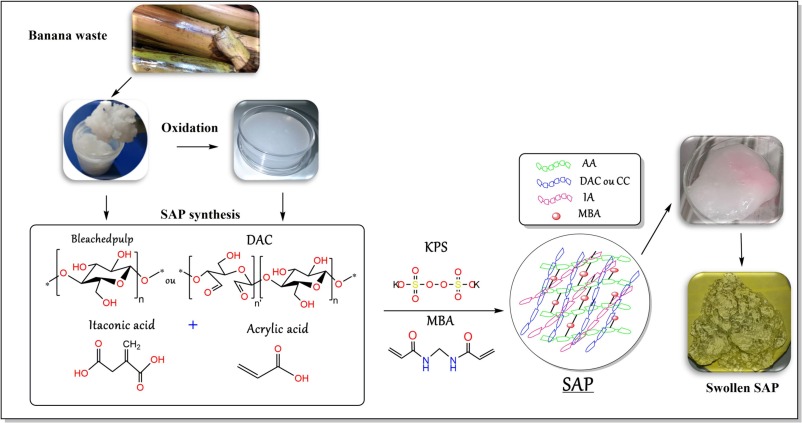
Key Highlights
- Eco-Friendly Raw Material: Banana pith, a common agricultural waste, serves as an inexpensive and sustainable source for creating superabsorbents.
- Innovative Chemical Modifications: Extraction of cellulose, grafting with hydrophilic monomers, and cross-linking techniques are central to enhancing water absorption.
- Diverse Applications: The resulting materials are applicable in agriculture, environmental remediation, and personal hygiene products.
Introduction
The increasing demand for water retention materials and a global emphasis on sustainable waste management have led to innovative research exploring non-conventional resources. Banana pith, typically considered an agricultural byproduct, has emerged as a promising raw material for the production of superabsorbent polymers (SAPs). SAPs are three-dimensional cross-linked networks with the intrinsic ability to absorb and retain fluids many times their own weight. Utilizing banana pith not only offers a cost-effective source of cellulose but also contributes to a reduction in environmental waste.
Materials and Methodology
Raw Material Preparation
Banana pith, abundant in cellulose and other polysaccharides, is an ideal candidate for synthesizing superabsorbents. The process begins with the careful collection of banana pith, ensuring that any contaminants are removed. The material is thoroughly washed and then dried to eliminate moisture. Following the drying process, the pith is ground into a fine powder. This distribution of particle sizes promotes uniform chemical treatment and efficient extraction of cellulose.
Extraction of Cellulose
The extraction of cellulose from banana pith is a crucial initial step. Traditionally, an alkali treatment using sodium hydroxide (NaOH) is employed. This step removes unwanted components, such as lignin and hemicelluloses, which can interfere with subsequent modifications. Cellulose extraction might involve:
- Submerging the ground pith material in an alkaline solution.
- Heating the mixture to promote chemical reactions.
- Filtering and washing the extracted cellulose to remove any residual chemicals.
The purified cellulose obtained from this process provides a robust backbone for further chemical modifications aimed at enhancing water absorption properties.
Chemical Modification and Grafting
One of the core enhancements to impart superabsorbency is chemical grafting. The purified cellulose from banana pith is often modified via graft copolymerization. Hydrophilic monomers, such as acrylic acid, acrylamide, or sodium acrylate, are typically selected. The grafting process involves:
- Initiation: A free radical initiator, like ammonium persulfate (APS), is mixed with the cellulose to generate reactive sites.
- Propagation: Hydrophilic monomers are introduced to the mixture where they covalently bond to the cellulose chain, effectively grafting onto the backbone.
- Cross-linking: In order to form the three-dimensional network characteristic of superabsorbents, cross-linking agents such as methylene bis-acrylamide (MBA) are incorporated. This step stabilizes the structure, enabling high swelling capacity even when the network is under mechanical stress.
Free radical polymerization is the most common method applied; however, other techniques like microwave-assisted grafting have also shown promise. These methods augment the hydrophilic nature of the polymer, increasing its ability to absorb water extensively.
Synthesis of Hydrogels
The formation of a hydrogel is essential in converting the modified cellulose into a superabsorbent material. Once the polymer grafting process concludes, the reaction mixture is typically cast into shape and allowed to set. The cross-linked structure swells upon immersion in water, transforming into a hydrogel with a remarkable capacity for water uptake. Additives like N,N-dimethylacrylamide (DMA) can further enhance the swelling kinetics, ensuring rapid absorption and high retention.
Characterization Techniques
Structural and Chemical Analysis
Fourier-transform Infrared Spectroscopy (FTIR)
FTIR spectroscopy is widely employed to verify the chemical structure of the modified cellulose. This technique identifies the characteristic peaks corresponding to chemical bonds such as C=O, O-H, and N-H. By comparing the spectra before and after chemical modification, researchers can confirm the successful grafting of acrylic monomers onto the cellulose.
Nuclear Magnetic Resonance (NMR) Spectroscopy
In some studies, NMR provides detailed insights into the molecular structure of superabsorbent polymers. It can confirm the chemical shifts and bonding patterns indicative of successful polymerization and cross-linking.
Morphological Analysis
Scanning Electron Microscopy (SEM)
SEM is utilized to observe the surface morphology and to measure the porosity of the hydrogel network. The images acquired from SEM can reveal the pore size distribution and the overall structural integrity of the superabsorbent material. A uniform porous network often correlates with high water absorption and retention capacity.
Thermal and Mechanical Stability
Thermogravimetric Analysis (TGA)
TGA provides essential data regarding the thermal stability of the synthesized material. This analysis involves measuring weight changes of the material under controlled temperature conditions. The temperature range at which significant weight loss occurs helps ascertain the material's stability for various practical applications.
Rheological Studies
Rheological measurements assess the viscoelastic properties of the hydrogels. Such studies are crucial for understanding how the material behaves under mechanical stress, including during swelling. A stable gel fraction after cross-linking, typically in the range of 85-95%, is a desirable attribute indicating durable performance even under repeated cycles of swelling and deswelling.
Swelling Behavior Analysis
Swelling Ratio Determination
The swelling ratio is a key performance metric for superabsorbents. It is defined as the weight of absorbed water relative to the dry weight of the polymer. Experiments are conducted by immersing the hydrogel in distilled water or saline solutions (such as NaCl) to evaluate its performance under different ionic strengths. The capacity to absorb water up to 1000 times its own weight represents the benchmark of high-performance superabsorbents.
Applications and Potential Uses
Agricultural Enhancement
One of the most discussed applications of banana pith-based superabsorbents is in agriculture. Enhanced water retention in soil can significantly reduce irrigation needs while facilitating better water use efficiency. The hydrogels maintain soil moisture levels during dry spells, potentially improving crop yield. Additionally, the slow release of water from the gel matrix helps reduce the stress on plants, especially in arid and semi-arid regions.
Environmental Remediation
Besides agricultural applications, superabsorbents derived from banana pith can play a significant role in environmental management. In wastewater treatment processes, the high absorption capability of these materials is used for the removal of heavy metals and organic pollutants. Their role in absorbent pads and filters is an emerging area of study, where controlled swelling properties can immobilize contaminants, thus reducing their spread in ecosystems.
Personal Hygiene Products
The remarkable absorbency of these biopolymers makes them suitable candidates for incorporation into diapers, sanitary napkins, and other personal hygiene products. Their potential antimicrobial properties, observed in some formulations, further enhance safety and comfort for end-users.
Comparative Overview Table
| Parameter | Description | Method/Technique |
|---|---|---|
| Raw Material Preparation | Cleaning, drying, and grinding of banana pith. | Mechanical processing |
| Cellulose Extraction | Alkali treatment to remove lignin and hemicellulose. | Sodium hydroxide treatment, filtration |
| Chemical Modification | Grafting of hydrophilic monomers on cellulose backbone. | Free radical polymerization, microwave-assisted techniques |
| Cross-linking | Incorporating agents to stabilize hydrogel network. | Methylene bis-acrylamide (MBA), initiators like APS |
| Structural Characterization | Verifying chemical bonding and grafting success. | FTIR, NMR spectroscopy |
| Morphological Analysis | Observation of pore structure and surface features. | SEM imaging |
| Thermal Stability | Assessment of degradation temperature and material robustness. | TGA |
| Swelling Behavior | Measurement of water absorption capacity. | Swelling ratio analysis in various mediums |
Recent Developments and Future Directions
Advancements in Synthesis Techniques
Continuous research in the field of superabsorbents has led to refinement of synthesis methodologies. Recent studies have explored the integration of green chemistry principles to further reduce the environmental footprint of synthesis. Innovations such as microwave-assisted reactions and the use of bio-based cross-linking agents increase efficiency and effectiveness while maintaining the eco-friendly nature of the process.
Scalability and Commercial Viability
One of the critical aspects influencing industrial adoption is the scalability of the process. While laboratory-scale experiments have successfully demonstrated the potential of banana pith-derived superabsorbents, translating these methods to commercial scale requires process optimization. Cost-effectiveness and consistent product quality remain pivotal in achieving market penetration. Modifications to reaction conditions, recycling of unreacted materials, and energy-efficient processing techniques are being actively investigated.
Multifunctional Applications
Beyond traditional applications, the multifunctional nature of these superabsorbents has garnered attention. Researchers are examining their potential in biomedical fields for controlled drug release, wound dressings, and tissue engineering scaffolds. Moreover, their antimicrobial properties open up avenues for the development of advanced materials that not only absorb fluids but also inhibit the proliferation of pathogens.
References
-
Preparation of Superabsorbent Composite(s) Based on Dialdehyde Cellulose - ScienceDirect
- Synthesis of Superabsorbent Hydrogel from Banana Peel - AIP Publishing
-
Adsorption Behavior of Banana-based Superabsorbents - ScienceDirect
-
Creating Superabsorbent Materials from Banana Fiber Waste - Natural Science News
- Synthesis and Characterization of Superabsorbent Natural Polymers - ResearchGate
Recommended Further Queries
Last updated March 19, 2025