
Understanding Functions in Mathematics
An in-depth exploration of functions and their roles in math
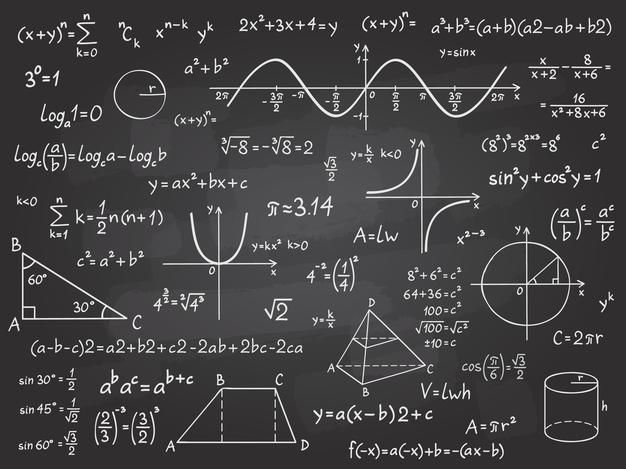
Highlights
- Functions as Fundamental Mappings: Every function establishes a unique correspondence between elements in a domain and those in a codomain.
- Domain, Codomain, and Range: Understanding these sets is essential to grasping how functions operate.
- Variety and Application: From algebraic functions to trigonometric functions, they model real-world phenomena and complex relationships.
Definition and Fundamental Concepts
In mathematics, a function is a formal description of a relation between two sets: one known as the domain (the set of inputs) and the other commonly referred to as the codomain (the set of potential outputs). Each element in the domain is associated with one and only one element in the codomain, ensuring that for every input value, there is one unique output. The set of outputs that are actually produced by the function is called the range.
This strict rule of a unique output is what distinguishes functions from general relations. For instance, in the function \( f(x) = x^2 \), every real number \( x \) is mapped to a non-negative number \( x^2 \). In essence, a function acts like a machine: you feed it an input, and it returns a definite output, never more than one.
Mathematical Notation
Functions are typically named using letters such as f, g, or h. The notation \( f(x) \) denotes the output of the function f when \( x \) is the input. The notation also implicitly defines the domain and codomain. For example, if we state \( f: \mathbb{R} \rightarrow \mathbb{R} \) with \( f(x) = x^2 \), it means the function takes all real numbers and produces real numbers, though the actual outputs (the range) are limited to non-negative reals.
Domain, Codomain, and Range
A clear understanding of the domain, codomain, and range is vital for analyzing functions:
Domain
The domain of a function is the complete set of possible values of the independent variable. Typically, restrictions on what constitutes a valid input could come from the practical limitations of the problem or inherent restrictions in the function's formula (like division by zero or taking the square root of a negative number in the set of real numbers).
Codomain and Range
The codomain is the set that contains the potential outputs of the function. However, not all elements in a codomain need to be realized as outputs. The subset of the codomain that is actually produced by the function is called the range.
For example, in the function \( f(x)=x^2 \) defined on \( \mathbb{R} \), the codomain might be taken as \( \mathbb{R} \), but the range is only the non-negative real numbers because squaring any real number cannot produce a negative result.
Types of Functions and Their Representations
Functions can be classified into several types, each with its own properties and uses. This classification framework provides insight into the variety and application of functions in both theoretical and applied mathematics.
Algebraic Functions
Algebraic functions are typically expressed through algebraic operations—addition, subtraction, multiplication, division, and raising to a power. They include:
Linear Functions
A linear function takes the form \( f(x) = ax + b \) where \( a \) and \( b \) are constants. The graph of a linear function is a straight line, characterized by its slope \( a \) and intercept \( b \).
Quadratic and Polynomial Functions
Quadratic functions are polynomial functions of degree two and take the form \( f(x)=ax^2+bx+c \), while higher-degree polynomial functions involve terms raised to powers beyond two. These functions can have complex behaviors with turning points and varying curvature.
Transcendental Functions
Transcendental functions extend beyond algebraic operations and include:
Exponential Functions
Exponential functions are of the form \( f(x)=a^x \) where \( a \) is a positive constant. They exhibit rapid growth or decay depending on the base \( a \).
Logarithmic Functions
The inverse of exponential functions, logarithmic functions, involve a constant base and are expressed as \( f(x)=\log_a (x) \). They increase at a decreasing rate and are useful in problems involving scales, such as decibels in acoustics.
Trigonometric Functions
These functions, including sine, cosine, and tangent, are fundamental to the study of periodic phenomena. Their graphs exhibit cyclic behavior, making them indispensable in fields such as physics and engineering.
Other Categories
In addition to the major classifications above, functions can also be detailed by:
- Rational Functions: Functions that are the quotient of two polynomials. For example, \( f(x)=\frac{x-1}{x+2} \).
- Piecewise Functions: These functions are defined by different expressions on different intervals of the domain. They are particularly useful when a situation exhibits different behaviors under different conditions.
- Inverse Functions: Given a function \( f \), an inverse function \( f^{-1} \) reverses its mapping so that \( f(f^{-1}(y)) = y \) for every \( y \) in the range.
Graphical Representation of Functions
One of the most compelling ways to understand functions is by visualizing them through graphs. When a function is plotted on a coordinate system, the x-axis typically represents the domain and the y-axis represents the range. Each point \((x, f(x))\) corresponds to an input and its output.
Graphs can reveal key features of functions, such as intercepts, maxima, minima, and asymptotic behavior. This visual approach helps in analyzing trends, understanding the behavior of functions under various transformations, and solving problems graphically.
Constructing a Graph
To graph a function:
- Identify the domain and key intercepts.
- Determine any asymptotes or boundaries based on the function's form.
- Plot several points by substituting different values of \( x \) into the function.
- Connect the points smoothly, keeping in mind the function’s continuity and behavior at the boundaries.
Operations on Functions
Functions can be manipulated through various operations to create new functions or to simplify complex relationships. Some basic operations on functions include:
Addition and Subtraction
For two functions \( f(x) \) and \( g(x) \), you can form a new function by adding or subtracting them:
\( (f+g)(x)=f(x)+g(x) \) and \( (f-g)(x)=f(x)-g(x) \).
Multiplication and Division
Functions may also be multiplied or divided. If you have two functions, the product \( (f \cdot g)(x)=f(x) \cdot g(x) \) and, provided \( g(x) \neq 0 \), the quotient can be written as \( \left(\frac{f}{g}\right)(x)=\frac{f(x)}{g(x)} \).
Composition of Functions
One of the most interesting operations is the composition of functions. Given functions \( f \) and \( g \), their composition is expressed as:
\( (f \circ g)(x)=f(g(x)) \). This operation means that you first apply \( g \) to \( x \) and then apply \( f \) to the result.
Comprehensive Table of Key Function Types
| Type of Function | General Form | Key Characteristics |
|---|---|---|
| Linear Function | \( f(x)=ax+b \) | Graph is a straight line; constant rate of change. |
| Quadratic Function | \( f(x)=ax^2+bx+c \) | Parabolic graph; has a vertex and symmetry axis. |
| Exponential Function | \( f(x)=a^x \) | Rapid growth or decay depending on \( a \); continuous curve. |
| Logarithmic Function | \( f(x)=\log_a (x) \) | Inverse of exponential functions; increases slowly. |
| Trigonometric Function | \( f(x)=\sin(x),\ \cos(x),\ \tan(x) \) | Cyclical behavior; periodic with fixed periods. |
| Rational Function | \( f(x)=\frac{P(x)}{Q(x)} \) | May have asymptotes and discontinuities; quotient of polynomials. |
| Piecewise Function | Defined by separate cases | Different expressions over different intervals. |
Applications and Importance of Functions
Functions are foundational not only in pure mathematics but also in applied disciplines. They are critical tools in:
- Physics: Modeling laws of motion, electromagnetism, and thermodynamics often requires the use of functions to relate physical quantities.
- Engineering: Engineers utilize functions in designing circuits, analyzing materials, and understanding system dynamics.
- Economics: Functions model supply and demand, cost and revenue analysis, and can forecast economic trends.
- Computer Science: Functions underpin algorithms, data transformations, and functional programming paradigms.
- Biology: In population dynamics, enzyme kinetics, and genetics, functions help model growth and evolutionary trends.
Moreover, in advanced studies, functions serve as the building blocks for subjects like calculus, differential equations, and linear algebra, facilitating the understanding of change, systems behavior, and optimization.
Real-World Examples
Consider a scenario in economics: a function \( C(q) \) might represent the cost associated with producing \( q \) units of a product. Here, \( q \) is the input or the independent variable, and \( C(q) \) is the output or the dependent variable. Similarly, in physics, the position of an object over time can be represented by a function \( s(t) \), where \( t \) represents time and \( s(t) \) the object's location.
In many cases, these functions not only describe relationships but also allow for predictions and optimization, such as minimizing cost or maximizing profit in an economic model.
Advanced Considerations
In higher mathematics, the concept of functions is extended and refined. Topics such as continuous versus discrete functions, one-to-one (injective), onto (surjective), and bijective functions are explored extensively. These ideas are crucial in understanding the structure of mathematical systems and building the basis for more abstract concepts like transformations and mappings in linear algebra.
For instance, an injective function ensures that distinct inputs yield distinct outputs, while a surjective function covers the entire codomain. A function that is both injective and surjective is called bijective and has a well-defined inverse, denoted as \( f^{-1} \). These properties support rigorous proof techniques and the establishment of equivalence between different mathematical structures.
Functional Equations and Composition
In numerous applications, solving functional equations—equations where the unknowns are functions—requires intricate understanding of composition, inversion, and transformation. For example, the composition \( (f \circ g)(x) = f(g(x)) \) not only combines two functions but can also simplify complex relationships into more manageable forms.
Summary Table of Function Properties
| Property/Operation | Description | Mathematical Notation/Example |
|---|---|---|
| Uniqueness | Each input has exactly one output. | \( f(x) \) produces a single value for every \( x \). |
| Domain | Set of all possible inputs. | \( \{ x \in \mathbb{R} \} \) for many functions. |
| Range | Subset of outputs that the function actually produces. | \( \{ f(x) \mid x \in \text{domain} \} \) |
| Composition | Combining two functions where the output of one becomes the input of another. | \( (f \circ g)(x)=f(g(x)) \) |
| Inverse | Function that reverses the mapping of the original function. | \( f^{-1}(y) \) such that \( f(f^{-1}(y))=y \) |
References
- Function (mathematics) - Wikipedia
- What is a Function? - Math is Fun
- Function | Definition, Types, Examples, & Facts - Britannica
- What is a Function? - GeeksforGeeks
- What is a Function? - BYJU'S
Recommended Further Queries
Last updated March 13, 2025