
Revolutionizing State Finances: The Transformative Power of Generative AI in Financial Reporting
Unlock unprecedented efficiency, accuracy, and strategic insight in government fiscal management.
Key Insights into Generative AI's Impact
- Automation of Routine Tasks: Generative AI significantly reduces manual workload by automating the drafting of financial statements, reports, and disclosures, enabling staff to focus on strategic initiatives.
- Enhanced Accuracy and Fraud Detection: AI's ability to analyze vast datasets identifies anomalies and discrepancies in real-time, improving data integrity, compliance, and proactive risk management against fraud.
- Real-Time Insights and Predictive Analytics: Generative AI processes financial data continuously, providing immediate insights and robust forecasting capabilities for better fiscal planning and responsive decision-making.
Generative AI (GenAI) is fundamentally reshaping financial reporting for state agencies by introducing unprecedented levels of automation, precision, and analytical depth. This advanced technology, adept at generating new content and interpreting complex datasets, offers profound benefits in streamlining financial operations and fostering more insightful decision-making within public finance. From automating mundane tasks to providing sophisticated predictive analytics and enhancing regulatory compliance, GenAI is poised to redefine how state governments manage and report their fiscal health, leading to more efficient, transparent, and accountable public services.
Automating Financial Reporting Processes
One of the most immediate and impactful transformations brought by Generative AI is the automation of routine, time-consuming financial reporting tasks. State agencies often grapple with voluminous financial data, from budgets and expenditures to audits, making manual processes prone to errors and delays. GenAI can significantly alleviate this burden by automating various aspects of report generation.
Streamlining Report Generation and Documentation
Drafting Financial Statements and Disclosures
Generative AI can analyze large volumes of historical and current financial data to automatically draft comprehensive financial statements, disclosures, and memos. This capability ensures consistent formatting and rapid production, freeing finance professionals from the arduous task of manual document creation. The reduction in manual effort not only saves time but also minimizes human error, ensuring greater accuracy and compliance with evolving regulatory standards.
For instance, an AI system can process transaction records, ledger entries, and budgetary allocations to produce a first draft of a quarterly financial report, complete with explanations of significant variances. This automation extends to generating productivity templates and full drafts for recurring reports, standardizing output and significantly reducing preparation time.
Automated FOIA Responses
Beyond internal reports, AI tools can quickly sort, search, and retrieve specific documents required for Freedom of Information Act (FOIA) requests. This capability significantly improves compliance rates and reduces the administrative burden on staff who would otherwise spend considerable time manually sifting through records.

Generative AI facilitates seamless workflows in government agencies, as depicted by the digital illustration.
Enhancing Accuracy and Proactive Risk Management
Generative AI's analytical prowess extends far beyond basic automation, offering sophisticated capabilities that significantly enhance data accuracy and facilitate proactive fraud detection and risk management within state financial operations.
Improved Data Quality and Error Reduction
Systematic Data Analysis
AI systems can analyze vast datasets more systematically and consistently than human analysts. This reduces errors caused by manual data entry, oversight, or inconsistencies across different data sources. By identifying anomalies or discrepancies early in the reporting process, GenAI ensures higher data integrity and compliance. For example, AI can scrutinize transaction data for patterns that deviate from normal behavior, flagging potential errors or suspicious entries before they impact final reports.
Fraud Detection and Anomaly Spotting
One of the most impactful applications of GenAI in financial reporting is its ability to detect fraud. By continuously monitoring transactions and analyzing patterns in financial data, AI can identify irregularities or potential fraudulent activities that might otherwise go unnoticed. This proactive approach supports more effective risk management and enhances financial oversight. Agencies can leverage AI-generated insights for ongoing transaction monitoring, helping to ensure the integrity of public funds.
Advanced Risk Identification and Compliance Oversight
Proactive Risk Assessment
Generative AI can analyze various budget scenarios and predict economic trends, enabling more informed fiscal planning and proactive risk identification. It can generate prompts that consider multiple scenarios, helping agencies make robust financial decisions. This extends to automating assessments of regulatory compliance by comparing financial data against applicable laws, rules, and policies. AI can flag potential risks such as budget overruns or control weaknesses, significantly enhancing transparency and oversight.
The following radar chart illustrates the perceived capabilities of Generative AI across various aspects of financial reporting for state agencies. The metrics are indicative of GenAI's potential impact, with higher values suggesting greater transformative potential in that area.
Advancing Data Analysis and Decision-Making
Generative AI transforms financial reporting from a historical recounting of figures into a dynamic, forward-looking process. Its capabilities in advanced data analysis and forecasting provide state agencies with deeper insights for more strategic decision-making.
Real-Time Financial Insights and Reporting
Continuous Data Processing
Unlike traditional periodic reporting, generative AI enables near real-time generation of financial analyses and reports by continuously processing incoming financial data. This allows state agencies to respond more swiftly to financial risks or opportunities, ensuring timely insights that inform immediate fiscal management. For instance, continuous monitoring can alert officials to cash flow issues or budget overruns as they develop, rather than after the fact.
Advanced Predictive Analytics and Scenario Modeling
GenAI excels at analyzing patterns in fiscal data and employing predictive algorithms to forecast future budget trends, revenue collections, and expenditure needs. These models are invaluable for accurate budgeting and planning under various economic conditions or policy changes. The ability to simulate different scenarios provides a robust framework for fiscal management, helping agencies to anticipate challenges and optimize resource allocation.
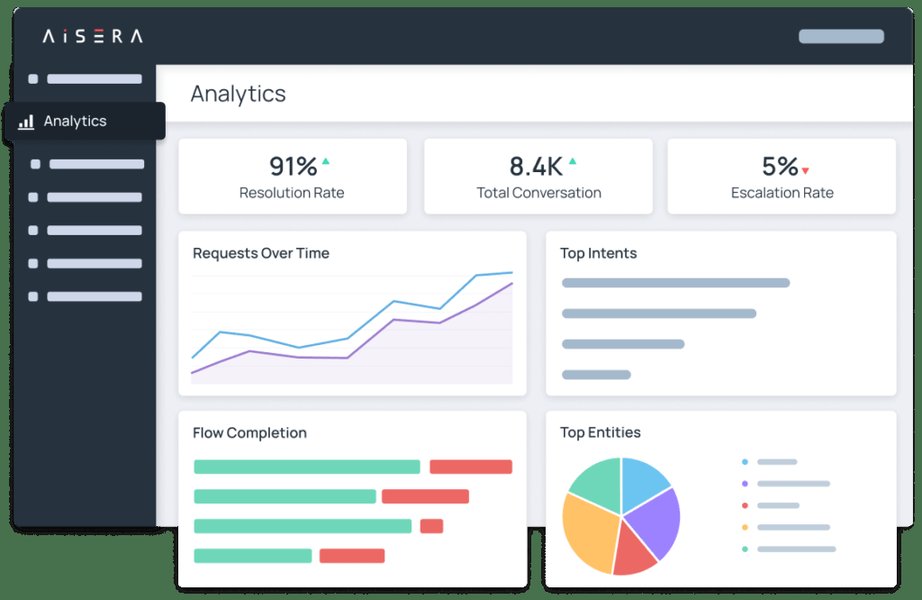
An AI-powered dashboard offering comprehensive analytics for data-driven decisions.
To further illustrate the multifaceted benefits of Generative AI in transforming financial reporting for state agencies, consider the following mindmap:
Optimizing Resources and Enhancing Productivity
The integration of Generative AI allows state agencies to reallocate human capital from repetitive tasks to higher-value activities, leading to significant gains in productivity and overall resource optimization.
Boosting Staff Productivity
Focus on Strategic Initiatives
By automating routine reporting and documentation, GenAI enables finance staff to shift their focus towards strategic planning, complex problem-solving, and initiatives that drive greater public value. This transformation empowers employees to engage in more analytical and impactful work, fostering a more skilled and engaged workforce.
Cost Reduction and Efficiency Gains
Reduced Operational Costs
The reduction in manual hours needed to compile, analyze, and produce financial reports translates directly into significant cost savings related to labor-intensive financial processes. This efficiency can be redirected towards improving financial policy development, enhancing public service delivery, or addressing other critical needs.
Key Distinctions: Traditional vs. AI-Driven Financial Reporting
To fully grasp the transformative potential of Generative AI, it's essential to compare traditional financial reporting methods with those enhanced by AI. The table below highlights the fundamental shifts across key operational areas:
| Feature | Traditional Approach | With Generative AI |
|---|---|---|
| Report Generation | Manual drafting, time-consuming, prone to human error | Automated, template-driven, rapid, high accuracy |
| Data Analysis | Basic, historical, reactive, often delayed insights | Advanced, real-time, predictive, insightful, proactive |
| Fraud Detection | Limited, often post-hoc, reliant on manual review | Proactive, pattern-based, continuous monitoring, real-time alerts |
| Compliance Management | Reactive, manual checks, susceptible to oversight | Proactive, automated regulatory updates, continuous assessment |
| Resource Allocation | Manual simulations, less comprehensive scenario testing | AI-driven scenario modeling, optimized planning, deep insights |
| Stakeholder Reporting | Complex, often technical, less accessible | Simplified, user-friendly, customizable narratives, interactive (e.g., chatbots) |
This table underscores how GenAI moves financial reporting from a retrospective, labor-intensive function to a forward-looking, automated, and highly analytical one, fundamentally altering the landscape for state agencies.
Challenges and Governance Considerations
While Generative AI offers immense benefits, its implementation in state agencies also introduces significant challenges and governance requirements that must be carefully addressed to ensure responsible and ethical deployment.
Navigating Regulatory Complexity and Risks
Data Hallucinations and Bias
One of the primary concerns with Generative AI is the potential for "hallucinations" — instances where the AI generates plausible but incorrect or fabricated information. For financial reporting, this risk is critical as inaccuracies can have severe consequences. Agencies must rigorously test and monitor AI models for biases and errors to ensure fair and accurate reporting suitable for public trust. This necessitates robust validation processes and human oversight at critical junctures.
Reliance on Third-Party Providers
Many GenAI solutions rely on third-party providers, which introduces concerns about data security, vendor lock-in, and intellectual property safeguarding. State agencies must establish clear contractual agreements and data governance frameworks to mitigate these risks, especially given the sensitive nature of financial data.
Resource Needs and Policy Compliance
Specialized Expertise and Data Management
Effective utilization of Generative AI demands specialized expertise in AI model development, data science, and IT infrastructure. Agencies need to invest in training existing staff or hiring new talent capable of managing and optimizing AI systems. Furthermore, extensive data management capabilities are crucial for ensuring the quality, accessibility, and security of the vast datasets required to train and operate GenAI models.
Compliance with AI Policies and Transparency
Several states, including Maryland, New York, California, South Carolina, and Tennessee, are actively developing or have implemented policies and strategies to guide AI adoption within government. These policies often mandate inventories of high-risk AI systems, impact assessments, and disclosures about AI use. State agencies must comply with these evolving state and federal regulations, prioritizing transparency about how AI-generated reports are created and ensuring human oversight remains paramount.
This video discusses critical strategies for mitigating AI risks within state government operations, a crucial aspect for responsible AI adoption in financial reporting.
Frequently Asked Questions (FAQ)
What is Generative AI in the context of financial reporting?
How does Generative AI improve accuracy in financial reporting?
Can Generative AI detect fraud in state agency financial reports?
What challenges do state agencies face when adopting Generative AI for financial reporting?
Will Generative AI replace human finance professionals in state agencies?
Conclusion
Generative AI holds immense potential to revolutionize financial reporting for state agencies, moving beyond mere automation to deliver a future of enhanced accuracy, real-time insights, and strategic foresight. By automating labor-intensive processes, improving data integrity, and enabling advanced analytics, GenAI empowers government finance teams to produce more accurate, timely, and actionable financial information. While challenges related to governance, data quality, and ethical considerations require careful navigation, the transformative benefits of GenAI ultimately lead to more efficient public resource management, strengthened accountability, and greater transparency for stakeholders. As state governments progressively integrate these intelligent systems, financial reporting will evolve into a dynamic function, driving better fiscal outcomes and more resilient public services.
Recommended Further Exploration
- How is AI enhancing public sector financial accountability?
- What are the ethical considerations for AI in government finance?
- Case studies of AI implementation in state budgeting and financial planning
- Future trends in generative AI for government services