
Unearthing the Truth: Are There Hidden Cities Beneath the Giza Pyramids?
Exploring the sensational claims of vast underground structures and the strong scientific skepticism they face.
The ancient pyramids of Giza stand as enduring monuments to human ingenuity, but recent claims of vast, hidden structures extending deep beneath them have ignited a fiery debate. Are these claims of underground cities and complex networks a groundbreaking discovery or an elaborate exaggeration? Let's delve into the evidence, the expert opinions, and the verified findings.
Highlights: Key Insights into the Controversy
- The Sensational Claim: A research group, the "Khafre Project," asserts the discovery of a massive underground complex beneath Giza, featuring deep shafts and large chambers, detected using Synthetic Aperture Radar (SAR).
- Widespread Skepticism: Prominent Egyptologists, archaeologists, and radar specialists largely dismiss these claims, citing lack of scientific basis, technological limitations, absence of peer review, and geological implausibility.
- Real Discoveries vs. Contested Claims: It's crucial to distinguish these disputed findings from genuine, verified discoveries of smaller voids, corridors, and known subterranean features within and around the Giza complex, which do *not* support the "underground city" narrative.
The Claims: An Underground World Beneath Khafre's Pyramid?
In early 2025, reports surfaced regarding purported discoveries made by the Khafre Project, involving researchers like Professor Corrado Malanga and Filippo Biondi. Utilizing Synthetic Aperture Radar (SAR) tomography, they claimed to have detected an extensive network of structures beneath the Giza plateau, particularly centered around the Pyramid of Khafre.
Specifics of the Alleged Findings:
- A vast complex potentially stretching up to two kilometers beneath the surface, linking areas under all three main pyramids.
- Eight enormous, vertical, cylinder-shaped shafts, allegedly plunging around 648 meters (approx. 2,100 feet) deep, possibly featuring spiral structures.
- Massive cube-shaped chambers, supposedly measuring 80 meters per side.
- Interconnected tunnels and potentially even an underground water system.
- Some accounts linked these claims to the mythical "Hall of Records," an idea lacking archaeological basis.
The researchers suggested these deep structures might serve as foundational support for the immense weight of the pyramids above.
Scrutiny from the Experts: Science vs. Speculation
Despite the intriguing nature of these claims, the overwhelming response from the mainstream scientific and archaeological community has been one of strong skepticism and outright refutation.
Voices of Skepticism
Leading figures in Egyptology have publicly challenged the validity of the Khafre Project's findings:
- Dr. Zahi Hawass: A renowned Egyptologist and former Egyptian Minister of Antiquities, Dr. Hawass has unequivocally dismissed the claims as "fake news," emphasizing their lack of scientific foundation and stating they were made without official permission or credible backing.
- Professor Lawrence Conyers: An expert in geophysical survey methods, including ground-penetrating radar, from the University of Denver, questioned the technical feasibility. He stated that the SAR technology cited is unlikely capable of penetrating the ground to the extreme depths claimed (kilometers) and described the interpretation of a vast "underground city" as a "huge exaggeration," though acknowledging the possibility of smaller, shallower, undiscovered features predating or contemporary with the pyramids.
Technological Limitations and Methodological Concerns
Beyond individual expert opinions, several fundamental issues undermine the credibility of the underground city claims:
- Radar Penetration Depth: Experts doubt that SAR, especially used from the surface or air, can achieve the necessary resolution and penetration depth (kilometers through potentially dense rock and varied strata) to accurately map structures as described.
- Lack of Peer Review: The findings have not been published in reputable, peer-reviewed scientific journals, a crucial step for validating scientific discoveries.
- Data Interpretation: Radar signals can be complex and prone to misinterpretation. Anomalies detected might be natural geological features, groundwater variations, or artifacts of the imaging process rather than artificial structures.
- Illustrative Imagery: Fact-checking organizations like Snopes noted that some images circulating online purporting to show these underground structures were actually AI-generated illustrations, not direct outputs of the radar scans.
- Geological Context: The Giza pyramids are built on a solid limestone bedrock plateau. Excavating such vast, deep structures as claimed would have been an immense undertaking, arguably surpassing the construction of the pyramids themselves, and seemingly impractical given the known geology.
- Association with Fringe Theories: Such claims sometimes fuel non-academic theories about the pyramids having alternative functions (e.g., energy devices), further distancing them from mainstream archaeological understanding.
Distinguishing Fact from Fiction: Real Discoveries at Giza
It is vital to differentiate the highly contested claims of the Khafre Project from legitimate archaeological discoveries made at Giza using scientific methods. The plateau continues to yield secrets, but these findings are typically smaller in scale and subject to rigorous verification.
Verified Findings Within and Around the Pyramids
- The ScanPyramids Project: Using non-invasive techniques like muon tomography, infrared thermography, and 3D simulation, this international project has made significant discoveries:
- A large void (the "Big Void" or "ScanPyramids Big Void") measuring about 30 meters (98 feet) long was detected within the Great Pyramid (Khufu) in 2017. Its purpose remains unknown.
- A previously unknown corridor, approximately 9 meters (30 feet) long and 2 meters (6.5 feet) wide, was confirmed above the original main entrance of the Great Pyramid in 2023.
- Western Cemetery Anomaly: In 2024, researchers using Ground Penetrating Radar (GPR) and Electrical Resistivity Tomography (ERT) identified an L-shaped anomaly beneath the surface in an empty area of the Western Cemetery at Giza, potentially indicating a filled-in shaft leading to a tomb structure. This requires further excavation for confirmation.
- Known Subterranean Features: Archaeologists have long known about underground chambers and shafts associated with mastaba tombs (burial structures for officials and nobles) surrounding the pyramids. Tunnels and chambers also exist beneath structures like the Step Pyramid at Saqqara.
These confirmed discoveries, while fascinating, are localized and do not provide evidence for the existence of a vast, interconnected city deep beneath the Giza plateau as claimed by the Khafre Project.
The Myth of the Hall of Records
The idea of a hidden "Hall of Records" beneath the Sphinx or pyramids, supposedly containing ancient knowledge, is often mentioned in speculative contexts. However, this concept primarily originates from the psychic readings of Edgar Cayce in the 20th century, not from archaeological evidence. Mainstream Egyptology considers it a myth.
Visualizing the Controversy: Expert Confidence Levels
The following chart illustrates a hypothetical assessment of the confidence levels surrounding the claims and related factors, contrasting the perspective likely held by proponents of the recent claims versus the general consensus within mainstream archaeology and Egyptology. The scale ranges from 1 (Very Low Confidence/Disbelief) to 10 (Very High Confidence/Acceptance).
This visualization underscores the significant divergence between the proponents' apparent certainty and the profound skepticism held by the established scientific community regarding the claims of vast underground structures.
Mapping the Giza Underground: Known vs. Claimed
To better understand the different types of subterranean features discussed in relation to the Giza plateau, this mindmap categorizes known or verified elements separately from the highly contested claims made by the Khafre Project.
This map highlights the difference between accepted archaeological knowledge and recent, unverified assertions about the Giza subsurface.
Glimpses Inside and Beneath: Verified Discoveries at Giza
While claims of vast cities remain unsubstantiated, genuine archaeological work continues to reveal more about the Giza complex. The images below showcase some of these real discoveries and the methods used, contrasting sharply with the speculative nature of the "underground city" claims. These findings are the result of careful scientific investigation, often using non-invasive technologies or meticulous excavation.
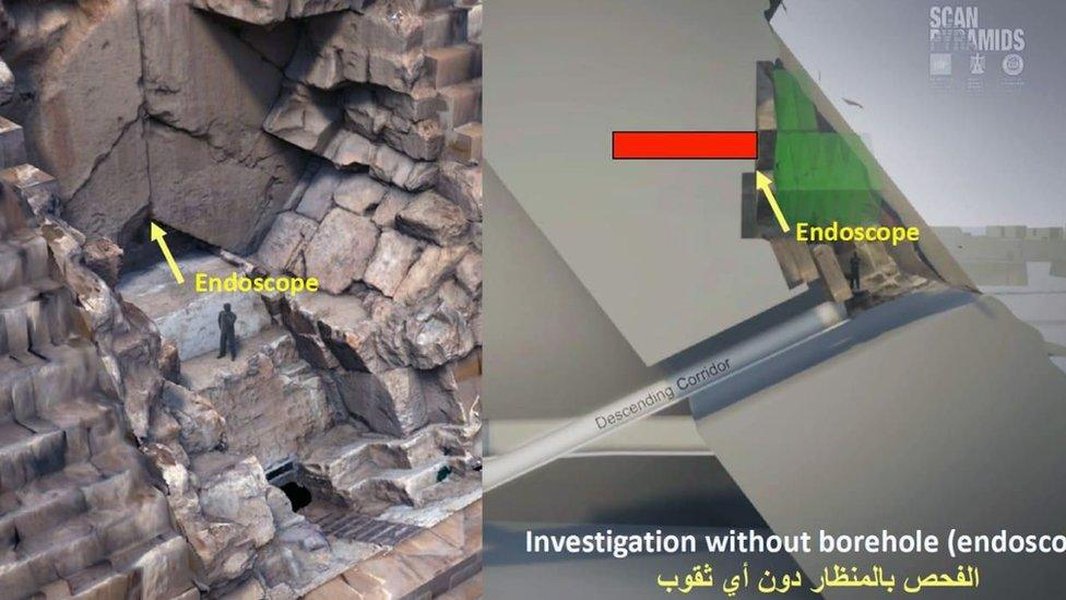
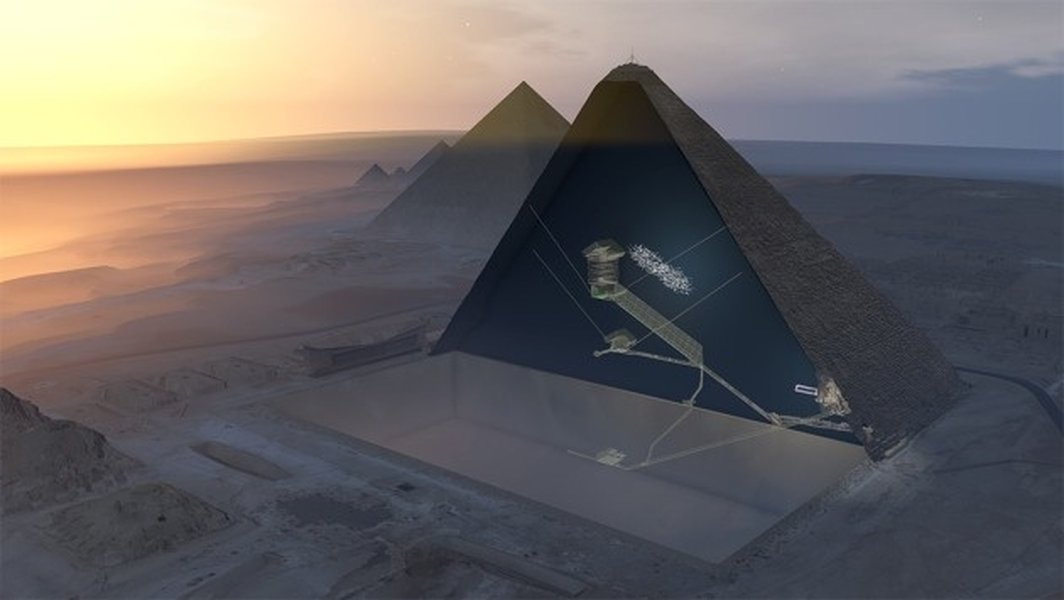
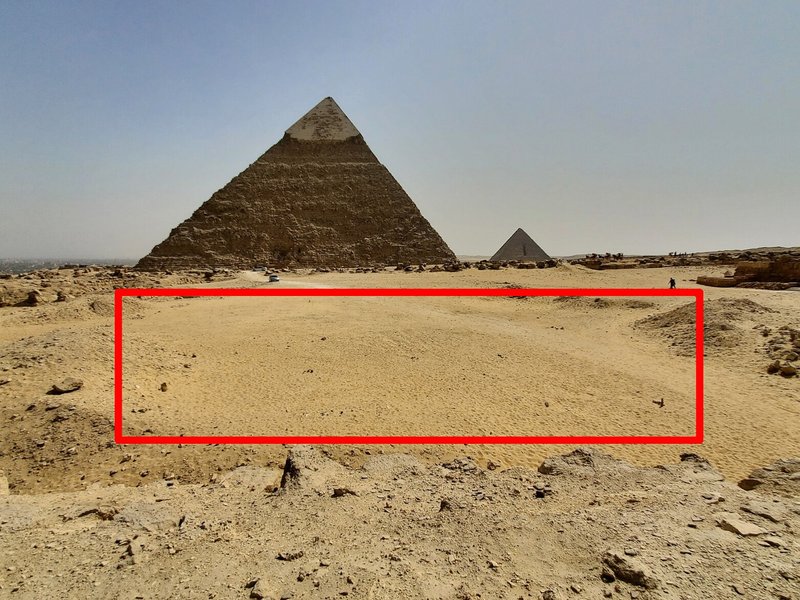
These examples represent the methodical progress of archaeological science at Giza, focused on verifiable evidence rather than sensational, unsupported claims.
Comparing Subterranean Features: Known vs. Claimed
This table provides a comparative overview of verified or strongly indicated subterranean features at Giza versus the key elements of the disputed Khafre Project claims, highlighting differences in scale, evidence, and scientific acceptance.
| Feature | Location | Description | Depth / Size (Approx.) | Evidence Basis | Scientific Consensus |
|---|---|---|---|---|---|
| Mastaba Shafts/Chambers | Giza Necropolis (around pyramids) | Vertical shafts leading to burial chambers beneath tombs | Variable, typically tens of meters deep | Excavation, Historical Record | Accepted Fact |
| Great Pyramid "Big Void" | Within Great Pyramid (Khufu) | Large, inaccessible empty space | ~30m long, above Grand Gallery | Muon Tomography (ScanPyramids) | Accepted Discovery (Purpose Unknown) |
| Great Pyramid Corridor | Within Great Pyramid (Khufu) | Sealed corridor | ~9m long, above main entrance | Muon Tomography, Endoscopy (ScanPyramids) | Accepted Discovery |
| Western Cemetery Anomaly | Giza Western Cemetery | L-shaped subsurface structure, possibly filled shaft/tomb | Shallow depth (~2m below surface), structure ~10m x 10m | GPR / ERT Survey | Potential Feature (Requires Excavation) |
| Khafre Project Shafts | Beneath Khafre Pyramid (?) | Claimed 8 deep vertical cylinders | Claimed ~648m / 2km deep | SAR Tomography (Khafre Project) | Widely Disputed / Unverified / Skepticism |
| Khafre Project Chambers | Beneath Giza Plateau (?) | Claimed massive cubic chambers, other structures | Claimed 80m x 80m x 80m cubes, various others | SAR Tomography (Khafre Project) | Widely Disputed / Unverified / Skepticism |
| Khafre Project "Underground City" | Beneath Giza Plateau (?) | Claimed vast interconnected network | Claimed up to 2km deep extent | SAR Tomography (Khafre Project Interpretation) | Widely Disputed / Regarded as Exaggeration/Hoax |
The table clearly contrasts the scale and evidential basis of accepted findings with the extraordinary and scientifically unsupported nature of the Khafre Project's assertions.
Expert Perspectives: Analyzing the Claims
The controversy surrounding the alleged structures beneath the Khafre pyramid has prompted detailed analysis from experts questioning the methodology and conclusions. The following video delves into the specifics of the SAR scan claims and the reasons for the widespread skepticism within the scientific community.
This analysis provides context on the technical limitations of the methods supposedly used and highlights the discrepancies between the claims made and the established understanding of the Giza plateau's archaeology and geology. It reinforces the position held by figures like Dr. Zahi Hawass and Professor Lawrence Conyers, emphasizing the need for rigorous, peer-reviewed evidence before such extraordinary claims can be considered credible.
Frequently Asked Questions (FAQ)
What exactly did the Khafre Project claim to find?
The Khafre Project, led by researchers including Corrado Malanga and Filippo Biondi, claimed to have used Synthetic Aperture Radar (SAR) tomography to detect a vast underground complex beneath the Giza pyramids, particularly under Khafre. This allegedly included eight deep cylindrical shafts (around 648m deep), massive cubic chambers (80m sides), spiral structures, and an interconnected network extending up to 2km deep, sometimes sensationalized as an "underground city".
Why are experts like Dr. Zahi Hawass so skeptical?
Dr. Hawass and other mainstream experts are skeptical primarily due to a lack of credible scientific evidence. They point out that the claims haven't been peer-reviewed, the methodology (SAR penetration to such depths) is questionable, the interpretations seem exaggerated, and the work was allegedly done without proper authorization. Dr. Hawass has labeled the claims "fake news" lacking scientific basis.
Can radar technology actually see structures that deep underground?
While ground-penetrating radar (GPR) and other geophysical methods can detect subsurface features, achieving clear resolution of complex structures at depths of kilometers, as claimed by the Khafre Project using SAR, is highly contested. Radar experts like Prof. Lawrence Conyers state that such depth penetration is unlikely with current technology, especially through the geological layers of the Giza plateau. Signal attenuation and scattering significantly limit depth and resolution.
So, are there *any* real underground structures at Giza?
Yes, absolutely. Archaeologists know of and continue to discover various legitimate underground features. These include burial shafts and chambers connected to mastaba tombs, tunnels, the recently confirmed void and corridor within the Great Pyramid discovered by ScanPyramids, and potential tomb structures identified by geophysical surveys in areas like the Western Cemetery. However, these verified or strongly indicated features are distinct from, and do not support, the claims of a massive, deep "underground city".
What is the "Hall of Records" mentioned in some reports?
The "Hall of Records" is a hypothetical repository of ancient knowledge, often mythologized as being located beneath the Sphinx or pyramids. This idea gained popularity through the psychic Edgar Cayce in the early 20th century. There is no archaeological or historical evidence for its existence, and it is considered a myth by mainstream Egyptologists.
References
- Giza Pyramid Mystery Addressed by Egyptian Official Amid Conspiracy - Newsweek
- Have Vast Underground Structures Been Discovered Beneath the Pyramids of Giza? - Snopes.com
- Ancient Mystery or Modern Hoax? Experts Debunk Giza Pyramid Underground City Claim - Decrypt
- Giant Structures Found Beneath the Pyramids of Giza? Examining the Evidence - Greek Reporter
- Going underground? Experts clash over claims of hidden city beneath Egypt pyramids - Euronews
- Hidden corridor discovered in Great Pyramid of Giza | CNN
- Scientists Are Investigating a Puzzling Underground 'Anomaly' Near Giza’s Great Pyramid - Smithsonian Magazine
Recommended
Last updated April 5, 2025