
Beyond the Tombs: Unveiling the Secrets Beneath Egypt's Ancient Pyramids
Recent claims of vast underground cities clash with established archaeology. What truly lies hidden beneath the Giza plateau?
Highlights: What Lies Beneath?
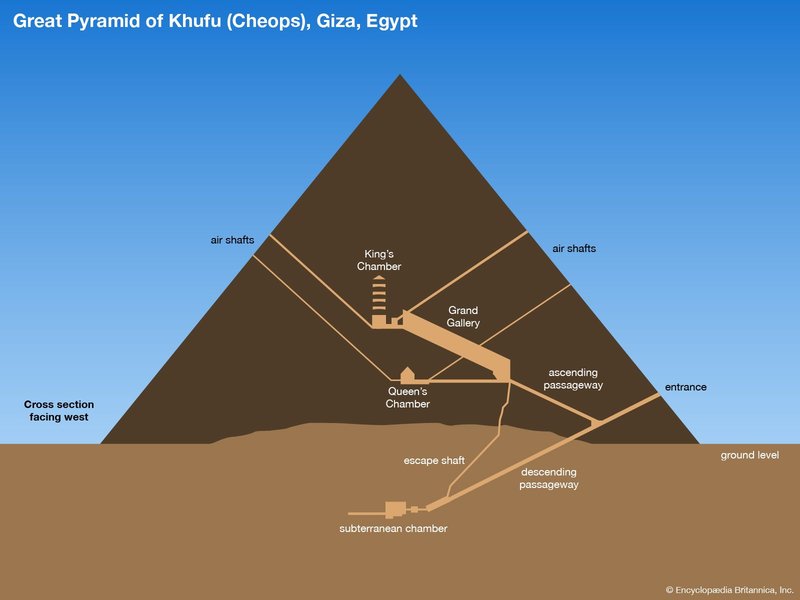
- Established Substructures: The major Giza pyramids contain known underground elements like burial chambers (King's, Queen's, Subterranean), passageways, and shafts carved into the bedrock, primarily for funerary and ritual purposes.
- Controversial New Claims: An Italian research team recently claimed the discovery of a vast underground complex beneath Giza using radar, purportedly including massive shafts (over 2,000 ft deep), huge chambers, and potential tunnels linking the pyramids, sometimes referred to as an "underground city."
- Significant Skepticism: These sensational claims face strong criticism from mainstream Egyptologists and radar experts, who cite a lack of credible evidence, potential misinterpretation of data or natural features, questionable technological capabilities for the claimed depths, and the use of AI-generated imagery in promoting the findings.
The Enduring Mystery of the Pyramid Foundations
For centuries, the Egyptian pyramids, particularly the iconic trio at Giza, have captivated humanity. While their majestic exteriors are well-studied, the question of what lies beneath their massive stone bases has remained a subject of intense speculation and research. Beyond the known burial chambers and passages intended for the pharaohs' afterlife journeys, what other secrets does the bedrock hold? Recent technological advancements and controversial claims have reignited this ancient debate.
What We Know: Documented Underground Features
Decades of archaeological work have established the presence of specific substructures directly associated with the Giza pyramids:
- The Great Pyramid of Khufu: This largest pyramid features several known internal chambers, including the King's Chamber and Queen's Chamber within the superstructure, and a significant unfinished Subterranean Chamber carved directly into the bedrock beneath the pyramid's base. Various shafts and passages connect these areas.
- Pyramids of Khafre and Menkaure: These pyramids also possess their own substructures, including burial chambers and passages, though typically less complex than Khufu's.
- Bedrock Foundation: All the pyramids were constructed on the solid limestone bedrock of the Giza plateau. The known internal passages and chambers often extend into this natural foundation.
- Purpose: The primary function of these established underground elements is understood to be related to the funerary rites and beliefs of the ancient Egyptians, serving as tombs and spaces for associated rituals.
The Controversy: Claims of a Vast Underground Network
In early 2025, sensational claims emerged from a team of Italian researchers, notably Professor Corrado Malanga and Filippo Biondi, suggesting the discovery of an enormous, previously unknown complex beneath the Giza plateau, primarily detected using Synthetic Aperture Radar (SAR) tomography.
Details of the Claims
The researchers reported findings that dramatically expand the scale of subterranean structures:
- Massive Cylindrical Shafts: They described detecting eight enormous vertical shafts beneath the Pyramid of Khafre, allegedly extending downwards over 648 meters (approximately 2,100 feet). These shafts were reportedly wrapped in "spiral staircases."
- Huge Cube-Shaped Chambers: These deep shafts are claimed to connect to two massive cube-shaped chambers, each measuring roughly 80 meters (about 250 feet) per side, situated on a large limestone platform.
- Interconnected System: The team suggested similar access points and structures exist beneath all three major Giza pyramids, linked by a network of chambers and descending channels resembling pipelines, forming a vast system stretching perhaps 2 kilometers.
- An "Underground City" or Complex: Based on these alleged findings, the researchers and subsequent media reports referred to a "vast underground city" or complex beneath the pyramids.
- Links to Legend: Some interpretations connected these purported discoveries to ancient legends like the "Halls of Amenti" or the "Hall of Records," mythical repositories of ancient wisdom.
The Technology Behind the Claims
The primary technology cited by the Italian team is Synthetic Aperture Radar (SAR) tomography, a remote sensing technique that uses radar pulses to create images of subsurface structures. Ground-penetrating radar (GPR) and electrical resistivity tomography (ERT) are other geophysical methods used in archaeological surveys to detect anomalies beneath the ground surface without excavation. These techniques measure reflections of radar waves or variations in electrical resistance in the soil and rock, which can indicate buried walls, chambers, voids, or geological features.
Comparing Perspectives: Established vs. Controversial Views
The claims made by the Italian research team represent a significant departure from the established archaeological understanding of the Giza plateau. The radar chart below visually contrasts key aspects of the traditional view versus the recent controversial claims regarding the nature of structures beneath the pyramids. This comparison highlights the differing interpretations of scale, depth, purpose, evidence, and scientific acceptance.
This chart illustrates the stark contrast: the established view describes relatively localized, shallower structures primarily for burial, supported by direct archaeological evidence and wide consensus. The controversial claims propose vast, extremely deep structures with potentially different purposes, based on remote sensing data that lacks broad acceptance and verification.
Debunking the Hype: Skepticism and Critical Reception
The claims of a vast underground city were met with immediate and strong skepticism from the mainstream archaeological and Egyptological communities.
Points of Contention
- Lack of Credible Evidence: Many experts assert that no credible, verifiable evidence has been presented to support the existence of such massive, deep structures or an "underground city." The primary claims were made at a press conference, not through rigorous, peer-reviewed publication detailing the methodology and data interpretation sufficiently.
- Technological Limitations: Radar experts, like Professor Lawrence Conyers, have questioned whether current SAR or GPR technology can reliably penetrate the Giza bedrock to the extreme depths (over 2,000 feet) claimed by the researchers. Signal attenuation and scattering in dense rock typically limit effective penetration depth significantly.
- AI-Generated Imagery: A widely circulated image depicting a cross-section of the pyramid with the alleged massive underground structures was identified by fact-checkers (like Snopes) as being generated using artificial intelligence, not derived from actual radar data, further damaging the claims' credibility.
- Alternative Explanations: Critics suggest the radar anomalies detected could be misinterpreted natural geological features (like fissures, karst formations) or much smaller, known types of voids or shafts common in the Giza necropolis, rather than enormous, artificial chambers.
- "Fake News" Label: Several prominent Egyptologists and archaeological bodies have dismissed the sensational claims as "fake news" or a "huge exaggeration," urging caution until independent verification or direct archaeological evidence (like drilling or excavation) is obtained. The Egyptian Ministry of Antiquities has not endorsed these findings.

Mindmap: Structures Beneath Giza
This mindmap provides a visual summary of the different facets surrounding the question of what lies beneath the Giza pyramids, covering established knowledge, recent controversial claims, the ensuing debate, and related discoveries.
Verified Discoveries and Ongoing Research
While the "underground city" claims remain highly contested, legitimate archaeological research continues to uncover genuine, albeit less sensational, underground features on the Giza plateau and other Egyptian sites.
Confirmed Findings Near Giza
- Giza Cemetery Anomalies: A recent survey (published 2024) using GPR and ERT in the Western Cemetery area near Khufu's pyramid detected previously unknown anomalies. These include a shallower, L-shaped structure likely filled with sand (possibly a filled-in entrance or offering chapel) and a deeper anomaly about 10 meters below, potentially indicating a void or chamber. These findings point to unexcavated tombs or related structures within the known cemetery context, not a vast city.
- Mastaba Tombs: The areas surrounding the pyramids are known necropolises containing numerous mastaba tombs belonging to officials and royalty. These typically feature vertical shafts leading down to underground burial chambers carved into the bedrock.
- Historical Mentions: Ancient writers like Herodotus mentioned Egyptian priests' accounts of underground chambers built by early rulers. A 1993 survey reportedly found evidence of an ancient passage or "subway" beneath the causeway connecting Khafre's pyramid and the Sphinx.
Exploring Known Subterranean Spaces
Archaeologists and researchers continue to study the known underground portions of the pyramids. The video below offers a glimpse into the exploration of the Subterranean Chamber of the Great Pyramid, showcasing the kind of direct investigation needed to understand these spaces.
This exploration highlights the real, documented underground architecture, contrasting sharply with the unverified claims of much larger, deeper structures.
Summary of Known and Claimed Underground Features at Giza
The table below summarizes the different types of underground structures associated with the Giza pyramids, distinguishing between archaeologically verified features and the recent, controversial claims.
| Feature Type | Location | Description | Verification Status |
|---|---|---|---|
| Burial Chambers (King's, Queen's) | Within Pyramid Superstructure (Khufu) | Finished chambers intended for royalty. | Verified (Direct Access) |
| Subterranean Chamber | Bedrock beneath Great Pyramid (Khufu) | Unfinished chamber carved into rock. | Verified (Direct Access) |
| Passages & Shafts | Within/Beneath Pyramids | Corridors connecting chambers, some possibly ventilation or symbolic. | Verified (Direct Access) |
| Mastaba Tomb Chambers/Shafts | Giza Necropolis (Surrounding Pyramids) | Vertical shafts leading to burial chambers for officials/nobles. | Verified (Excavation) |
| L-shaped Anomaly | Western Cemetery near Khufu | Shallow geophysical anomaly, possibly filled structure/entrance. | Detected (GPR/ERT), Requires Excavation |
| Deeper Anomaly | Western Cemetery near Khufu | Deeper geophysical anomaly (~10m), possibly void/chamber. | Detected (GPR/ERT), Requires Excavation |
| Massive Vertical Shafts | Claimed beneath Khafre Pyramid | ~8 shafts, >2000 ft deep, spiral stairs. | Claimed (SAR Data), Unverified, Widely Disputed |
| Giant Cube-Shaped Chambers | Claimed deep beneath Khafre Pyramid | Two chambers, ~250 ft per side. | Claimed (SAR Data), Unverified, Widely Disputed |
| Extensive Tunnel Network / "Underground City" | Claimed beneath Giza Plateau | Interconnected system linking pyramids. | Claimed (SAR Data), Unverified, Widely Disputed |
Frequently Asked Questions (FAQ)
Is there really a vast underground city beneath the Giza pyramids?
Currently, there is no credible scientific evidence accepted by mainstream archaeologists or Egyptologists to support the claim of a "vast underground city" beneath the Giza pyramids. While recent claims based on radar surveys suggest massive structures, these findings are highly controversial, lack independent verification, and have been widely criticized and dismissed by experts as exaggeration or misinterpretation. Known underground features are limited to burial chambers, passages, and nearby tombs.
What technology was used to make the recent claims?
The Italian researchers primarily cited the use of Synthetic Aperture Radar (SAR) tomography. This is a remote sensing technique that uses radar waves to image subsurface features. However, experts have questioned the ability of this technology to penetrate the dense bedrock of the Giza plateau to the extreme depths claimed (over 2,000 feet) and accurately map structures of the proposed size and complexity.
What are the "Halls of Amenti" or "Hall of Records"?
The "Halls of Amenti" and the "Hall of Records" are concepts primarily from esoteric lore and psychic readings (like those of Edgar Cayce), not established Egyptian history or archaeology. They refer to legendary hidden chambers or libraries, supposedly located near the Sphinx or beneath the pyramids, containing ancient records and wisdom from lost civilizations like Atlantis. While the recent controversial claims sometimes invoke these legends, there is no archaeological evidence for their existence.
What do most archaeologists believe is under the pyramids?
Mainstream archaeologists believe that beneath the pyramids lie their foundational bedrock, along with the specifically designed and well-documented substructures created by the ancient Egyptians. This primarily includes burial chambers (like the Subterranean Chamber in the Great Pyramid), access tunnels, shafts, and potentially some structural elements related to construction or stability. They also acknowledge the extensive necropolis surrounding the pyramids, containing numerous underground tombs (mastabas) with their own shafts and chambers. They do not currently accept the existence of vast, deep, city-like complexes.
Recommended Reading
- What did the recent GPR survey near the Great Pyramid actually find?
- Is there any archaeological basis for the legends of the Hall of Records or Halls of Amenti?
- How deep can ground-penetrating radar realistically see beneath structures like the pyramids?
- What was the intended purpose of the unfinished Subterranean Chamber in the Great Pyramid?
References
Last updated May 4, 2025