
Global Interpretations of Tiananmen Square
A multifaceted narrative of the 1989 protests and who gets to define history
Key Highlights
- International View on Human Rights: The event is widely seen as a brutal suppression of pro-democracy efforts and a stark violation of human rights.
- Authoritarian Narrative Control: The Chinese government maintains a singular narrative domestically, framing the protests as counterrevolutionary actions aimed at preserving national stability.
- Multiplicity of Interpretations: Across the world, multiple stakeholders including historians, journalists, political analysts, and human rights activists engage in interpreting and reinterpreting the incident.
Understanding the Event in Global Context
Historical Background and International Impact
The 1989 protests in Tiananmen Square represent a turning point in modern Chinese history—the memory of which resonates globally as symbolic of the universal quest for democratic freedoms and human rights. The protests, which began as calls for political reform, greater accountability, and expanded civil liberties, evolved into a broader expression of the desire for change. As they grew in scale, the crackdown that followed by the authoritarian government became a powerful emblem of state-controlled narratives and the suppression of dissent.
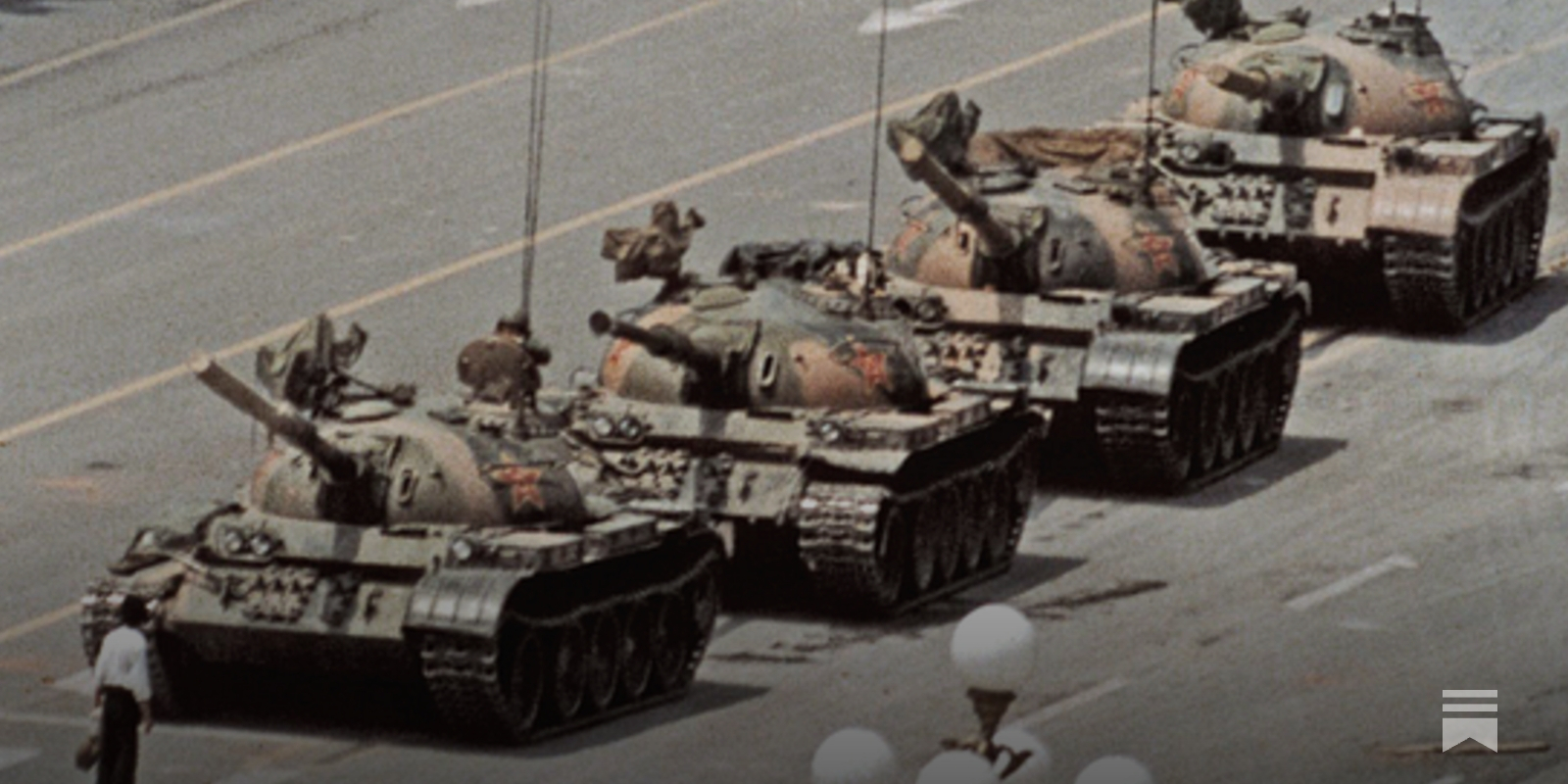
On the international stage, this event is frequently characterized as a violent reset in the relationship between a government and its citizenry. The widely circulated images—most notably that of an unidentified man standing resolutely in front of a column of military tanks—transcended cultural and national boundaries to evoke a universal symbol of resistance against overwhelming state power. These images have played a crucial role in galvanizing support for human rights campaigns worldwide and have often been employed as a somber reminder of the costs associated with challenging an authoritarian regime.
The International Human Rights Perspective
Most global observers, including international media, historians, and human rights organizations, interpret the events of Tiananmen Square as a clear-cut case of excessive state violence in response to a largely peaceful protest. This perspective is built upon a substantial body of eyewitness accounts, documentary evidence, and analyses that document the use of military force against largely unarmed civilians. The narrative of a repressive crackdown that stifled open demands for change is deeply embedded in global scholarship.
The international human rights community has unabashedly condemned the actions taken by the Chinese government. From diplomatic briefs to human rights reports, there is a prevailing sentiment that the loss of life and the subsequent suppression of free speech represent not just a Chinese issue but a global moral dilemma. The event is seen as a dire illustration of the lengths to which authoritarian regimes will go to silence dissent and control the flow of information.
This interpretation has also played a significant role in shaping international relations over the ensuing decades. Western governments and global institutions often include discussions of the Tiananmen Square incident in the broader debate about democratic values and state-sponsored censorship. Consequently, the event has become both a historical lesson and a continuing point of contention in discussions around international human rights policies.
Media Narratives and the Role of Documentation
A critical factor that has contributed to the global understanding of the Tiananmen Square events is the role played by the media. International journalists risked both professional and personal peril to capture and report on the confrontation between protesters and government forces. The documentation created through photos, videos, and investigative journalism has served as the cornerstone of the widely accepted interpretation that underscores the valorization of free speech and the defense of civil liberties.
By establishing a repository of visual evidence and thorough reports, international media outlets have ensured that the narrative of the protests as a struggle for democratic reform remains accessible. Such transmissions of raw moments have imbued the global conscience with a legacy of caution against authoritative overreach. The vibrant dissemination and discussion of these images have elevated the event to a symbol of resistance and a rallying call for democratic advocacy around the world.
The Chinese Government’s Interpretation and Control of the Narrative
State-Sponsored Historical Narratives
Within China, the interpretation of the 1989 incident is markedly different due to the government's tight control over informational channels and education. The Chinese authorities have constructed an official narrative which recasts the events as isolated acts of disorder rather than a widespread call for reform. This narrative serves multiple functions: it minimizes the scale of violence, masks government accountability, and aligns with a broader state-driven agenda that prioritizes national stability over transparency.
The state’s portrayal of these events as counterrevolutionary disturbances fundamentally alters public discourse. In official communications, educational materials, and controlled media, the protests are seldom depicted as a fight for democratic values. Instead, they are described in ways that imply necessary corrective action was taken to restore order, thereby justifying the use of military intervention.
Censorship and Information Suppression
One of the key strategies employed by the Chinese government has been widespread censorship. This tightly controlled narrative is enforced through various mechanisms, including the omission or alteration of historical events in textbooks, the blocking of search terms online, and the suppression of commemorative events. The government’s efforts aim not only to obscure the graver details of the crackdown but also to instill a singular, official version of history among younger generations.
The extensive censorship practices have led to a significant gap between domestic understanding and international interpretations of the event. Many young Chinese, who grow up in a highly regulated informational environment, may not have full access to the documented evidence of the protests as articulated by external sources. This isolation nurtures a collective memory that is both sanitized and politically convenient.
Political and Social Implications in China
The Chinese state’s monopoly on historical interpretation has far-reaching implications for both governance and society. By controlling the narrative surrounding Tiananmen Square, the government reinforces the notion of its indispensability in maintaining social order. National unity and long-term political stability are frequently cited as justifications for the actions taken during the events of 1989, and these rationales continue to influence domestic policy.
The deliberate suppression of dissent regarding the Tiananmen Square protest memory also impacts how contemporary issues are managed. With a historical precedent set for reining in public debate, the state models how other forms of dissent can be handled, contributing to a broader framework for political suppression. This historical interpretation thus not only serves as a recounting of past events but also as a foundational tool for governing current and future political challenges.
Multiplicity of Interpretations: Who Owns the Right?
Shared Ownership of Collective Memory
Beyond the dichotomy of state-controlled versus international portrayals, an essential aspect of interpreting historical events like Tiananmen Square lies in recognizing the multiplicity inherent in any shared memory of the past. The right to interpret such a pivotal moment in history is not vested in any single entity. Instead, it is an evolving process shaped by continuous dialogue among various stakeholders—ranging from independent historians, global media, academic circles, to the voices of human rights organizations.
Even where the Chinese government asserts control over the narrative within its own borders, internationally, diverse perspectives contribute to a pluralistic understanding of the events. Scholars and experts frequently revisit and challenge existing interpretations, ensuring that the historical narrative remains dynamic and inclusive. This fluidity is critical, as every reinterpretation sheds light on new contexts, evidence, and socio-political dynamics, thereby enriching our collective grasp of the past.
The international perspective, buoyed by committed documentation and scholarly debate, emphasizes that historical memory must remain open to scrutiny. This open discourse allows for multiple readings of the protest movements and subsequent government actions, effectively decentralizing the right to determine what “really” occurred. An enduring principle in democratic societies is that history should be a canvas for debate—an ever-evolving story that remains subject to reinterpretation as new evidence and interpretations emerge.
The Role of Authority and Intellectual Freedom
In any society, the power to interpret moments of historical significance carries considerable weight. The tensions between authoritative narratives and independent interpretations are deeply emblematic of broader struggles between centralized power and intellectual freedom. While authoritarian governments may impose a singular, sanitized narrative, the international community’s inclination toward comprehensive inquiry underscores the democratic imperative for transparency and debate.
Important reflections arise from this analysis—chief among them the question of who gets to decide historical truth. The inherent challenge is to balance respect for national narratives with the need to confront historical injustices through impartial inquiry. Consequently, intellectual and cultural freedom champions broader access to uncensored historical records and robust academic debate. This approach not only honors the complexity of defining historical truth but also ensures that societies can learn, adapt, and prevent the repetition of past errors.
As debates around Tiananmen Square continue, what remains clear is that history belongs to no one party alone. The multiplicity of voices—from those who experienced the events firsthand to those who study them long after—collectively contributes to a richer, more nuanced understanding. In this sense, the right to interpret the events is a shared cultural responsibility, cemented by the principle that historical truth should emerge from dialogue, evidence, and the persistent questioning of established narratives.
A Comparative Table of International and Domestic Perspectives
| Aspect | International Interpretation | Domestic Narrative |
|---|---|---|
| Historical Context | Seen as a cry for democratic rights and humanitarian reform against oppressive state power. | Presented as a necessary measure for restoring order and curbing counterrevolutionary activities. |
| Media and Documentation | Extensive journalistic documentation supports the portrayal of a brutal crackdown on unarmed citizens. | Strict censorship and state-controlled media disseminate a narrative that minimizes violence. |
| Political Impact | Catalyst for international human rights advocacy and discussions on state repression. | Used to emphasize the importance of stability and to justify undemocratic uses of force. |
| Ownership of Interpretation | A pluralistic and evolving debate among historians, political analysts, and human rights advocates. | A monopoly by the state enforced through censorship and controlled education. |
The Broader Implications for Global History and Memory
Impact on International Relations
The legacy of the Tiananmen Square events extends far beyond the immediate tragedy witnessed in 1989. It has had enduring implications for international relations, particularly between China and Western nations. The global narrative, which places a high emphasis on human rights, has often influenced diplomatic interactions and policy decisions. Countries that vocally condemned the crackdown have, over time, adopted measures aimed at curbing similar abuses elsewhere, using the events as a reference point for advocating broader democratic reforms.
Conversely, the tension between the Chinese official narrative and the international interpretation underlines the complex interplay between national sovereignty and globalization. As information flows freely across borders, attempts by any government to monopolize historical interpretation become more challenging. Intellectual freedom and access to independent research play decisive roles in counterbalancing state-sanctioned narratives.
Cultural Memory and the Role of Activism
Cultural memory is an ever-evolving narrative constructed by continual acts of remembrance, protest, and reinterpretation. Activists, survivors, and the diaspora all contribute to the way a society remembers its past. In this light, the events at Tiananmen Square have become a beacon for civil liberties advocates around the globe. Commemorations, artistic representations, and academic studies serve not only as memorials to those who suffered but also as powerful signals of resistance against the ossification of historical truth.
The challenge here is to foster a historical environment in which the conversation remains open and fact-based. While the national narrative may be closed off to dissent, international communities continue to engage in robust dialogue about the legacy of the protests. This has encouraged a culture of transparency and critical inquiry that transcends geographical and political boundaries. In doing so, the struggle to interpret Tiananmen Square fairly becomes part of a larger movement advocating for historical accountability and universal human rights.
References
- Tiananmen Square Incident - Britannica
- Tiananmen Square Crackdown - CNN
- China’s Tiananmen – 30 Years Later - TIME
- 1989 Tiananmen Protests - Amnesty International
- Tiananmen - BBC News
- 1989 Tiananmen Square Protests and Massacre - Wikipedia
-
Human Rights Report on China - Human Rights Watch
-
The Guardian on Tiananmen - The Guardian
-
NYT on Tiananmen’s Tank Man - The New York Times
-
Al Jazeera on Tiananmen Square - Al Jazeera
Recommended for Further Exploration
Last updated March 4, 2025