
Unraveling the Divine Connection: Lady Godiva and Ancient Persian Goddesses
Exploring the Historical and Mythological Threads Between an English Noblewoman and Iranian Deities
- Historical vs. Mythical Godiva: While Lady Godiva was a real Anglo-Saxon noblewoman, her famous naked ride is largely considered a later mythical embellishment.
- No Direct Alignment with Iranian Deities: There is no historical or direct mythological link between Lady Godiva and specific Iranian goddesses.
- Shared Archetypes of Female Empowerment: Despite the lack of direct connection, both the legendary Lady Godiva and various Iranian goddesses embody powerful archetypes of courage, compassion, fertility, and challenging oppressive systems.
The intriguing query regarding a potential alignment between Lady Godiva and Iranian goddesses invites a deep dive into both historical accounts and mythological narratives. Lady Godiva, an iconic figure in English folklore, is primarily known for her legendary ride through Coventry. Meanwhile, Iranian mythology boasts a rich pantheon of deities, many of whom embody significant aspects of nature, fertility, and human virtues. While there is no direct historical or widely recognized mythological alignment between the two, an exploration of their respective tales can reveal fascinating parallels in themes of female agency, sacrifice, and divine attributes.
The Enduring Legend of Lady Godiva
Fact, Fiction, and a Ride for Justice
Lady Godiva, or Godgifu as she was known in Old English, was indeed a real Anglo-Saxon noblewoman who lived in the 11th century. She was married to Leofric, the powerful Earl of Mercia and Lord of Coventry. Historical records confirm her and Leofric's roles as benefactors to various religious houses, most notably the Benedictine monastery at Coventry. They were known for their generosity to the church.
However, the famous story of her naked ride through the streets of Coventry to protest her husband's oppressive taxation is largely considered a later embellishment rather than a verifiable historical event. The earliest known written account of this legend appears in the 13th-century Flores Historiarum by Roger of Wendover, centuries after Godiva's death. This narrative suggests that Godiva, troubled by the heavy tolls Leofric had levied on the citizens, repeatedly pleaded with him to reduce them. His retort, according to the legend, was that he would only do so if she rode naked on horseback through the town's market.
The legend further asserts that Godiva, determined to alleviate the suffering of the people, accepted the challenge. Before her ride, she issued a proclamation for all citizens to remain indoors and shut their windows, out of respect for her modesty. The tale also introduces the character of "Peeping Tom" in later versions, appearing around the 16th or 17th century, who disobeyed this order and was supposedly struck blind or dead for his transgression. Upon her return, Leofric reportedly honored his word and reduced the taxes, or at least all tolls save those on horses, as some accounts suggest.
A famous painting by John Collier (c. 1897) depicting Lady Godiva's legendary ride.
The Evolution of the Myth
The story of Lady Godiva has evolved significantly over centuries, transforming from a simple act of charity into a powerful symbol of protest and civic pride. While historians generally view the naked ride as a myth, its cultural significance is undeniable. Coventry, for example, still celebrates its connection to Lady Godiva with statues, annual festivities, and processions. The enduring nature of the legend speaks to its resonance with themes of justice, compassion, and female defiance against oppression.
A Glimpse into Ancient Persian Mythology
Powerful Deities and Cosmic Battles
Iranian mythology, often referred to as Persian mythology in Western terms, is a rich tapestry of stories concerning the origin and nature of the world, focusing heavily on the eternal battle between good and evil. This mythology predates Zoroastrianism in some aspects, yet many deities are integrated into Zoroastrian beliefs.
Key Iranian Goddesses and Their Attributes
Among the prominent goddesses in Iranian mythology are figures who embody various aspects of nature, fertility, wisdom, and protection. Here are a few notable examples:
- Anahita (Ardvi Sura Anahita): Revered as a powerful goddess, Anahita is associated with water, fertility, healing, and wisdom. Her name means "the immaculate one." She is often depicted with a connection to rivers and lakes, symbolizing the "Water of Birth." Temples dedicated to Anahita exist in Iran, and her symbol is the lotus flower. She shares features with the Greek goddess Aphrodite, emphasizing love and fertility.
- Spenta Armaiti: This goddess is the guardian of the green earth and a symbol of fertility and birth. Her name means "beneficent devotion," and she is also associated with devotion to one's home and the newly deceased. She is one of the Amesha Spentas (beneficent immortals) in Zoroastrianism, embodying piety and earthly abundance.
- Drvaspa: An ancient Persian goddess who protects cattle, children, and friendship.
- Simurgh: While not strictly a goddess, the Simurgh is a benevolent mythical bird in Iranian folklore, sometimes equated with the phoenix. It symbolizes wisdom, healing, and beneficence, and its image appears in various forms of Iranian art and literature.
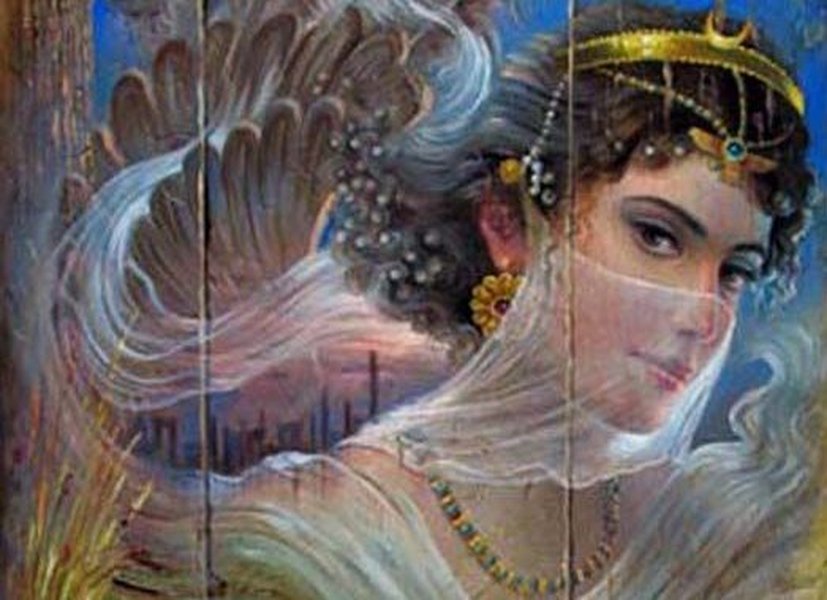
An artistic depiction of the ancient Persian water goddess, Anahita.
Comparing Godiva and Iranian Goddesses: A Thematic Analysis
Searching for Shared Threads
While a direct historical or mythological link between Lady Godiva and Iranian goddesses is absent, we can explore thematic similarities and archetypal connections. The core of Lady Godiva's legend revolves around her compassion for her people and her willingness to make a profound sacrifice to alleviate their suffering. This act, whether historical or mythical, positions her as a champion of justice and a figure of benevolence.
Iranian goddesses, particularly Anahita and Spenta Armaiti, also embody benevolent qualities deeply connected to the well-being of humanity and the earth. Anahita's association with water and fertility directly impacts life and abundance, while Spenta Armaiti's role as guardian of the earth underscores themes of sustenance and nurturing. These deities, through their divine attributes, contribute to the harmony and prosperity of the world, much like Lady Godiva's legendary act aimed to restore well-being to her community.
Thematic Overlaps and Archetypal Resonance
Let's consider some points of potential, albeit indirect, thematic resonance:
- Compassion and Benevolence: Lady Godiva's motive was pity for her people. Iranian goddesses like Anahita (fertility, healing) and Spenta Armaiti (earth, devotion) are fundamentally benevolent, contributing positively to existence.
- Sacrifice and Empowerment: Godiva's ride, a personal sacrifice, empowered her to effect change for her community. While Iranian goddesses operate on a cosmic scale, their powers and attributes often involve acts that maintain balance and provide for humanity.
- Connection to Nature/Elements: Lady Godiva's ride on horseback links her to the natural world and movement. Iranian goddesses like Anahita (water) and Spenta Armaiti (earth) are deeply entwined with natural elements and their life-giving properties.
- Symbol of Resistance/Justice: The Godiva legend, especially in its later interpretations, highlights a woman challenging a tyrannical system. While less direct, the very existence of a pantheon of benevolent deities in Iranian mythology suggests a cosmic order that, at its heart, strives for balance and justice against evil forces.
It's important to reiterate that these are thematic comparisons and not evidence of a direct historical or mythological alignment. The cultural contexts and origins of Lady Godiva's legend and Persian mythology are distinct.
Mythological Attributes Radar Chart
A Comparative Look at Perceived Strengths
To further illustrate the perceived thematic strengths of Lady Godiva (as a legendary figure) and two prominent Iranian goddesses, Anahita and Spenta Armaiti, let's consider a radar chart. This chart is based on conceptual alignment with various mythological attributes, rather than empirical data, reflecting how these figures might be viewed through a thematic lens. Higher values indicate a stronger association with that attribute.
This radar chart illustrates the perceived strengths of each figure across several conceptual attributes. Lady Godiva's legend shows high scores in Compassion, Courage, and Challenging Authority, reflecting her iconic act of protest. Anahita, as the goddess of water and fertility, naturally excels in Fertility/Abundance and Connection to Nature, along with Wisdom. Spenta Armaiti, associated with the earth and devotion, also scores high in Fertility/Abundance and Connection to Nature, alongside Compassion.
The Intersection of History and Myth: Beyond Direct Links
Cultural Representations and Artistic Interpretations
The absence of a direct link does not diminish the cultural impact of either Lady Godiva or Iranian goddesses. Both represent powerful feminine figures who, in their respective traditions, embody virtues and inspire reverence. Lady Godiva's story has been immortalized in art, literature, and even modern culture (e.g., Godiva Chocolatiers). Similarly, Iranian deities are central to ancient Persian art, literature, and religious practices.
The legend of Lady Godiva, while rooted in a real historical figure, has acquired mythical dimensions, functioning as a "myth of origin for the town of Coventry." This transformation from historical personage to legendary hero is a common phenomenon in folklore, where figures are imbued with symbolic weight far beyond their documented lives.
Common Themes in Female Archetypes
Despite vastly different origins and cultural contexts, the presence of strong female figures who act for the benefit of their communities or the cosmos is a recurring theme across global mythologies. These figures often embody universal virtues and societal ideals. Here’s a comparative table highlighting some aspects:
| Aspect | Lady Godiva (Legendary) | Iranian Goddesses (e.g., Anahita, Spenta Armaiti) |
|---|---|---|
| Nature of Figure | Historical noblewoman whose story became mythologized. | Divine beings within a structured pantheon. |
| Primary Motivation/Role | Compassion for suffering people, desire to alleviate taxes. | Cosmic balance, fertility, healing, protection, devotion. |
| Mode of Influence | Personal sacrifice/protest (legendary ride). | Divine power, natural phenomena, spiritual principles. |
| Symbolic Representation | Courage, defiance, benevolence, civic identity. | Life, purity, abundance, earth, spiritual connection. |
| Cultural Context | Anglo-Saxon England, medieval folklore. | Ancient Persia, Indo-Iranian religion, Zoroastrianism. |
This table further emphasizes that while their origins and direct functions differ, the underlying resonance of powerful female figures acting for good is a shared element in human storytelling.
Exploring the Lady Godiva Legend
Unpacking the Historical and Mythical Layers
To gain a deeper understanding of the Lady Godiva legend, its historical context, and how it evolved into the widely known story, watching a concise video can be highly insightful. This video offers an engaging overview of the real historical figure versus the mythical narrative that has captured imaginations for centuries.
A video exploring the historical Lady Godiva versus the legendary figure.
This video provides an excellent summary of the complexities surrounding Lady Godiva's story, distinguishing between what is historically documented and what has become part of popular lore. It helps contextualize why her act, whether real or embellished, became such a powerful symbol in English history and culture.
Conclusion
In summary, while Lady Godiva was a historical Anglo-Saxon noblewoman, her famed naked ride to reduce taxes is largely a later mythical addition to her story. There is no direct historical or mythological evidence to suggest an alignment between Lady Godiva and any specific Iranian goddesses. The two originate from vastly different cultural, geographical, and historical contexts. However, a thematic analysis reveals that both Lady Godiva, as a legendary figure, and Iranian goddesses like Anahita and Spenta Armaiti, embody universal archetypes of compassion, courage, benevolence, and a profound connection to the well-being of their respective worlds or communities. The enduring nature of their stories lies in their ability to inspire and reflect shared human values, even without a direct cross-cultural link.
Frequently Asked Questions
Was Lady Godiva a real person?
Did Lady Godiva really ride naked through Coventry?
Who is Anahita in Iranian mythology?
Are there any historical connections between England and ancient Persia?
What is the significance of "Peeping Tom" in the Lady Godiva legend?
Recommended Further Exploration
- The historical accuracy of Lady Godiva's ride
- Major goddesses in Zoroastrian mythology
- Cultural impact of Lady Godiva legend
- Comparative mythology of female deities across cultures
References
 nakedhistorian.wordpress.com
 thelivesofmyancestors.wordpress.com
Last updated May 21, 2025