
Understanding GPT-Newspaper and the Power of LangGraph
Delving into AI-Powered Personalized News Creation and Advanced Agent Frameworks
The user is asking for an explanation of the concepts presented in the linked article about building "GPT-Newspaper" using "LangGraph." This involves understanding what GPT-Newspaper is, how it functions with AI agents, and the role of LangGraph in facilitating this process.
Key Insights into GPT-Newspaper and LangGraph
- GPT-Newspaper is an innovative project that leverages a team of specialized AI agents to autonomously create personalized newspapers. These agents handle tasks from searching and curating news to writing, critiquing, designing, and publishing.
- LangGraph is a powerful library built on LangChain designed for building stateful, multi-actor AI applications with cyclical computational capabilities. It enables complex agent workflows and allows for iterative processes, such as the critique and revision cycle in GPT-Newspaper.
- LangGraph provides a more expressive and controllable framework for developing complex AI agents compared to simpler, acyclic workflows. Its ability to manage state and facilitate branching makes it ideal for building sophisticated agentic systems.
GPT-Newspaper: An Autonomous News Publishing System
GPT-Newspaper is an ambitious project that aims to revolutionize news consumption by creating personalized newspapers tailored to individual user preferences. The core concept behind GPT-Newspaper is to emulate a traditional publishing house by assembling a team of specialized AI agents, each responsible for a specific stage of the newspaper creation process.
The Team of Specialized AI Agents
The GPT-Newspaper system relies on the collaboration of several distinct AI agents. Each agent performs a crucial role, contributing to the final personalized newspaper. These agents work in concert, passing information and tasks between them in a structured workflow. The specialized agents include:
The Search Agent
This agent acts as the scout, responsible for scouring the internet to find the latest and most relevant news items based on the user's specified interests and queries. It's the initial step in gathering the raw material for the newspaper.
The Curator Agent
Following the search phase, the Curator Agent takes on the role of the discerning connoisseur. Its task is to filter and select the most pertinent and high-quality news articles from the vast amount of information gathered by the Search Agent. This selection is based on the user's preferences, ensuring the content is relevant and engaging.
The Writer Agent
Once the articles are curated, the Writer Agent, the team's wordsmith, comes into play. This agent is responsible for crafting engaging, reader-friendly articles based on the selected news items. It transforms the raw information into coherent and compelling content suitable for a newspaper format.
The Critique Agent
The Critique Agent serves as the provider of constructive feedback. It reviews the articles generated by the Writer Agent, assessing their quality, accuracy, and adherence to the user's preferences. This agent plays a vital role in ensuring the final output is polished and meets a high standard.
The Designer Agent
The Designer Agent is the artist of the team. Its responsibility is to arrange and design the curated and written articles for a visually appealing reading experience. This involves formatting the layout, incorporating any relevant visual elements, and ensuring the newspaper is easy to read and navigate.
The Editor Agent
The Editor Agent acts as the conductor, bringing all the pieces together. It takes the designed articles and constructs the final newspaper based on a chosen layout. This agent ensures that the various sections are properly organized and the flow of information is logical.
The Publisher Agent
The final touch is provided by the Publisher Agent. This agent is responsible for publishing the finished newspaper to the frontend or the desired service, making it accessible to the user. This could involve generating an HTML file, sending an email, or integrating with another platform.
LangGraph: Enabling Complex Agent Workflows
LangGraph is a fundamental component that makes the sophisticated workflow of GPT-Newspaper possible. Built on top of the LangChain library, LangGraph is specifically designed for developing stateful, multi-actor applications using Large Language Models (LLMs). Its key innovation lies in its ability to handle cyclical computations, which are essential for building dynamic and interactive AI agents.
Beyond Directed Acyclic Graphs (DAGs)
While LangChain provides tools for building chains of computation often represented as Directed Acyclic Graphs (DAGs), where information flows in one direction without loops, LangGraph introduces the capability to create cyclical graphs. This is a crucial distinction, as many complex AI agent behaviors require iterative processes where an agent's output can feed back into an earlier stage of the workflow, prompting further refinement or action.
Stateful Graph Architecture
At its core, LangGraph revolves around the concept of a stateful graph. In this architecture, each node in the graph represents a step or an action performed by an agent. The graph maintains a state that is passed between these nodes and updated as the computation progresses. This state acts as the memory and context for the agents, allowing them to make dynamic decisions based on accumulated information throughout the workflow.
Nodes and Edges
The building blocks of a LangGraph workflow are nodes and edges. Nodes encapsulate specific functionalities or agent actions, such as searching for information, writing an article, or critiquing content. Edges define the transitions between these nodes, determining the flow of execution within the graph. LangGraph supports both unidirectional and bidirectional edges, enabling flexible workflow designs.
Here's a simplified representation of how nodes and edges might be defined in a LangGraph workflow for a task:
# Define a Langchain graph
workflow = Graph()

# Add nodes for each agent
workflow.add_node("search", search_agent.run)
workflow.add_node("curate", curator_agent.run)
workflow.add_node("write", writer_agent.run)
workflow.add_node("critique", critique_agent.run)
workflow.add_node("design", designer_agent.run)

# Set up edges
workflow.add_edge('search', 'curate')
workflow.add_edge('curate', 'write')
workflow.add_edge('write', 'critique')
workflow.add_conditional_edges(start_key='critique',
                               condition=lambda x: "accept" if x['critique'] is None else "revise",
                               conditional_edge_mapping={"accept": "design", "revise": "write"})

# set up start and end nodes
workflow.set_entry_point("search")
workflow.set_finish_point("design")

# compile the graph
chain = workflow.compile()
This code snippet illustrates how nodes representing different agent actions are added to a workflow graph. Edges define the sequential flow from searching to curating, writing, and critiquing. The use of add_conditional_edges demonstrates LangGraph's ability to handle branching logic, allowing the workflow to loop back to the 'write' node if the 'critique' agent determines that revisions are needed.
The Power of Cycles in GPT-Newspaper
The cyclical capability of LangGraph is particularly evident and powerful in the interaction between the Writer Agent and the Critique Agent within GPT-Newspaper. This interaction forms a feedback loop:
\[ \text{Writer Agent} \rightarrow \text{Critique Agent} \rightarrow \begin{cases} \text{Accept} \rightarrow \text{Design Agent} \ \text{Revise} \rightarrow \text{Writer Agent} \end{cases} \]
Initially, the Writer Agent produces an article. This article is then evaluated by the Critique Agent. If the Critique Agent identifies areas for improvement, it provides feedback, and the workflow cycles back to the Writer Agent for revisions. This iterative process continues until the Critique Agent is satisfied with the article's quality, at which point the workflow proceeds to the Designer Agent.
This dynamic and interactive sequence, facilitated by LangGraph's cyclical capabilities, significantly enhances the quality of the final output in GPT-Newspaper, mirroring the collaborative review process in traditional publishing.
Why Choose LangGraph for Building Agents?
LangGraph offers several advantages for developers building complex AI agents:
- Reliability and Controllability: LangGraph provides granular control over the agent's thought process and workflow execution, making it easier to build reliable systems and debug issues.
- State Management: The built-in state management simplifies tracking information and context across multiple steps and agents in a complex workflow.
- Branching and Retries: LangGraph's ability to handle conditional edges allows for sophisticated branching logic and the implementation of retry mechanisms in case of failures or the need for review.
- Multi-Step Reasoning: It excels at orchestrating multi-step computational flows, breaking down complex tasks into smaller, manageable steps executed by different agents.
- Flexibility and Customization: LangGraph is a low-level framework that allows developers to define custom agent architectures and workflows tailored to specific needs, rather than being restricted to pre-defined cognitive architectures.
LangGraph in the Broader AI Landscape
LangGraph is part of the broader movement towards building more sophisticated and autonomous AI agents. While traditional LLM applications often follow a linear chain of operations, the need for agents that can engage in more complex reasoning, interact with external tools, and maintain conversational history has led to the development of frameworks like LangGraph.
Comparison with LangChain
LangGraph is an extension of LangChain, specifically designed to address the limitations of building agent runtimes with complex internal states and cycles using only LangChain Expression Language (LCEL) which primarily focuses on Directed Acyclic Graphs (DAGs). While LangChain provides a foundation for building LLM applications and chains, LangGraph adds the necessary constructs for stateful and cyclical workflows.
Here is a simplified comparison:
| Feature | LangChain (LCEL) | LangGraph |
|---|---|---|
| Workflow Structure | Directed Acyclic Graphs (DAGs) | Stateful Graphs with Cycles |
| State Management | Limited, often external | Built-in, per-graph state |
| Agent Interaction | Linear chains | Multi-actor collaboration with feedback loops |
| Complexity Handling | Suitable for simpler sequences | Designed for complex, iterative workflows |
Applications of LangGraph
Beyond building personalized newspapers like GPT-Newspaper, LangGraph can be applied to a wide range of complex AI agent applications, including:
-
Advanced Chatbots: Creating conversational agents that can maintain context over long interactions, access external knowledge, and perform multi-turn reasoning.
-
Task Automation: Building agents that can autonomously execute complex tasks involving multiple steps, tool usage, and conditional logic.
-
Supply Chain Management: Developing multi-agent systems where different agents handle inventory, orders, and deliveries, coordinating their actions for efficient operation.
-
Code Generation and Review: Creating agents that can generate code, receive feedback, and iteratively refine the code based on critiques.
Visualizing LangGraph Workflows
Understanding the flow of information and control within a LangGraph application can be greatly aided by visualization. The graph-based structure lends itself well to diagrams that illustrate the nodes, edges, and conditional transitions.
The following image depicts a conceptual workflow which aligns with the type of multi-agent system that can be built with LangGraph:
Conceptual Diagram of an Agent Workflow
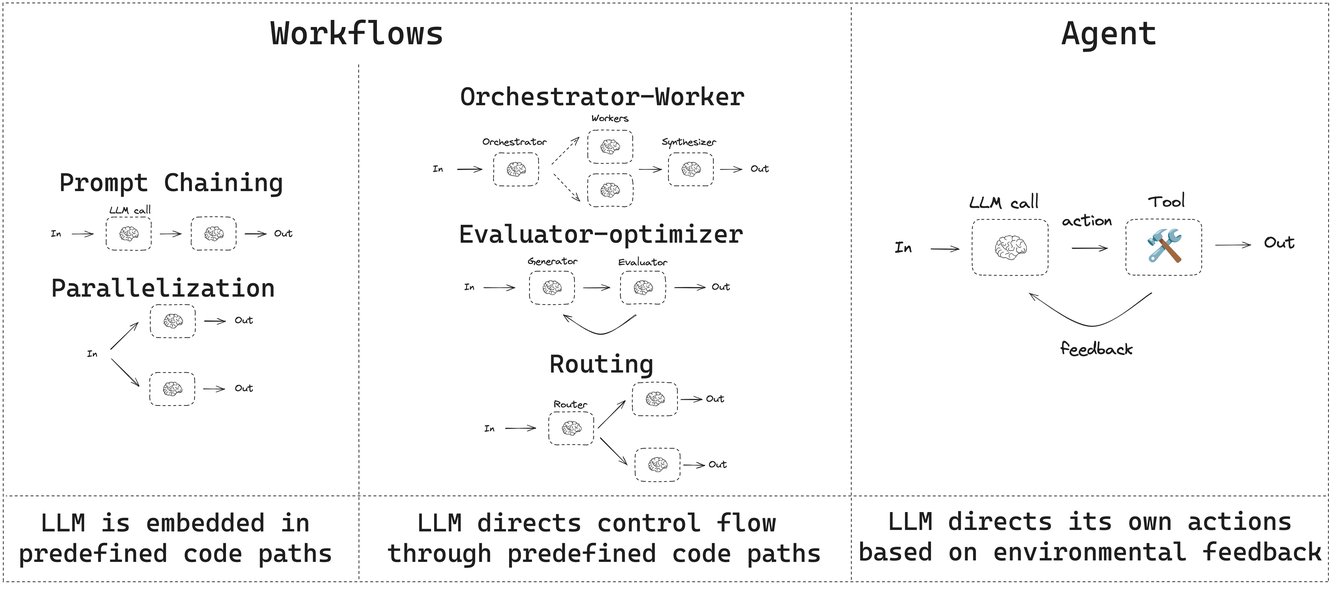
This diagram illustrates how different components or agents interact in a cyclical manner, with a central controller or decision point guiding the flow based on the current state. This type of architecture is precisely what LangGraph facilitates, allowing for dynamic and adaptive agent behavior.
Getting Started with GPT-Newspaper and LangGraph
For those interested in exploring GPT-Newspaper or building their own AI agents with LangGraph, the process typically involves setting up the necessary environment and obtaining API keys for the language models and any external tools used.
Prerequisites
To run the GPT-Newspaper project, you would generally need API keys for services like Tavily (for searching) and OpenAI (for the LLM capabilities). These keys allow the agents to access the necessary external resources and models.
Installation and Running
The typical steps involve cloning the project repository from GitHub, setting up environment variables with your API keys, installing the required Python packages, and then running the application.
# Clone the repository
git clone <repository_url>

# Export your API Keys (example)
export TAVILY_API_KEY=<YOUR_TAVILY_API_KEY>
export OPENAI_API_KEY=<YOUR_OPENAI_API_KEY>

# Install Requirements
pip install -r requirements.txt

# Run the application (example)
python app.py
Once the application is running, you would typically access it through a web browser interface to provide your preferences and initiate the newspaper generation process.
Frequently Asked Questions about GPT-Newspaper and LangGraph
What is the main goal of the GPT-Newspaper project?
The main goal of GPT-Newspaper is to create personalized newspapers tailored to individual user preferences by using a team of autonomous AI agents to handle the entire process, from content gathering to publication.
How does LangGraph enhance the capabilities of building AI agents?
LangGraph enhances the capabilities of building AI agents by providing a framework for creating stateful, multi-actor applications with cyclical workflows. This allows for more complex reasoning, iterative processes (like critique and revision), and better control over the agent's execution flow compared to simpler, acyclic methods.
Can LangGraph be used for applications other than generating newspapers?
Yes, LangGraph is a versatile framework that can be used to build a wide variety of complex AI agent applications, including advanced chatbots, task automation systems, multi-agent collaboration platforms, and more, wherever state management and cyclical workflows are required.
Is LangGraph a replacement for LangChain?
No, LangGraph is built on top of and extends the LangChain library. While LangChain provides a foundation for building LLM applications, LangGraph adds specific capabilities for creating stateful, cyclical agent runtimes, making it suitable for more complex agentic systems that require dynamic decision-making and iterative processes.
References
Last updated May 10, 2025