
Unpacking the Evolution: Beyond Lines of Code in GPT-4 vs. GPT-4.1
Delving into the architectural and capability advancements that truly define the leap from GPT-4 to its more potent successor, GPT-4.1.
When comparing sophisticated AI models like ChatGPT-4 and its successor, ChatGPT-4.1, the traditional software metric of "lines of code" (LoC) offers a very incomplete picture. The advancement between these versions is less about the quantity of code and more about profound enhancements in architecture, training methodologies, and, crucially, capabilities. Let's explore what truly sets these models apart.
Key Insights: Understanding the GPT-4 to GPT-4.1 Transition
- No Public LoC Data: OpenAI has not publicly disclosed the exact number of lines of code for GPT-4 or GPT-4.1, nor the specific LoC difference between them. The core advancements are not primarily measured in LoC.
- Capability-Driven Evolution: GPT-4.1 represents a significant step up in performance, particularly in coding assistance, understanding and following complex instructions, and handling vastly larger amounts of information (long-context).
- Architectural & Training Refinements: The differences stem from sophisticated changes in the underlying neural network architecture, more extensive and refined training datasets, and improved training techniques rather than simple additions or subtractions of code lines.
The Elusive "Lines of Code": Why Traditional Metrics Fall Short for LLMs
In the realm of large language models (LLMs), the concept of "lines of code" as a measure of complexity or advancement is fundamentally misleading. While there is code involved in building the training frameworks, inference engines, and APIs, the essence of the model—its intelligence and capabilities—resides within its learned parameters and architecture.
Proprietary Nature and Focus on Model Parameters
OpenAI, like many AI research labs, keeps the specific details of its model architectures and the exact codebase proprietary. The "size" of these models is more often discussed in terms of parameters. For instance, GPT-4 is estimated to have around 1 trillion parameters, a colossal figure that reflects the model's capacity to learn and represent complex patterns in data. GPT-4.1 builds upon this foundation, refining these parameters and the architecture they inhabit.
Beyond Code: The Essence of LLM Advancement
Improvements from one LLM version to the next, such as from GPT-4 to GPT-4.1, are primarily driven by:
- Architectural Enhancements: Modifications to the neural network design to improve efficiency, learning capacity, or specific skills.
- Training Data: The quality, diversity, and sheer volume of data used to train the model. GPT-4.1 benefits from more recent data (knowledge cutoff around June 2024 for some aspects) and potentially more targeted datasets for specific skills like coding.
- Training Techniques: Refinements in how the model is trained, including reinforcement learning from human feedback (RLHF) and other sophisticated optimization methods.
- Instruction Tuning: Fine-tuning the model to better understand and follow user instructions.
Unveiling GPT-4.1: A Leap in Capabilities
GPT-4.1 isn't just an incremental update; it's a more powerful "engine" designed to deliver tangible improvements in several key areas, making it a more robust tool for complex tasks, especially for developers and researchers.
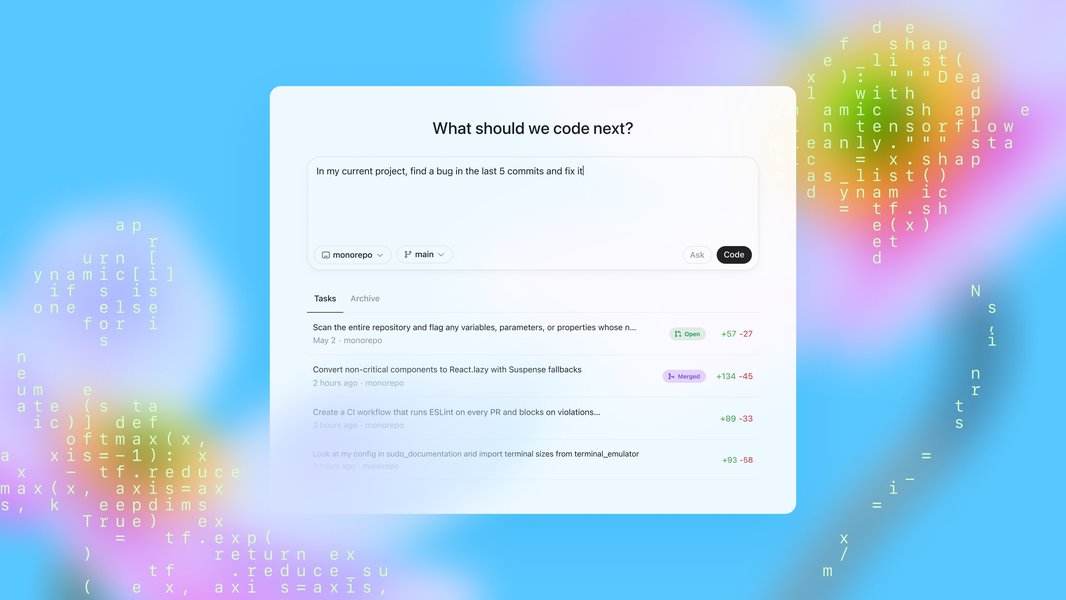
GPT-4.1 significantly enhances AI's coding capabilities, building on foundations like OpenAI's Codex.
Enhanced Coding Prowess
One of the most lauded improvements in GPT-4.1 is its significantly enhanced ability to understand, generate, and debug code.
- Higher Accuracy: It completes coding tasks more effectively and reliably. For example, on the SWE-bench Verified benchmark, which tests real-world software engineering capabilities, GPT-4.1 achieved a 54.6% task completion rate, a substantial increase from GPT-4o's 33.2%.
- Better Diff Handling: GPT-4.1 is trained to follow diff formats (showing changes between code versions) more reliably, making fewer extraneous edits. It reduced such errors from 9% in GPT-4o to just 2%.
- Improved Benchmark Scores: It more than doubled GPT-4o's performance on Aider’s polyglot diff benchmark and even surpassed GPT-4.5 on some coding metrics.
Mastery of Long Contexts
GPT-4.1 introduces a dramatically expanded context window, allowing it to process and "remember" much larger amounts of information within a single interaction.
- 1 Million Token Context Window: This is a massive increase compared to previous models (GPT-4 typically handled up to 32,768 tokens, though variants existed). A 1 million token context is equivalent to approximately 750,000 words or roughly 80,000 lines of input code.
- Benefits: This enables GPT-4.1 to work with entire medium-sized application codebases, lengthy documents, complex research papers, or extensive conversation histories, leading to more coherent and contextually aware responses and analyses.
Superior Instruction Following
GPT-4.1 demonstrates improved adherence to complex and nuanced instructions. On Scale’s MultiChallenge benchmark for instruction following, GPT-4.1 scored 38.3%, a notable 10.5% increase over GPT-4o. This means it's more likely to perform tasks exactly as specified, reducing the need for iterative prompting.

The development and training of advanced AI models like GPT-4.1 rely on massive computational infrastructure, such as data centers.
Architectural and Training Evolution: The Core Differences
The advancements in GPT-4.1 are not superficial. They are rooted in deep architectural refinements and more sophisticated training processes.
From Parameters to Performance
While GPT-4 already boasted an estimated 1 trillion parameters, GPT-4.1 refines how these parameters are utilized and potentially introduces architectural changes that allow for more efficient processing and better learning. The exact nature of these changes is proprietary, but the outcome is a model that can do more with its vast scale.
The Role of Training Data and Techniques
The quality and scope of training data are paramount. GPT-4.1 benefits from updated datasets and potentially more targeted training regimens focused on its key strengths like coding and long-context understanding. Advanced training techniques, including improved reinforcement learning loops, contribute to its enhanced instruction-following capabilities and overall reliability.
Comparative Snapshot: GPT-4 vs. GPT-4.1 Capabilities
To visualize the relative strengths, consider this comparative radar chart. It provides a qualitative assessment of key capabilities based on reported improvements. The "Input Context Capacity" reflects the ability to process large inputs, where GPT-4.1's 1 million token window is a significant leap.
This chart illustrates GPT-4.1's marked improvements across several dimensions, especially in its capacity to handle large inputs and its coding-related skills.
Visualizing the Evolution: GPT Model Advancement
The journey from earlier GPT models to GPT-4.1 is one of continuous innovation and refinement. This mindmap offers a simplified overview of this progression, highlighting key milestones and improvements that distinguish each major iteration, culminating in the specialized strengths of GPT-4.1.
(e.g., 175B Parameters,
Baseline for ChatGPT)"] id2["GPT-4
(~1 Trillion Parameters,
Improved Reasoning,
Multimodality (Text/Image),
Larger Context than GPT-3.5)"] id3["GPT-4o ('Omni')
(Enhanced Speed & Efficiency,
Improved Voice/Vision,
Broader Accessibility)"] id4["GPT-4.1
(Specialized Enhancements)"] id4_1["Focus: Advanced Coding
(Higher SWE-Bench scores,
Reliable diffs)"] id4_2["Focus: Long Context
(1 Million Token Window)"] id4_3["Focus: Instruction Following
(Improved accuracy & reliability)"] id4_4["API Availability
(Plus, Pro, Team Tiers)"]
This mindmap illustrates how each new model builds upon the successes of its predecessors, with GPT-4.1 representing a significant specialization and enhancement in key areas like coding and long-context processing.
Key Differentiating Factors Summarized
While a direct "lines of code" comparison isn't feasible or particularly informative for LLMs, the table below summarizes the crucial distinctions between GPT-4 and GPT-4.1 based on their capabilities and known characteristics.
| Feature | GPT-4 (General/Typical) | GPT-4.1 |
|---|---|---|
| Primary Focus | General advanced reasoning, multimodal capabilities | Optimized for coding, long-context understanding, and precise instruction following |
| Estimated Parameters | ~1 Trillion | Builds on GPT-4 architecture, specific parameter count not public, focus on efficiency and capability enhancement |
| Max Input Context Window (Tokens) | Typically up to 32,768 (variants exist) | Up to 1,000,000 tokens |
| Equivalent Input Code Handling | Considerably less than GPT-4.1 | ~80,000 lines of code |
| Coding Performance (e.g., SWE-Bench) | Baseline (e.g., GPT-4o at 33.2%) | Significantly improved (54.6%) |
| Code Diff Reliability | Good, but more prone to extraneous edits (e.g., GPT-4o at 9% error) | Excellent, significantly fewer extraneous edits (2% error) |
| Instruction Following | Strong | Superior, higher scores on benchmarks (e.g., Scale's MultiChallenge) |
| "Lines of Code" (Internal Model) | Not publicly disclosed; not a primary metric | Not publicly disclosed; not a primary metric |
This table highlights that the evolution to GPT-4.1 is marked by substantial gains in practical abilities rather than a simple increase in something like internal lines of code.
Deep Dive: GPT-4.1's Coding Capabilities in Action
To better understand the practical implications of GPT-4.1's advancements, particularly in coding and handling long contexts, the following video provides insights and demonstrations. It showcases how these improvements translate into real-world performance, offering a glimpse into why GPT-4.1 is considered a significant step forward for developers.
This video discusses GPT-4.1's coding capabilities, often comparing it with previous models or demonstrating its performance on specific tasks. It helps to contextualize the benchmark improvements and feature enhancements, such as its adeptness with large codebases due to the expanded context window.
Frequently Asked Questions (FAQ)
▶ So, there's no exact number for lines of code difference?
Correct. OpenAI has not released such figures. More importantly, "lines of code" is not a meaningful metric for comparing the advancements between large language models like GPT-4 and GPT-4.1. The improvements lie in the model's architecture, training data, parameter tuning, and resulting capabilities, not in a simple count of code lines.
▶ What does the "1 million token context window" in GPT-4.1 actually mean for users?
It means GPT-4.1 can process and "remember" a vastly larger amount of text or code in a single interaction. This is equivalent to about 750,000 words or around 80,000 lines of code. This allows users to input entire books, large research papers, or substantial codebases for analysis, summarization, or generation tasks, leading to more contextually rich and coherent outputs.
▶ Is GPT-4.1 better than GPT-4 or GPT-4o in every aspect?
GPT-4.1 is specifically optimized and shows significant improvements in coding, long-context understanding, and instruction following. While it represents an advancement, "better" can be task-dependent. GPT-4o, for example, was highlighted for its speed and improved multimodality in voice and vision interactions at its launch. GPT-4.1 seems to be a more specialized powerful engine, particularly excelling in technical and complex textual tasks.
▶ If not lines of code, what is the best way to understand the difference between these models?
Focus on their capabilities and performance benchmarks. Look at improvements in specific tasks (like coding accuracy on SWE-bench), the size of the context window they can handle, their ability to follow instructions, and any new features or optimizations highlighted by OpenAI. These functional differences are far more indicative of their advancements than internal code metrics.
Recommended Further Exploration
- What are the specific architectural changes in GPT-4.1 compared to GPT-4o that lead to better performance?
- How does GPT-4.1's 1 million token context window impact real-world application development and large-scale data analysis?
- Explore benchmarks comparing GPT-4.1 with other leading AI models in coding and reasoning tasks.
- What are the ethical considerations and safety measures associated with the increased capabilities of models like GPT-4.1?
References
Last updated May 17, 2025